
Renault focuses on independence and aims to make electric vehicles more profitable
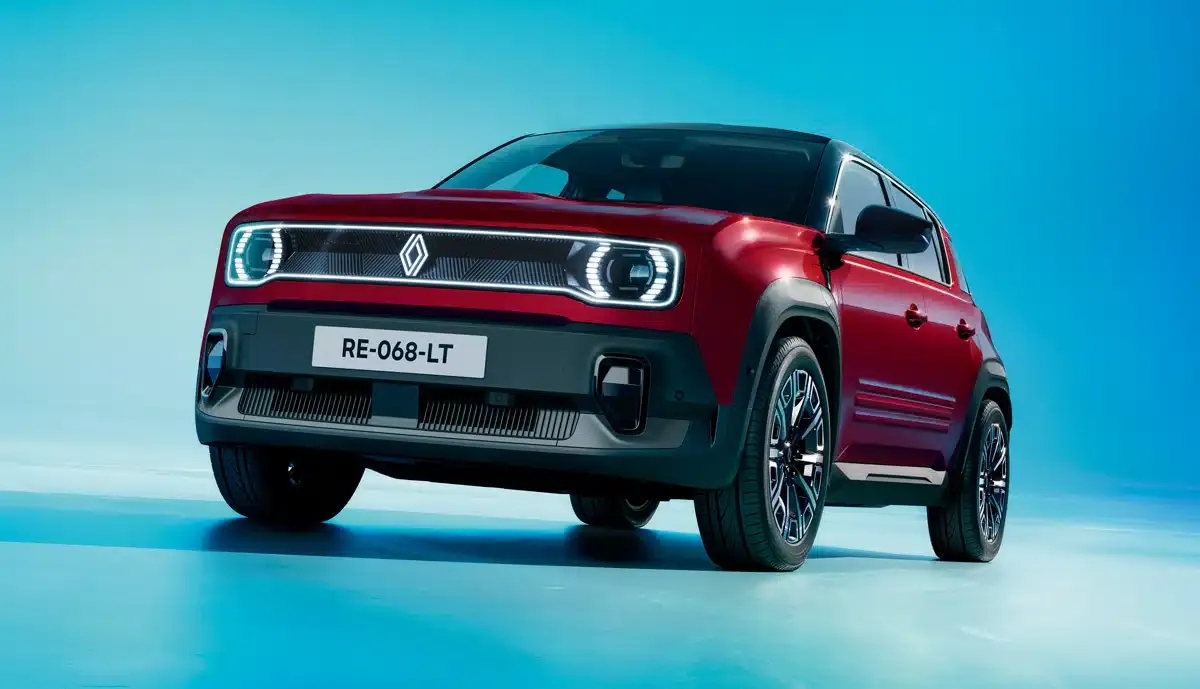
Image: Renault
At the Paris Auto Show, François Provost, CEO of the Renault Group, explained to journalists the company’s future strategy. According to the Edison portal, the focus was on the competitive landscape posed by Chinese manufacturers, the utilization rate of European factories, and the profitability of electric vehicles.
Renault rules out joint vehicle production with Chinese manufacturers in Europe. According to Provost, the company’s European plants are already 85 percent fully occupied, leaving no capacity for such cooperation. Additionally, the group aims to remain technologically independent and only allows partners who utilize Renault’s technology.
"In Europe, we want to stay independent. We want to prove that a European automaker can develop vehicles within two years and remain at the forefront of the technologies that matter today—such as those in electric vehicle supply chains and software," said Provost.
While the new electric Twingo still relied on support from Chinese engineers, future models will follow a new standard of two years for development time. To achieve this, about 50 percent of the engineers have been retrained from working on traditional powertrains to new areas such as batteries, software, and power electronics, according to the company.
Regarding profitability, Provost stated that electric cars remain less profitable on average compared to internal combustion engines. However, Renault is achieving profits with the Twingo, Renault 5, and Renault 4 that are “significantly higher” than those of the first generation of Mégane and Scénic. The goal for future platform generations is to reach a profitability level comparable to that of hybrid technologies.
According to Provost, the current obstacle to demand is the European supply chain, particularly the availability of batteries. While the use of LFP cells (lithium-iron-phosphate) in the Mégane E-Tech reduces battery costs by more than 25 percent, establishing a complete European value chain including raw material extraction and refining takes time.
To counter price pressure from Asian imports, Renault focuses on total costs over the vehicle’s entire lifespan. In addition to the purchase price, factors such as guaranteed residual values, low operating costs, a service network with 10,000 outlets, long-lasting warranties, and software updates are crucial. Additionally, gasoline prices are becoming increasingly unpredictable, and maintenance costs for electric vehicles are 30 percent lower than those for older internal combustion engines.
Also interesting
About the author
Thomas Langenbucher is an expert in electromobility with professional experience in the automotive industry and finance sector. Since 2011, he has been covering electric vehicles, sustainable technologies, and mobility solutions for ecomento.de. Learn more.
Reader interactions