
The Renault Scenic E-Tech has an 89 kWh battery and a WLTP range of 642 km. A cheaper LFP version will arrive in autumn 2026.
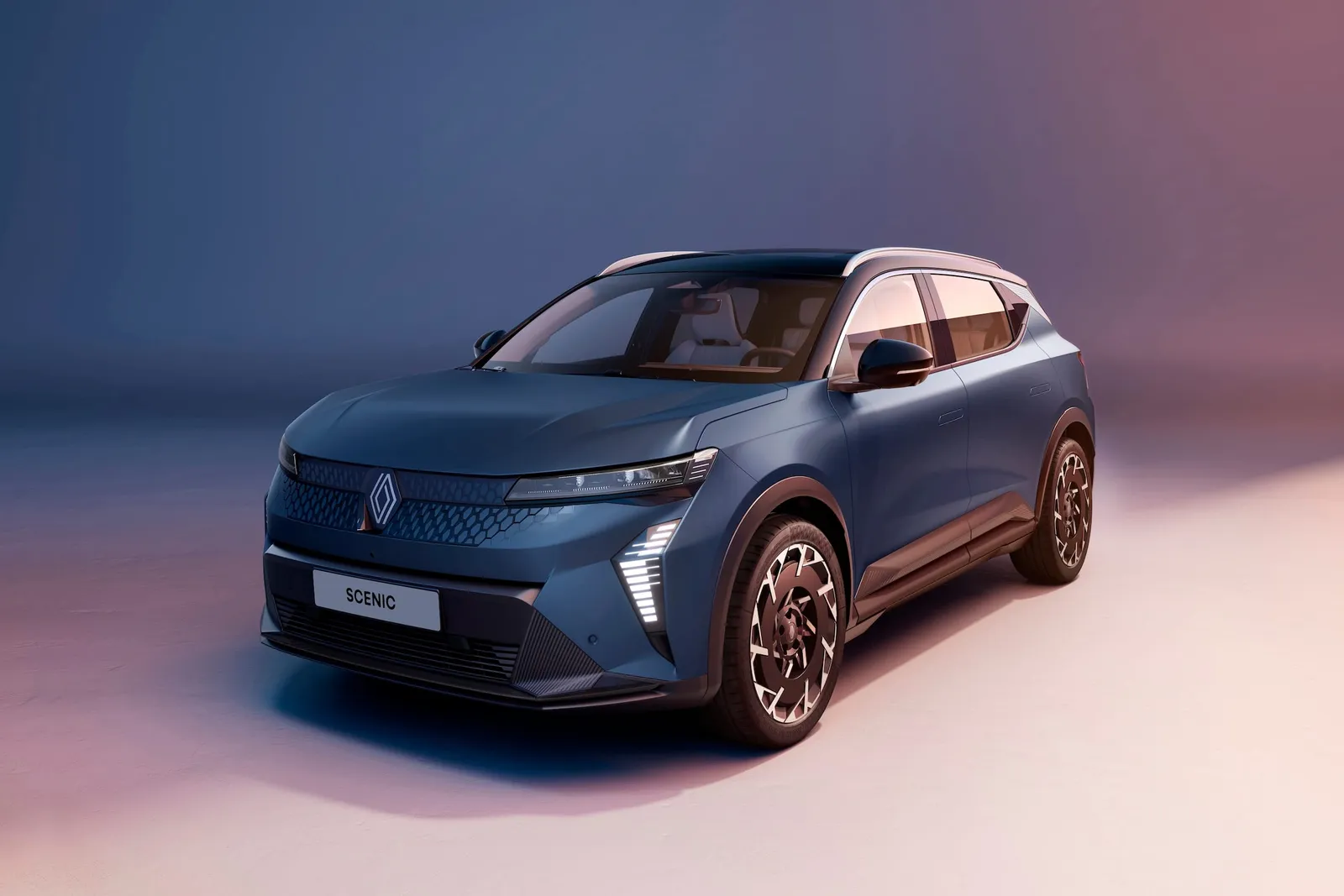
Renault has refreshed the Scenic E-Tech electric, with this update focusing mainly on technology rather than a new bumper. The biggest change is the 89 kWh NMC battery, offering a claimed WLTP range of up to 642 km along with faster DC charging. In autumn 2026, a cheaper version with a 67 kWh LFP battery will also be added to the French market.
Table of Contents
Show
Hide
The Scenic remains the same family electric vehicle at 4.47 meters in length and under 1.9 tons in weight, but it becomes significantly more interesting on paper. Especially for those who saw it as a good car but slightly too expensive compared to competitors.
New 89 kWh Battery, Same 220 HP Engine
The Long Range version now features a new 89 kWh NMC battery instead of the previous 87 kWh pack. Renault claims a WLTP range of up to 642 km, which is 20 km more than before. The engine remains unchanged, delivering 220 HP.
The manufacturer also claims a 25% improvement in charging speed. In practice, the Scenic can now charge from 15% to 80% in 28 minutes, with a maximum DC power of 150 kW. This sounds reasonable, even though the peak power itself hasn’t increased. The conclusion is simple: the charging curve has been improved rather than just the figures used for marketing.
In France, this version is already available for 38,750 euros. However, it’s important to note right away that this is the price including local subsidies, so it makes no sense to convert it directly to Polish pricing.
The Scenic with LFP battery is expected to be cheaper and faster to charge
The second new development is perhaps even more interesting. In the fall of 2026, Renault will add a Scenic model with a 67 kWh LFP battery, which is expected to offer up to 467 km of WLTP range.
This gets interesting because the smaller battery is supposed to deliver a higher maximum power output than the larger NMC version. Renault mentions 165 kW DC charging and a 24-minute time to reach 80% charge. For a family-oriented compact crossover using cheaper cell chemistry, this looks pretty good. Of course, that’s assuming the car can be charged this fast for extended periods.
Renault uses a cell-to-pack architecture already seen in the updated Megane E-Tech electric. The pack consists of 232 pouch cells, with an estimated space utilization rate of 53%. This is actual technical detail, not just marketing fluff.
The starting price in France for the LFP version is set at 31,750 euros. If Renault doesn’t overprice it in other countries, the Scenic might finally enter a segment where customers actually compare it to the Volkswagen ID.4, Skoda Enyaq, or Ford Explorer, rather than just taking a look at it in the showroom.
Scenic also receives updates to its cabin and electronics. The openR link system with Google services now has Gemini as an alternative to Google Assistant, allowing for more natural voice commands without having to tap on the screen while driving.
In addition, Renault provides 2 GB of data per month for 3 years for Google Play apps, along with a Qi2 wireless charger. Google Maps also allows filtering chargers by provider, power output, or payment method. It may seem like a minor detail, but it’s actually useful, especially when someone doesn’t want to end up at an empty charging station just because the navigation suggested the first available spot.
The changes also include new seats in the Techno version, two new body colors, and new designs for 19- and 20-inch wheels. There is no full facelift, so Renault has mainly improved the aspects that drivers use daily.
ADAS systems have also been improved, but it’s still not an autonomous car
The driver assistance system package has received an update as well. The adaptive cruise control and Active Driver Assist can now analyze traffic more effectively, while the Multi Target function tracks multiple vehicles at once to respond better to drivers cutting in or cars slowing down in traffic jams.
An Emergency Stop Assist feature has also been added, which can stop the car if the driver fails to respond. A camera inside the cabin detects fatigue and distraction, and it also recognizes the user to load their preferred settings for the seats, multimedia, navigation, and ambient lighting.
There’s also a new Smart mode that automatically switches between Eco, Comfort, and Sport modes. It sounds convenient, but it’s one of those features that needs to be tested in practice. If it becomes too aggressive, drivers will likely revert to manual mode anyway.
In Poland, the upgraded Scenic has not yet appeared in the configurator. As of now, the existing Scenic Long Range costs from 209,900 PLN and comes equipped with an 87 kWh battery as well as a WLTP range of up to 622 km. The question is therefore not only “when” but also “how much,” because it is the price that will determine whether these technical improvements actually make a difference.
Renault has improved the aspects of the Scenic that matter most to electric vehicle owners: the battery, charging, and software. Will the LFP version truly bring the price down to a more reasonable level?
LovEV Newsletter
Want more content like this?
Sign up — we’ll send you a weekly summary once the newsletter starts.