
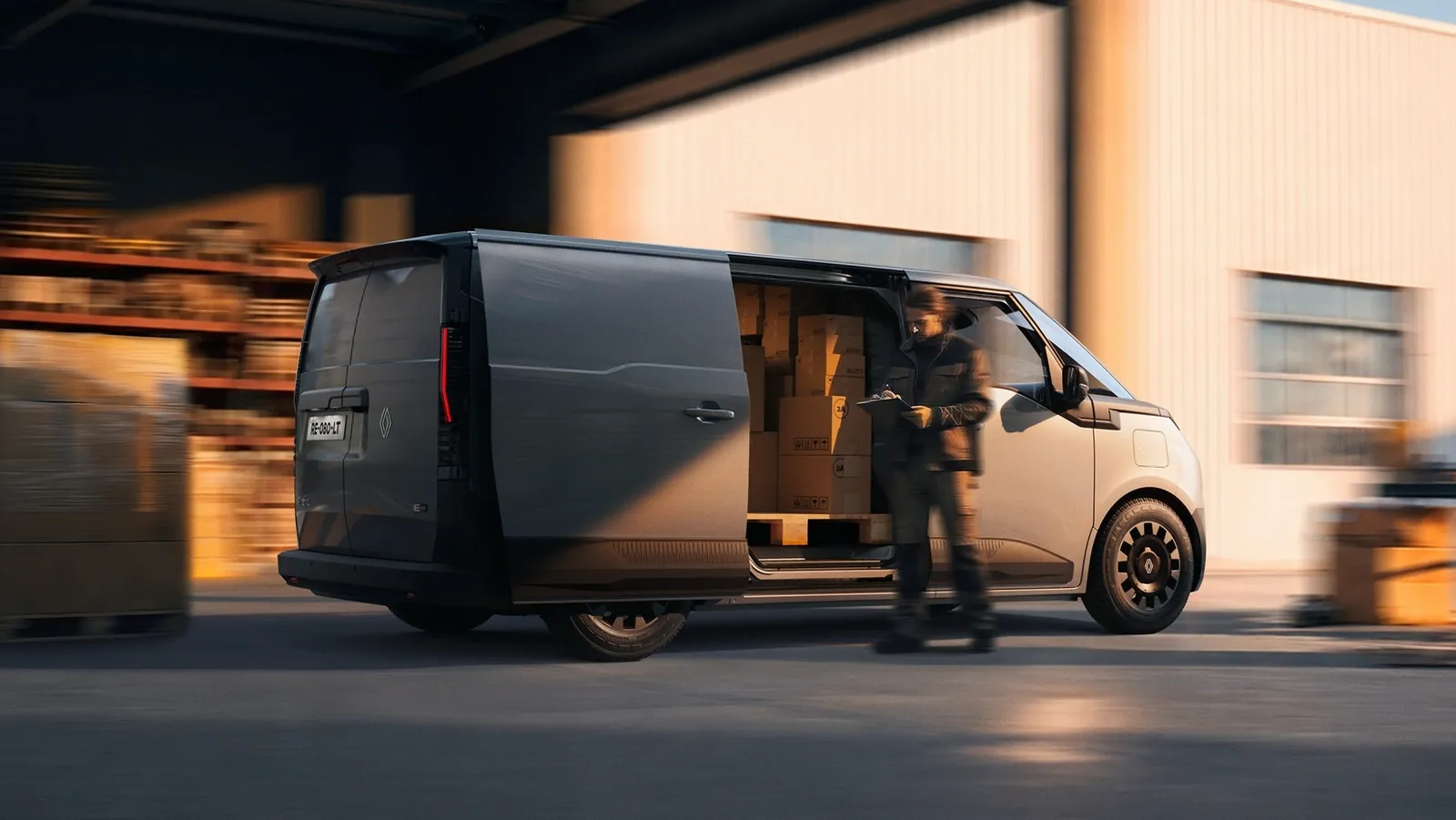
Renault revolutionizes electric vans with its new Trafic, offering 470 km of range and the ability to charge 380 km in just 20 minutes.
14/09/2026 16:00
Updated to
14/09/2026 16:00
Few vans hold as much symbolic importance for Renault as the Trafic, a model in production since 1980 that has seen over 2.5 million units manufactured across three generations. Its entry into the electric segment is thus not just another launch; it marks the beginning of a new era for the brand’s entire light commercial vehicle strategy, officially unveiled at the IAA Transportation exhibition in Hannover. Renault provided an early glimpse of it at the end of last year.
The interesting aspect of the new electric Trafic van E-Tech is not only that it eliminates the internal combustion engine but also that it is developed from scratch as an electric vehicle on a platform designed specifically for this purpose. It is also Renault’s first commercial vehicle built under the Software Defined Vehicle concept, meaning a vehicle whose behavior and functions can continue to evolve through software updates after leaving the factory.
An electric platform from the ground up
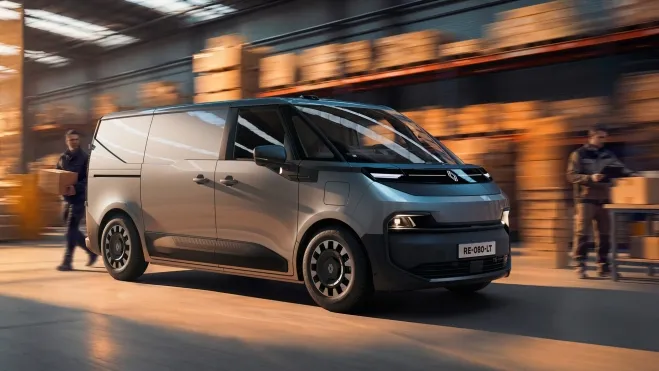
Unlike previous generations, this Trafic is not a combustion van modified for electric use, but rather a vehicle built on a 100% electric "skateboard"-style platform developed by Ampere, Renault’s electric vehicle division. Its design allows the battery to be placed under the vehicle floor, freeing up cargo space—an advantage that is particularly important in a segment where every cubic meter counts for professionals who use it daily.
The main propulsion system relies on an electric motor with 150 kW (204 HP) of power and a torque of 345 Nm. The architecture also allows for the inclusion of a second electric unit, one per axle, to provide all-wheel drive in models equipped with it. With this setup, the electric Trafic can tow up to 2,000 kilograms, carry a payload of 1.3 tons, and have a usable volume of up to 5.8 cubic meters. It offers space for three euro pallets and a loading height of 53 cm.
Two batteries for two modes of operation
Renault has chosen to offer two battery options depending on the intended use of the vehicle. The Comfort Range uses NMC chemistry and provides a range of up to 470 kilometers under the WLTP cycle, designed for longer trips. The Urban Range, with LFP chemistry and free of nickel or cobalt, offers around 350 kilometers, sufficient for urban fleets with predictable daily distances and lower manufacturing costs. Renault estimates that the Trafic E-Tech will be able to cover 690 kilometers in urban conditions.
The 800-volt electrical architecture is one of the most significant technical advantages of the new electric Trafic. Thanks to it, the vehicle can go from 15% to 80% charge on direct current in approximately 20 minutes, regaining up to 280 kilometers of range (380 kilometers in urban driving) during that time. This is a crucial figure for any professional fleet, where every minute of idling represents an opportunity cost.
Two body styles designed to maximize space
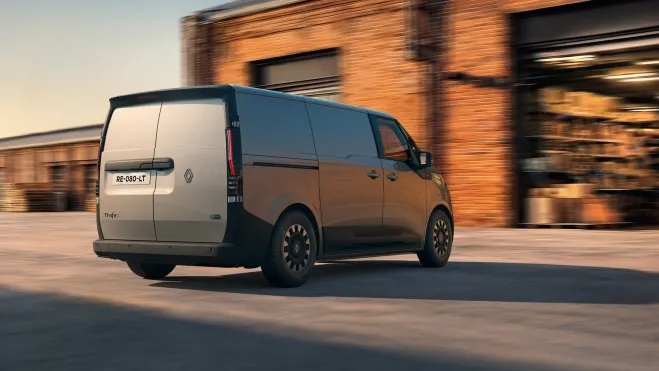
The new Trafic will be available in two body lengths. The L1 version is 4.87 meters long and 1.92 meters wide, with a cargo volume of 5.1 cubic meters. The L2 version, with a 40-centimeter longer wheelbase, reaches 5.27 meters in length and has a capacity of up to 5.8 cubic meters. In both cases, the vehicle’s height remains at 1.90 meters, a figure deliberately chosen to allow the van to access underground parking spaces, which are common in urban delivery tasks.
The new electric Trafic will be manufactured at Renault’s plant in Sandouville, France, on the same assembly line as the version with a combustion engine. The same plant will also handle any modifications requested by customers, many of which are managed by Qstomize, Renault’s subsidiary specialized in customizing and adapting light commercial vehicles.