
Renault CEO: Those who use our platforms must design their cars differently
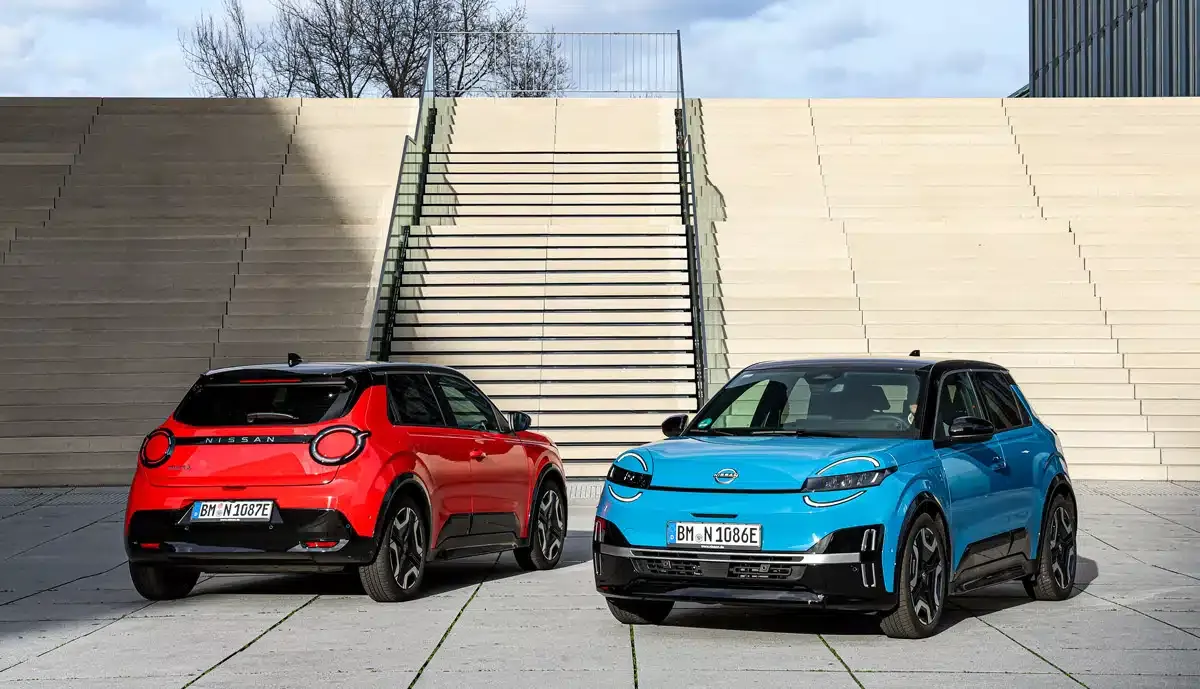
Image: Nissan
Renault aims to create greater differences between its own models and those of competitors based on the company’s platforms in the future. The firm has various partnerships for producing vehicles for other manufacturers, especially using the RGMP Small platform. This platform is used for Renault’s electric cars such as the Renault 5, Renault 4, and Twingo.
Currently, the Nissan Micra (featured image) is produced based on the Renault 5. Additionally, production of the Nissan Pixo, built on the Renault Twingo platform, is upcoming. There are also agreements with Ford and Mitsubishi for manufacturing future models. Notably, the Micra bears a strong resemblance to the Renault model, with these electric compact cars differing mainly in the design of their front and rear lights.
In the past, Renault offered partners various levels of customization, including tailored body panels, though this increased production costs. According to Autocar, due to confidentiality agreements, executives at Renault did not have early access to the designs of cars produced for competitors. The lack of design changes in the Micra reportedly caused frustration internally.
François Provost, head of the Renault Group, has now adjusted the system introduced by his predecessor Luca de Meo, according to Autocar. The goal is to ensure that future models from competitors are more distinctly different from Renault versions. He told the automotive website that insufficient differentiation had been requested in the past.
As an example, Provost cited Renault’s subsidiary Dacia’s small electric SUV, the Spring: Although it shares the same platform as the traditional compact car Renault Twingo, the vehicles appear to be different models. The group’s CEO stated that he will not enter into partnerships without adequate differentiation. He expressed this view to Ford CEO Jim Farley, who emphasized that a partner vehicle must be recognizable as a Ford.
"That’s why I prefer to engage in fewer collaborations with strategic partners who are only interested in a one-time, tactical partnership, and instead focus more on long-term partnerships," said Provost. "You’ll see that each of them differs significantly from the others."
Also interesting
About the author
Thomas Langenbucher is an expert in electromobility with professional experience in the automotive and finance industries. Since 2011, he has been covering electric vehicles, sustainable technologies, and mobility solutions on ecomento.de. Learn more.
Reader interactions