
Renault 8 Gordini Concept unveiled as one-off 266bhp EV
Features · News
'La Gorde' is back, but with two seats, a coupé bodystyle, and an all-electric motor...
GE
George East
24 September 2026 · 6 min read
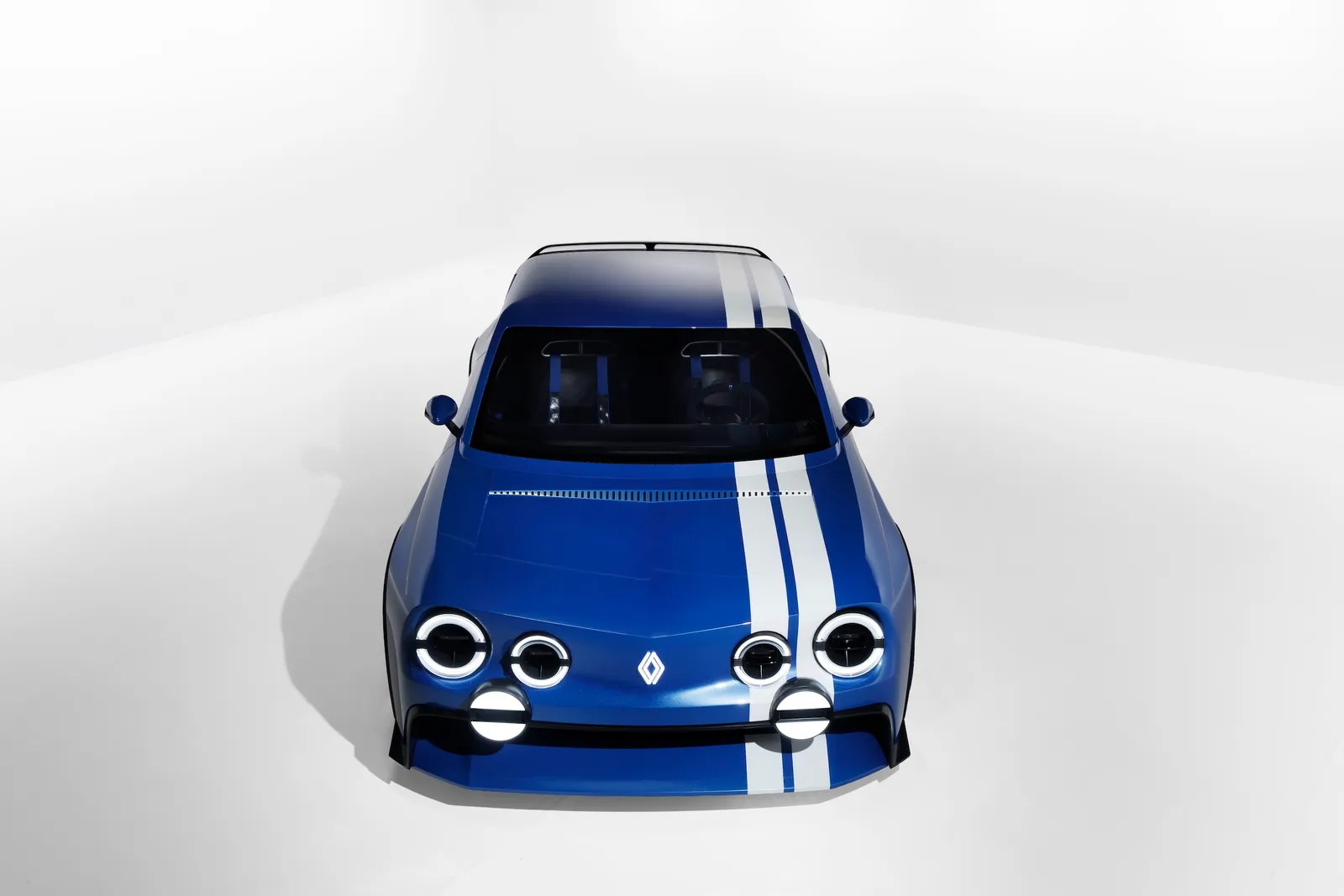
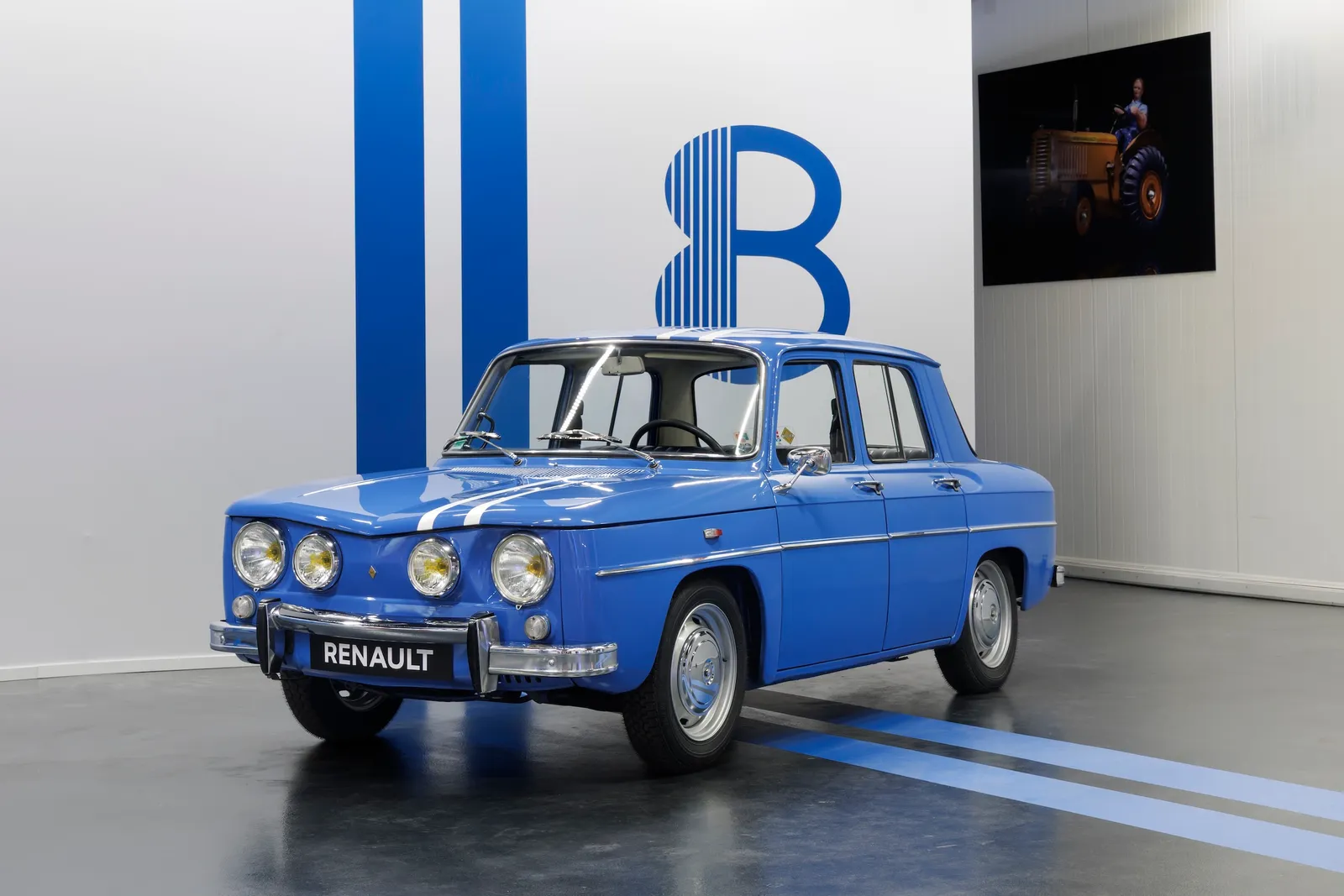
Renault has taken the wraps off of its Renault 8 Gordini Concept, a one-off, all-electric tribute to the original “Gorde” of 1964.
The Renault 8 Gordini Concept is the latest in a line of historic Renaults re-imagined as EVs. Previous examples include the R17 by French product/industral designer, Oro Ïto, and the Renault 5 Diamant, an art car created in collaboration with Paris-based designer and architect, Pierre Gonalons.
A fully in-house design
Unlike the R17 and the R5 Diamant, the Gordini 8 Concept is 100% Renault in its design, and the result of over 300 in-house sketches from the French firm’s design team.
This EV version of the Renault 8 Gordini measures 4.12 metres long, 1.88m wide, and 1.27m tall. Most notably, its design team ditched the original’s four-door, four-seater saloon bodystyle in favour of a two-door, two-seater coupé setup.
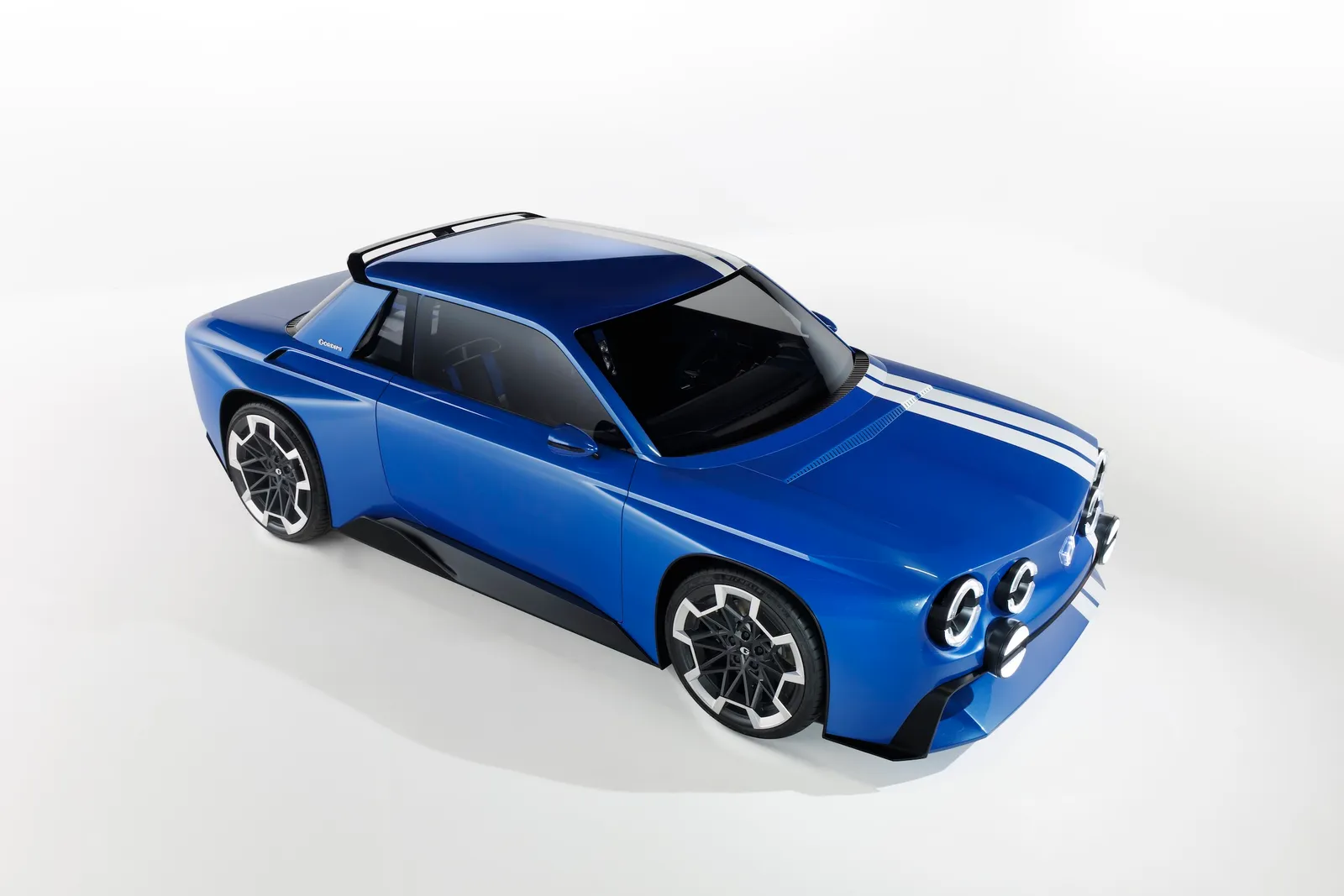
Nonetheless, its lineage is immediately evident courtesy of the six circular 3D headlights set in the bodywork up-front, and the aggressively V-browed bonnet.
Further nods to the original include the shell-shaped wing mirrors, modernised versions of the original ‘Gordini’ lettering and ‘8’ emblem, plus recessed embossing across along the waistline. A design feature of the original, the latter now directs airflow towards a rear air vent at the rear of the car.
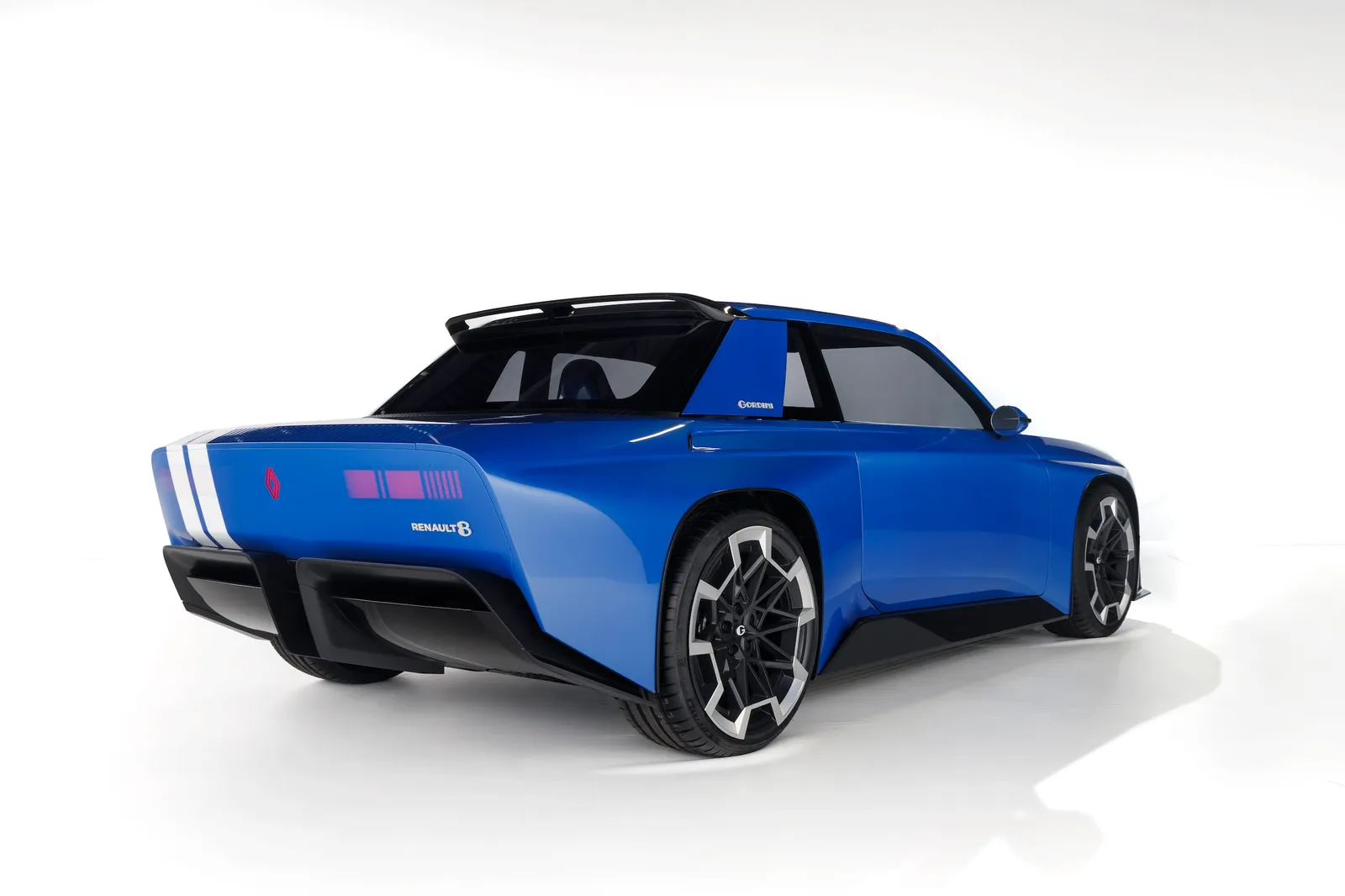
Around the back of the all, the sharply-raked Kamm tail with its widened, rectangular haunches are a nod to the original Renault 8 Gordini’s rear-wheel-drive (RWD) drivetrain, which was paired with a rear-mounted, 94bhp water-cooled engine. According to Renault’s vice-president of design, Alexandre Malval, “at the rear, the lights are perfectly flush. So much so that they are barely visible when switched off.”
Bringing together the past and the present
Renault hasn’t just used 8 Gordini Concept’s design as its inspiration. As with its 547bhp, tri-motor R5 Turbo 3E, the design is influenced by the “café racer” trend, which began in the early 20th century and is now prevalent in the world of reimagined classic motorcycles and cars.
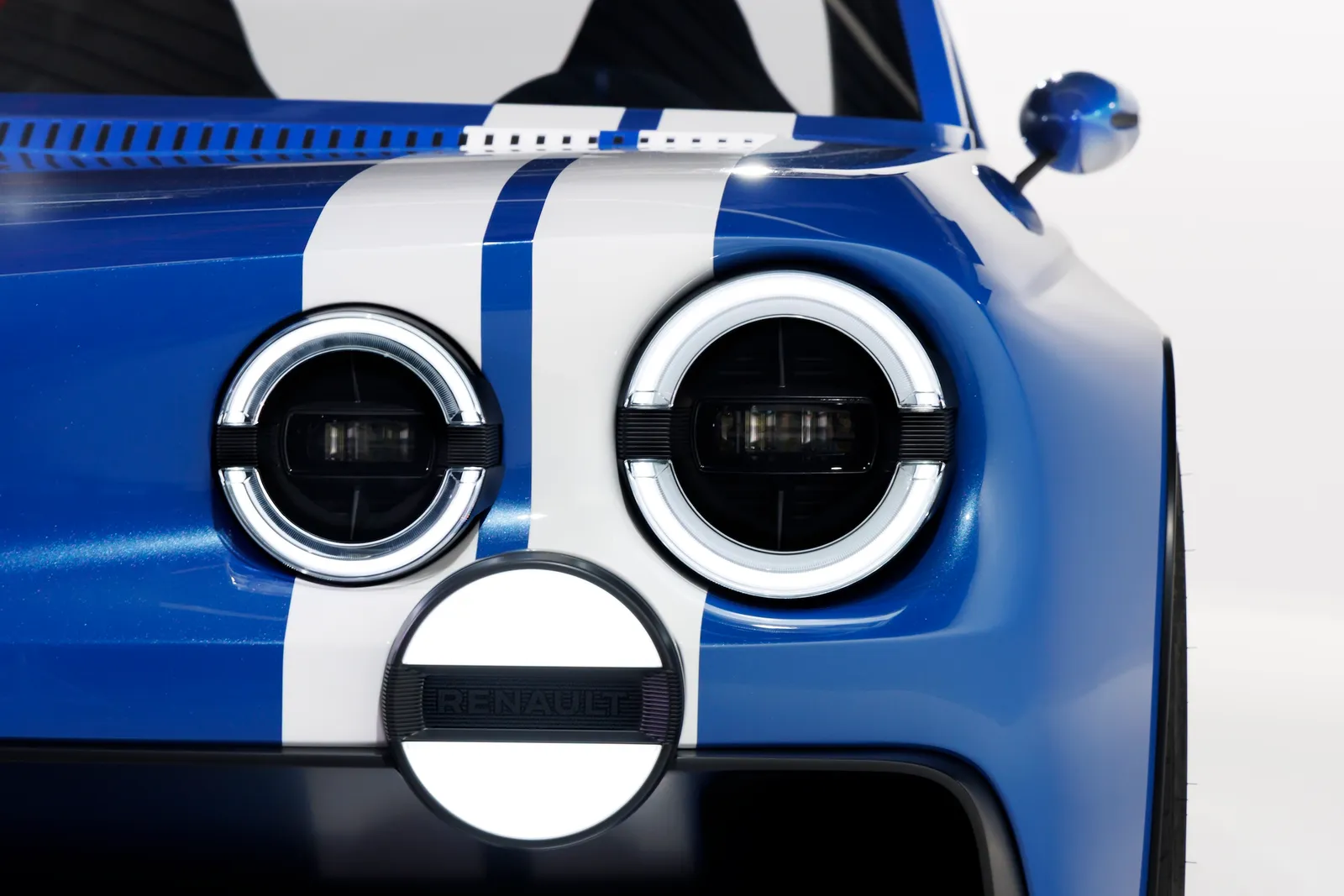
The idea behind the café racer philosophy is to accentuate the aesthetic qualities of the vehicle’s raw materials and mechanical components by remove any non-essential features.
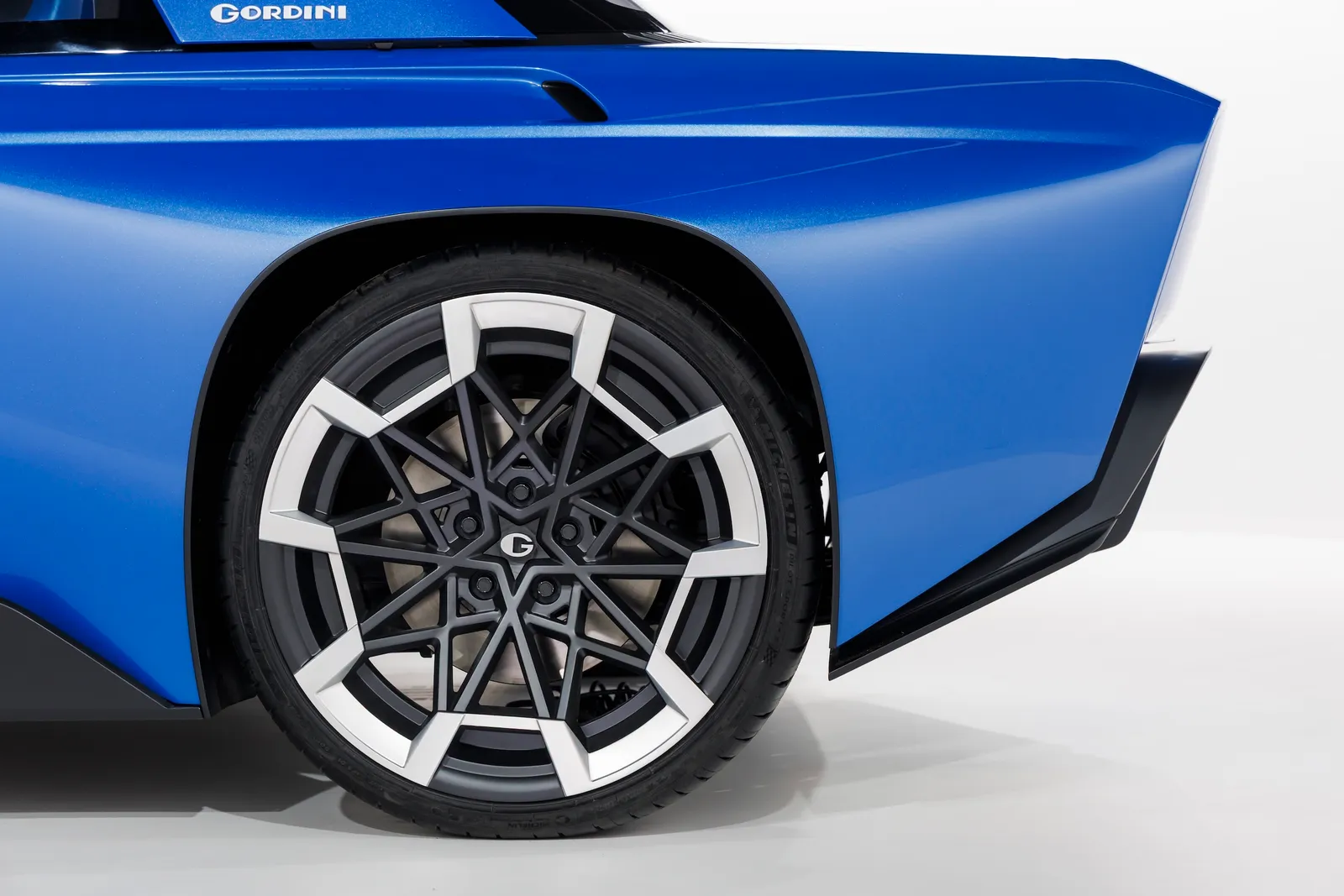
Adhering to this form of design language, the original Renault 8 Gordini’s chrome side moulding is now integrated into the body work to become a feature line. Other split lines have been removed to enhance the car’s sense of high kinetic energy and forward motion – for example, there is no shut line for the bonnet, which can be removed as a singular unit as per a number of racing cars.
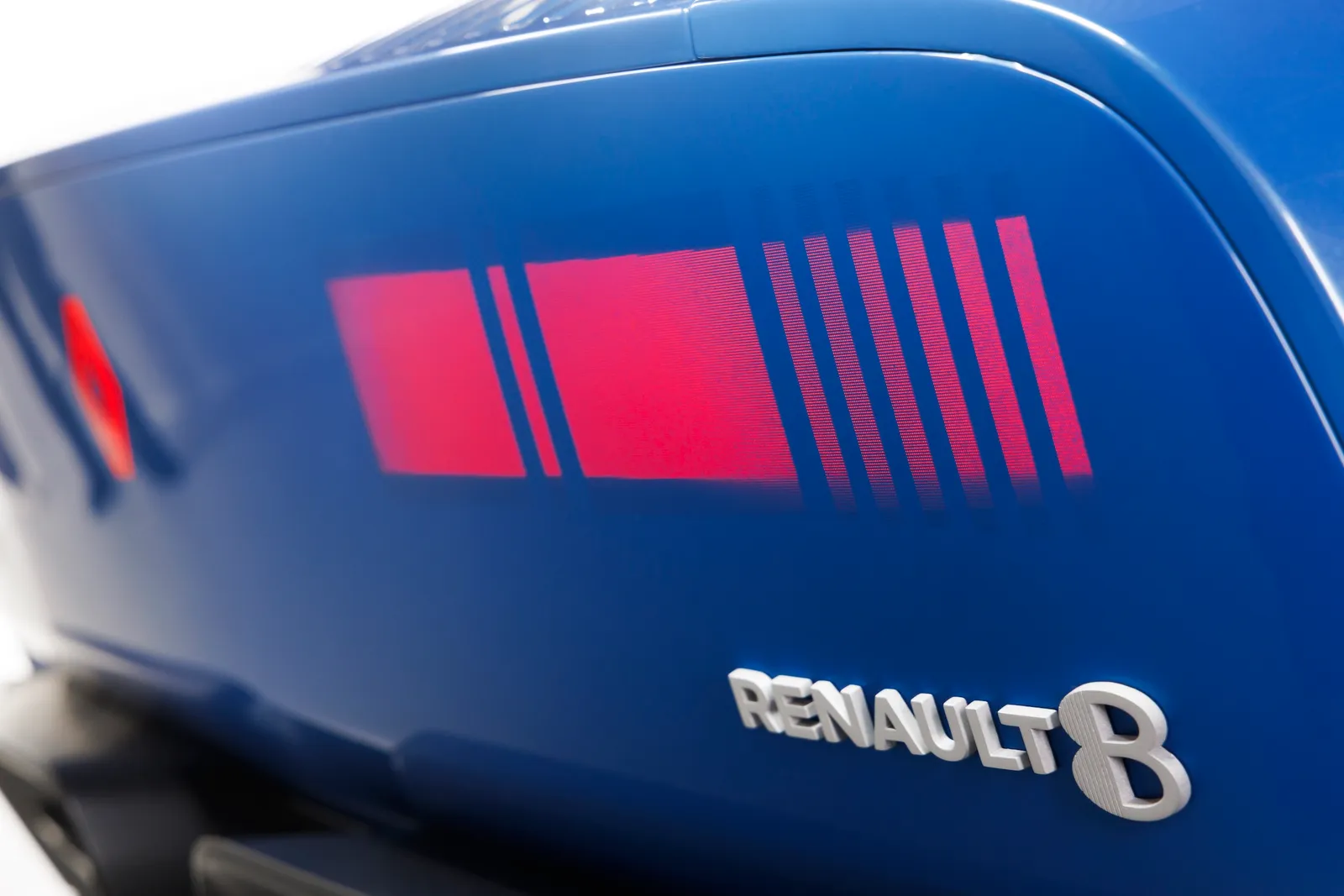
Its designers have also used the white Gordini ‘double stripe’ as a structural component, instead of a pure decorative feature. The grille at the base of the windscreen and the illuminated graphic pattern inside the rear lights align with the stripe. Inside, the double stripe extends into the passenger compartment, continuing across the top of the dashboard, switching from white to blue.
The beauty of raw materials and mechanical components
The café racer theme continues inside the 8 Gordini Concept by blending a minimalist layout with an array of exposed high-end materials.
“We limited the number of parts inside the cabin, meticulously crafting each one with understated lines,” explained Renault interior designer, Robin Biondi. “They are part of both the structure and the trim. Nothing is superfluous.”
The brushed dashboard visor running the width of the cabin pays tribute to the original, and the dashboard itself is finished in the same material with an embedded set of six circular digital dials matching the car’s front end.
The console and switchgear where the original’s R8 Gordini’s transmission tunnel would have been is also trimmed in brushed aluminium. According to Renault, “the focus is clearly on driving. The only feature that catches the eye is the red dot on the stopwatch button in the centre of the dashboard.”
A full rejection of plastic and carbon fibre
In fact, there is no plastic or carbon fibre to be found anywhere throughout the Renault 8 Gordini Concept’s cabin.
The centre of the steering wheel and external part of the two bucket seats are upholstered in blue and black leather. Meanwhile, the centre of the seats are finished in matching blue corduroy. Their pattern of the former is derived from the original car. Meanwhile, the top-stitching running across the blue Alcantara-trimmed door panels is said to be inspired by a racetrack’s kerbs, and the steering wheel looks to be trimmed in the same coloured material.
Unfortunately, the Renault 8 Gordini Concept won’t make it into production. Beyond its 266bhp power output, which we expect comes from a rear-mounted electric motor, Renault has provided no further technical information about the car’s battery capacity or range.
It will, however, make its public debut at the Renault Carwalk in the centre of Paris on the Champs-Élysées on September 24, 2026. A handful of weeks later, it will go on display to the public at this year’s Paris Motor Show, which runs from October 12 – 18. To read EV Powered’s list of all the electric cars worth checking out at this year’s event in the French capital, click here.