
The Renault 5 now has a range of up to 430 km WLTP and an LFP battery. The cheaper version is currently unavailable in Germany.
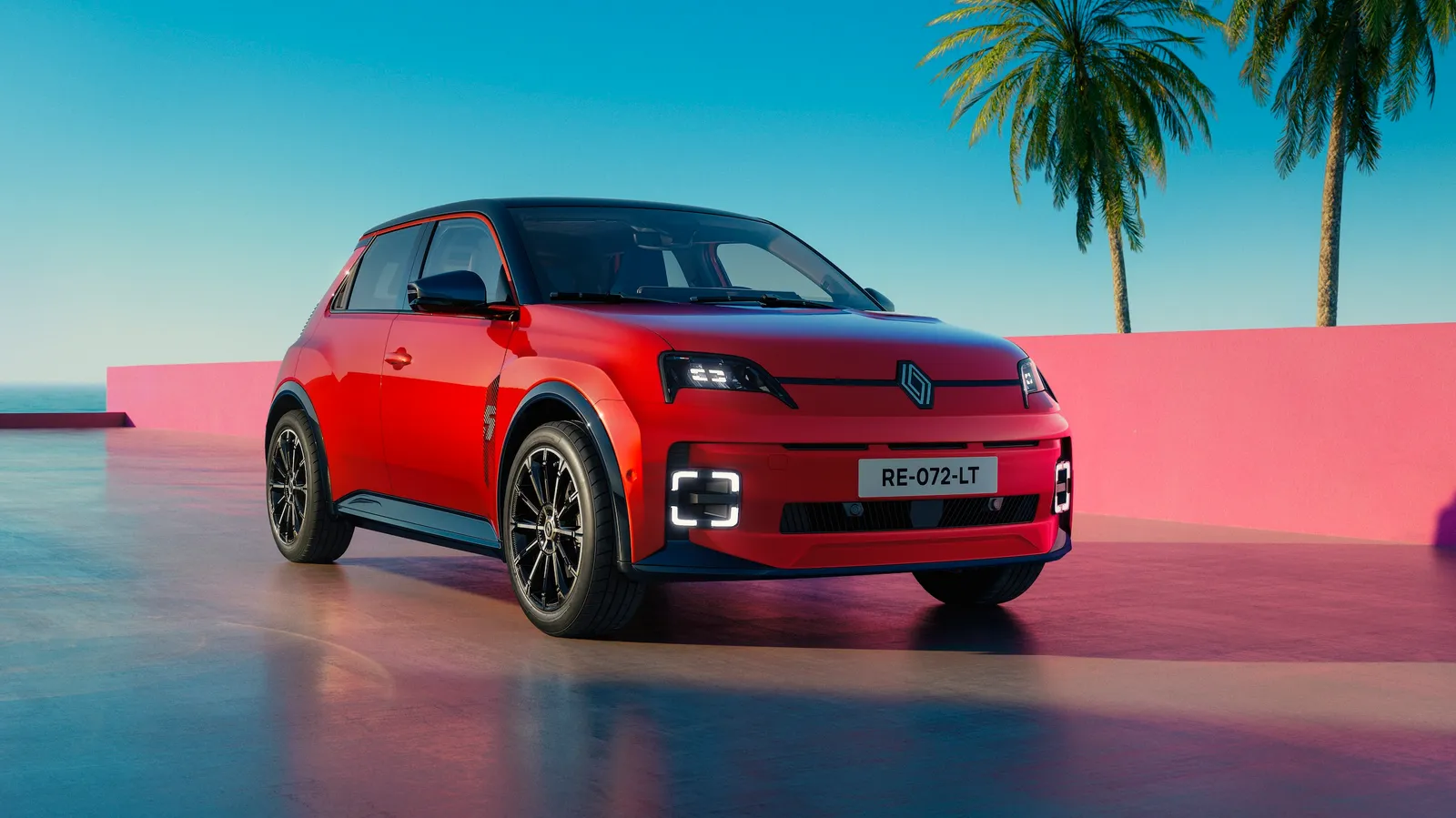
Renault has refreshed the electric Renault 5 for the 2026 model year, increasing the range to 315 km WLTP in the 40 kWh version and to 430 km WLTP in the 52 kWh variant. A new base version with an 80 kW engine and a 36.5 kWh LFP battery has also been added, offering up to 305 km WLTP range.
Table of Contents
Show
Hide
Two things are most important for drivers here. First, the larger battery results in an extra 20 km on paper. Second, Renault is shifting the R5 toward the cheaper LFP chemistry, but not everywhere.
New Five version: 80 kW, 36.5 kWh LFP and 80 kW DC
The new base configuration is part of the Five trim level. Renault pairs an 80 kW engine with a 36.5 kWh LFP battery, claiming a range of up to 305 km WLTP. Previously, the two known variants had 90 kW and 40 kWh, as well as 110 kW and 52 kWh batteries, both using NMC chemistry.
In some markets, such as France, the new 80 kW plus LFP setup replaces the previous 90 kW plus 40 kWh configuration. There is also one practical change: the new Five finally gets fast DC charging up to 80 kW, which was not available in this version before. AC charging remains at 6.6 kW.
The engine is a “Gen 2 Evo” unit, known from the Twingo E-Tech Electric. There Renault limits it to 60 kW, while in the R5 it offers full 80 kW. The battery itself features a cell-to-pack design, without separate module levels, and is structurally integrated with the car’s floor.
Renault also highlights urban performance: 0-50 km/h in 3.5 seconds. This sounds reasonable for a small electric car, though it is of course an urban sprint, not a full 0-100 km/h time.
There’s however a catch for now. Renault previously announced in Germany a Five version starting at 24,900 euros, but it wasn’t available in the configurator. Everything suggests the new Five with LFP battery won’t reach Germany for now. It’s also not available in Poland yet.
Longer range, lower prices, and some interior changes
In the two previous versions, Renault improved the vehicle’s aerodynamics and battery electronics. The car now has a lower ground clearance and redesigned mirrors. As a result, the range increased from 312 to 315 km WLTP for the 40 kWh battery and from 410 to 430 km WLTP for the 52 kWh battery. The second figure looks particularly good compared to before, though we’re still talking about WLTP conditions, not Polish winters.
Meanwhile, the manufacturer reduced prices. In Germany, the entire price list dropped by 1,710 euros, with the base R5 starting at 26,290 euros for the Evolution 120 Urban Range. In Poland, the 2026 model year looks like this:
Evolution 120 KM urban range: 121,500 zł
Techno 120 KM urban range: 130,500 zł
Evolution 150 KM comfort range: 134,500 zł
Techno 150 KM comfort range: 143,500 zł
Iconic Cinq 150 KM comfort range: 152,500 zł
Roland Garros 150 KM comfort range: 158,500 zł
New colors DeZir Red and Dolomite Grey are also available, along with new 18-inch wheels featuring a gold finish, different interior trims, and decals for the roof and doors. Starting from the Techno version, the cabin includes a ventilated wireless charger and 4G-enabled e-call.
Renault also adds automatic switching between Eco, Comfort, and Sport modes depending on driving style. The Multi-Sense button disappears from the steering wheel, but manual mode changes can still be made via the OpenR Link screen or verbally. On the higher-end Iconic Five and Roland Garros versions, certain safety systems become standard, including blind spot monitoring, cross-traffic alert, and Active Driver Assist with emergency braking.
There’s another digital feature. Through an OTA update, Google’s Gemini will be added to the car, replacing Google Assistant. Renault states that “Gemini goes far beyond a conventional voice assistant,” implying more natural conversations. Marketing as usual, but the platform change is real.
The refreshed Renault 5 will be unveiled by the manufacturer at the 2026 Paris Motor Show, held from October 12-18, with orders for the new model year already open in European markets where it is available.
The most interesting aspect here isn’t even the extra 20 km WLTP range, but rather that Renault is quietly introducing LFP batteries to this urban retro-EV, market by market. What do you think? Would such a version of the Five at around 110-115 thousand zł make sense in Poland?
LovEV Newsletter
Want more content like this?
Sign up — we’ll send you a weekly summary once the newsletter starts.