
World record of 503.17 km/h. The YANGWANG U9 Xtreme exceeded 500 km/h.
In the article
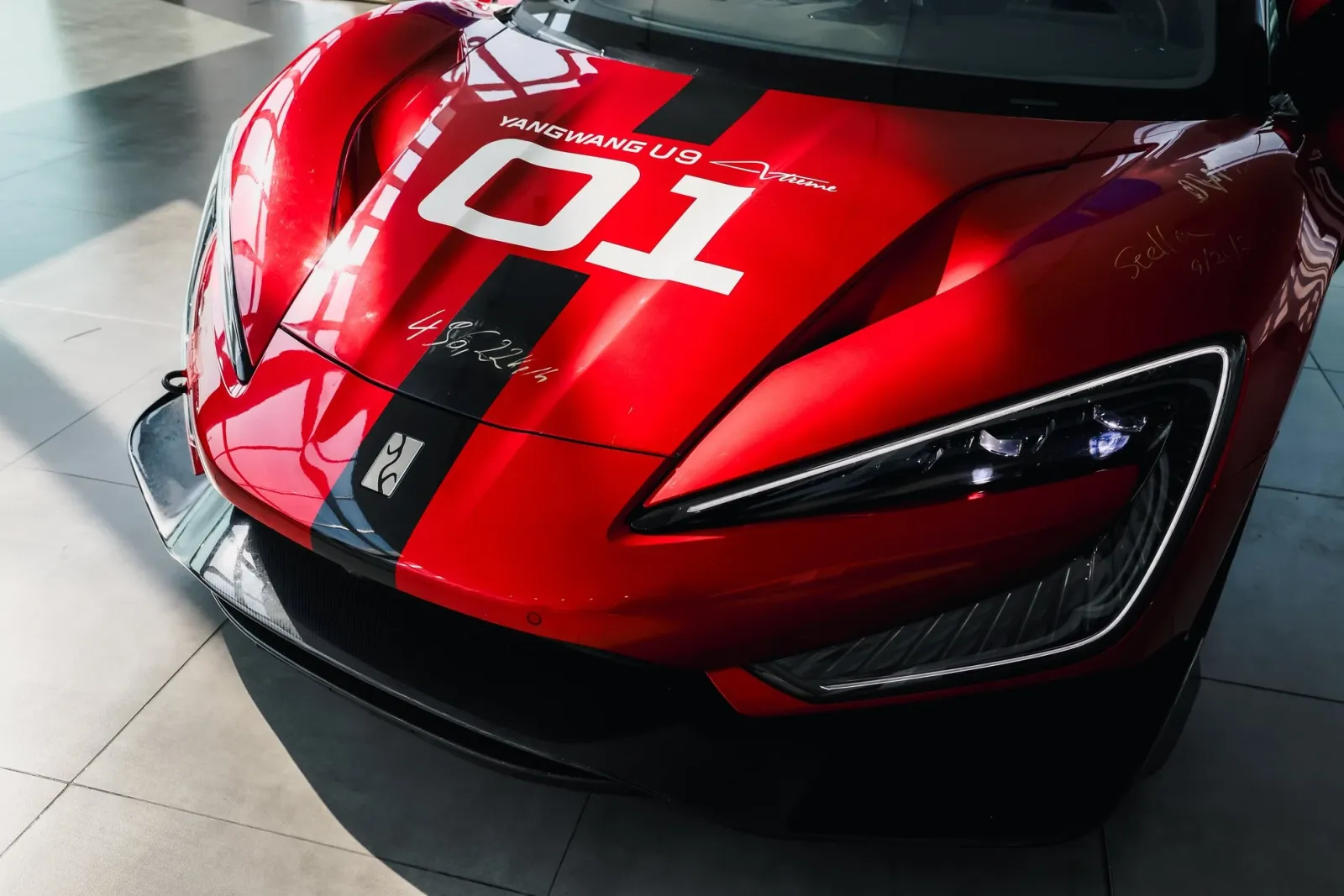
YANGWANG U9 Xtreme reached 503.17 km/h. The previous record for the same model was 496.22 km/h
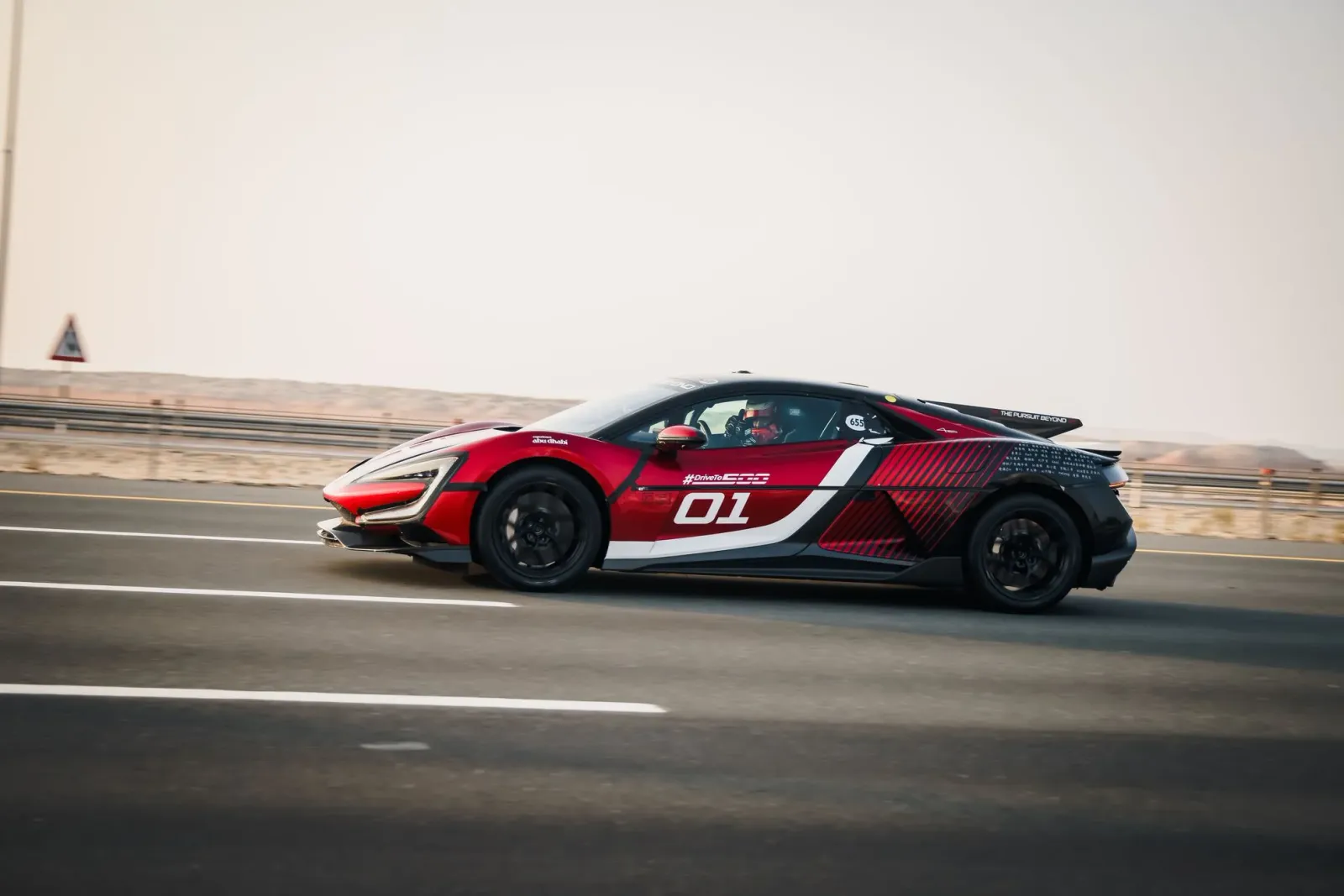
The test was conducted on November 1, 2026, on public road E11 in the Al Dhafra region of Abu Dhabi
The result was recognized by the FIA, and the car set two Guinness World Records for one-way speed
The U9 Xtreme’s electric drive system generates 3019 horsepower
Driving again was Marc Basseng, a racing driver specializing in long-distance races
The Giti tires are also record-breaking, having been recognized as the fastest tires for road and electric vehicles
YANGWANG U9 Xtreme’s world record: 503.17 km/h on a public road
YANGWANG broke its own record. Last year’s U9 Xtreme speed of 496.22 km/h was set at the German ATP Papenburg test track. Now the benchmark has risen to 503.17 km/h. According to the manufacturer’s press release, this speed was recognized by the FIA (International Automobile Federation), the governing body for global motor sports.
The car has also been entered in the Guinness Book of Records in two categories. The first is for the highest speed achieved by a production car in a one-way run. The second is for the highest speed achieved by a production electric car in a one-way run. This means U9 Xtreme is now the fastest production car in this category, regardless of propulsion type, thus surpassing even internal combustion engine vehicles.
It is worth noting the addition of “in one direction.” The record applies to a one-way trip, not the average of two trips in opposite directions. This caveat is important to keep in mind when comparing it to other results in automotive history.
The record also credits the tires. The Giti tires used by the U9 Xtreme were recognized as the fastest tires for electric vehicles as well as the fastest tires for road cars in the world.
Abu Dhabi instead of a test track: why this attempt was more difficult
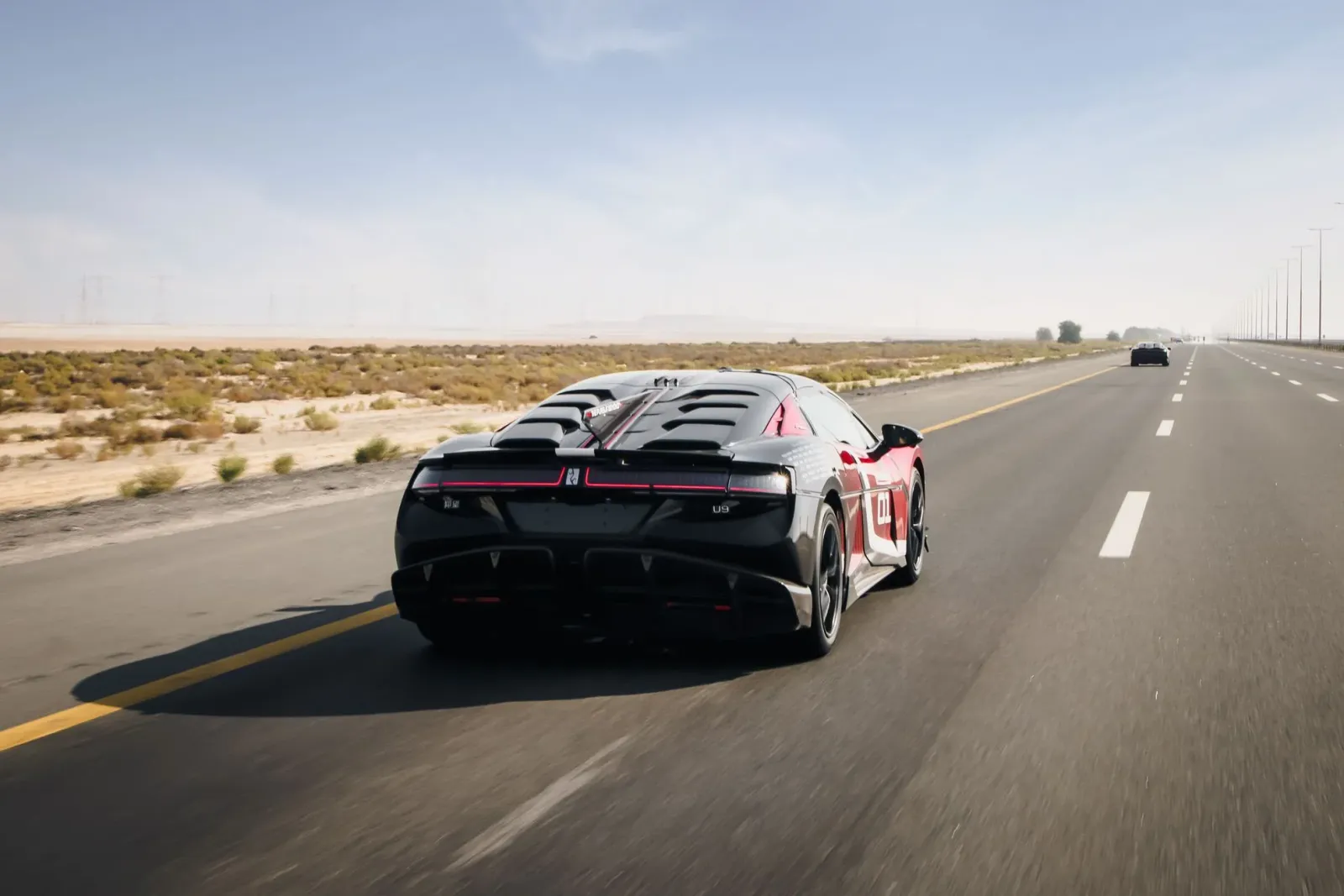
The record-breaking drive took place on the Sheikh Khalifa Bin Zayed International Road (E11) in the Al Dhafra region. It is a regular public road, not a specialized testing track. Local authorities closed 10 kilometers of the route for the team. The longest straight section where top speed could be achieved was about 7 kilometers long.
Preparing the road proved to be a major challenge. Due to its proximity to the desert and daily traffic, the surface had to be thoroughly cleaned. According to the manufacturer, even after that, every meter of the route was checked again to remove loose wire fragments from the cleaning brushes. At speeds over 500 km/h, these could pose a threat to the driver, the car, and the tires.
Marc Basseng emphasizes that this is a completely different situation from driving on a track: “This time we took on a totally different challenge: breaking speed limits on public roads in Abu Dhabi. Unlike a specialized test track, public roads present us with entirely different challenges, making precision, stability, and trust in the vehicle more important than ever. Breaking the world record once is extraordinary, but repeating such a feat in such a different environment is truly unique.”
Two days of testing and engineers’ night adjustments
The entire operation took two days of testing. On October 31, the team conducted two test runs, during which the YANGWANG U9 Xtreme reached 490 km/h. That’s a high speed, but still lower than last year’s record.
YANGWANG’s engineers worked all night to refine the preparation procedures to ensure the battery and engines were at optimal temperature before each run. They also adjusted the angle of the rear wing to increase downforce on the rear axle. Additionally, they modified the suspension software to boost rebound damping, meaning greater resistance from the shock absorbers when the wheel returns after bending. This was intended to improve the car’s response to minor surface irregularities. The results came the next day: 503.17 km/h.
From 309 to 503 km/h. The record history of YANGWANG U9
The path to 500 km/h speed was very short by industry standards. According to the manufacturer, only three years passed since the U9 project began. The subsequent milestones were as follows:
January 2024: The standard U9 reached 309 km/h at Wuhan Hannan Airport in China
October 2024: The U9 reached 391.94 km/h at the ATP Papenburg track in Germany
August 2025: The U9 Xtreme made its debut on the same track, achieving 472.41 km/h
September 2025: A world record for production cars, at 496.22 km/h in Papenburg
November 1, 2026: 503.17 km/h on the E11 road in Abu Dhabi
BYD argues that the 500 km/h threshold has been the industry goal for a century, but conventional internal combustion engine systems prevented it from being achieved in a production car. The company attributes its success to its electric engine and battery technologies.
What BYD representatives say
Stella Li, BYD’s Executive Vice President, doesn’t hide her enthusiasm: “I always say that our engineers are young, brave, and maybe a little crazy – but in a positive way! (…) Even when the team celebrated last year in Germany the astonishing speed of 496.22 km/h, data analysis and discussions about how to take the U9X to the next level were already underway. The speed of 503.17 km/h is an incredible achievement that pushes the bar for fully electric vehicles even further than anyone could have imagined.”
What this world record means for electric mobility
It’s undeniable that this is primarily a marketing display of power. The information comes from the manufacturer’s press release, and a car with over 3000 horsepower is hard to consider a vehicle for the average driver. The result also applies to a specific one-way driving category.
Nevertheless, it’s hard to remain indifferent to this. Not long ago, electric cars were mainly associated with urban driving and limited range. Today, this electric vehicle is the fastest production car in its category, and its world record has been recognized by the FIA. For BYD and the YANGWANG brand, this is a strong argument in competing for premium segment customers. For the entire industry, it’s a signal that electric powertrains no longer have any inferiority complex, even in areas where internal combustion engines have dominated for decades.
Maciej Gis