
Aviloo’s ranking of battery degradation in electric cars. Hyundai Ioniq 5 is the best, Nissan Leaf ZE1 and Renault Zoe are the worst.
Aviloo has released a comprehensive report on the decline in battery capacity in electric vehicles based on mileage. Much depends on the brand and mileage, and it has also been proven that smaller battery packs (=frequent charging) with poor cooling degrade faster than larger batteries. Teslas perform relatively poorly, while the Model Y fares better. In almost all electric vehicles, battery degradation starts quickly before slowing down. However, a lot depends on the specific vehicle, as some buyers are simply unlucky.
Battery Capacity Decline in Electric Vehicles by Mileage
The first graph, showing the decline in capacity after 50,000 kilometers of driving, is interesting. The clear losers in this comparison are the two vehicles with small batteries and no liquid-cooled cells: the Nissan Leaf ZE1 (previous generation, passive cooling) and the Renault Zoe (air cooling), both of which are no longer in production. In modern cars, a median degradation rate of around 5 percent is the market standard. Against this backdrop, the Tesla Model 3 performs poorly, while the Hyundai Ioniq 5 and Mercedes EQA do well. In all electric vehicles, the variation in measurements (from the weakest battery to the best) is quite large, at 8-10 percent.
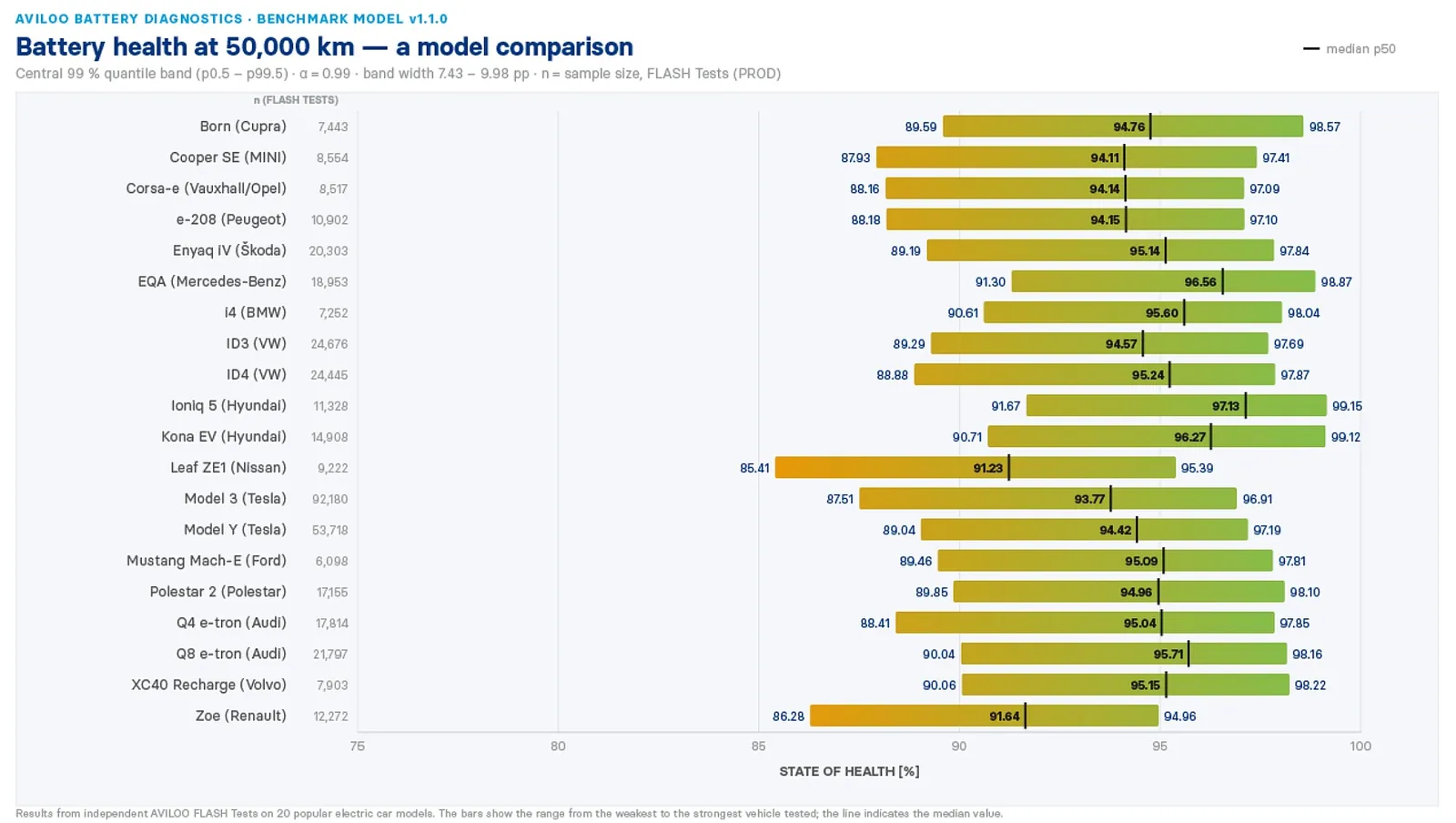
50,000 kilometers is less than four years of typical use in Poland. For company vehicles, this is roughly the duration of a standard lease, about two years. The figures come from a quick test (Flash), which provides less accurate results.
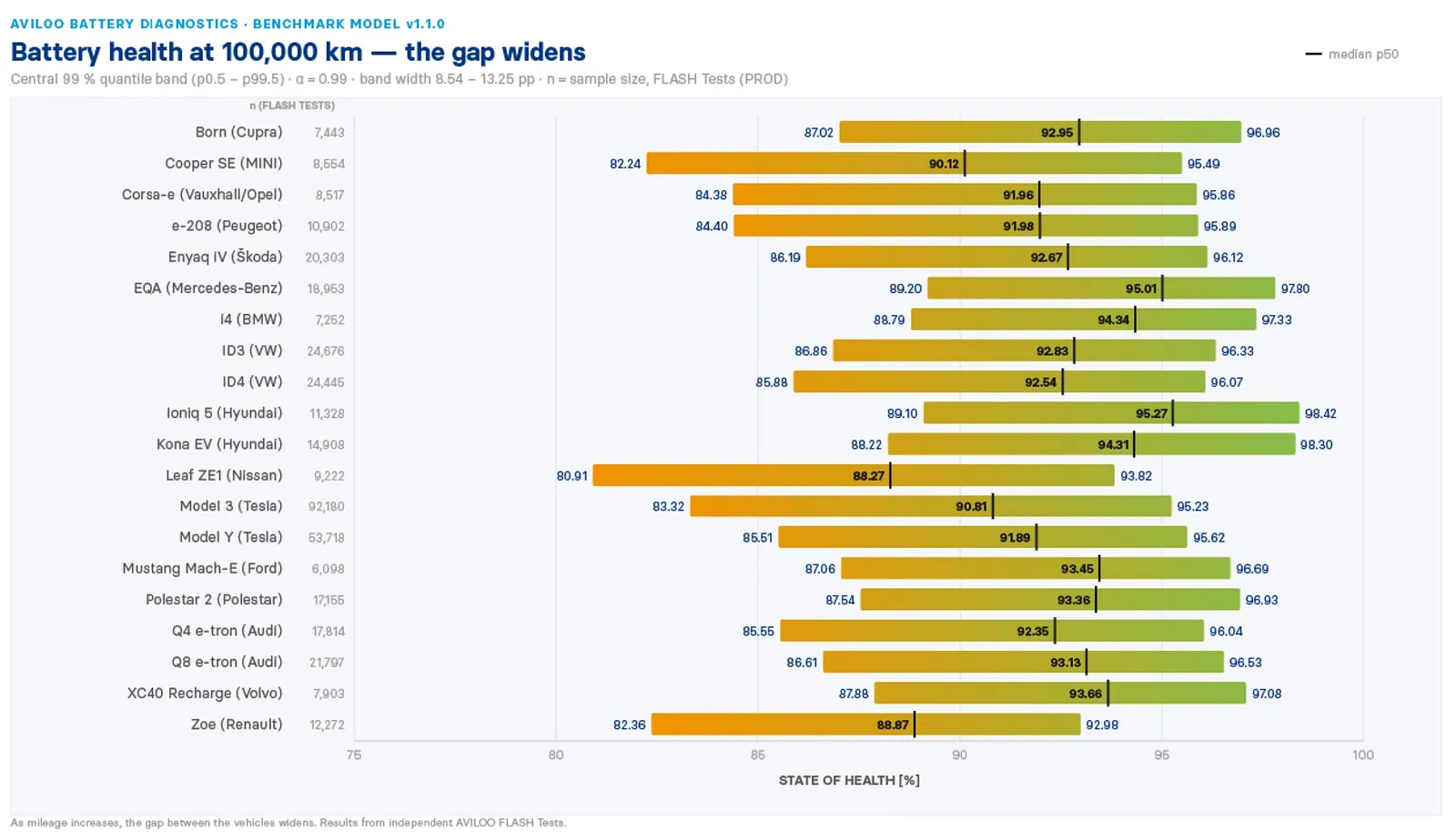
At 100,000 kilometers, the gap between the best and worst vehicles widens, with their performance metrics dropping more significantly. The Hyundai Ioniq 5 and Mercedes EQA show a level of degradation that other electric cars experienced at 50,000 kilometers. The BMW i4 and Hyundai Kona Electric perform well in this regard. It’s difficult to determine a single median value that could serve as a standard for all vehicles; Teslas have a degradation rate of 9-8 percent, followed closely by models based on the MEB platform. Surprisingly, the Mini Cooper approaches 10 percent degradation, with some units even catching up to the Nissan Leaf and Renault Zoe. Could it be due to smaller battery capacity, resulting in more cycles of operation?
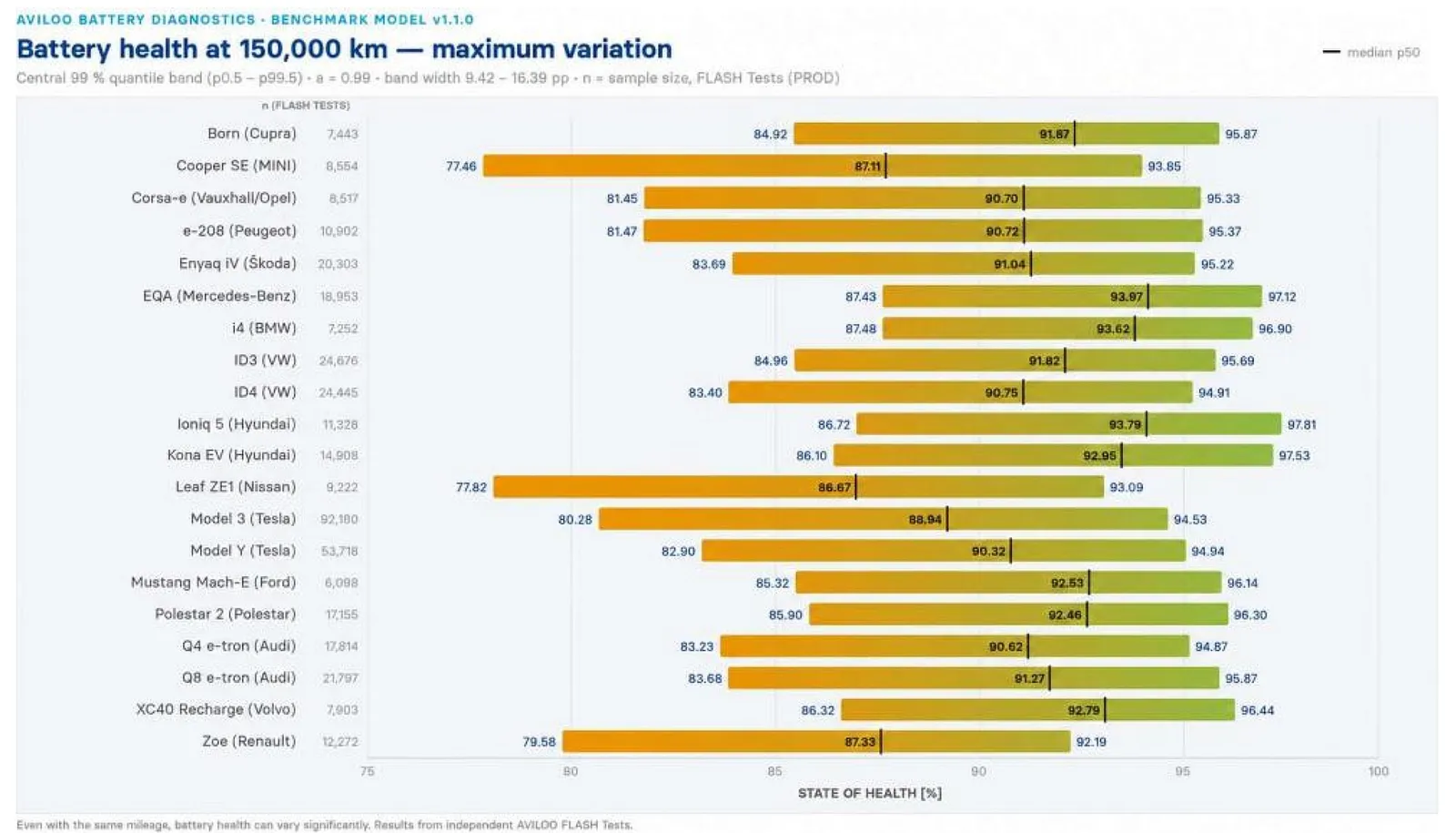
At 150,000 kilometers of mileage, there is no longer a single approximate value—variations between models and individual vehicles become significant. On the positive side, in almost all electric cars, the decline in battery capacity slows down noticeably, with the median remaining around 90 percent of its original level (degradation of about 10 percent). However, there are unfortunate cases where vehicles have seen their capacity drop to 83…82…81…80 percent. The Mini Cooper shows the highest variation in measurements, with the worst units performing even worse than the Nissan Leaf or Renault Zoe. The Tesla Model 3 and Opel Corsa-e also exhibit high variation:
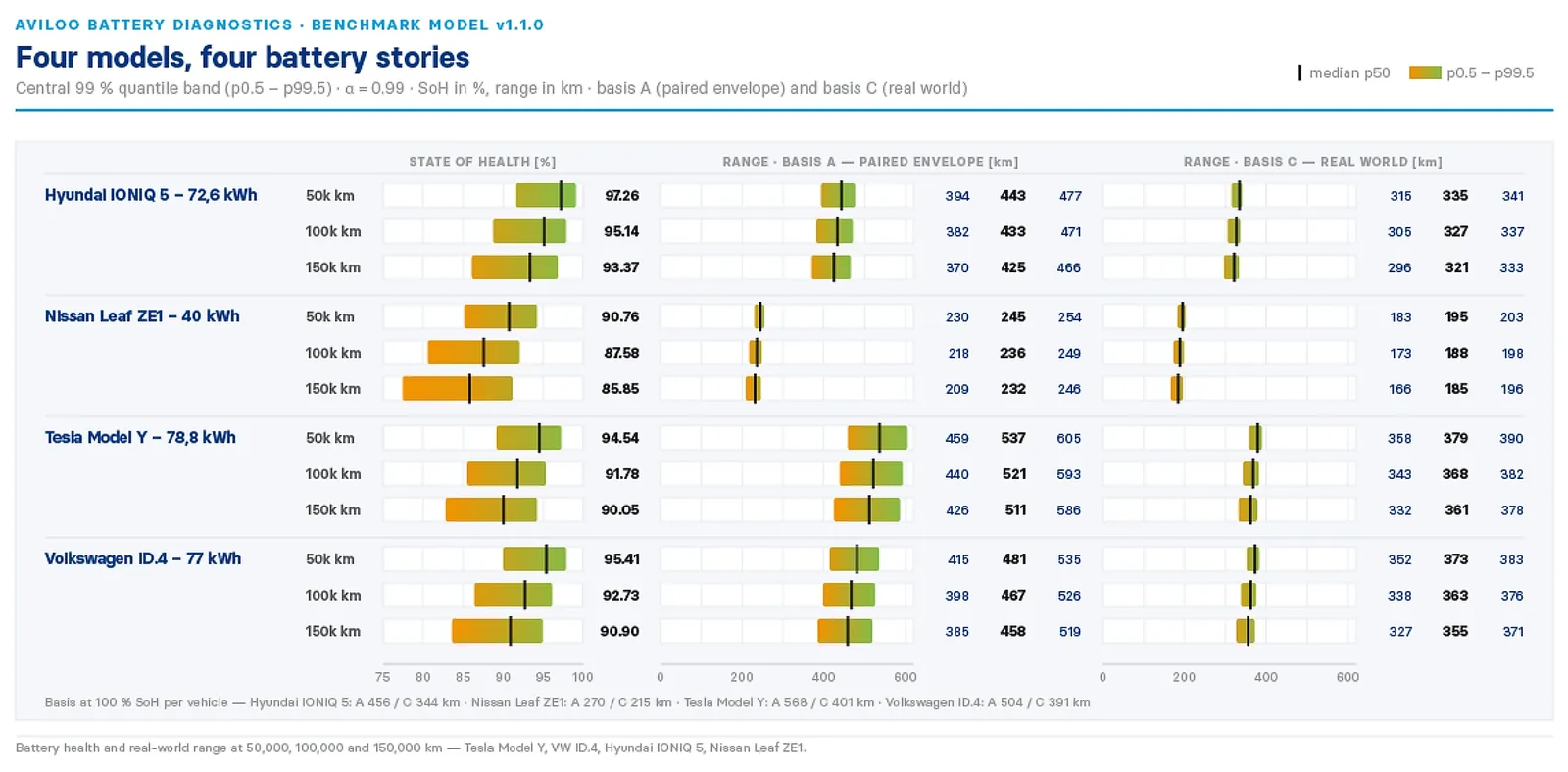
Comparing the four different models makes it clear that the lack of cooling and small capacity in the Nissan Leaf ZE1 are a recipe for rapid degradation. In some units, this degradation is extremely fast. Hyundai, on the other hand, used cells in the Ioniq 5 that exhibit predictable and steady capacity loss. The Tesla Model Y and Volkswagen ID.4 fall between these two electric vehicles. Unfortunately, a different generation of cells is used in all of them now, as the Nissan Leaf ZE1 has been replaced by the new Nissan Leaf; therefore, the values below are primarily relevant in the used car market.
Article Rating
Reader Ratings
[Total: 2 votes Average: 4]
Don’t miss new content — CLICK and FOLLOW Elektrowoz.pl on Google News. You might also be interested in the following ads: