
The Range Rover Electric is supposed to retain the qualities of its gasoline-powered version.
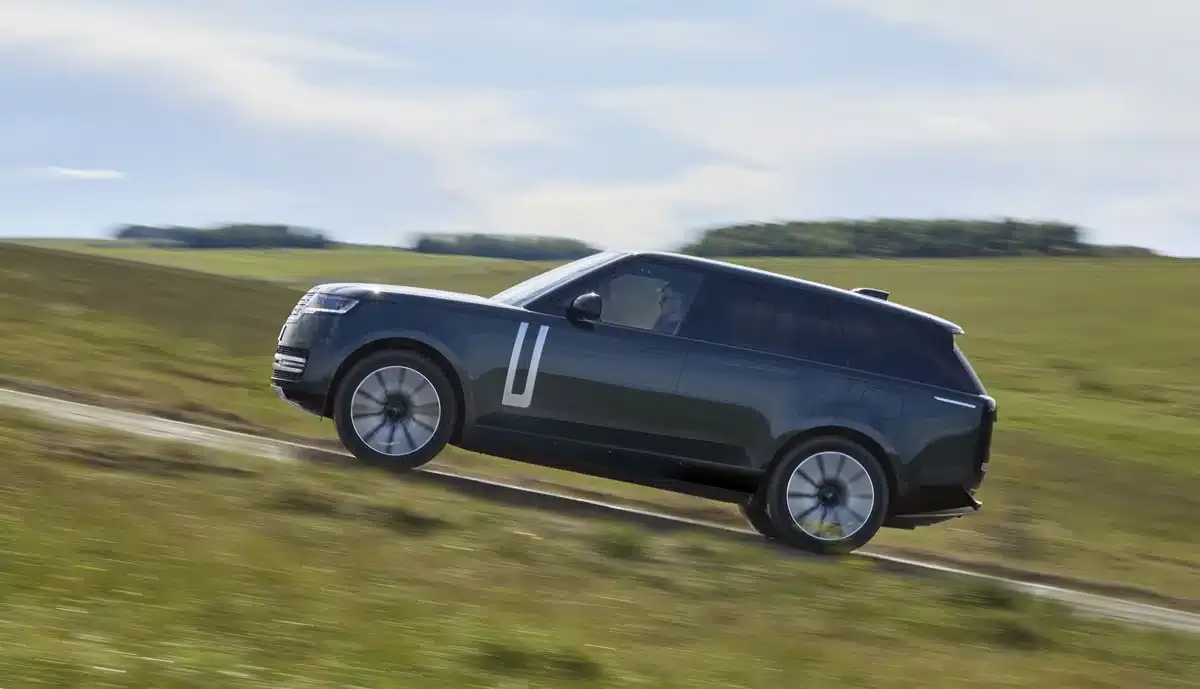
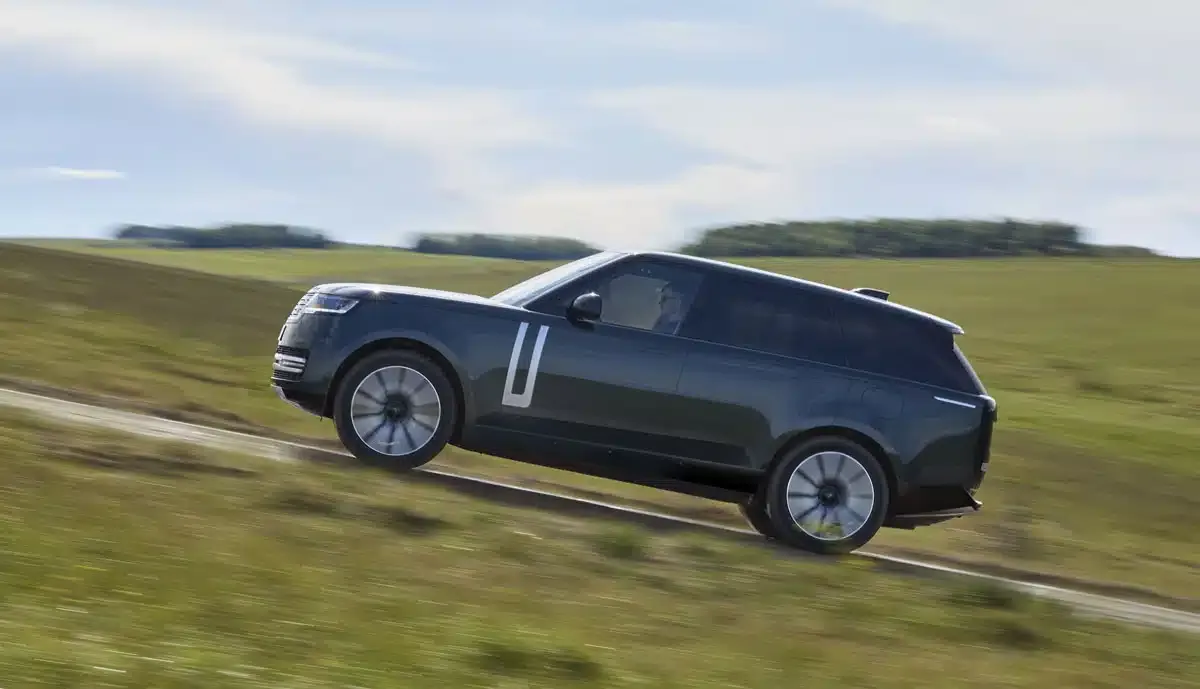
Image: Land Rover
Land Rover recently unveiled the first all-electric version of its flagship Range Rover. The Range Rover Electric will be available first in the UK, starting at around 180,000 euros. Compared to the combustion engine variants available here at around 146,000 euros, the battery-powered version is expected to differ minimally aside from its powertrain.
The new Range Rover Electric is built on the MLA-Flex architecture (Modular Longitudinal Architecture), which was designed from the start to accommodate a purely electric version as well. The electric vehicle uses a battery pack with 120 kWh of storage capacity located under the cabin floor. Identical permanent magnet motors are mounted at both the front and rear axles, each delivering 260 kW/356 horsepower, though neither motor operates at full capacity simultaneously.
The development of the electric car took four years and posed a significant technical challenge, according to Rachel Hogg in an interview with Autocar. The global production manager for Range Rover said the goal was to create a “completely credible Range Rover.” A major part of this work involved engine development. Since no ready-made solutions were available on the market, the components had to be designed internally.
Electric Drive Focused on Off-Road Capability
An initial plan called for an induction motor at the front axle. However, Simon Fairbrother, the manager responsible for the electric car, explained that this motor would overheat under extreme off-road conditions and could not deliver its full performance. As a result, another type of motor was chosen, which extended the development time by several months.
The electric luxury SUV weighs approximately 2,885 kilograms, which is 75 kilograms more than the version with a partial electric plug-in hybrid drive. Its center of gravity is 88 millimeters lower than that of the V8 model. To compensate, the electric version features two-stage dampers from the Range Rover Sport SV, an adjustable dual-chamber air suspension, and a rear axle steering angle of 7.3 degrees.
Inside, the design remains largely unchanged. The electric drive unit at the rear axle is positioned so that the cargo space does not lose volume. There are minor changes to the exterior design, especially on the radiator grille and wheel design, which result in a 0.01 improvement in the drag coefficient. This is intended to increase the vehicle’s range by five miles (8 km) in urban driving and by 10 miles (16 km) on the highway.
According to the manufacturer, the off-road capability of the Range Rover Electric remains largely intact, although the ground clearance is reduced by 29 millimeters compared to the gasoline version. The water depth tolerance of 900 millimeters stays unchanged. Senior Technical Specialist Jason Walters described to Autocar the response behavior of the electric motor as being much more forgiving. The rapid response and excellent controllability of an electric motor make an electric vehicle on sand something “phenomenal.”
According to the company, Range Rover owners do not often drive off-road, but most would tow a trailer during the vehicle’s lifetime. The electric version has a towing capacity of 2500 kilograms, which is lower than the 3500 kilograms of the conventional gasoline model and also below the 3000 kilograms of the plug-in hybrid version. However, Land Rover states that analyses of over 360 million anonymized customer trips show the all-electric model is suitable for 97 percent of these trips.
Also interesting
About the author
Thomas Langenbucher is an expert in electromobility with experience in the automotive and financial industries. Since 2011, he has been covering electric vehicles, sustainable technologies, and mobility solutions for ecomento.de. Learn more.
Reader interactions