
What would prevent an electric car from lasting 20 years (or more)?
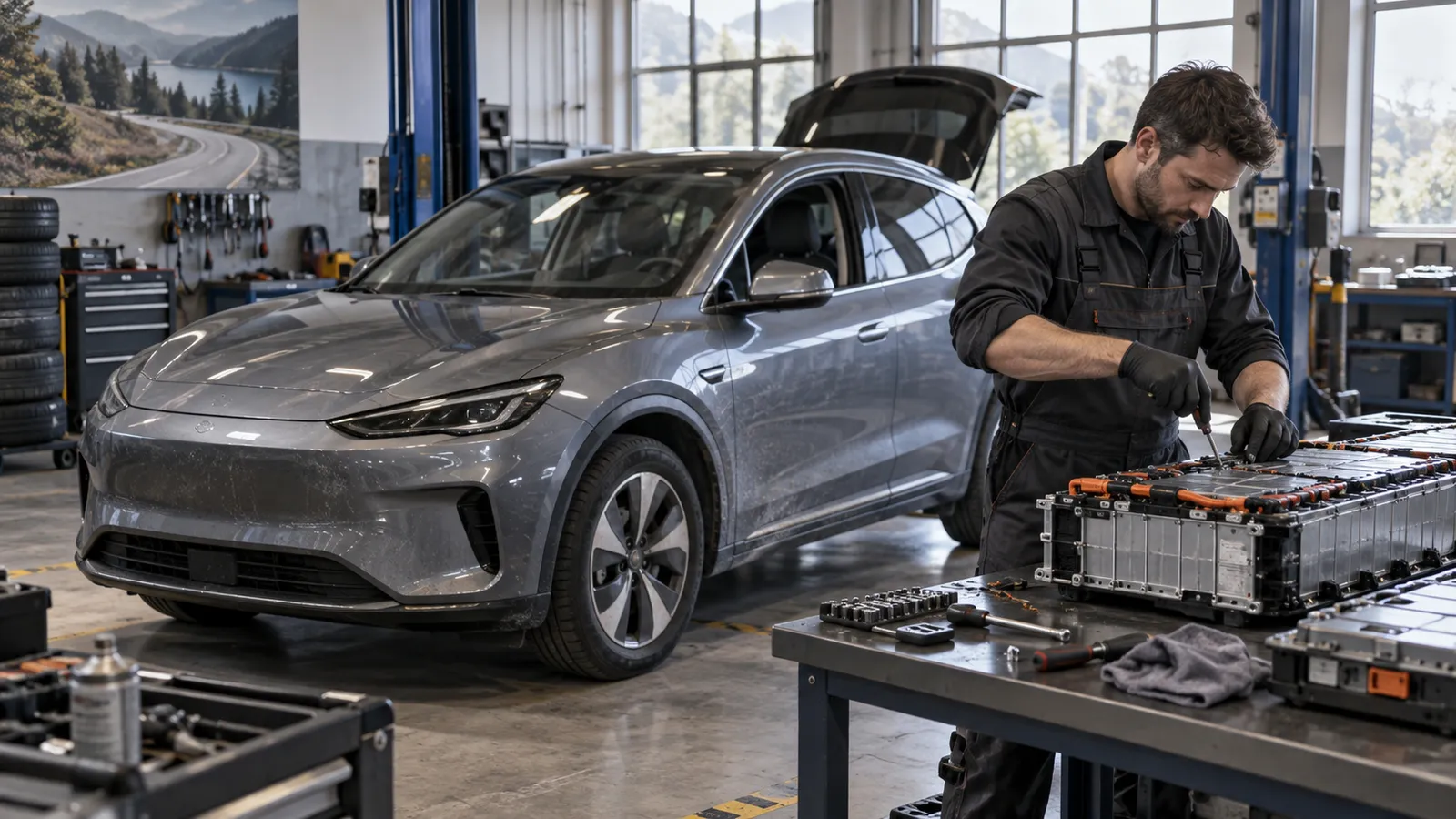
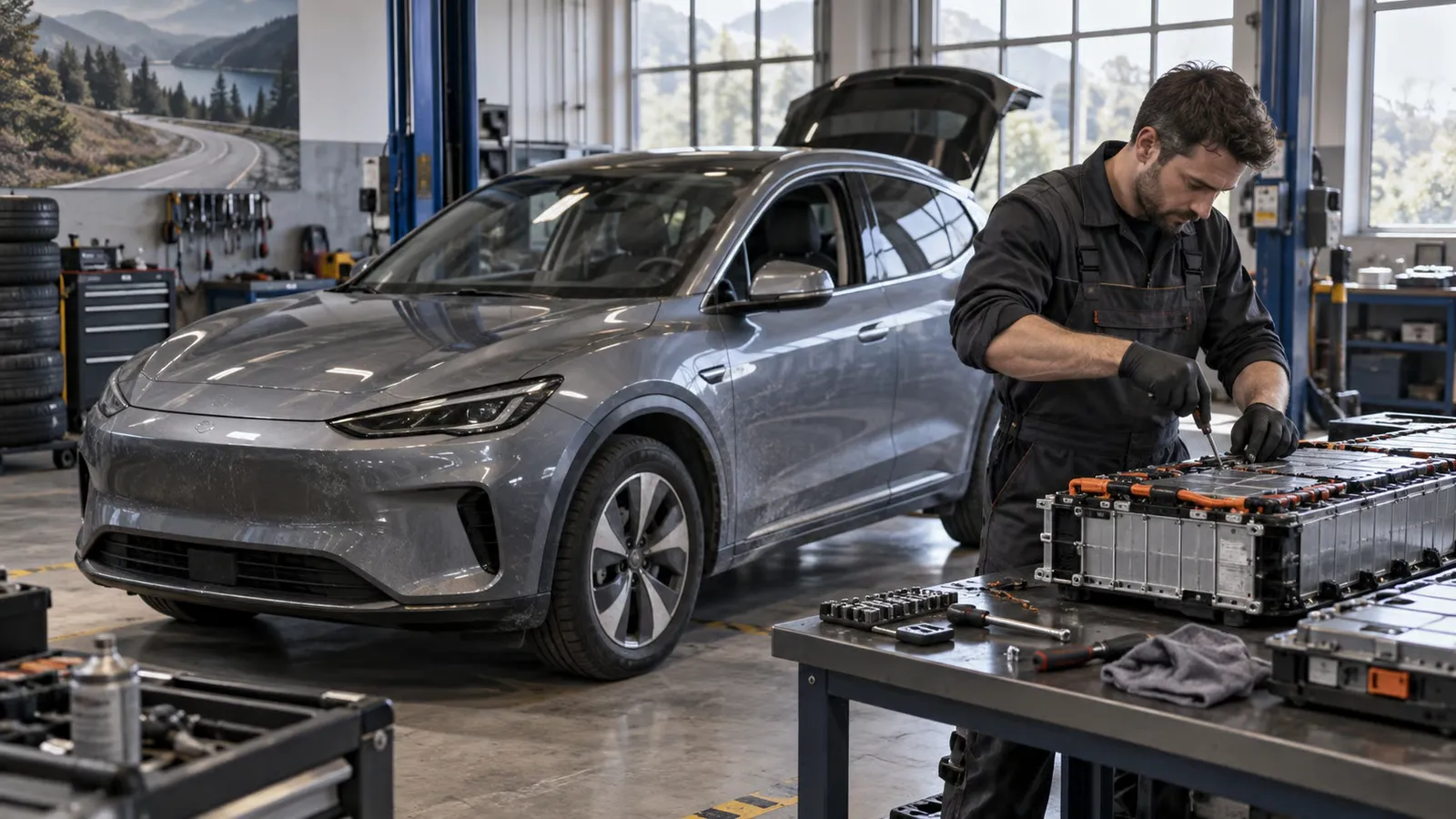
AI-generated image
How long can an electric vehicle actually last? Ten years? Fifteen years? Twenty years? And more importantly, what will happen when it reaches an age at which some internal combustion engine cars continue to be used by a second, third, or fourth owner?
In various discussions with colleagues and friends, as well as on social media, the topic of electric vehicle longevity and sustainability frequently comes up in conversations.
A legitimate question given the relative newness of this technology, and the lack of sufficient time—at least several decades—to gather enough data for solid statistics. This is even though we know that the first electric vehicles, which are already 10 or 15 years old, are still in use and performing fairly well. Some even hold mileage records in their original condition. We all think of those old Peugeots, Renaults, Mercedes, or Volkwagens that keep running twenty or thirty years after leaving the factory. There are far fewer electric vehicles known in this regard, for a rather simple reason: the mass market is still too young.
But then again, it’s a question I’ve asked myself as well, even though I’ve been an electric vehicle owner for almost 8 years and no longer need to prove to anyone my commitment to electric vehicles.
A question I used to ask myself… but I don’t anymore. Because ultimately, one can also legitimately wonder what prevents an electric vehicle from lasting 10, 15, or 20 years like some gasoline vehicles, and even being more reliable and less costly over time than those.
The more years pass and the more data accumulates, the clearer it becomes that nothing seems to prevent an electric car from lasting as long as a good old gasoline car. Or perhaps even longer.
The battery is no longer the real issue
Over the past few years, any discussion about the lifespan of an electric car inevitably turned to questions regarding battery longevity: how long will it last, will it need to be replaced after eight years, ten years, and at what cost? Will the car be beyond repair once it loses 20% of its capacity?
Fortunately, we now have enough time to start answering these questions.
Geotab, a specialist in telematics for corporate fleets, has 22,700 electric cars from 21 different models in its database. The average measured degradation is 2.3% per year. Thus, after eight years, a battery retains on average just over 80% of its capacity.
Aviloo, on the other hand, has analyzed over 500,000 batteries. Among the twenty models studied, the median remaining capacity after 150,000 kilometers ranges from approximately 87% to 94%. Sixteen of the twenty models still maintain a capacity above 90%, although such studies should be viewed with caution due to potential biases.
Another interesting figure: Recurrent, an American company specializing in analyzing the condition of electric vehicle batteries, reports a battery replacement rate of about 4% among over 30,000 vehicles under observation, excluding major recalls. These replacements mainly occur in older models, with a rate of around 8.5% for first-generation electric vehicles, 2% for second-generation models, and only 0.3% for models from 2022 and later.
This obviously doesn’t mean that all batteries will still be in perfect condition after twenty years. But the idea that replacing a battery pack is a normal step in an electric car’s life after a few years is increasingly difficult to defend (except, of course, among certain top Facebook experts).
It’s also an opportunity to remind that a battery at 80% capacity isn’t a dead battery, at least in cars that originally offered significant range: a car that provided 500 km of range when new can still achieve around 400 km under these conditions. This means it remains fully usable for many purposes.
In addition, regulations will evolve to support longer battery lifespans. Indeed, Euro 7 introduces European standards for battery durability for the first time. For a particular electric vehicle, the regulation requires a minimum capacity of 80% after five years or 100,000 kilometers, dropping to 72% after eight years or 160,000 kilometers. Compared to the 87% to 94% capacity measured by Aviloo after 150,000 kilometers, it is clear that many current batteries far exceed the regulatory minimums.
Mechanics work in favor of electric vehicles
But while we tend to focus on the battery, let’s not forget that other components in an electric car can also fail, such as the electric motor, reducer, inverter, and some transmission components. This still results in far fewer parts compared to a gasoline car, which has a turbocharger, fuel injection system, emission control systems, exhaust system, ignition system, lubrication system, clutch, or often a complex and expensive gearbox—especially if it’s automatic or robotic with those well-known paddle shifters. Add to this the belts and basically everything that operates at high temperatures with friction and vibrations, and it’s clear there’s no real comparison.
This is what the initial statistics tend to confirm. In its 2026 breakdown of failures, ADAC reports 10.3 failures per 1,000 electric cars five years old, compared to 17.4 per 1,000 diesel cars of the same age.
The German TÜV provides another example. The performance of electric cars varies greatly. Some models such as the Mini Cooper SE, Audi Q4 e-tron, or Fiat 500e achieve very good results in technical inspections, while others rank much lower. Two recurring weaknesses are the running gear, stressed by weight, and the brakes, which may suffer from not being used enough due to regenerative braking.
Be aware that this doesn’t mean electric cars never break down. You might encounter software bugs, a faulty heat pump, a defective onboard charger (hello, the 22 kW module in early Taycans), worn-out tires, or electronic issues.
We also need to distinguish between two things that are sometimes confused: reliability and durability. Some studies, particularly those by Consumer Reports, show more problems with certain newer electric vehicles, but these often relate to software, electronics, or peripheral equipment.
As a result, it’s entirely possible to have a car that develops several bugs after three years of use while still having an engine system capable of covering hundreds of thousands of kilometers.
The problem of mechanical failure or electronic malfunction
An electric vehicle can remain highly reliable for many years, yet like any other vehicle, it is still subject to rare but potentially costly failures. This is especially true of the battery, which accounts for a significant portion of the vehicle’s value. France Assureurs estimates that only about half of manufacturers currently offer batteries that are truly repairable, which raises serious concerns when a defect appears in the battery pack.
In a conventional car, when a turbocharger, injector, or even a transmission fails, it is usually possible to replace only the faulty component without replacing the entire powertrain. The situation can differ in some electric vehicles. While a few specialists can now replace just part of the battery or even a single defective cell, a problem localized to the battery can still require replacing the entire pack, resulting in costs high enough that repair becomes uneconomical.
This is likely where one of the unique features of electric vehicles lies. They have fewer mechanical components that can wear out or fail, but a larger portion of their value is concentrated in a few expensive components, with the battery being the most prominent. As a result, while available data suggests they wear out more slowly, the real challenge will be determining whether they can be diagnosed, opened up, and repaired at a reasonable cost when problems do arise. This brings us to the issue of “repairability” — whether they can be fixed by a local mechanic or an individual who can easily replace a non-critical part with an equivalent found on Amazon at a fraction of the price, giving them a cost advantage. At least for now. Which leads us smoothly to the next point.
A car also endures thanks to those who know how to repair it
All it takes is to look at the twenty- or thirty-year-old internal combustion engines still on the road today to understand that their longevity depends not only on their manufacturing quality. If they’re still running, it’s also because an entire ecosystem has developed around them over the decades, including independent garages, auto salvage yards, adaptable parts, refurbished equipment, and mechanics capable of diagnosing a problem without necessarily replacing half of the car.
If the starter on a 2005 Clio fails tomorrow morning, there’s a good chance its owner can find a new, used, or refurbished part along with a garage to install it. I’ve personally experienced this ease of repair on my son’s 2010 Polo, where we replaced the heating/air conditioning fan ourselves (with very limited expertise) in just under two hours using the same new part purchased for less than 50 euros on Amazon. I can’t even imagine how much the bill would have been if we had done this repair at a VAG dealership… Not only did we save money, but the experience was fun and satisfying. And it’s still working perfectly years later.
The question is therefore whether we will be able to achieve the same thing with electric cars.
In fifteen years, we will need to have specialists who can open a battery pack, identify a faulty module, replace only what needs to be replaced, and then get the entire system back online. We will also need to be able to repair an onboard charger, an inverter, or a motor without having to replace the entire subassembly.
This sector is beginning to develop, but it remains very young. Working on high-voltage systems requires specific qualifications, the tools are different, and access to BMS data can be complicated depending on the manufacturer. As for the market for refurbished batteries and parts from accidented vehicles, it already exists but is still far from reaching the maturity of the thermal components market.
In addition to the issue of repairability, there is now another phenomenon that hardly existed in older cars: digital aging. A Peugeot 205 never needed a connection to a server to continue performing exactly the same functions twenty years after it was released. In contrast, an e-208 from 2026 may rely on mobile apps, cloud services, remote updates, a constant connection, or connected navigation systems to utilize certain features.
This raises the question of what will remain of all these services in fifteen or twenty years. In other words, will the mobile network used by cars still exist? Will the manufacturer keep maintaining the servers? Will the app continue to work on current smartphones? Will battery charging planning and pre-conditioning still be fully functional?
The problem has already begun with the gradual shutdown of 2G and 3G networks, which is starting to cause difficulties for some older vehicles. The European Commission estimates that several dozen million cars could be affected by issues related to the eCall system once these networks are phased out. Consider the tragic example of Fisker, which went bankrupt shortly after launching its Ocean model, leaving owners stranded in the countryside with cars that lost their connectivity and all associated functions after the company’s servers were shut down.
In the same vein, what will happen if the central screen, which currently handles almost all of a car’s controls, fails in five, ten, or fifteen years? Will it be easy to repair or replace, by whom, and at what cost?
Of course, this doesn’t mean all these cars will stop running, but some may lose certain functions over time, even though their mechanical parts remain in perfect condition. This gives rise to a new form of vehicle aging, where a car can become digitally obsolete before it becomes mechanically so. This issue applies not only to electric vehicles, but since they are generally more connected and rely more on software, they are particularly vulnerable to it.
"Economically irreparable" does not mean truly unrepairable
There is another factor that helps put this debate into perspective: the residual value of the vehicle. A study conducted by BCA Expertise and Prim’Act on 2.7 million expert reports shows that repairs for electric cars can be more expensive in certain situations. That said, these vehicles are also on average much younger than conventional cars in use, making them more costly on the used car market.
A repair costing 2,000 euros represents about 38% of the average value of a conventional car in the study, compared to only 13% for an electric car. Despite sometimes higher average repair costs, an electric car is not necessarily more likely to be classified as economically irreparable.
This is a point that isn’t immediately obvious but is important, because a car doesn’t always end up in the scrapyard simply because it’s technically impossible to repair. It often ends there because, from an insurance perspective, the cost of repairs becomes disproportionate to its value. This issue isn’t specific to electric vehicles either; it has existed for a long time with conventional cars.
So, twenty years? No one can seriously claim today that an electric car bought in 2026 will still be drivable in 2046, simply because we don’t yet have enough data on current generations to make such a claim confidently.
On the other hand, there is no longer any obvious technical reason why it couldn’t succeed, given its mechanical simplicity, the low wear observed in the batteries, and the initial reliability statistics. Because, with comparable manufacturing quality, there are still some technical factors that suggest an electric vehicle might have a better chance of reaching a high mileage with its original powertrain than a gasoline vehicle.