
How much do you actually spend on recharging?
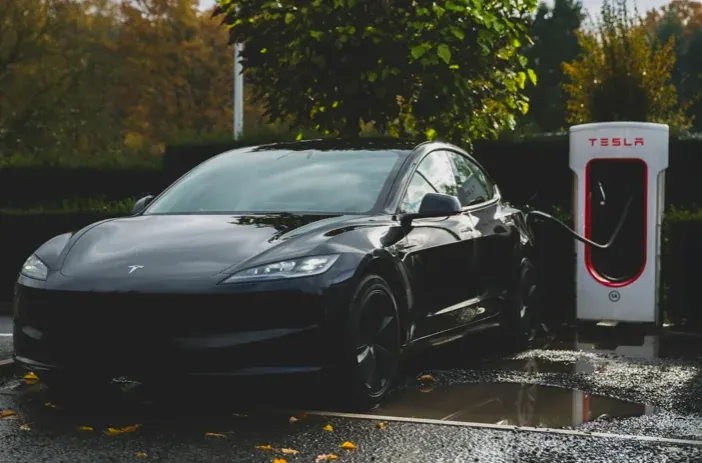
How much do you spend on charging on the road? Between refueling at home (for those who can) and at charging stations, what is your average cost per kWh? Comparing it to gasoline, as we’re often asked to do, only makes sense in terms of actual costs. We ask readers to help us establish reliable averages: you can write in the comments section at the end of the article or to info@vaielettrico.it
How much do you spend on charging? Some people can cover 100 km for 6 euros...
We receive summaries here and there in the comments section, as was the case with the recent article on why so few electric cars are sold in Italy. But this topic is so important (especially for those considering switching to electric vehicles) that I’m asking for your help to create something more structured. With summaries like the one Luca sent us: “I bought a Tesla Model 3 Long Range instead of my old Ford C-Max 2.0 diesel. Looking back, after 6 years and 133,000 km, I saved 8,000€ on fuel, 2,200€ on maintenance, 2,300€ on taxes, and 1,400€ on insurance. When I read people complaining that an EV might cost 5,000€ more than its gasoline version, it makes me laugh. The latest charges I made outside my home cost 0.45€/kWh and 0.43€/kWh (at a 250kW Supercharger): that amounts to 6.3€ and 6.02€/100km based on my average consumption (mostly on rural roads).”
…and some say, “Above 35 cents, the math doesn’t add up”
Naturally, there are those who think differently, like Bruno: “I tried a Cupra Raval — beautiful, actually stunning. Its interior space and cargo capacity are comparable to the Captur. For that model with 211 HP and a 52 kWh battery starting at 31,950€, I’ve got a quote of 36,000€ including three optional items. It has a range of 440 km in city driving and maybe 300 km on the highway, which is a decent range. I don’t think I’ve ever made a highway trip longer than 300 km. My used car, with 25,000 km on it in 2024, cost 18,200€. It’s hard to justify the higher cost when it comes to electric cars — if you don’t charge at home, you might spend 8€ per 100 km, or even 10€. Tesla is another story, but the charging network isn’t as widespread; I have to drive 20 km just to reach one. In terms of cost-effectiveness, the price per kWh shouldn’t exceed 35 cents anywhere, regardless of where you charge.”
The moral of the story: we want to highlight the real costs of charging. Also to spread the best practices for saving money. These days there’s a lot of talk about the discounts on gasoline offered by Eni and other oil companies. But in electric vehicles, the gap between the cheapest and most expensive prices is even larger. It ranges from 0.25 euros per charge at home to up to one euro per kWh at certain public HPC charging stations. That’s four times more. We thank you in advance for your help with real-life experiences using electric vehicles.
Bonus on charging stations: nothing is lost — here’s why / VIDEO
Previous Article
Can I drive 300 km on the highway with a Polestar 3 at 130 km/h?
