
How sustainable are the Model Y, Dolphin Surf, and eVitara?
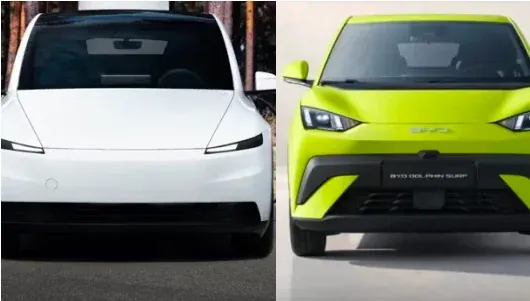
How sustainable are the Tesla Model Y, Dolphin Surf, and Suzuki -eVitara? Green NCAP conducted a review of these electric vehicles and also evaluated two Volkswagen gasoline models: the Golf 2.0 diesel and the Tayron 1.5 eTSG DSI, a hybrid vehicle that received significantly lower scores. The diesel model scored much lower than the gasoline one.
Sustainability ratings: Model Y at 93%
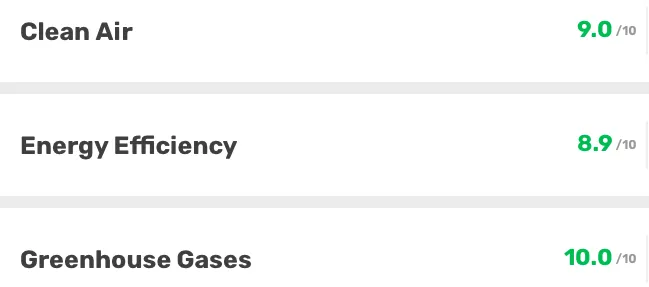
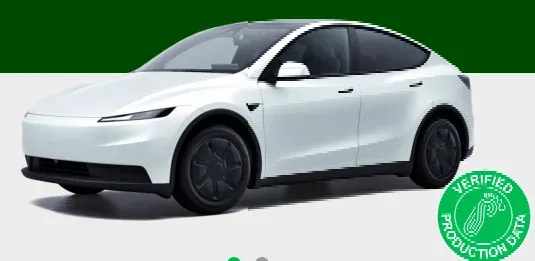
Here is what Green NCAP writes: “Although not particularly light (1.9 tons), the Tesla SUV achieves a total carbon footprint over its lifetime of just 95 g of CO2–eq./km. This makes it one of the standout vehicles evaluated. Under real driving conditions, it demonstrates strong energy efficiency and rapid cabin heating in cold weather. Equipped with an efficient heat pump and an exceptionally well-insulated cabin, it maintains interior temperatures very well, showing minimal temperature drop of -7°C 30 minutes after shutdown. Its charging performance is equally efficient, with fast charging from 10% to 80% capacity in just 24 minutes.” The only drawback is the lack of bidirectional charging (V2L/V2G). But “the balance between engine architecture, battery design, and overall management makes it a benchmark for efficiency in electric SUVs.”
Dolphin Surf does even better: 96%
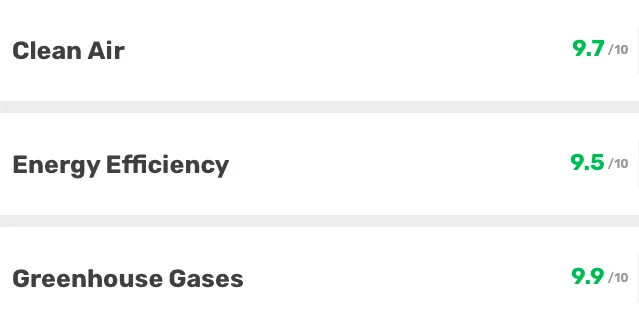
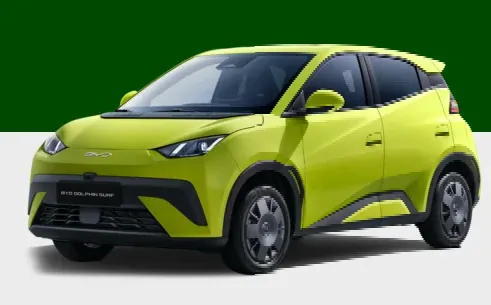
According to Green NCAP, the Chinese model performed “exceptionally well… by combining low weight with high energy efficiency. In road tests, it showed low energy consumption, effective fast charging (10-80% in 33 minutes), and practical V2L reverse charging capabilities.” The only drawback is that “the heating in the rear cabin could be improved.” Nevertheless, the Dolphin Surf received an “impressive overall rating.” The experts also noted that “the car is manufactured in China and was submitted for evaluation using generic production data rather than verified specific production figures. Its baseline lifecycle score is quite conservative. But its low weight, small battery size, and excellent energy efficiency make it a top performer.”
How Sustainable Are They? / eVitara Falls Back to 87%
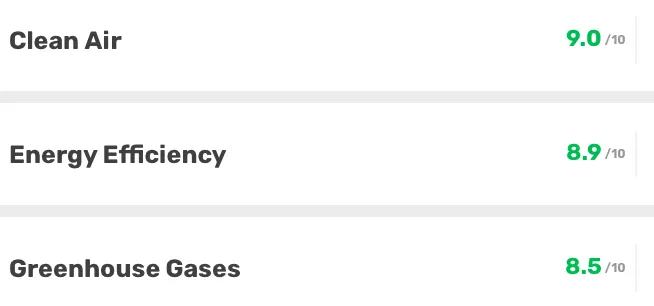
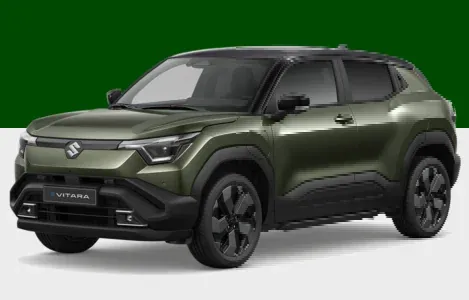
The last among the electric vehicles evaluated is the Suzuki Vitara, which fails to reach 5 stars (4½) and stops at an 87% rating. Its environmental score is affected by its weight (1.8 tons) and concerns over emissions during the initial production phase in India. However, driving tests showed good fuel efficiency in most test scenarios. Although inaccuracies were noted on the dashboard display, these were later fixed through a Suzuki recall. “The car also has a rather slow cabin heating when it’s cold,” the review adds. It also criticizes “the poor fast DC charging speeds, which took 44 minutes to charge from 10% to 80%.”
– Read also / Hydrogen distributors say no: some giving up on millions from PNRR
Previous Article
ErreDue: How to produce green hydrogen and oxygen—all in one container
Next Article
Electrifying ports: NatPower Marine and Zebox reach agreement