
How much savings on electricity (and how much I used to spend)

How much I save on electricity (and how much I used to spend with a traditional car). Readers respond to the call for a personal assessment of the actual charging costs, in a situation of varied and confusing rates. This is also to compare with gasoline prices, which are also in a very chaotic phase. Reports from other readers will follow. To contact us: info@vaielettrico.it
How much I save on electricity: home chargers and Tesla chargers offer the greatest benefits
It’s obvious that those who charge at home and while on the road, possibly owning a Tesla, can enjoy lower prices. “How much do I pay per kWh drawn from the grid?” writes Daniele. “On average 0.25€, but in winter when I buy around 1,000 kWh per month it drops to 0.21/0.22 because the fixed costs are spread over more kWh, making them cheaper per unit. Over a full year, we spend about 1,600/1,800€ at home for two electric cars that travel a total of 40,000 km. The annual consumption totals around 12 MWh, of which 6.5/6.7 comes from self-generated solar power. I work shifts and always have the chance to charge my car during the day.” Stefano, on the other hand, has a Tesla and reports an average cost of “5.90€/100 km, charging 75% at home at 0.29/0.30 and 25% at Superchargers while traveling.” It’s impossible to spend this little on gasoline—reaching 60 km with just 5.90€ would already be an excellent result.
With self-production, some people spend less than 0.60 per 100 km...
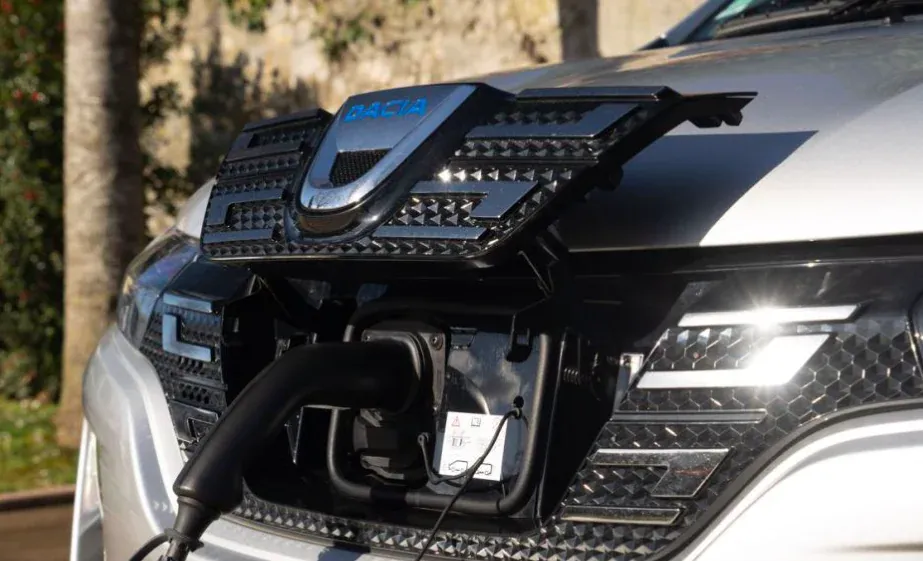
Gio relies almost entirely on renewable energy and is blunt: “With solar panels on my roof, I run most of the year for free. Giorgia Meloni and her flawed energy policies don’t bother me at all.” Perseo also finds the costs of self-generation to be negligible: “I sell the solar power I generate and have paid only 0.04 euros per kWh for electricity. Considering the consumption of my two electric cars at 12 and 15 kWh per 100 km, the costs come to 0.48 and 0.60 euros per 100 km respectively.” Massimiliano adds, “We always charge at home; our two electric cars together cover about 60,000 km per year. With an average actual consumption of 16 kWh per 100 km, the total cost (including everything, so the bill amount divided by kWh) is 0.24 euros per kWh—less than 4 euros per 100 km.” Alessandro, on the other hand, asked Gemini to calculate his cost per kWh based on his bill. The result was around 0.2746 euros per kWh. His car is a Dacia Spring; “It’s as if I’m paying for gasoline.”
“1.10 per liter.”How much savings on electricity: with the Model Y…
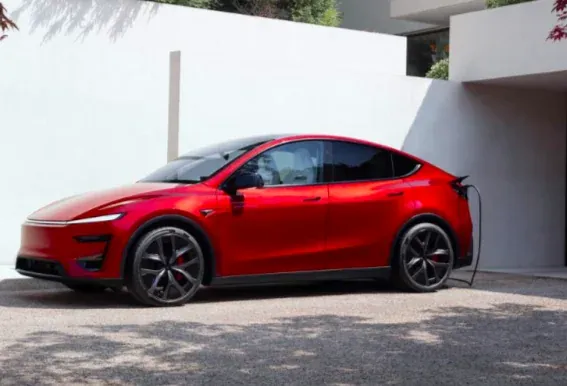
Stefano, a reader from Alba, owns a 2023 Tesla Model Y RWD: “In 3 years I’ve driven 126,000 km, with an average cost of 1,000 euros per 6,800 kWh of annual charging. About 70% of my charging is done at my workplace, where I have a solar power system, and the remaining 30% is done at Superchargers or public charging stations. The bottom line: as shown by the Tesla app, I’ve saved 13,000 euros on fuel over 3 years (at current gasoline prices, it would be even more). Not to mention no maintenance costs (0 euros in 3 years) and no registration fees.” Francesco, on the other hand, has a 2026 Model Y Performance model, the Juniper. “I compared it with the X3, GLC, and Audi Q5 diesel models, which are competitors to a 4.70-meter car. But all of those would have fuel costs that are at least 30% higher per kilometer. Plus, there are no registration fees, no maintenance visits, and the purchase price is at least 20,000 euros lower.”
AC Charging from Plenitude via EVDC: “I spend half as much as with the Fiesta”
Angelo, on the other hand, doesn’t have the option to charge at home: “But for 2 months now I’ve been happy owning a Puma Gen E, with which I’ve traveled about 2,000 km. I mainly charge using AC at the Plenitude charger near my home and via EVDC (0.44 € per kWh). Including the fees for topping up my wallet, I’ve spent 109 € so far, with an average consumption of 13.42 kWh per 100 km. With the Fiesta Mild Hybrid I had before and a very economical driving style (5.25 liters per 100 km), I would have spent 208.60 €, considering the gasoline price on the day of charging. The savings amount to 48%. Over a year, including the tax (248 € for Fiesta – 0 € for Puma), I should end up spending around 550 € on electricity compared to 1,295 € for a gasoline car. … What else to say? BEV for life!!!”. CONTINUE
Charger bonuses – nothing is lost / VIDEO
Previous Article
What We Saw at the Genoa Show
Next Article
Renault Pushes for Electric Vehicles Made in France
