
How many jobs could be lost due to CO2?
Slowing down the transition to electric cars to save jobs could turn out to be a boomerang for Europe’s automotive industry. According to a study on the sector’s employment prospects, delaying CO₂ emission rules by five years could result in a 6% reduction in jobs by 2035 compared to 2025.
If current targets are maintained, employment could increase by 2%. Growth could reach 10% if Europe introduces new incentives alongside emission rules to produce more electric cars, batteries, and charging infrastructure within its borders.
The reason is simple: as the production of gasoline and diesel cars declines, activities related to electric cars increase. The shift from one technology to another means the loss of some jobs, but it can also create new ones. What will make the difference is primarily Europe’s ability to manufacture new cars and their components, rather than buying them from other countries.
Fewer jobs, but more opportunities
The study compares three possible scenarios for the future of Europe’s automotive industry, considering not only car factories but also battery manufacturers, recycling facilities, and charging infrastructure. Under the first scenario, with current CO₂ emission rules, overall employment could increase by 2% between 2025 and 2035. Under the second scenario, with incentives to boost European production of electric cars and batteries, the increase would reach 10%. If the targets are delayed by five years, however, jobs could decline by 6%.

With current rules, jobs could grow by 2%, up to 10% with incentives.
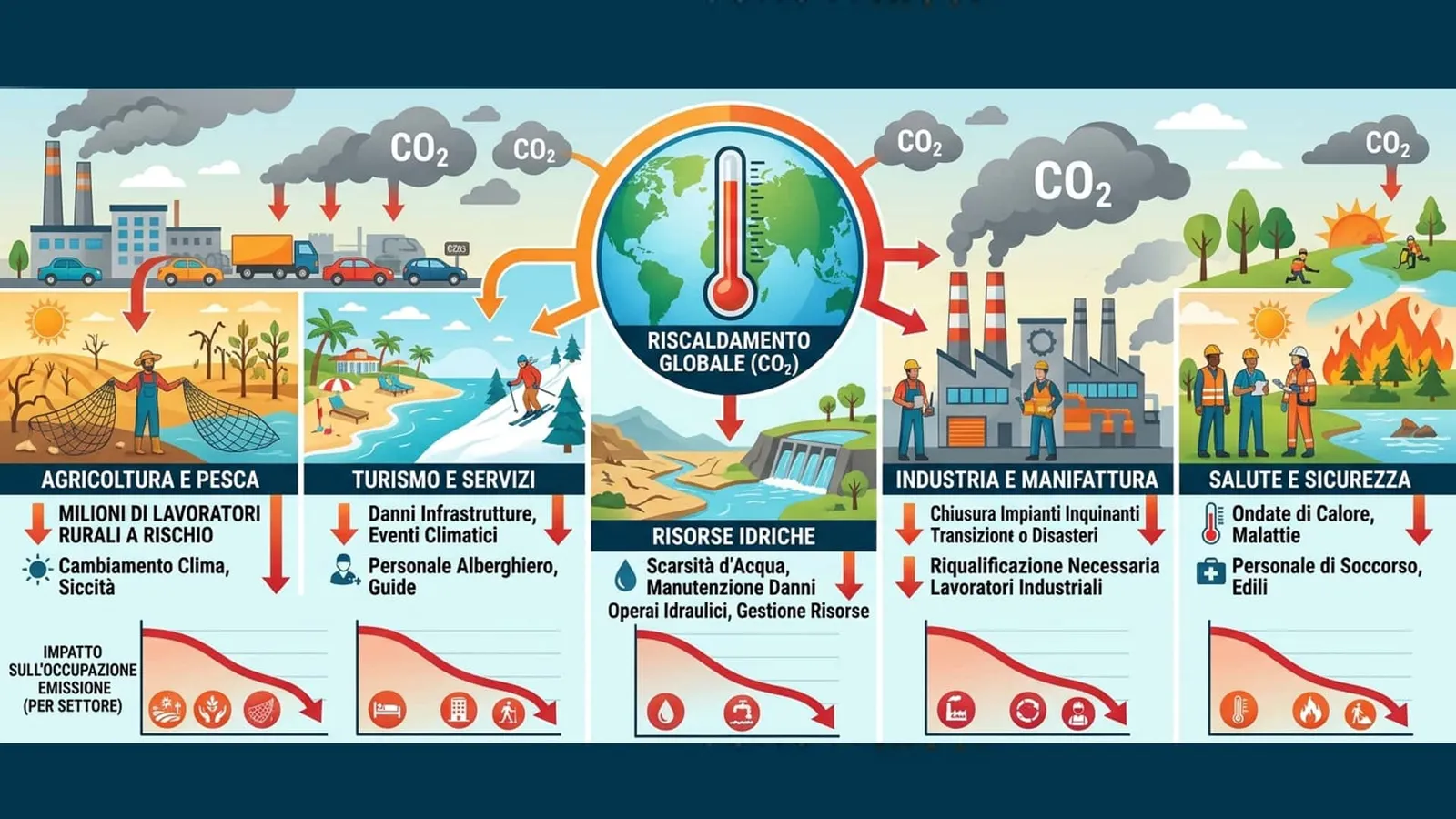
Photo by: Motor1 Italia visual (AI-assisted)
At first glance, it might seem strange: manufacturing an electric car actually requires about 30% fewer workers compared to a vehicle with a combustion engine. Electric cars have fewer mechanical components and do not need some of the processes typical of traditional engines. But the picture changes when considering the entire supply chain, from battery production to their second life and recycling, including charging stations.
The speed at which the market changes will also play a significant role. Estimates suggest that if current targets are maintained, battery electric vehicles will account for 60% of new sales by 2030 and 100% by 2035. If regulations are delayed, these figures would drop to 33% and 60% respectively. This would mean keeping some jobs related to internal combustion engines for longer, but it would also slow down the growth of new businesses in the electric sector.
Germany, Italy, and France among the most affected countries
The transition will not have the same impact across all of Europe. Automobile factories are concentrated mainly in certain countries, and therefore decisions regarding the sector’s future will have varying consequences depending on the presence of this industry in each region. According to the study, delaying emission targets compared to the current plan would lead to a reduction in employment across all member states by 2035.
Germany, the EU’s largest automobile producer, would be most affected, followed by France, Poland, Italy, and Spain. For these countries, the issue concerns not only how many cars will be produced but also where they will be built and where the batteries and components will come from.
And it is here that investments come into play. By maintaining current targets, estimates suggest that the share of electric and plug-in hybrid vehicles produced in the European Union and sold on the European market would reach 68% by 2035. With new industrial policies, it would rise to 75%, while delaying the implementation of regulations would keep it at 56%.
Read also