
Test drive of the Geely E2: a Chinese electric compact car with almost everything it needs to succeed
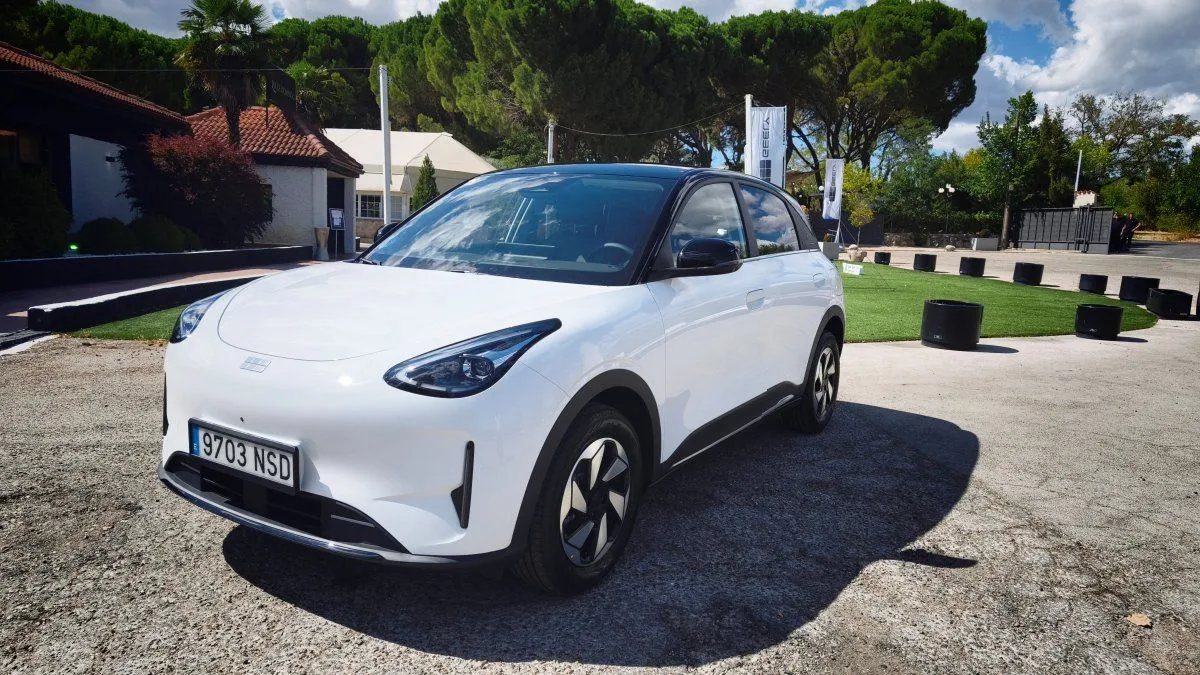
The Geely E2 has entered Europe with great ambition. It is not merely an imported car. It has been reviewed and redesigned in certain areas to meet the high standards of the European market. This is especially true in terms of safety, which has enabled it to become the first model in its segment to achieve five stars from euroNCAP in its latest version in 2026.
It is a compact car with space for five people, positioned in the mid-range segment at 4.13 meters in length. It is not as large as a Renault Megane with its 4.2 meters, nor as short as the Renault 5 or BYD Dolphin Surf. However, it benefits from its 2,645 mm wheelbase, which, combined with a rear-wheel drive system and a CTP battery, results in interior space above average, especially in the back seats where there is ample knee room.
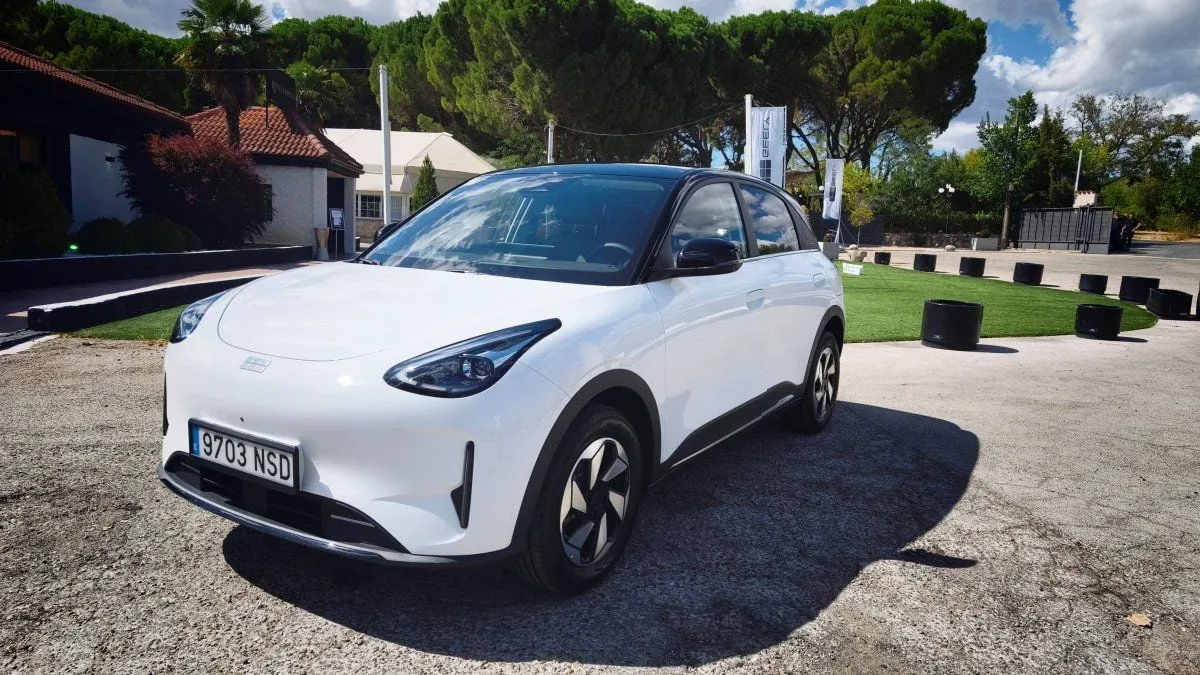
The trunk space is also noteworthy, offering 375 liters in the rear compartment. The version we tested featured electric opening functionality, placing it behind the 440 liters of the Renault Megane, which is slightly larger, but ahead of the 304 and 308 liters in the Renault 5 and BYD Dolphin Surf, which are smaller.
However, where the Geely E2 has no competition is in its front trunk. It provides a “huge” 71 liters of space that not only suffices for storing charging cables but also serves as a proper area to carry backpacks, groceries, or other items that don’t fit in the rear trunk.
Geely E2: Interior and Quality
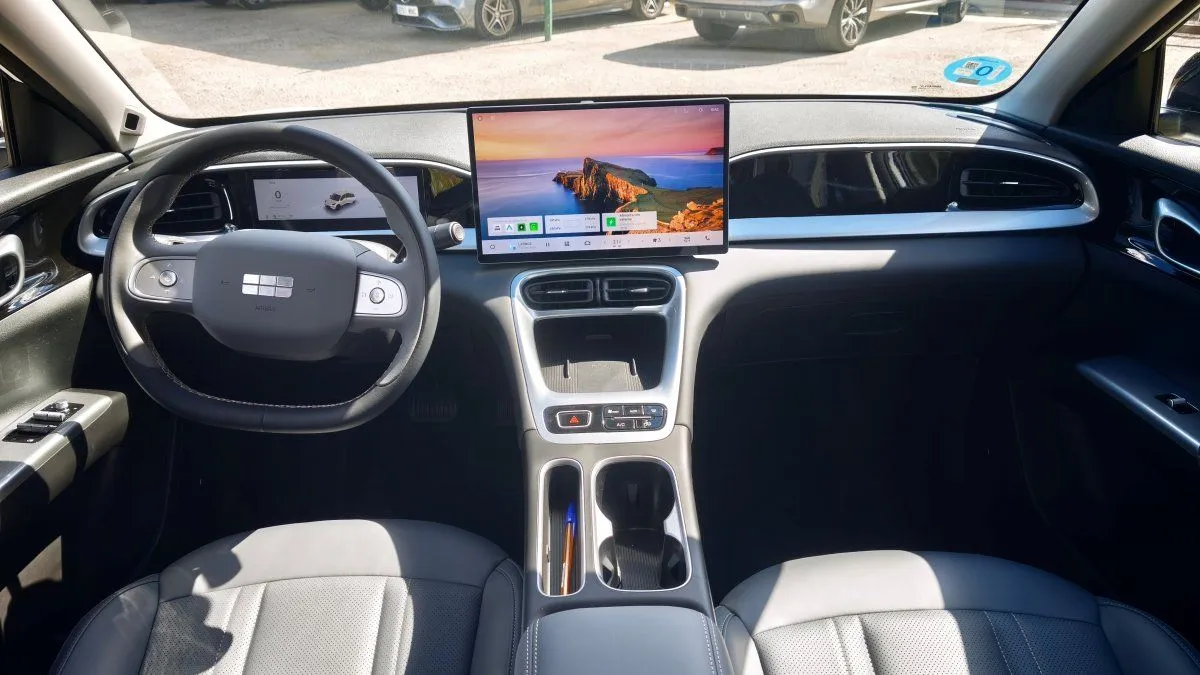
The Geely E2 doesn’t aim to reinvent the wheel. Its interior design falls somewhere average without standing out, with quality levels slightly below those of BYD or Renault, but more than sufficient given its price point.
Everything is in its proper place, including a large 14-inch central screen, which reminds us of brands like Dacia or Citroen’s strategy of offering budget cars without a central screen. Meanwhile, Chinese manufacturers include a 14-inch display even in their most affordable models.
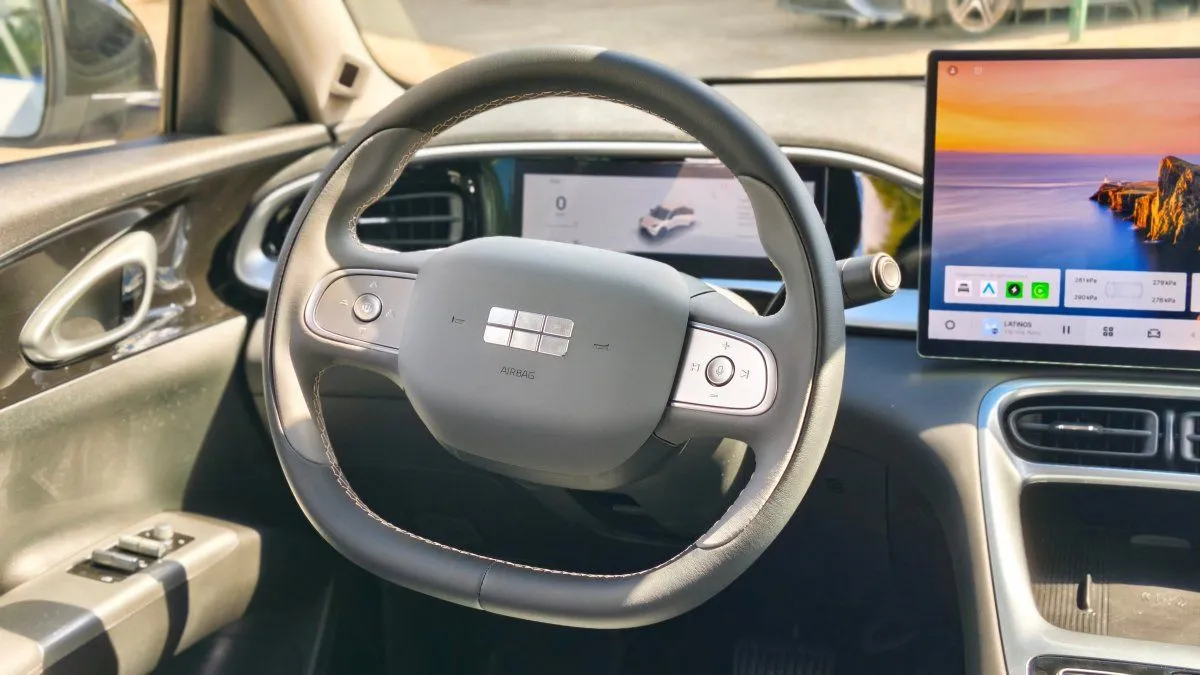
The bad news is for those who dislike the lack of physical buttons. Almost all controls are located on the screen, with only a few basic ones remaining on the steering wheel. But this is part of its digital design, and if not, we can always use voice commands.
It’s also worth noting the ample storage space available. There’s a 28-liter compartment under the rear seat, along with multiple interior solutions (36 spaces in total) that utilize 85% of the cabin space. This way, we can keep everything organized without it looking like the car has been through a hurricane.
The infotainment system works properly. It follows the same pattern as other brands, though there were some issues in our unit at times, such as the navigation app disappearing while we were driving and reappearing after a while.
If you don’t look at the car, it’s hard to tell which Chinese brand it is—BYD, Dongfeng, Geely... It also lacks a bit of creativity or practicality; for example, it doesn’t use the navigation map as the default background like most brands do, requiring users to navigate through submenus to set up basic functions.
Geely E2: Driving and Range
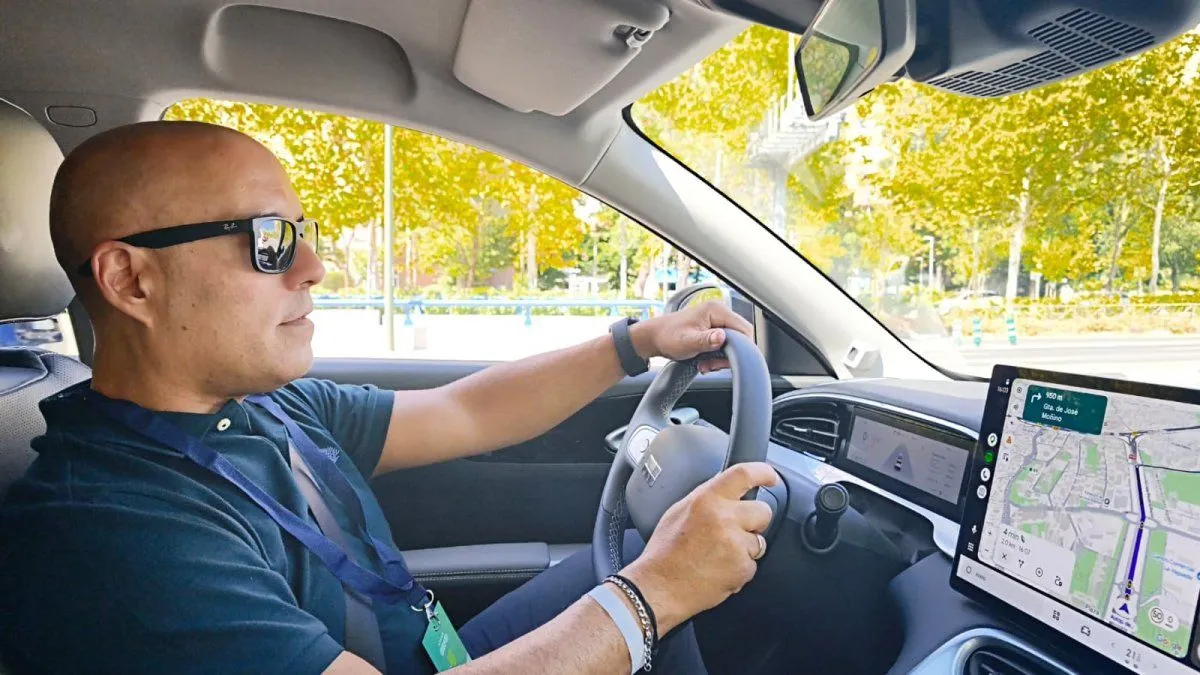
The test we conducted was quite short and mainly focused on urban driving. Our model was the top-of-the-line version, the Max+, equipped with an 85 kW (116 HP) engine producing 150 Nm of torque, along with a 47 kWh battery, taking just over 11 seconds to reach 100 km/h.
Our initial impression is that this engine is somewhat underpowered for the E2. For example, the mid-tier Renault 5 with 120 HP takes 9 seconds to reach 100 km/h, while the 150 HP version does it in 8 seconds. In the case of the BYD Dolphin Surf, the 30 kWh version has a simple 88 HP engine that reaches 100 km/h in 11.1 seconds, whereas the 40 kWh version features 156 HP, allowing it to reach 100 km/h in 9.1 seconds.
Above it is the Renault Megane, which with its 220 HP engine doubles Geely’s figure and can reach 100 km/h in 7.4 seconds. Although the Megane is in a different price category, it’s only 7 centimeters shorter than the Geely.
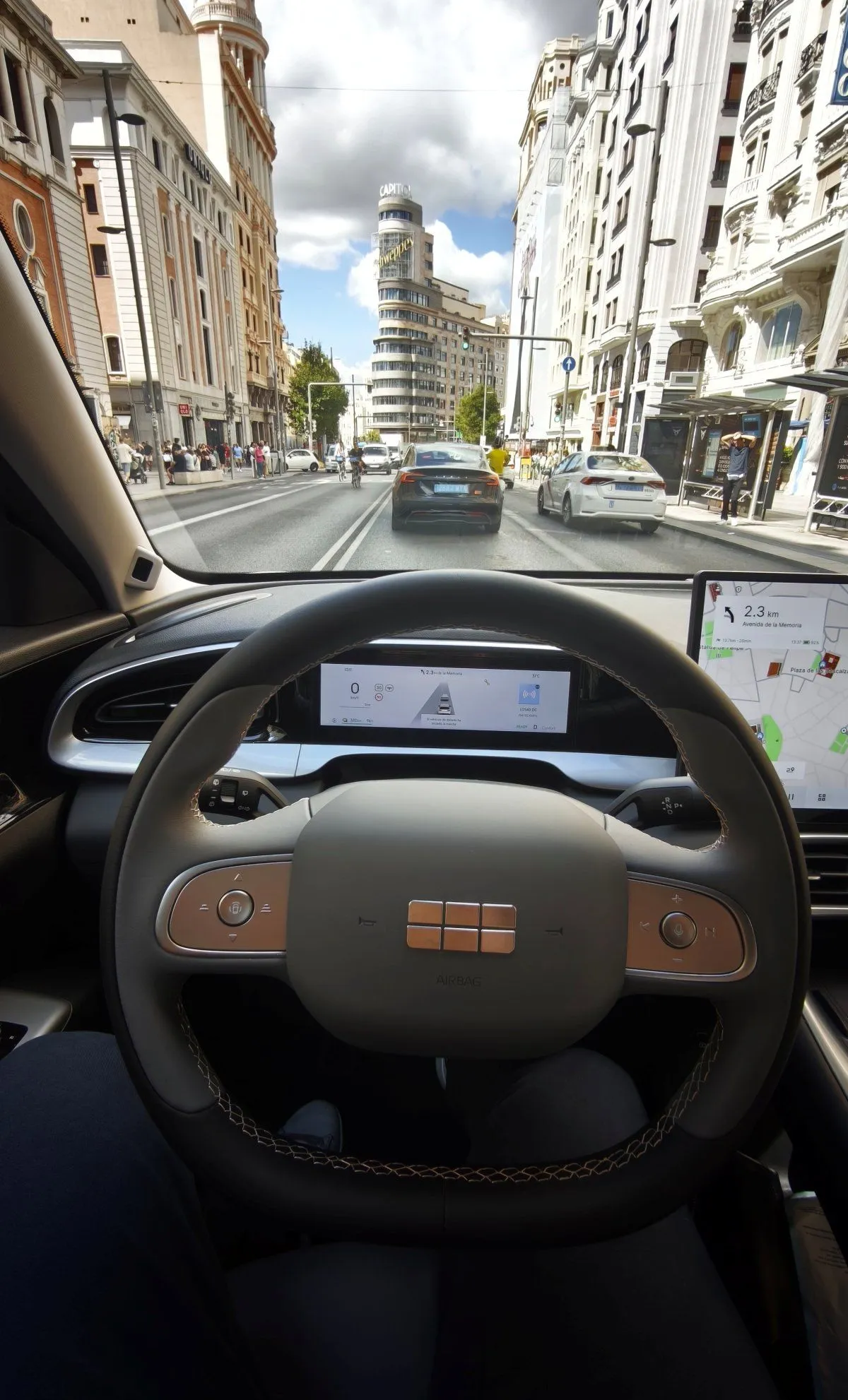
It feels like the E2 lacks a bit of power to offer more spirited acceleration and quicker recovery speeds that would allow for safer overtaking. The acceleration is very gradual and smooth, making it a model designed primarily for city driving. That’s in Sport mode. You can imagine what it’s like in ECO mode.
The handling in corners is, as one would expect from an urban car, comfortable in city driving, effectively filtering out potholes and bumps. However, when cornering at higher speeds, it suffers significantly from understeer, despite having rear-wheel drive. Therefore, it’s a car that requires a relaxed driving style.
As for efficiency, unfortunately the test was very short and focused mainly on the constant traffic in Madrid, with limited opportunities to use the ring roads. In total, it was 65 kilometers covered in 2:18 minutes, with an average ending speed of 28 km/h. We started with 97% battery charge and finished at 77%. The average fuel consumption was 11.5 kWh per 100 kilometers, which is just an initial figure pending a proper test under real conditions. But everything suggests that, like its peers in this segment, the figures will soar once it’s driving on highways at 120 km/h.
We weren’t able to test fast charging, but the numbers are correct. With this Max+ unit, it reaches a peak of 80 kW, allowing it to go from 30% to 80% in about 20-25 minutes. It also has a V2L function that enables using the car’s battery to power certain electrical devices.
Geely E2 Test: Conclusion
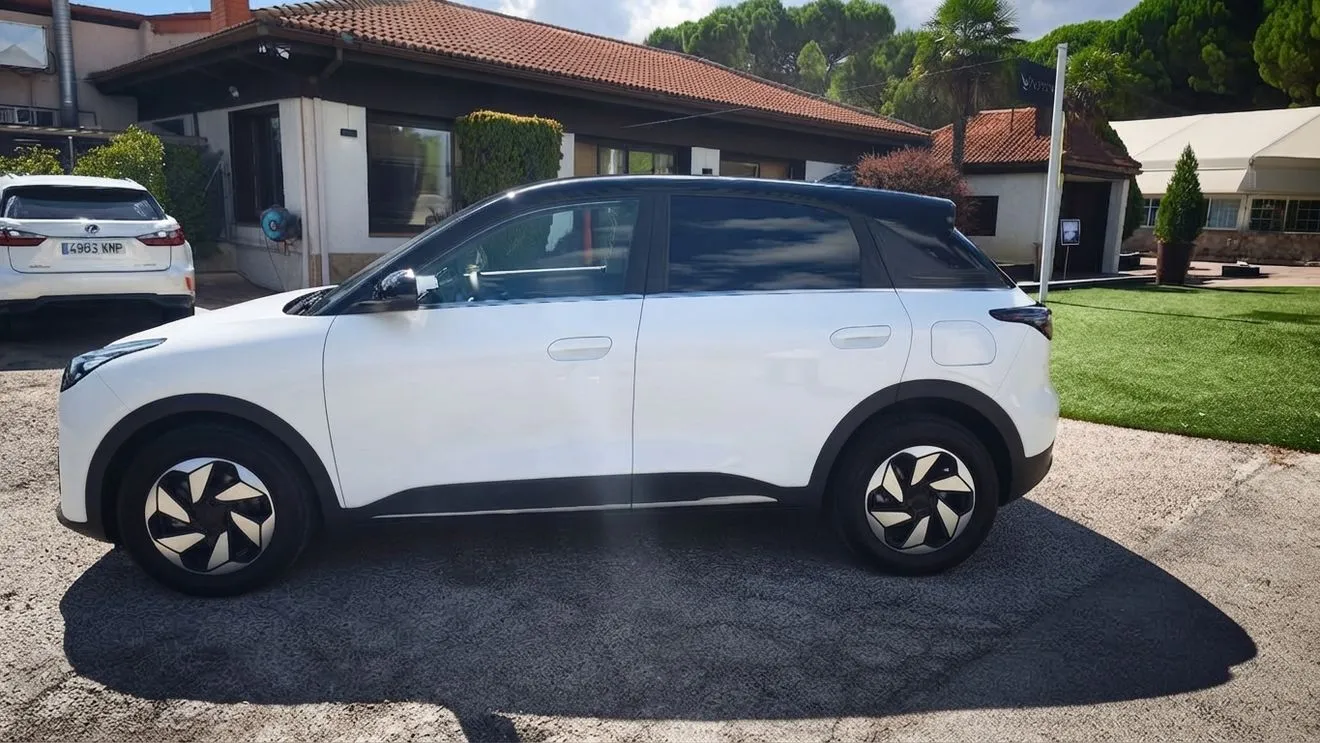
The conclusion of this brief overview is that the Geely E2 is an excellent car for its price. It does have a decent design, though it’s not very exciting. It’s quite simple and falls far behind its main competitors like the Renault 5, which appeals to emotional appeal with its design.
The impression after testing it is that the E2 falls somewhere in between. It’s neither large nor equipped with a battery or fast charging, making it unsuitable for long trips, similar to options available in the Renault Megane or BYD Dolphin (the standard version, not the Surf), but it’s also not as compact as the BYD Dolphin Surf or Renault 5 for city driving.
Its main strengths lie in its cost-performance ratio, interior space, and charging area. The Pro version costs 20,280 euros cash, before any discounts or promotions, putting it on par with the 30 kWh BYD Dolphin Surf, which has a WLTP range of 220 km and starts at 19,990 euros.
The Pro+ version, equipped with a more powerful engine and a 47 kWh LFP battery, costs 24,990 euros, while the tested Max+ version costs 27,495 euros. Again, these are prices before any discounts or promotions.
With the Renault 5 Intermédiaire available at 26,000 euros before any discounts or promotions, featuring 120 HP, a 40 kWh battery, and 315 km of WLTP range, or the BYD Dolphin Surf Boost at 23,990 euros with 156 HP, 40 kWh of battery capacity, and 310 km of WLTP range, the choice is indeed difficult.
Models
Geely E2 Pro
Geely E2 Pro+
Geely E2 Max+
Renault 5 120 CV
BYD Dolphin Surf Active
BYD Dolphin Surf Boost
Length
4.14 m
4.14 m
4.14 m
3.92 m
3.99 m
3.99 m
Width
1.81 m
1.81 m
1.81 m
1.81 m
1.72 m
1.72 m
Height
1.58 m
1.58 m
1.58 m
1.50 m
1.59 m
1.59 m
Wheelbase
2.65 m
2.65 m
2.65 m
2.54 m
2.50 m
2.50 m
Drive Type
Rear-wheel drive
Rear-wheel drive
Rear-wheel drive
Front-wheel drive
Front-wheel drive
Front-wheel drive
Power
82 HP
116 HP
116 HP
120 HP
88 HP
156 HP
Battery
35.4 kWh LFP
47.1 kWh LFP
47.1 kWh LFP
40 kWh
30 kWh LFP
43.2 kWh LFP
WLTP range
252 km
345 km
345 km
315 km
220 km
310 km
0-100 km/h
14.2 s
11.5 s
11.5 s
9.0 s
11.1 s
9.1 s
Rear trunk space
375 l
375 l
375 l
304 l
308 l
308 l
Front trunk space
70 l
70 l
70 l
—
—
—
Total trunk space
1,320 l
1,320 l
1,320 l
1,106 l
1,037 l
1,037 l
DC fast charging
60 kW
80 kW
80 kW
80 kW
65 kW
85 kW
Price
20,280 €
24,990 €
27.495 €
26.044 €
19.990 €
23.990 €