
ProLogium has begun producing solid-state batteries. 381 Wh/kg is high, while 0.5 GWh is currently low.
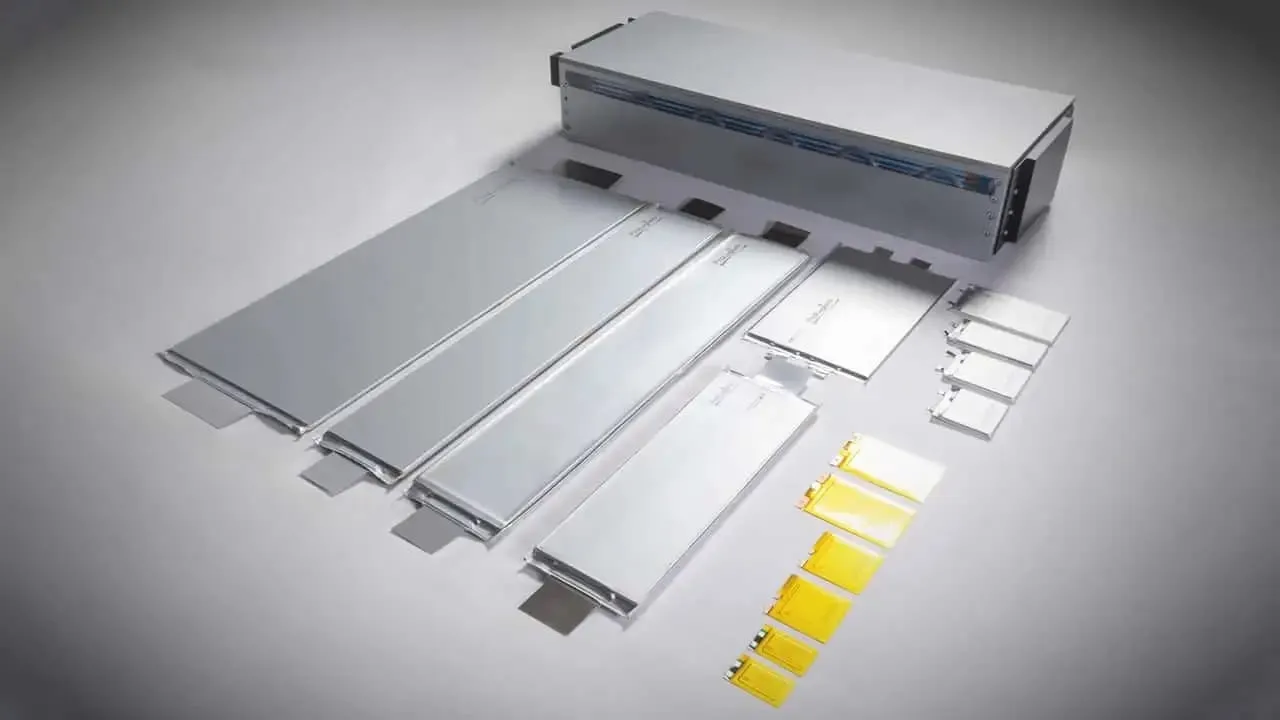
ProLogium from Taiwan announced the start of mass production of all-solid-state cells at its Taoyuan facility. Backed by Mercedes, the company mentions a large pouch cell with 185.4 Ah capacity, a density of 381 Wh/kg, and the ability to reach 5-80% charge in less than 10 minutes.
On paper, this performs better than typical NCM cells and significantly better than LFP cells. However, the scale of production at this stage remains modest.
What ProLogium Is Already Producing
The Generation 3.5 Lithium Ceramic Battery in a large pouch format has entered production. According to tests by Germany’s TÜV, it achieves 381 Wh/kg and 903 Wh/l in energy density.
This is about 30% higher than typical NCM cells used in electric vehicles today, which generally reach around 300 Wh/kg per cell. For comparison, LFP cells usually fall within the 150-200 Wh/kg range. Previously, Donut Lab claimed 400 Wh/kg, but there that it’s more of a claim than something actually being produced.
ProLogium also adds another important point, namely the formal distinction between true all-solid-state batteries and those with liquid electrolyte additives. UL Solutions tested the company’s large cell using the new Chinese standard GB/T 43568-2026, introduced in July.
During the test, the cell was kept under vacuum for 6 hours at a constant temperature of 120 degrees Celsius. The mass loss was less than 0.05%, compared to a limit of 0.5% required to classify a product as an all-solid-state battery. This is concrete evidence, not just a slogan.
The Gen 3.5 cell itself uses a composite solid electrolyte and a ceramic separator with its own edge-frame design. This provides additional insulation at the edges of the electrodes to reduce corrosion effects and improve sealing.
Charging, Safety, and Production Scale
The company also mentions the specifications of the older Gen 3 cell. It can charge from 5% to 80% in 8.5 minutes. The manufacturer claims that the cell will not catch fire even when pierced, at temperatures up to 170 degrees Celsius, or under overvoltage conditions with twice the nominal voltage. Impressive. Now we await similarly robust data for Gen 3.5 in real-world applications.
The factory’s initial production capacity in Taoyuan is 0.5 GWh per year. This is enough for about 6,000 power packs with a capacity of 80 kWh each. By EV industry standards, this is relatively low.
However, the plans are larger. The plant in Taiwan aims to double production by 2030. A second factory is being built in Dunkirk, France, and is set to start with an annual capacity of 4 GWh, with a target maximum of 44 GWh. Operation is scheduled for 2028, with further capacity expansion continuing until 2030.
The ProLogium also introduces Generation 4 with a completely inorganic superfluidized electrolyte system. There are two promises: faster charging and improved performance at low temperatures. What’s most interesting is that the transition from Gen 3.5 to Gen 4 will require only a 10% replacement of equipment in production lines. If this proves true, the cost of adopting newer chemistry could be lower than usual.
For Europe, one number is crucial today: 2028. That’s when production in France is set to begin, marking the first major manufacturing site closer to our market. Do you place more trust in 381 Wh/kg, or do you focus primarily on those modest initial 0.5 GWh figures?
LovEV Newsletter
Want more content like this?
Sign up — we’ll send you a weekly summary once the newsletter starts.