
ProLogium: We have begun mass production of solid-state cells. 0.38 kWh/kg, 0.9 kWh/l
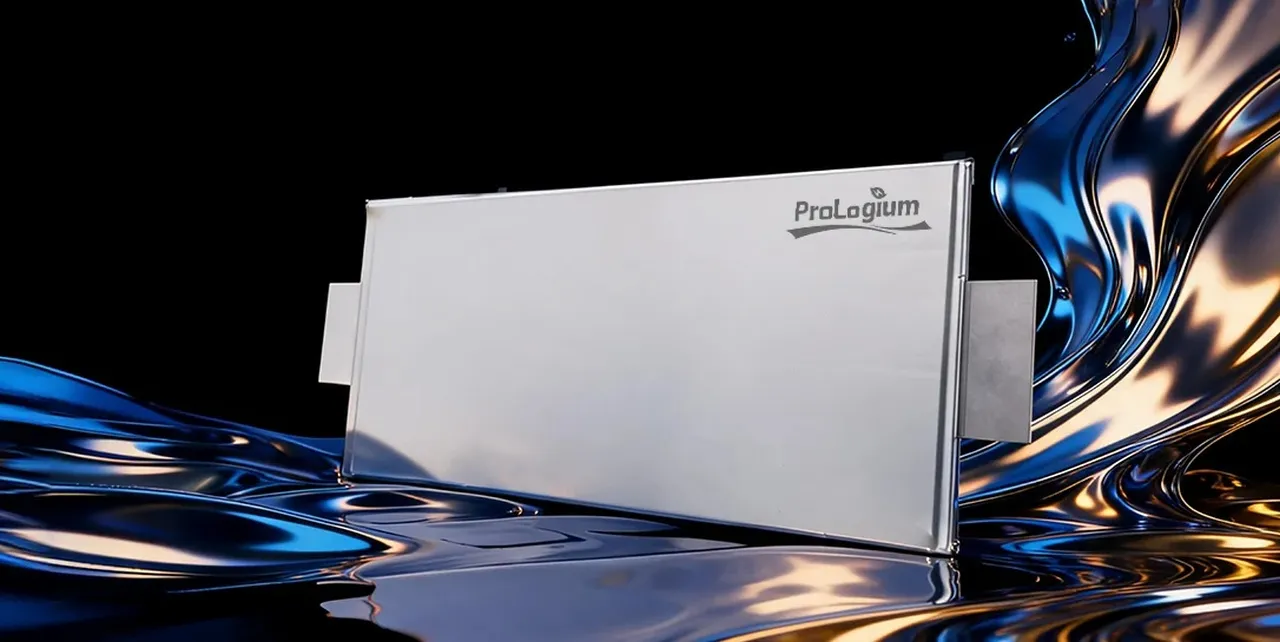
The Taiwanese company ProLogium announced that it has begun mass production of its second-generation cells using a ceramic solid electrolyte. These cells have energy densities of 0.381 kWh/kg and 0.903 kWh/l. The former value tells us how much energy can be stored in one kilogram of battery, but the latter is particularly interesting as it suggests that ProLogium’s cells are highly compressed compared to competitors. Even Donut Lab’s bipolar solid electrolyte cells offer “only” 0.805 kWh/l.
ProLogium. Moving slowly toward the goal
ProLogium claims to have supplied its solid-state cells to the independent certification body TÜV, which verified the aforementioned energy densities. This seems quite amusing in comparison to Donut Lab, which turned the specifications of its cells into a half-year-long narrative, while the Taiwanese company managed to condense all the information into a single sentence (source). It is also impressive that the 0.381 kWh/kg figure was achieved in a large-format cell with a capacity of 185.4 Ah, as all solid-electrolyte startups always started with small formats (buttons, tiny pouches) and minuscule capacities.
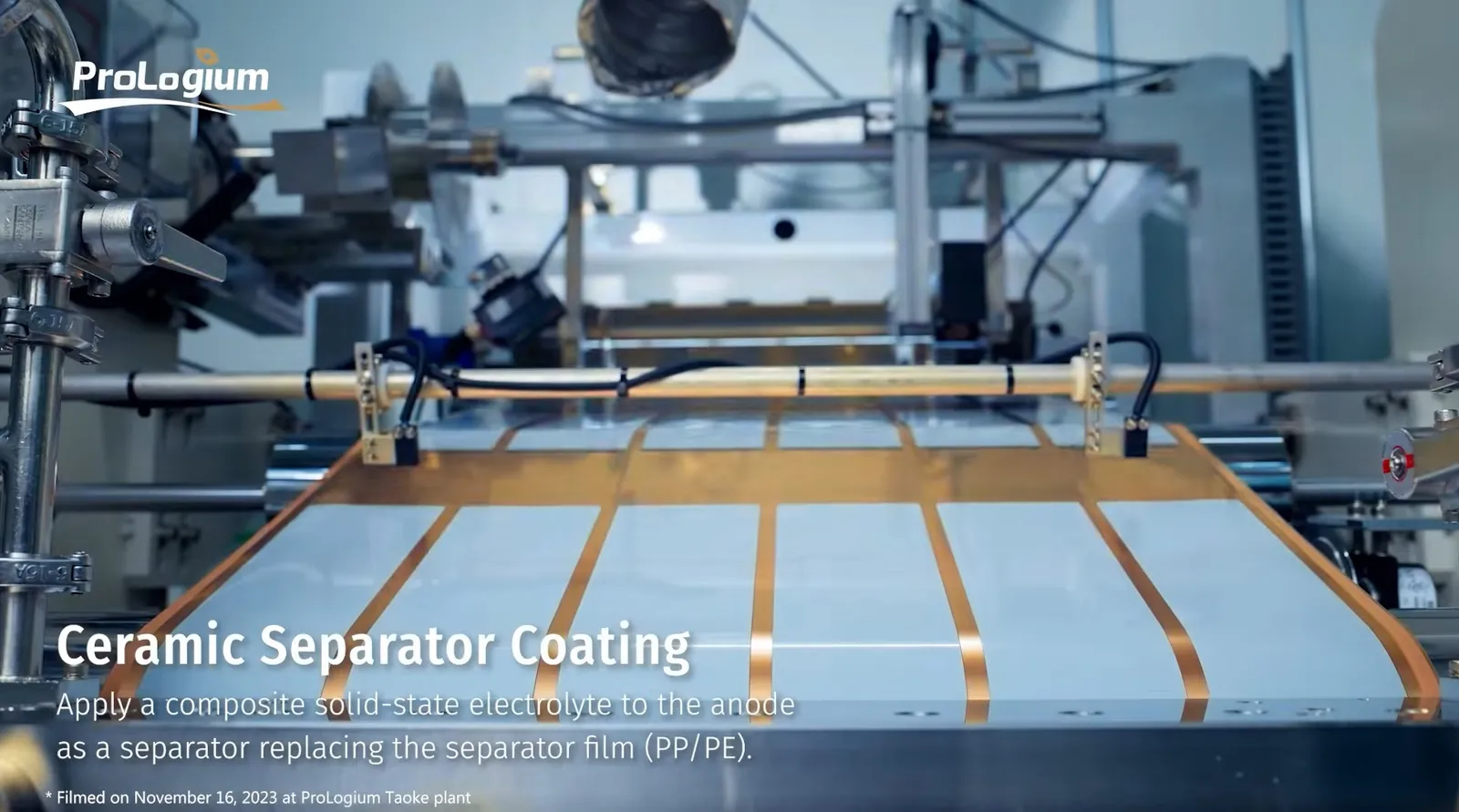
ProLogium calls its cells Gen 3.5, or third-and-a-half generation, but those who observe the company know this is merely the second generation of cells ready for broader production. As for true mass-scale manufacturing, we’re talking about a generation around 0.75. This is especially true since it’s only Gen4 that is supposed to guarantee better performance in cold conditions and promise lower production costs. When ProLogium signed a contract with Rimaki at IAA 2024, both companies stated their goal of achieving satisfactory results in terms of energy density and cost-performance ratio by 2030. It should be noted that the parameters confirmed by TÜV are already impressive—and sufficient. The only remaining issue is price.
The manufacturer claims that it tested its cells under China’s GB/T 43568-2026 standard, and after six hours of vacuum drying [vacuum drying, torch march, …] at 120 degrees Celsius, they lost less than 0.05 percent of their mass. The test confirmed the use of a solid electrolyte, as the maximum allowable weight loss is 0.5 percent. If cells exceed this value, they can at most be classified as having a solid-liquid electrolyte. With liquid electrolytes, cells lose several percent or even a dozen percent of their weight.

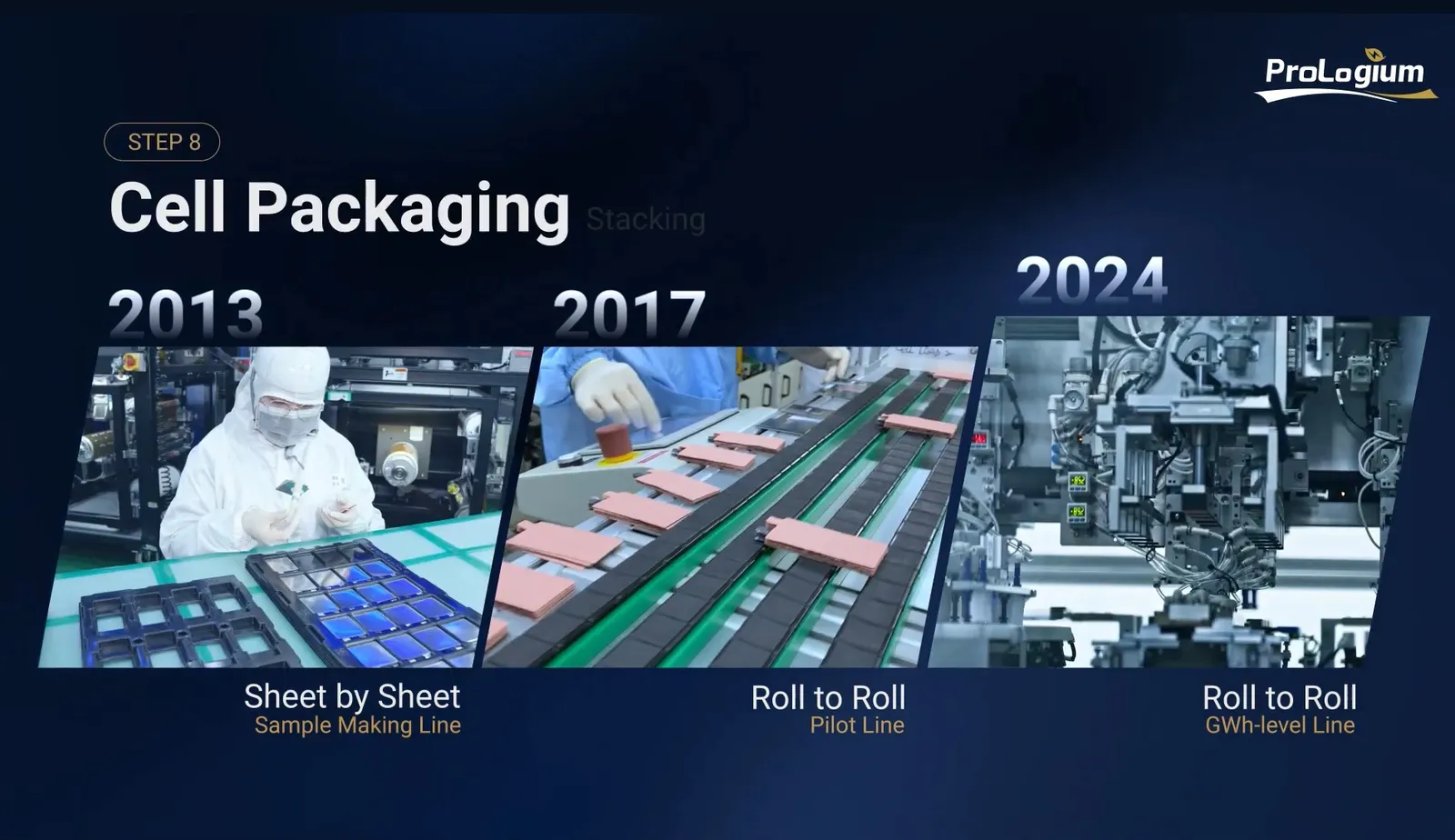
The development stages of ProLogium. First manually, then under human supervision, and finally mechanically. This is a good indicator of how much time it takes for a startup to develop a truly viable product (c) ProLogium
ProLogium reveals that it uses a ceramic electrolyte, which is more flexible than the competing QuantumScape product. Since 2013, the company has supplied over 2.3 million cells, but considering that these were cells with capacities of just a few ampere-hours during the first 10-12 years, it are the recent results that truly matter. As the company is based in Taiwan, it won’t be competing with any Chinese manufacturers. Thus, it remains to target niche European brands (see: Rimac) that currently don’t prioritize price but demand very specific specifications when entering into actual cooperation.
Editor’s note from Elektrowozu: We’re a bit concerned that the graphics on ProLogium’s website look as though they were generated by ChatGPT. It reminds us of Nikola Motors’ old campaign, where a very long downhill road that appeared to be flat was used for filming the hydrogen truck — and the rest just happened naturally. The hydrogen-powered truck kept driving, driving, driving — until it stopped. These captions below are also quite... concerning.
Article rating
Readers’ ratings
[Total: 0 votes Average: 0]
Don’t miss new content — CLICK and FOLLOW Elektrowoz.pl on Google News. You might also be interested in the ads below: