
Progress of electric vans and trucks in August 2026
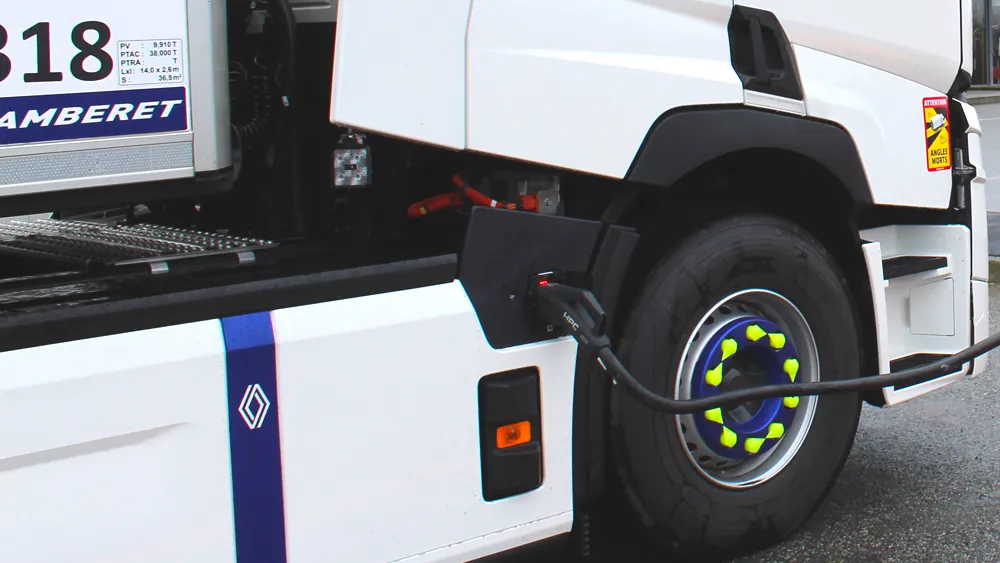
In addition to government mandates and incentives, electric vans and heavy trucks (trucks, coaches, and buses) are beginning to attract French professionals who have observed improvements in range and charging performance.
Although registration figures are still sometimes quite modest and far from the 36,159 electric passenger cars predicted by Emmanuel Macron a few days ago for August 2026, there are encouraging trends to be seen.
Light commercial vehicles
For utility vehicles with a total running weight (PTR) of up to 3.5 tons, 15,781 units across all energy types were registered in August 2026, a 14.6% decline compared to the same period last year. The drop was smaller on an annual basis, at -4.7%, with 224,569 vehicles registered in total.
The market share (PDM) of electric models is on the rise. With 27,672 units registered, their PDM was 12.4%. In August alone, there were 2,160 electric light utility vehicles, giving them a PDM of 13.9%, representing a 13.8% increase.
The percentage increase was higher for non-rechargeable hybrids: +32.4% compared to August 2025, with a PDM of 6.8% and 1,054 units registered. On an annual basis since the start of 2026, the increase was slightly less significant: +21.1%, with a PDM of 5.7% and 12,638 units registered.
The situation is more modest for rechargeable hybrids, with an August PDM of 1.4% for 219 units, representing a 5.3% increase. The annual total for this type of vehicle is 2,464 units, up by 56.2%, with a PDM of 1.1%.
Importantly, registrations of gasoline and diesel trucks are declining. This was evident last August, with declines of 28.7% and 20.5% respectively for 1,059 and 11,025 units, corresponding to PDMs of 6.8% and 70.9%.
The decline in diesel registrations is much more significant compared to the period from January to the end of August, when the decline was only 9%, with PDMs of 75.6% and 167,191 vehicles. For gasoline, the decline was 28.8% over the same period compared to last year, with a PDM of 5.6% and 12,365 units.
Other trucks
For utility vehicles with a PTR between 3.5 and 5.1 tons, only two power types were in competition. Diesel led slightly, with 927 units (+15%, average daily rate of 50.5%) since the start of the year and 123 units (+39.8%, average daily rate of 51.3%) in August 2026 alone.
Electric vehicles performed well for these vehicles, with 863 units (+99.3%, average daily rate of 47%) for the whole year and 116 units (+157.8%, average daily rate of 48.3%) in last August. For these utility vehicles, there were no registrations for CNG-powered models in last August, representing a 77.3% decline since January 2026.
Trucks
For trucks, diesel still accounts for the vast majority, benefiting especially from the significant decline in B100 (down 50.6% in August and 36.3% since January 2026) and GNV (down 4.5% in August and 60.4% since January). Its market share has been at 91.8% since the start of the year, with 24,786 units registered (a 0.2% decrease), and it reached 92.7% in August alone, with 1,466 vehicles registered (a 8% decrease).
Electric vehicles still make up a small portion of road tractors, dump trucks, and other heavy vehicles excluding coaches and buses. Only 48 vehicles were registered in August, representing a 3% market share, though there was still a 60% increase. From January to August 2026, its share was only 28.2%, with 673 new registrations and a 2.5% market share.
Last month, there were no models with hydrogen powertrains, rechargeable hybrids, conventional hybrids, or CNG engines, whereas at the start of the year there were 6, 2, 1, and 1 units respectively. This shows that although the figures are modest for this sector, decarbonizing heavy transport is increasingly moving toward electric solutions.
Buses
In the case of buses, as part of conversions of existing fleets, more types of powertrains are represented. This explains why the share of diesel engines is much lower compared to trucks. Since the beginning of the year, it has been 65.1%, with 3,008 registrations, representing a 14.9% increase. The trend reversed downward in August 2026, with 413 units and a diesel share of 69.8%.
In the same month, electric vehicles were the most common alternative (72 registrations, a 35.8% increase, with a monthly average growth rate of 12.2%). They were almost tied with CNG vehicles (71 units, a monthly average growth rate of 12%), but CNG showed a downward trend (-36%). Also recorded in August 2026 were 2 hydrogen vehicles and 34 non-rechargeable hybrids.
From January to last month inclusive, CNG was the most common alternative to diesel (780 registrations, a monthly average growth rate of 16.9%, up by 10.5%). Electric vehicles followed with a monthly average growth rate of 11.5% and 530 units (+17.3%). During the same period: 262 conventional hybrids (a monthly average growth rate of 5.7% and a 21.3% increase), 35 hydrogen vehicles (a monthly average growth rate of 0.8%, +9.4%), and 6 buses running on B100 fuel (a monthly average growth rate of 0.1%, -90.3%).