
Issues with Tesla FSD: “Unmet promises”
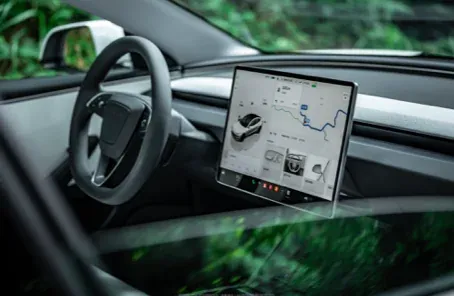
Problems with Tesla FSD, the Full Self Driving package: a reader explains why he filed a complaint with the Antitrust authority. Of course, we would also like to include Tesla’s perspective, but they do not respond to media inquiries. If they wish to, they can write to us at info@vaielettrico.it
by Francesco Ambrosino
“I am writing as an enthusiastic owner of a 2021 Tesla Model 3 Long Range. I love this car, its efficiency, and the revolution it represents. But there is one issue where I believe it’s time to bring clarity to the public, beyond the usual social media announcements: the Full Self-Driving (FSD) package sold on vehicles with Hardware 3 (HW3). I hope my testimony can help initiate an informed discussion among Vaielettrico’s readers. And to give voice to many Italian owners who feel deceived today.”
Problems with Tesla FSD: “True autonomous driving is impossible”
At the beginning of 2026, I decided to purchase the FSD package at full price (an optional feature costing around 7,500 euros that ended up costing me 3,800 because I already had the EAP). Tesla’s long-standing promise, repeated for years by Elon Musk and the sales team, was clear. The hardware onboard (HW3, introduced in 2019) already had everything necessary in terms of computing power and sensors to handle future autonomous driving through OTA software updates. In recent months, Tesla’s executives have had to publicly admit that Hardware 3 has insurmountable physical limitations. The 8 GB of RAM and the 1.2 MP camera resolution will never allow true “Unsupervised” autonomous driving (without a driver), which requires the AI4/HW4 system architecture (equipped with 16/32 GB of RAM and 5 MP sensors).
"The limitations of a software costing thousands of euros"
To confirm this, when the Dutch authority RDW granted the first approval for FSD Supervised in Europe under the new UNECE R171 (DCAS) regulation, vehicles with HW3 were completely excluded from the first batch of approvals, which were limited to models equipped with Hardware 4 only. For us, those with HW3 are now referred to as a “v14 Lite” version (a reduced and streamlined AI model). Alternatively, there are theoretical and complex hardware retrofits involving the replacement of computers and cameras, whose industrial production and approval timelines continue to be pushed back to 2027 or later. We should also add that in Italy, even hope for HW4 is dim, let alone when FSD14 LITE will be available in the EU. As a customer, I wonder: how is it possible to sell a software package costing thousands of euros at full price in 2026, knowing already that the hardware it’s installed on will never be capable of delivering the promised performance?
her?Problems with Tesla FSD: “I filed a complaint with the Antitrust Commission”
I didn’t want to settle for believing only the promises on X or waiting for some “logistical miracle.” On April 11, 2026, I filed a formal complaint with Italy’s Antitrust Authority (AGCM). My complaint alleges actual unfair business practices due to a lack of information and misleading statements about the product’s essential features (under the Consumer Code). The 180-day evaluation period set by AGCM is approaching its first formal deadline at the beginning of October. I can see that protests are growing across Europe. In the Netherlands, the HW3 Claim initiative was launched, in Italy, Class Action Italia has started reviewing the case (IT-2026-1). And in the U.S., legal actions are multiplying. Electric cars represent the future, and Tesla has been its main driver. But customer trust is maintained through transparency. By not selling inadequate hardware...
Promise of a software that will never work on it.READ ALSO: Voices from those excluded from the charging station bonus. And watch the VIDEO
Previous Article
TEST - Subaru E-Outback: everything changes, except Subaru’s spirit
Next Article
Used electric cars: okay, now the price is (more) reasonable
