
We tested the Volkswagen ID. Polo, a very round electric car that aims to dethrone the Renault 5
If something works, don’t change it. That was the philosophy Volkswagen followed for decades with models like the Polo or Golf. Though sometimes criticized for its conservatism, the German brand achieved sustained success over time by adhering to this strategy: despite the advancements from one generation to the next, the essence of its cars remained consistent.
This changed with the introduction of the ID. electric lineup in 2019, which meant starting over in areas such as exterior and interior design, as well as in other aspects like ergonomics and even the names used for its models. Although vehicles like the ID.3 and ID.4 can’t be considered failures, market response was much cooler than expected.
A little over a decade later, Volkswagen is turning back. The German automaker aims to revive the formula that made its cars true bestsellers across Europe: a sober and Germanic aesthetic, practical and ergonomic interiors, a high perceived quality, and names that are familiar to consumers. The new ID. Polo is the first representative of this new era that looks to the past to move forward into the future.
The Volkswagen ID. Polo is also the company’s first electric offering in the B-segment, one of the most important categories on the old continent. Positioned one tier below the ID.3 Neo, this model will have to compete with rivals such as the Renault 5. Is it a worthy competitor to the French bestseller? We can tell you that our first encounter with it during its launch in Valencia left us very impressed.
A true Volkswagen inside and out
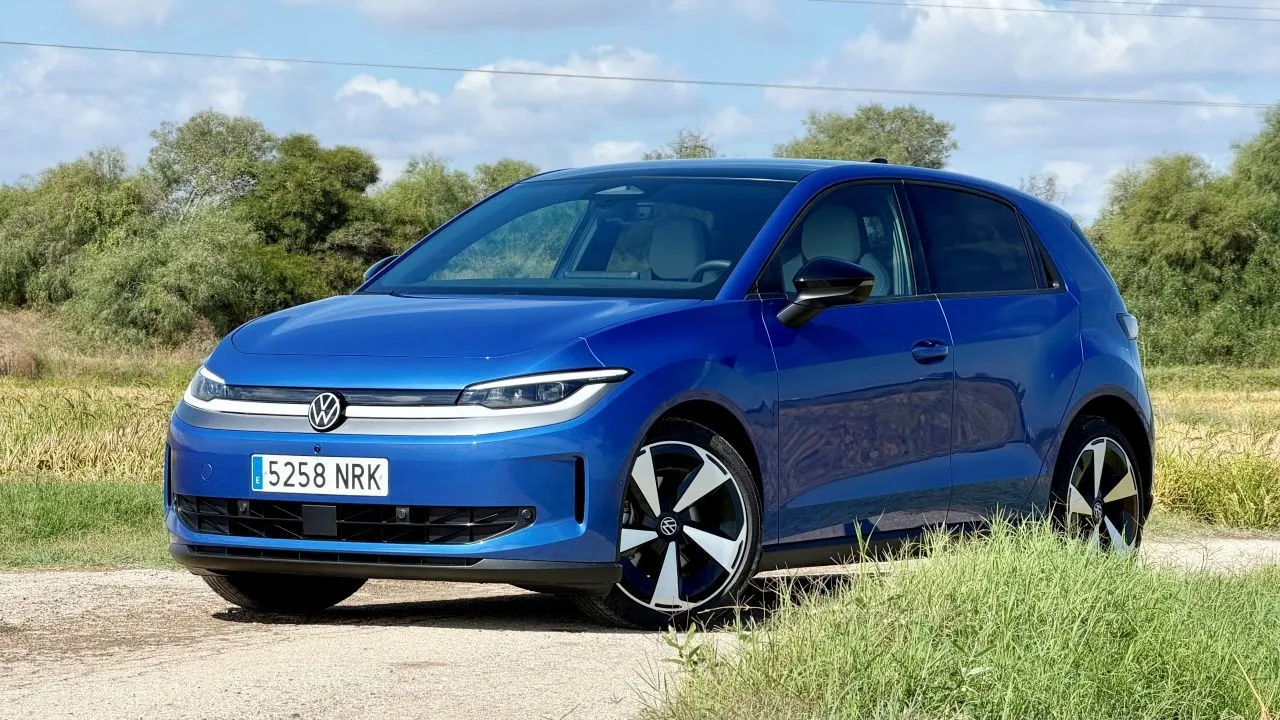
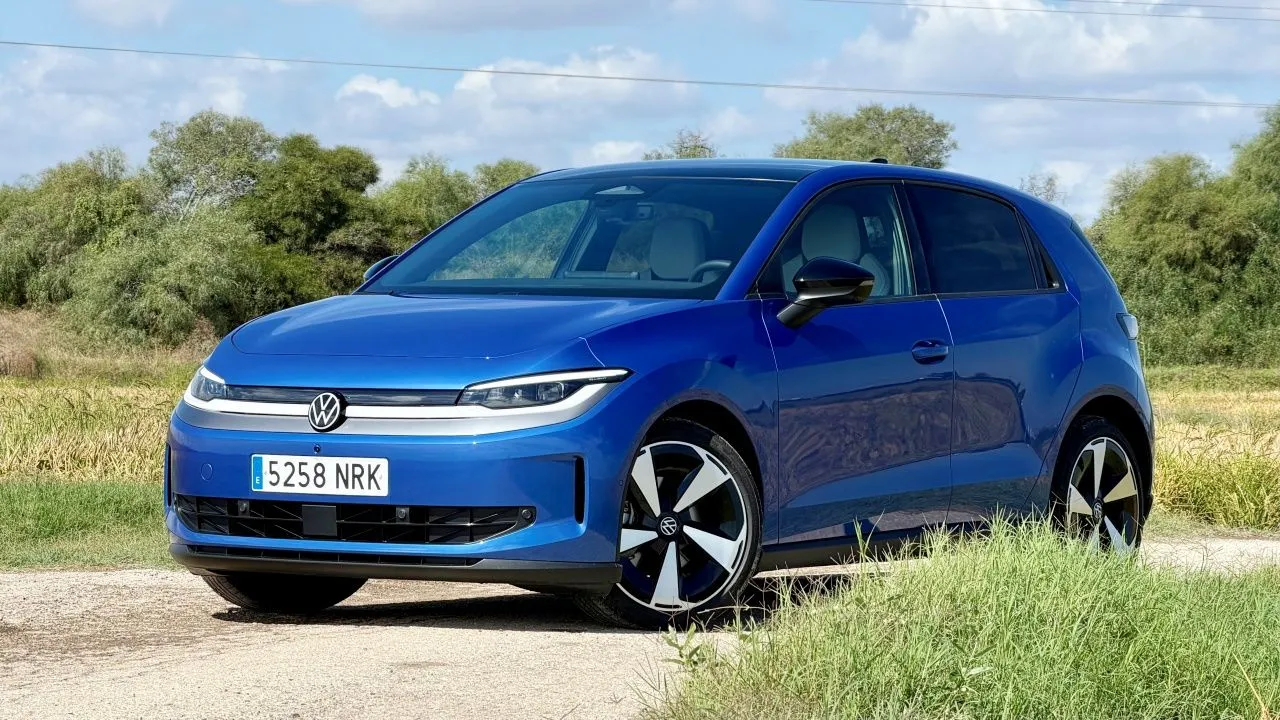
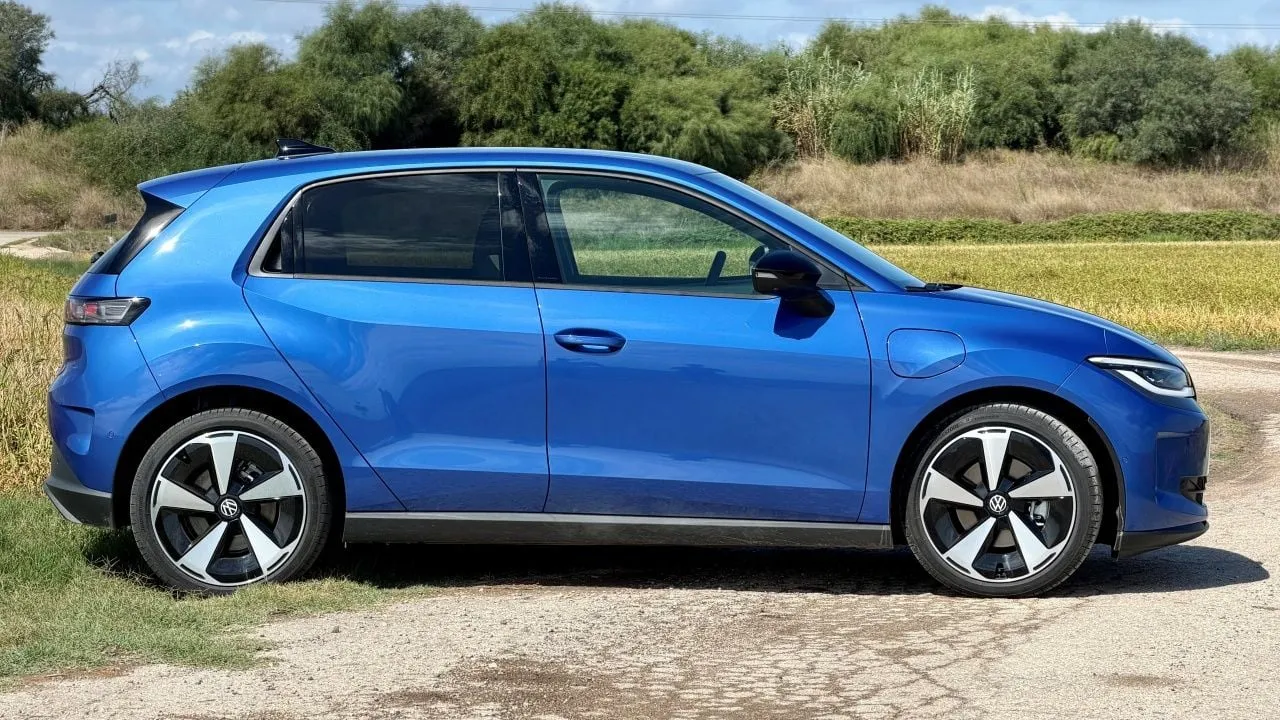
The newcomer is a five-door hatchback with a length of 4053 mm, width of 1816 mm, height of 1530 mm, and wheelbase of 2592 mm. It is slightly shorter than a Polo Thermal (4074 mm) but also taller (1435 mm) due to the batteries located under the floor. In any case, its aesthetics and proportions are largely those of a classic utility vehicle.
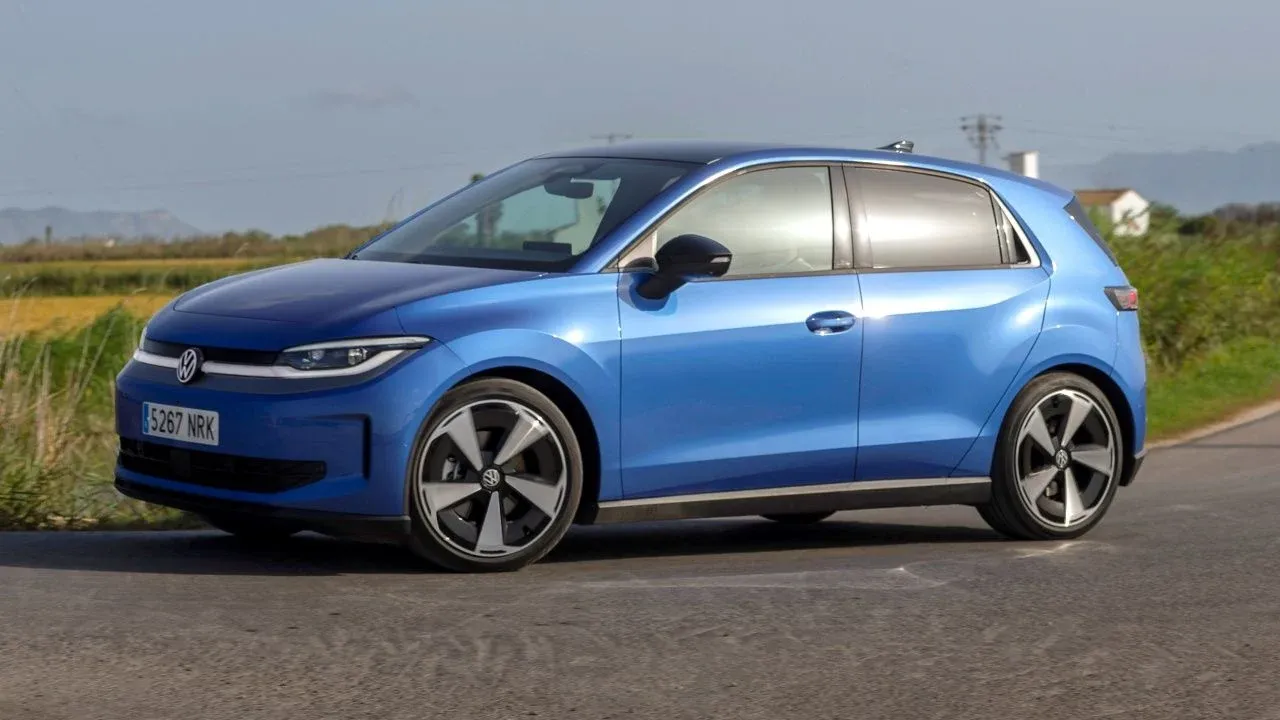
Its silhouette features two clearly defined volumes, with a short but horizontal hood that helps it avoid the monovolume appearance of the ID.3. The front lighting units (which may include IQ.LIGHT matrix technology) blend together with an LED strip that leads to the illuminated brand logo. The bumpers have a small smile-shaped air intake, framed by air curtains that not only serve an aerodynamic purpose but also resemble dimples.
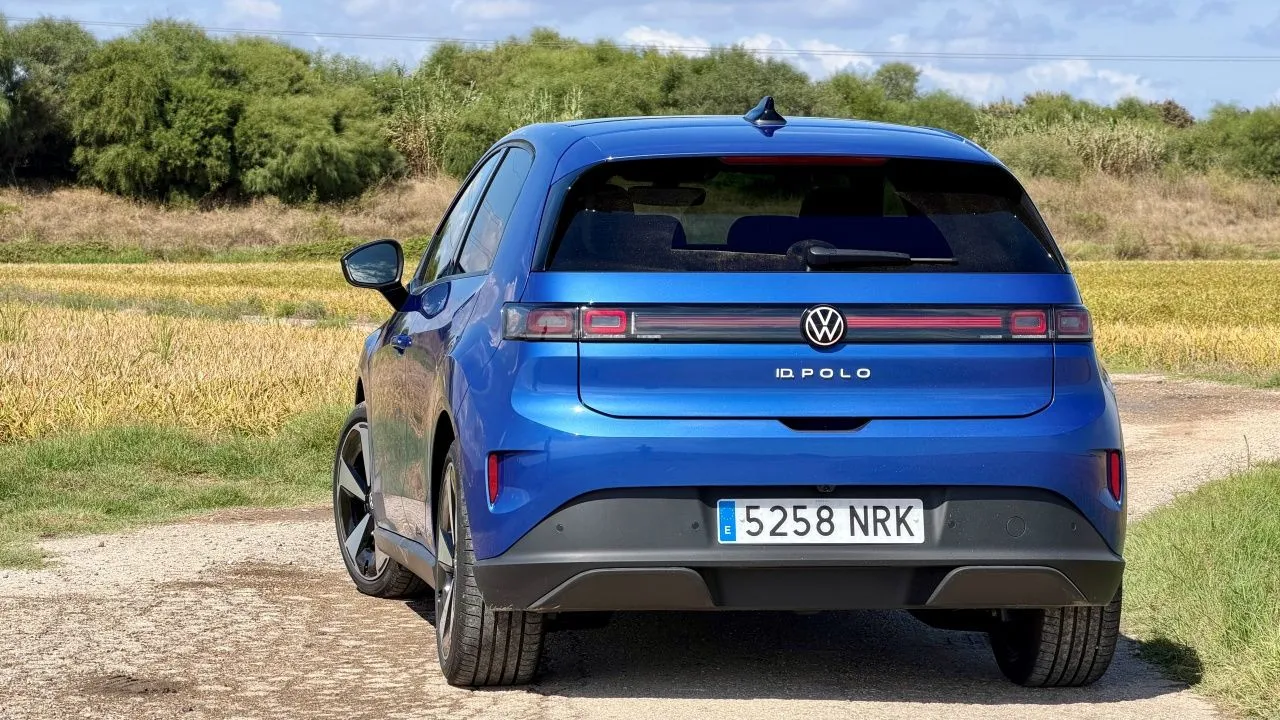
The C-pillar in arrowhead shape pays homage to the Golf series, while the rear door handles are concealed to give it a three-door appearance. The side belt line rises to shoulder height for a more dynamic look. Depending on the version, the tires range from 17 to 19 inches in diameter. At the rear, continuous trim elements enclose the Volkswagen badge, which is illuminated in red.
The interior completely breaks away from Volkswagen’s previous electric models thanks to a highly logical layout of controls and a quality that is more than adequate for its class. The 10-inch Digital Cockpit is practically twice as large as that in the earlier ID.3 and ID.4 models (5.3 inches). It offers several display modes, including a striking Retro mode that imitates the dashboard of a first-generation Golf.
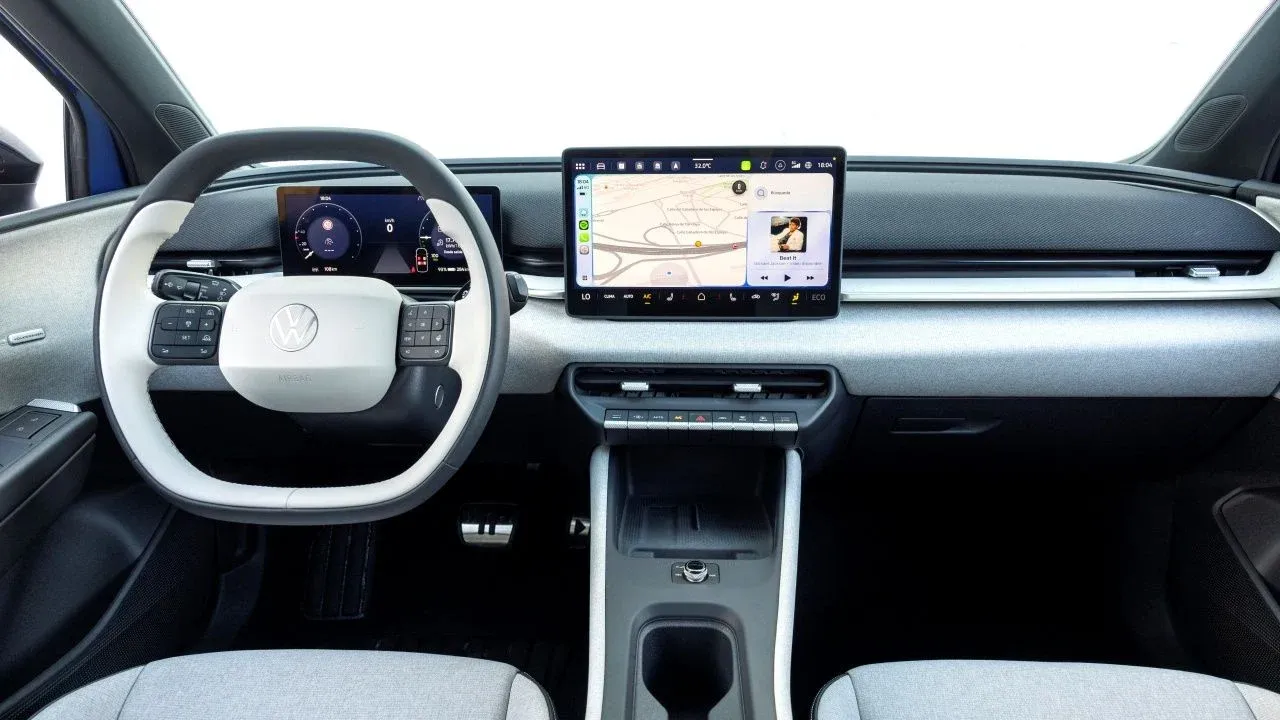
The 12.9-inch touchscreen (which also has a Retro mode) is paired with an infotainment system based on the Android Automotive operating system. It operates quickly and smoothly, and features a customization layer that resembles Volkswagen’s previous MIB4 interface (which is not bad). The much-criticized haptic controls for adjusting temperature and volume are gone, replaced by a set of buttons to manage all climate control functions in the first case, and a dial located in the center console in the second.
Ergonomics have improved significantly, aided in part by the new two-spoke steering wheel with physical buttons, which offer a much better feel than the touch controls previously used by the brand. That said, the steering wheel in the test unit was covered in white leather—a choice I personally don’t quite understand, as it’s a color that shows dirt very easily.
On the other hand, there is no longer a switch to control the rear window lifts, but rather four individual buttons. The center console features a wireless charger for smartphones, cup holders, and an armrest; additionally, there is a storage area beneath it with two 60 W USB-C ports.
Although the plastics used in the dashboard and doors are rigid, the quality feel is good thanks to the use of fabric on the upper and front sections of the dashboard; moreover, the door panels are padded and quite large. Additionally, the various components seem to be well assembled together with no misalignments or gaps.
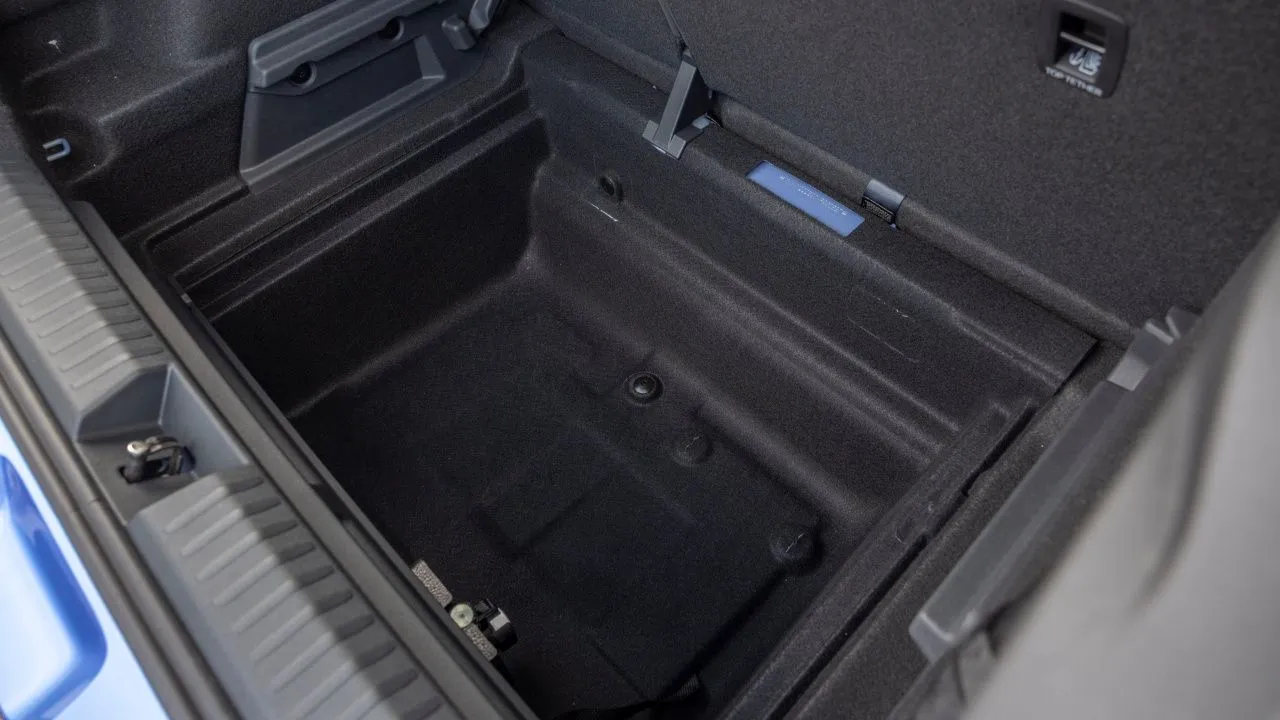
The rear seats provide adequate space for the head and legs; however, they lack the ventilation openings found in its twin model, the CUPRA Raval. But the real surprise is the huge 441-liter trunk, which puts the ID. Polo ahead of the Golf (381 liters) and ID.3 Neo (383 liters), both of which belong to the C segment. This is due to the absence of an exhaust system and the use of a torsion beam rear suspension, a configuration that frees up space and allows for a very deep and useful dual floor.
Volkswagen ID. Polo: Germanic consistency
The ID. Polo is based on the MEB+ modular platform in its front-wheel-drive version. It features disc brakes on both axles, along with a one-box system that provides a more consistent feel to the brake pedal since the transition from regenerative braking to mechanical braking is imperceptible to the driver. Additionally, there is a One Pedal mode that allows driving using only the accelerator, which is particularly practical in urban areas. To activate it, you need to select mode B on the selector lever located in the steering column.
There are three power levels: 116 HP (85 kW), 135 HP (99 kW), and 211 HP (155 kW). For the first two models, the battery is a 37 kWh net LFP (lithium-iron-phosphate) battery, offering a maximum range of 326 km according to WLTP standards and a peak charging rate of 90 kW DC (10-80% in 23 minutes). The most powerful version uses a 52 kWh NCM (nickel-cobalt-manganese) battery, achieving a WLTP range of 449 km. It can be charged at 105 kW (10-80% in 24 minutes). All versions can be charged via AC at 11 kW; additionally, they feature V2L (Vehicle-to-Load) reverse charging at 3.6 kW.
The top speed is limited to 160 km/h in all cases. The 116 CV version can accelerate from 0 to 100 km/h in 10.6 seconds, the 135 CV version in 9.5 seconds, and the 211 CV version in 7.1 seconds. A high-performance GTI model with 226 CV (166 kW) will be added later, reducing the acceleration time to 6.8 seconds and allowing it to reach 175 km/h.
In motion, the ID. Polo feels like a very stable vehicle for its size, with a suspension that strikes an excellent balance between agility and ride comfort: it can absorb potholes without losing stability, offering the driving feel of a larger car without sacrificing the agility typical of smaller models. The sound insulation appears to be well thought out, and the seats in the Style trim (more sporty than those in the Match and Life trims) provide good support for the body.
Our unit was the 211 CV version, which delivers very good performance by the standards of this segment. As with most front-wheel-drive electric cars with a certain level of power, accelerating hard from a stop causes the wheels to skid; however, electronic controls minimize this loss of traction so it’s barely noticeable through the steering wheel. The steering is well tuned and provides a good level of feedback.
Due to the short testing period, the energy consumption figures obtained were not very representative; nevertheless, the car seems quite efficient overall, with an auxiliary energy consumption of 13 kWh/100 km, which later dropped below 12 kWh/100 km in urban driving. A longer test in the future will allow us to get more realistic measurements.
Range, prices, and conclusions
As mentioned earlier, the range consists of three finish levels: Match, Life, and Style. The ID. Polo Match comes equipped with LED headlights, 17-inch wheels with alloy rims, a 10-inch digital dashboard, a 12.9-inch touchscreen, climate control, rear parking sensors, rain sensors, electrically adjustable mirrors, automatic emergency braking, and a lane-keeping system.
The ID. Polo Life comes standard with 18-inch tires, front parking sensors, a rearview camera, adaptive cruise control, electrically folding exterior mirrors, an electrochromic interior mirror, white ambient lighting, and a wireless smartphone charger. The ID. Polo Style adds to these features 19-inch tires, IQ.LIGHT matrix LED headlights, dynamic rear turn signals, illuminated logos, 30-color ambient lighting, a dual-zone climate control system, a heated steering wheel, and heated sport seats. It should be noted that the heat pump is optional in both models.
The Match trim can be paired with the 116 CV version, while the Life model is available with 116 and 211 CV engines. The Style level, on the other hand, is associated with the 135 and 211 CV variants, resulting in a total of five versions: Match 85 kW (starting at 25,990 euros), Life 85 kW (starting at 28,860 euros), Life 155 kW (starting at 35,070 euros), Style 99 kW (starting at 33,900 euros), and Style 155 kW (starting at 38,920 euros). These prices do not include subsidies, the CAE (Certificate of Energy Efficiency), or promotional discounts. With those added, the prices range from 17,900 euros for the Match 85 kW to 27,500 euros for the Style 155 kW.
In conclusion, we can assert without fear of being wrong that the ID. Polo is Volkswagen’s most interesting electric car to date. It corrects previous mistakes by reviving the values that defined the brand for decades and bringing them into the electric era. With its performance, handling, interior space, ergonomics, and range of options, it aims to become one of the benchmarks in its category.
Its price is similar to that of other equivalent models, while the range of its most powerful version and its fast charging times make it one of the most versatile electric SUVs on the market. The Volkswagen ID. Polo is set for massive sales, and the strong initial order volume seems to confirm this. This is great news for our country, as it is manufactured at the Martorell plant (Barcelona) alongside the aforementioned CUPRA Raval; furthermore, its batteries will later be produced in Sagunto (Valencia).
In summary...
Tested version:
211 HP (155 kW) engine
52 kWh NCM battery
Homologated range: 447 km WLTP
Prices:
Entry-level version: starting at 25,990 euros
Tested version (Style 155 kW): starting at 38,920 euros
Actual consumption during testing:
At temperatures slightly below 30 °C, city and highway: 13 kWh/100 km
Best aspects:
Performance and efficiency
Tuning
Perceived quality
Ergonomics
Trunk space
Areas for improvement:
Optional heat pump
High price before incentives (but in line with competitors)