
Cost of charging an electric car at home: Is France truly in a favorable position in Europe?
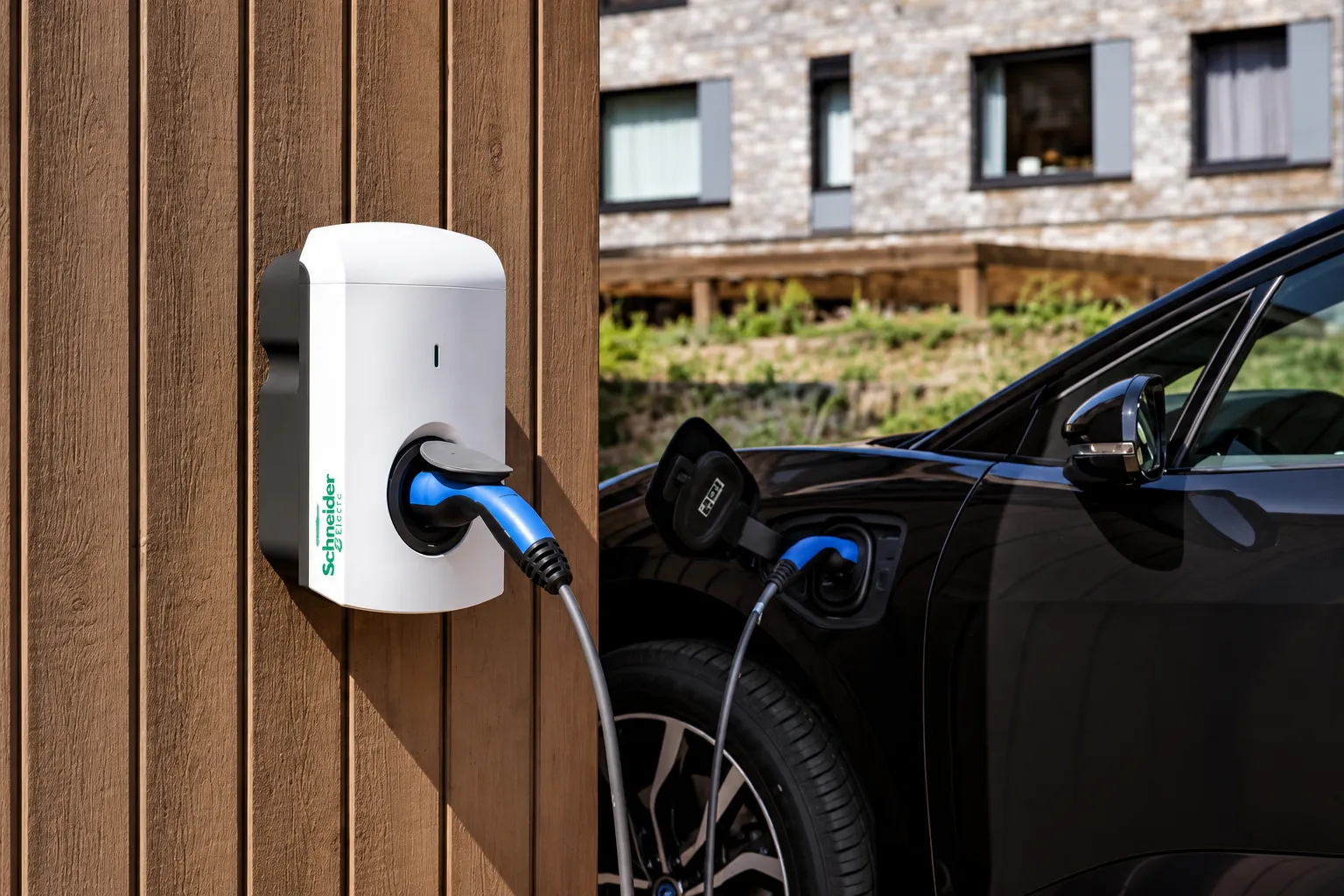
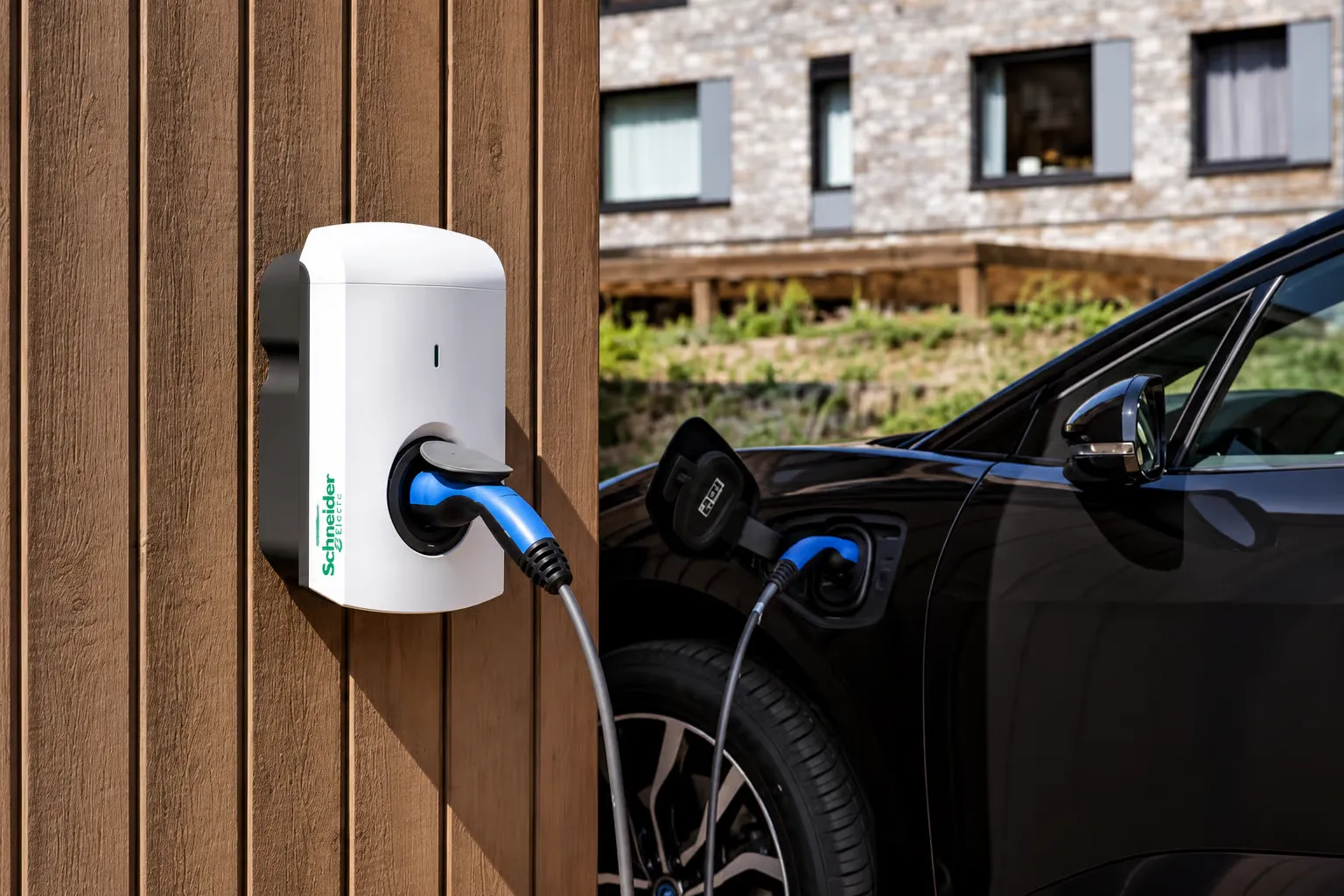
Is France among the most favorable countries in Europe for charging an electric car at home? According to the latest Eurostat data, the average electricity price in France remains lower than that of many neighboring countries, particularly Germany, Belgium, and Italy. The differences between certain countries on the Old Continent are striking. Here’s an overview.
The cost of electricity is a crucial factor when evaluating the usage expenses of an electric vehicle. In this regard, not all Europeans are in the same situation. Due to differences in taxation, electricity grids, and national energy policies, prices can vary significantly from one country to another. The latest data from Eurostat, covering the first half of 2026, provide an overview of the situation. So, are French drivers privileged?
Cheap electricity in France? Yes and no…
Let’s start with the good news. With an average price of 0.2485 €/kWh in the first half of 2026, France is below the European Union average of 0.2832 €/kWh. This is a fairly favorable outcome for French households, although France is far from being the cheapest country on the continent. France ranks thirteenth among the 27 EU member states when ordered from the most expensive to the least expensive. Twelve countries have higher prices, while fourteen enjoy more favorable rates. This casts doubt on the idea that electricity in France is particularly cheap on a European scale.
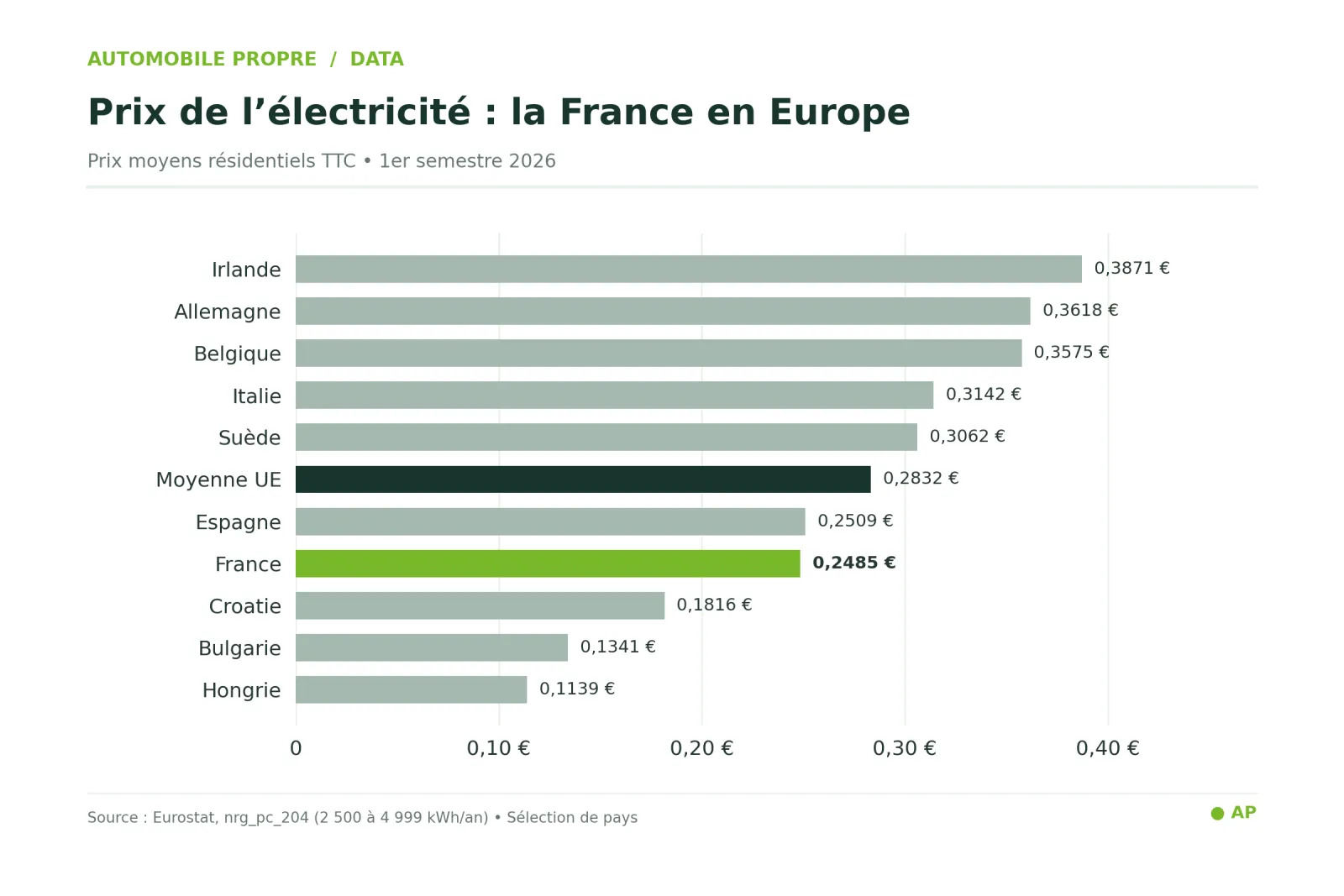
Comparing us with our immediate neighbors is still quite instructive. In Germany, the average price reaches 0.3618 €/kWh, which is nearly 46% higher than in France. Belgium is not far behind, at 0.3575 €/kWh. Italians pay 0.3142 €/kWh. In contrast, the difference with Spain is almost negligible, where the cost per kWh is 0.2509 €. Another observation is that prices are moving in different directions across countries. Compared to the first half of 2025, France’s average rate has dropped by about 7%. Germany also shows a decline, while Sweden and Poland experience significant increases. The European electricity market is far from uniform.
Up to 1,000 € difference per year for an electric vehicle
But what do these differences really mean for electric vehicle owners? To find out, let’s take the example of an electric car that consumes an average of 18 kWh per 100 km. Adding a 10% assumption for additional energy drawn from the grid to account for losses during home charging, we get a billed consumption of 19.8 kWh to travel 100 km. Applying France’s average electricity price, traveling 100 km costs 4.92 €.
For a driver who travels 15,000 km per year, the theoretical cost amounts to around 738 €. This covers only the electricity cost associated with charging, calculated based on the average statistical rate, without any additional fees related to the charging installation. Across the Rhine, the situation is quite different. With the same assumptions, a German driver spends 7.16 € per 100 km, which is approximately 1,075 € for 15,000 km. This represents a difference of 337 € per year compared to France...
In Belgium, the annual cost is around 1,062 €. It drops to 933 € in Italy and 745 € in Spain. France thus maintains a significant advantage over several major European automotive markets. For a driver who charges exclusively at home, this difference amounts to several hundred euros per year. The gaps become even more striking when the comparison is expanded. Ireland has the highest price in the EU at 0.3871 €/kWh. Conversely, Hungary offers the lowest rate at 0.1139 €/kWh. As a result, our fictional electric vehicle driver would pay 1,150 € in electricity costs per year in Ireland, compared to only 338 € in Hungary. That’s a difference of over 800 € for 15,000 km.
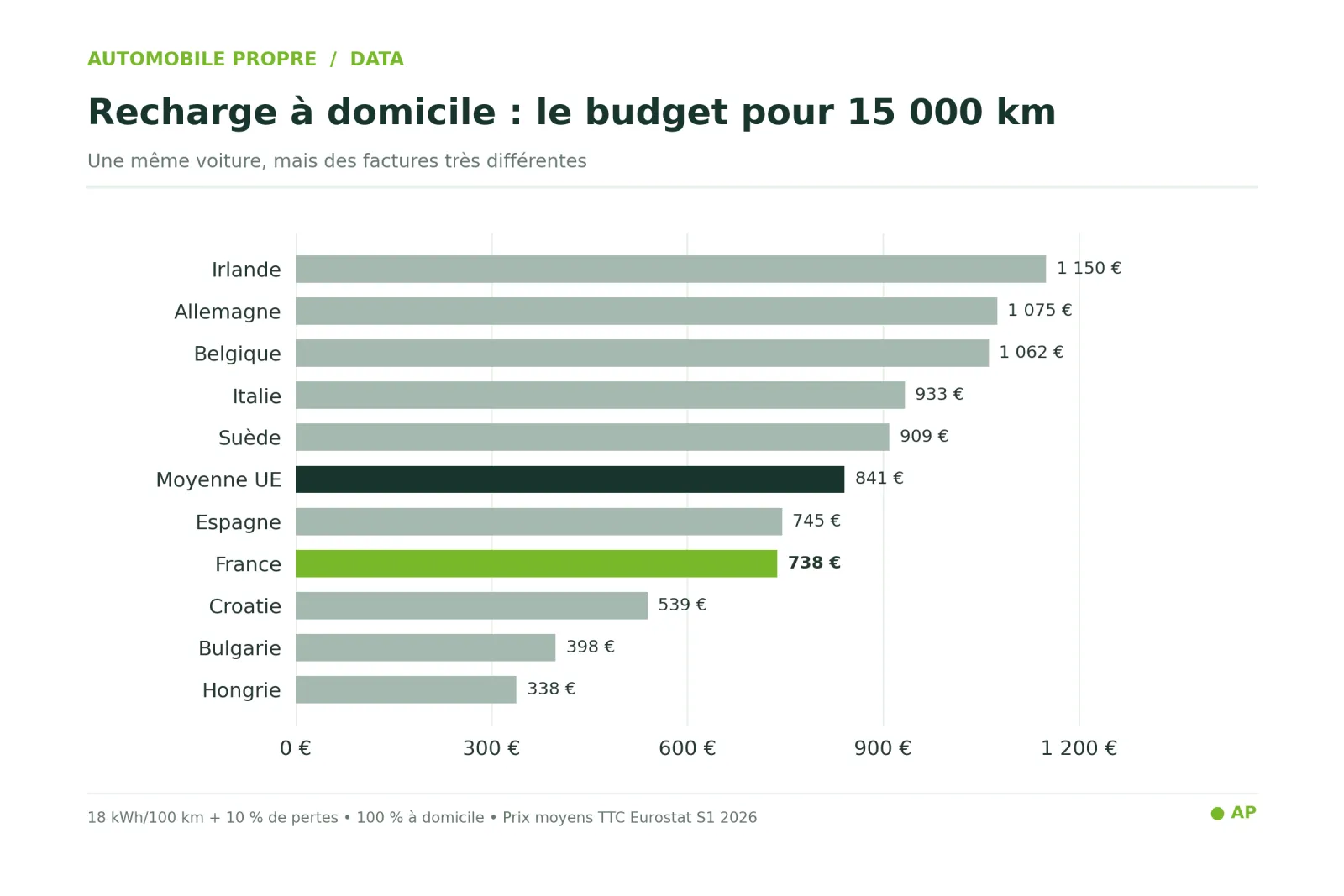
These figures show how much a person’s place of residence affects expenses related to an electric car. However, they do not mean that driving an electric car is always more cost-effective in countries where electricity is the cheapest. To determine that, one would also need to consider fuel prices, incomes, and the purchase cost of vehicles. In short, that is not the focus of this article.
Why such differences between countries?
How can these disparities be explained? Contrary to what one might think, the price paid by households does not depend solely on the production cost of electricity. Taxes, transmission fees, supply contracts, and support mechanisms established by governments also play an important role. The composition of the electricity mix also influences costs, but it is not enough to explain the prices charged to consumers. France benefits from significant nuclear power production, while other countries rely more on fossil fuels or imports.
However, European wholesale markets are interconnected, and residential prices depend on numerous national mechanisms. Sweden’s situation illustrates this complexity. Despite having a largely decarbonized electricity supply, thanks in part to hydroelectric and nuclear power, the country’s average price is 0.3062 €/kWh. This is about 23% higher than in France. Therefore, the presence of substantial renewable energy generation capacity does not automatically ensure low domestic prices.
On the contrary, several countries in Central and Eastern Europe exhibit particularly low prices. This is especially the case in Hungary, Bulgaria, and Croatia. However, some of these markets have price control mechanisms in place. These differences must be taken into account before drawing conclusions about the true competitiveness of national electricity systems. Still, they provide some insight.
What Eurostat’s figures don’t show
A methodological clarification is necessary. The data used represent the average electricity prices paid by households consuming between 2,500 and 4,999 kWh per year, including all taxes. They include the fixed components of the bills. Therefore, they do not correspond to the kWh price stated in your contract.
In France, for example, EDF’s Tarif Bleu offered a price of 0.1940 €/kWh in the first half of 2026 under the Base 6 kVA option, which is significantly lower than 0.2485 €/kWh. The difference stems mainly from the calculation method and the way various components of the bill are taken into account. To determine the additional cost of charging at home, the actual variable price charged by the supplier is generally more relevant.
Other factors also play a role. A driver who uses off-peak hours can significantly reduce their bill, just as a homeowner with solar panels who can charge during peak production times can do the same. Conversely, increasing the contracted power capacity or installing a home charging station may result in additional expenses. Therefore, our simulations should be understood as theoretical comparisons conducted using the same method for all countries. They help illustrate the differences across Europe but do not replace a personalized estimate of charging costs.
At fast charging stations, a different reality
So far, we have only discussed residential electricity. However, not all electric vehicle owners charge exclusively at home. For long trips, fast charging stations often become essential. And the prices charged are quite different from those of a home electricity contract.
Take Ionity as an example, an operator present in many European countries. On its network, the price without a subscription is 0.55 €/kWh in France, compared to 0.72 €/kWh in Germany. For a car that consumes 18 kWh per 100 km, this amounts to 9.90 € and 12.96 € respectively for traveling 100 km, excluding any potential losses and additional fees.
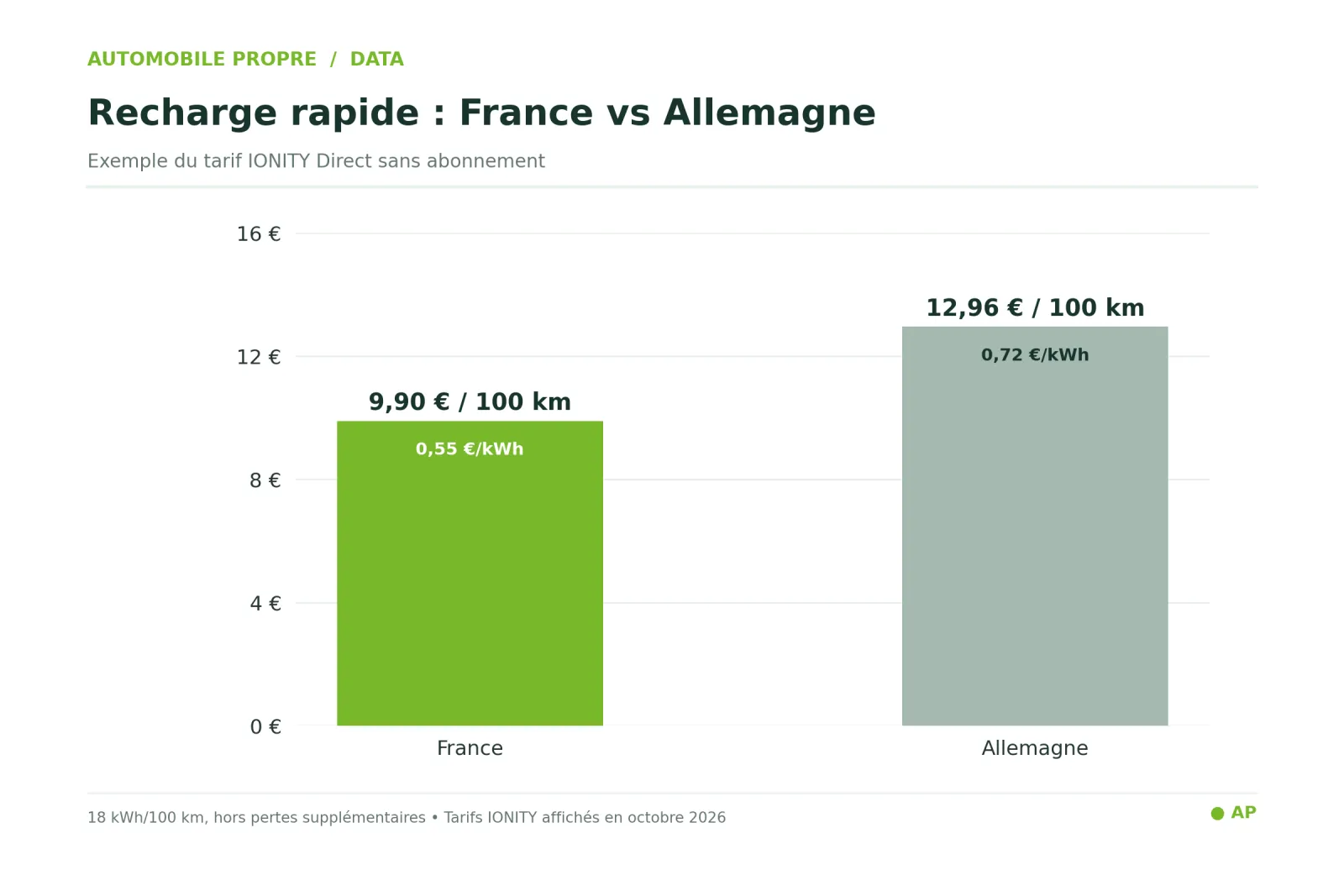
The French advantage exists in this example as well, but the amounts are significantly higher than those for home charging. At a price of 0.55 €/kWh, charging 50 kWh at a fast charger costs 27.50 €.
At home, at the previously mentioned variable price of 0.1940 €/kWh, the same amount of energy would cost 9.70 €. The ratio is almost one to three. However, one should avoid generalizing these results to all public charging stations. Each provider applies its own pricing policy. The price can vary depending on power, location, payment method, or whether a subscription is active.
Most importantly, the differences between countries do not follow those observed in the residential market. A country where household electricity is relatively affordable may have high prices at fast charging stations, and vice versa. There is no automatic correlation between Eurostat statistics and public charging rates.
So, is it worth charging in France?
So, is it worth installing an electric car charger at home in France? The answer is pretty much yes! With electricity prices lower than the European average, France offers relatively favorable conditions for electric car owners. Especially when compared to Germany, Belgium, or Italy. But France is far from being the European leader in low prices. Several countries, particularly in Eastern Europe, perform much better.
Still, these national averages tell only part of the story. For a French driver, the real advantage lies mainly in choosing the right electricity contract. With off-peak hours, special offers for charging, and for some, solar self-consumption, it’s possible to further reduce bills. It can still be said that French electric vehicle owners who have a home charging solution have strong reasons to save money.