
First tests of the electric Range Rover Sport: up to 609 km of range and better balance between performance and efficiency
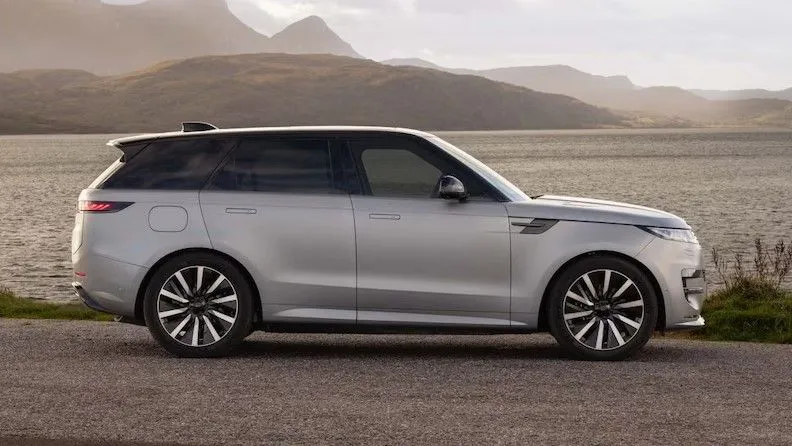
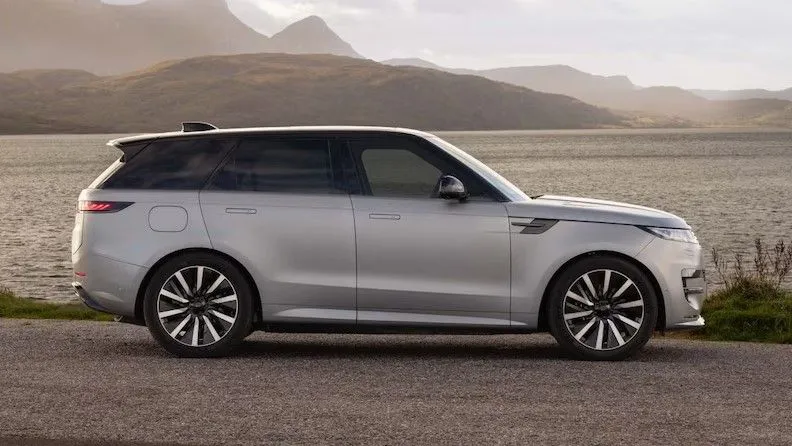
The electrification seems to fit naturally with the silence and comfort expected of a Range Rover. However, in the Sport version, the issue has some additional nuances. Its name promises a more dynamic experience, and replacing the internal combustion engine requires finding other ways to convey that character. Initial reactions from international press suggest a highly accomplished car, though they raise one question: will it be enough to convince its target customers?
The electric Range Rover Sport shares the MLA platform with the Range Rover and its gasoline-powered versions. Engineers integrated the electric drive system without altering its body structure, even making use of spaces designed for traditional mechanical components. Some of the control electronics are housed in a steel structure that matches the shape of the transmission in the conventional models, a solution that allows utilization of the existing architecture.
On the outside, the brand has chosen to maintain a recognizable image. The closed grille and certain specific wheel details help distinguish it, but there is no aesthetic break from the rest of the range. This approach reflects what Land Rover says its customers wanted: for it to remain a Range Rover Sport without needing to highlight its propulsion system from every angle.
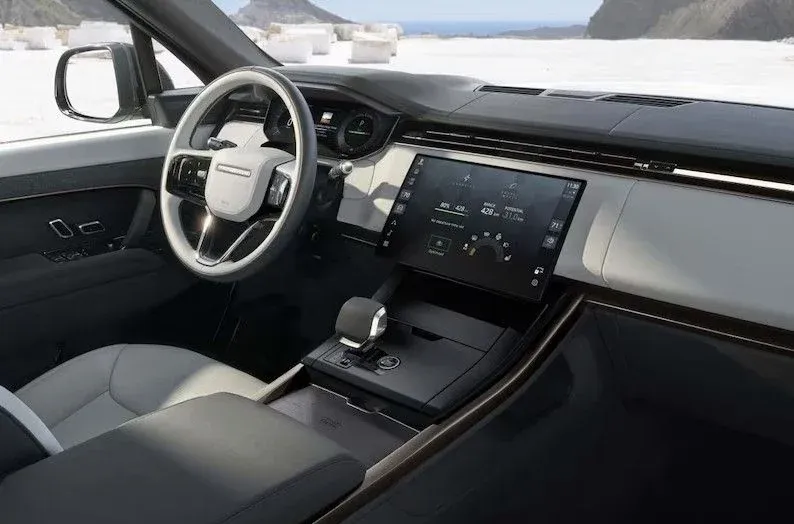
The interior maintains the same continuity. The 13.1-inch central screen and layout of controls are familiar, while the main differences lie in features such as energy recovery adjustment. Pedal drive is activated by setting the selector to the S position. The cargo space reaches 647 liters behind the second row, compared to 818 liters in the larger Range Rover.
The range includes an EV450 with 450 horsepower and an EV550 with 550 horsepower, both equipped with two engines and all-wheel drive. Impressions from this initial encounter are based on the more powerful model, whose power delivery stands out for its smoothness: the thrust doesn’t come on suddenly but increases in a controlled manner. It accelerates from 0 to 100 km/h in 4.5 seconds, while the entry-level version takes 5.6 seconds.
Both versions use an 118.5 kWh battery pack, with a maximum advertised range of up to 609 kilometers under WLTP conditions, depending on the configuration. The electrical architecture is 800 V, and the maximum charging power shown in this initial test reaches 325 kW. These figures make long trips feasible, though consumption measurements and charging sessions are still needed to assess their actual performance.
Greater balance on the road and strong off-road capability
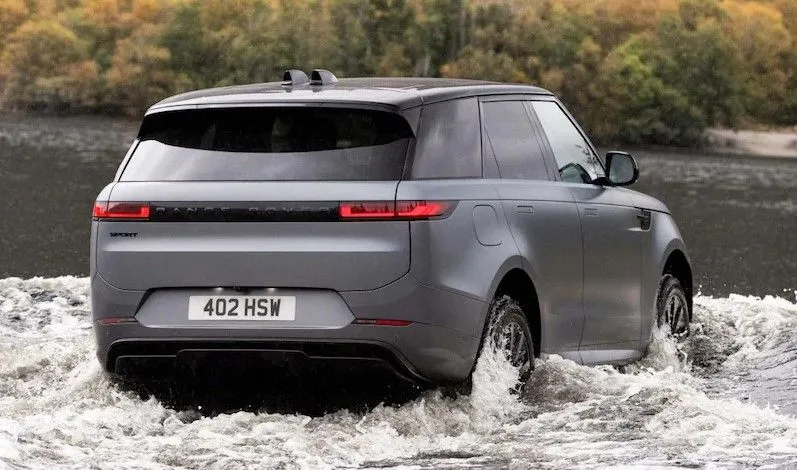
The most interesting transformation is in the chassis. According to the manufacturer, the structure is 61% stiffer and the center of gravity has dropped by 7.3 centimeters compared to the plug-in hybrid versions. The integration of the battery contributes to this change, aiming to improve reaction precision without sacrificing the usual comfort of the Range Rover family.
The initial tests on the roads of the Scottish Highlands, some with quite uneven surfaces, describe a car that is exceptionally balanced. The assessment even suggests it could be the best Range Rover Sport in the lineup. The handling remains more controlled than that of the larger Range Rover, with fewer oscillations and a steering system that provides slightly more feedback.
The adaptive air suspension with customized tuning, active stabilizers, and the all-wheel drive system of the tested unit play a role in this performance. What’s interesting is how they work together: the Sport model delivers greater precision without turning every bump into an annoyance. This combination of comfort and control appears to be one of its strongest advantages.
Off the asphalt, the impressions are also very positive. The propulsion system’s ability to regulate torque and maintain driveability even in mud stands out. Control over wheel slip allows smooth progress while preserving a sense of control over the vehicle—a quality more useful in such conditions than an impressive power figure.
Here it finds a way to differentiate itself from competitors like the Porsche Cayenne Turbo Electric or the Mercedes-AMG GT SUV. The Range Rover Sport does not aim to outperform others in acceleration or with excessive power. Its approach combines performance, comfort, and off-road capability, though this initial encounter does not allow for a direct comparison with those rivals.
The doubt these initial impressions raise is more emotional than technical. Some of Sport’s customers may associate its character with the sound and response of a V8, and might expect an especially striking experience when switching to an electric vehicle. Compared to the four-digit horsepower of some competitors or the 360-degree turning capability of the Mercedes Classe G electric, the British model offers a much more restrained approach.
That doesn’t make its design a flaw, but it does define its personality. The Sport electric seems to prioritize balance over spectacle, and there will be buyers who appreciate it precisely for that reason. Others may see a more practical limitation in its maximum towing capacity of 2,500 kg, especially if they need to transport a boat or a heavy trailer.
In terms of pricing, the reference for this first model in the Netherlands is as follows: the EV450 Dynamic SE starts at 123,197 euros, while the EV550 Dynamic HSE begins at 143,367 euros. In that market, the larger electric Range Rover costs around 166,000 euros. With initial impressions highlighting an even more satisfying driving experience and the same towing capacity, the Sport offers an interesting alternative for those who don’t need the extra space of its larger sibling.