
First test drive of the Peugeot E-208 GTi (281 hp). King of its class?
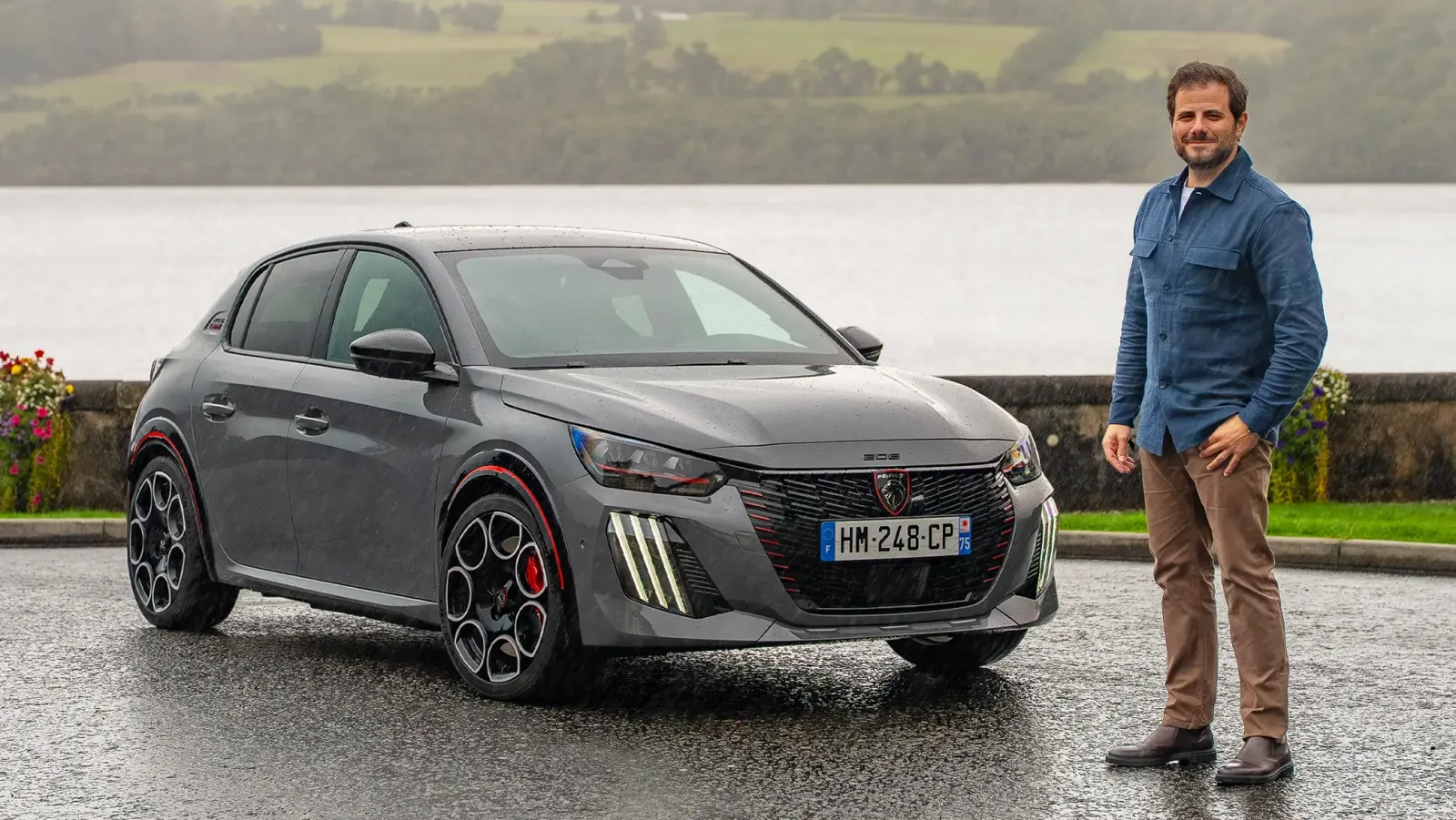
More than 40 years after the 205 GTi, Peugeot brings back one of its most coveted abbreviations in history. This time, without a gasoline engine.
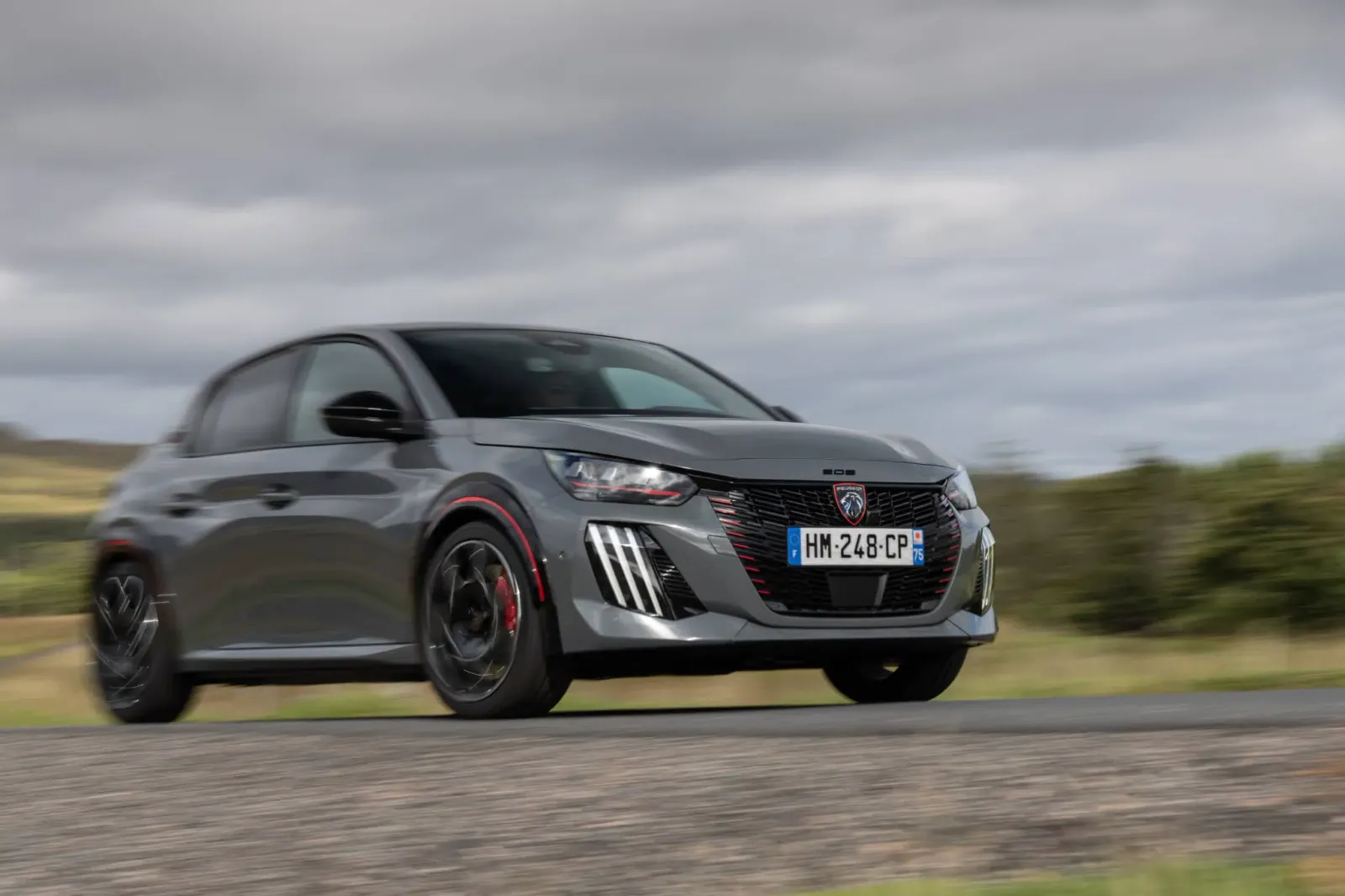
Peugeot e-208 GTi
First impressions
8.5/10
Market launch date: September 2026
The Peugeot E-208 GTi has 281 horsepower and is the fastest in its class, but that’s not what impresses the most.
Pros
Dynamics
Steering
Style
Cons
Price
Fuel consumption
The dashboard shows its age.
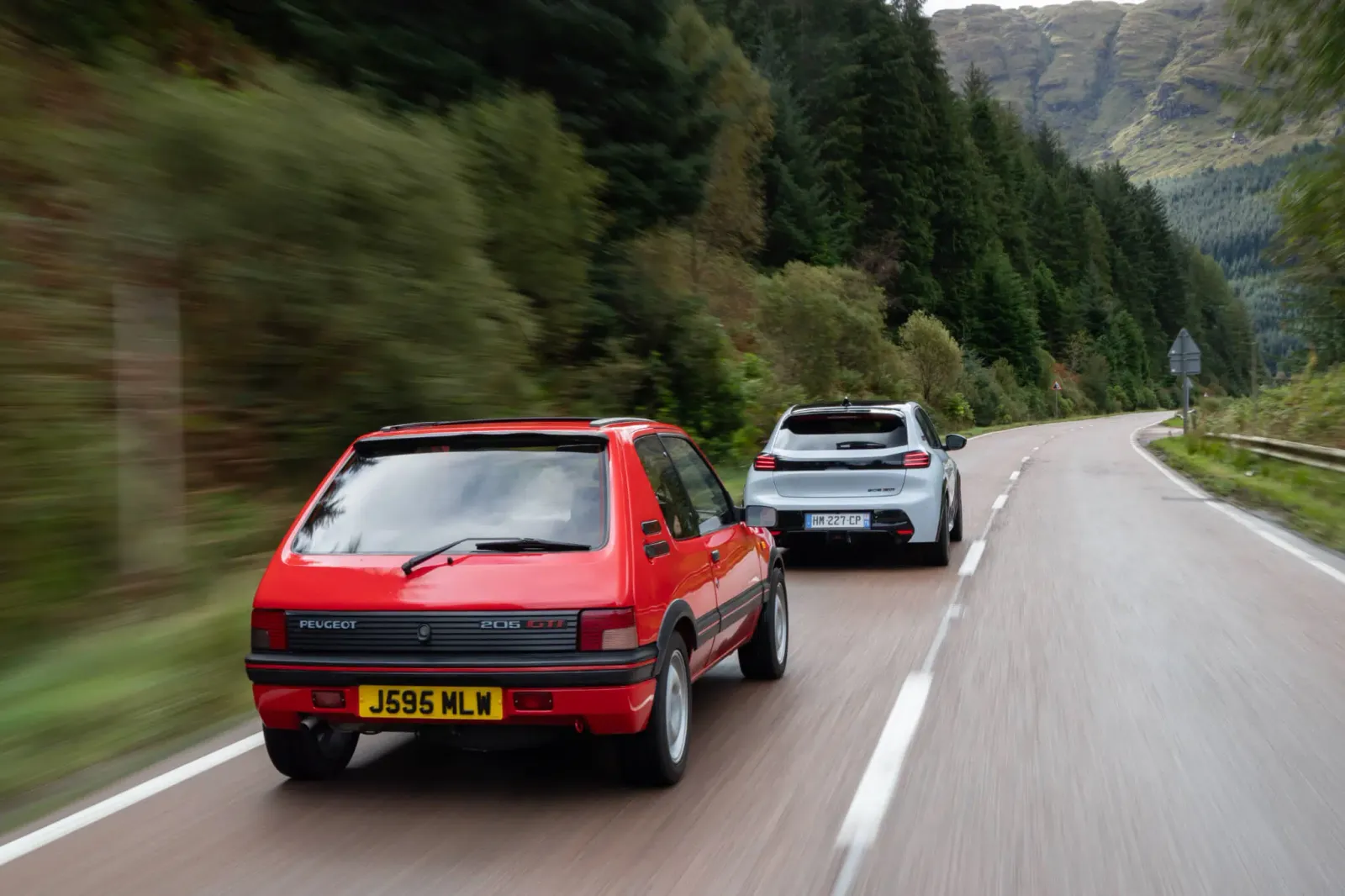
The GTi acronym is back at Peugeot, more than 40 years after its debut with the beloved 205 GTi. This return comes in a 100% electric form with the E-208 GTi, equipped with technical features we’ve seen in other Stellantis models such as the Abarth 600e or the Opel Corsa GSE.
But a glance at Peugeot Sport’s history shows that the brand’s sports division knows everything there is to know about small front-wheel-drive sports cars. This adds extra responsibility to the E-208 GTi, which marks a new era for this iconic acronym.
In theory, the E-208 GTi meets all the criteria expected of a high-performance vehicle. But there was only one way to determine if it lived up to its three magical letters: driving it on a winding mountain road — and that’s exactly what we did in Scotland.
The Peugeot E-208 GTi is the latest addition to a new generation of compact electric sports cars, which includes models such as the Alpine A290, Volkswagen ID. Polo GTI, CUPRA Raval VZ, Opel Corsa GSE, Abarth 600e, Alfa Romeo Junior Veloce, and the electric MINI JCW.
All of these vehicles have struggled to gain traction in the domestic (and European) market, and it seems increasingly clear that not many people are willing to pay over 40,000 euros for a fully electric pocket rocket.
Nevertheless, even entering this market late, Peugeot aims to change this trend by targeting the top spot in sales rankings for these sports cars with the 208 GTi.
GTi Heritage
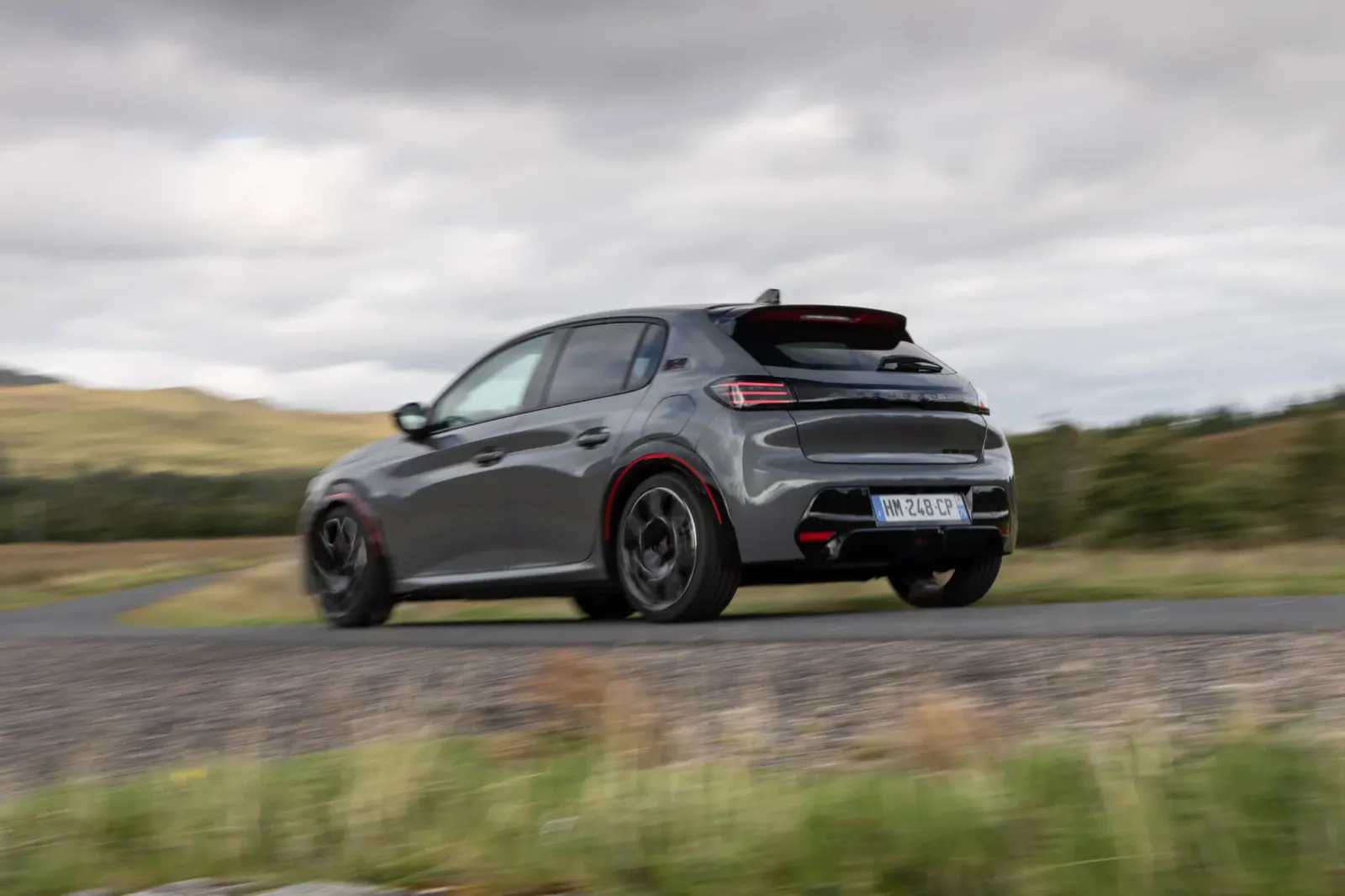
A single glance at the E-208 GTi makes it clear this is something entirely different from the regular 208. Peugeot Sport drew on several historical elements from the legendary 205 GTi, yet managed to do so without turning this compact electric car into an overdone nostalgia project.
DO NOT MISS:
There’s a Peugeot 205 the French didn’t dare produce
The 18” perforated wheels and various red accents throughout the body are good examples of this. Still, what most clearly identifies the GTi version is its stance—much more upright and aggressive.
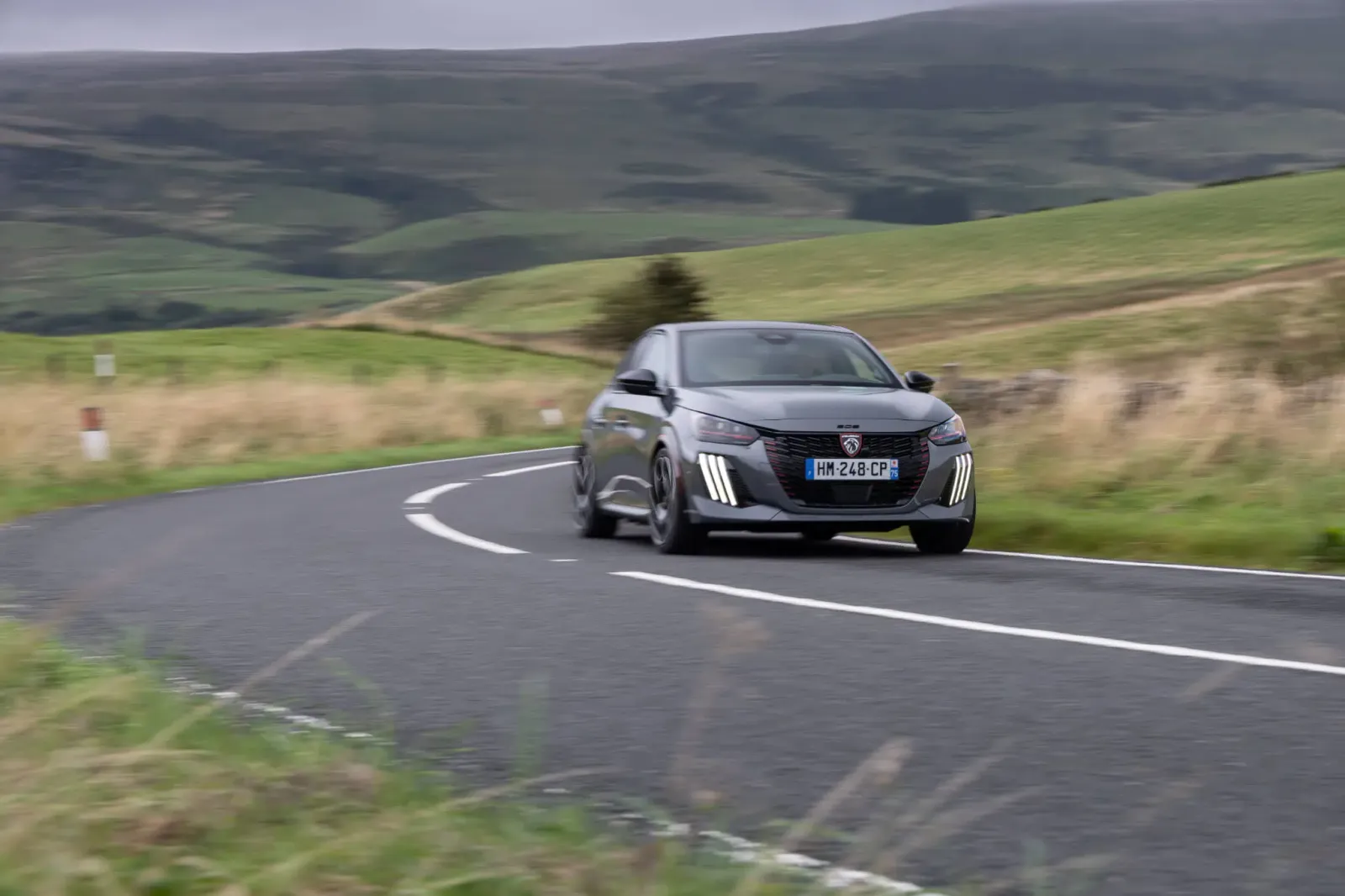
This is made possible by wider tracks of 56 mm at the front and 28 mm at the rear, along with a suspension that has been lowered by 25 mm.
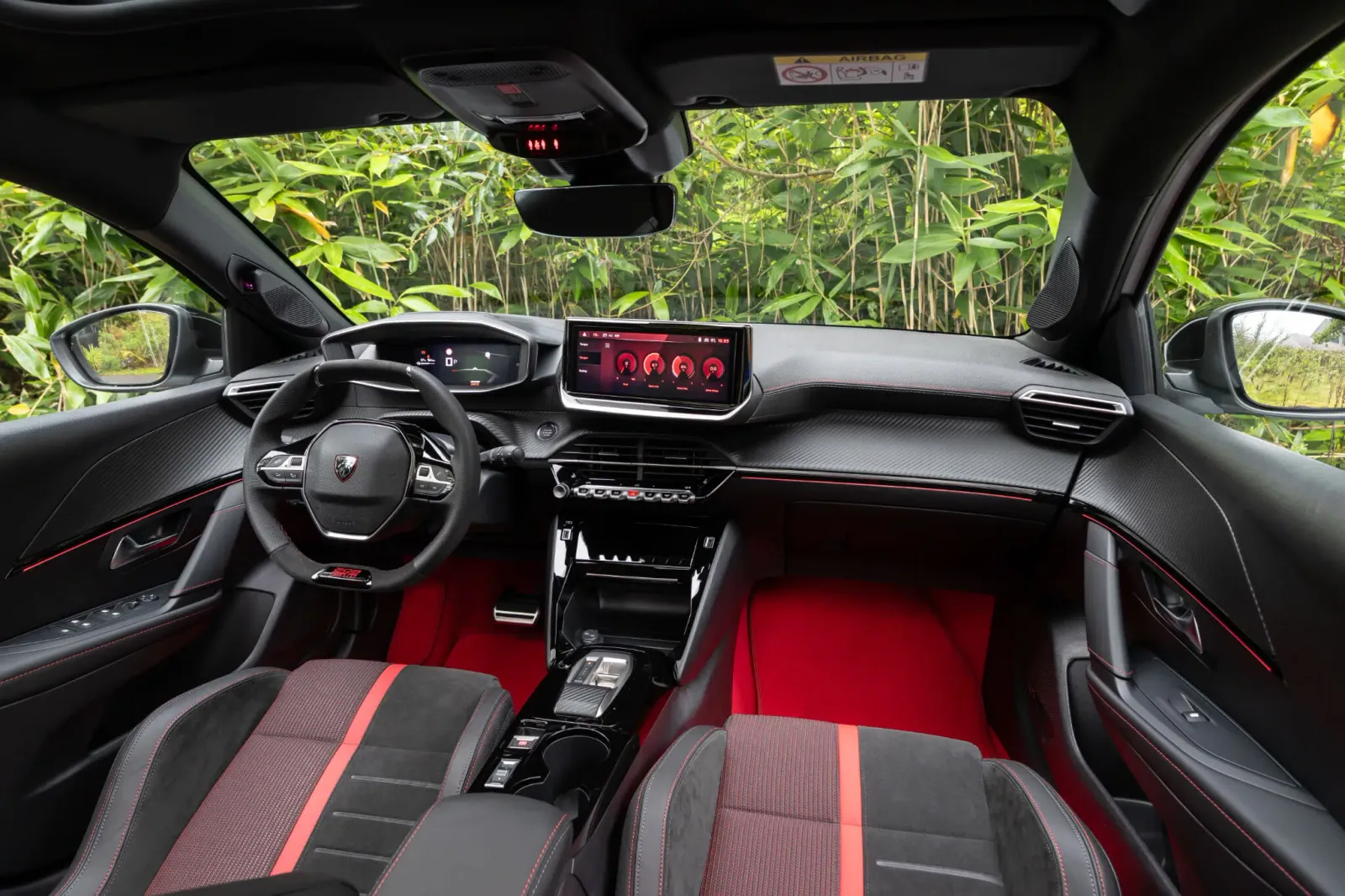
The interior shows its age
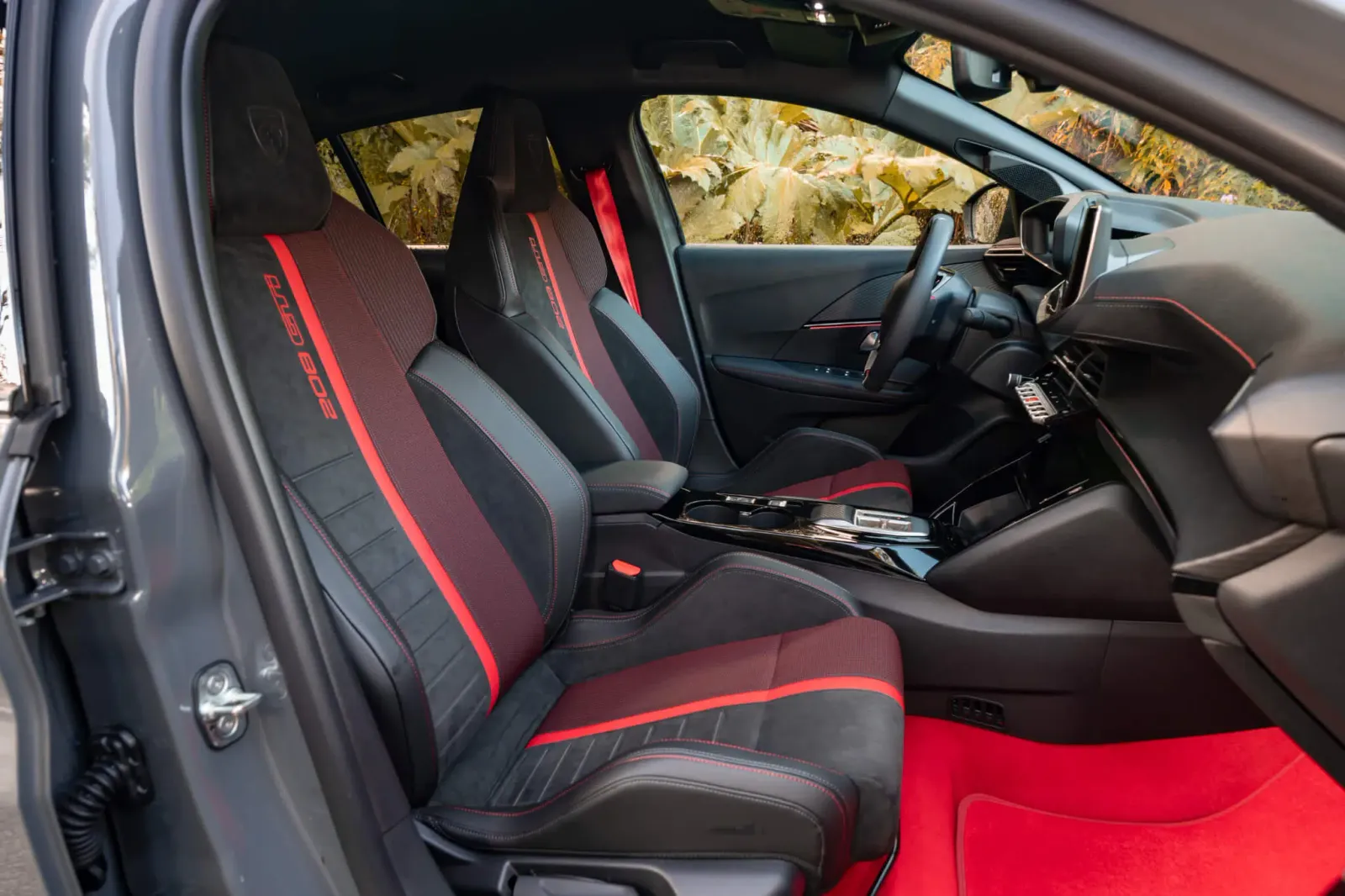
In the cabin, the red floor mats and seat belts directly echo Peugeot’s GTi “father” models. The sporty-shaped seats, inspired by the original 205 GTi, are another standout feature of this interior.
I also liked the driving position and the compact steering wheel covered in Alcantara. These are things you can feel even before testing the car, and in a GTi, they matter just as much as the technical specifications.
But there’s a problem here that we can’t ignore: this generation of the 208 was already introduced in 2019, despite the 2023 update. And that’s starting to show.
Moreover, a completely new generation of the 208 is planned for next year, which will revolutionize the entire model line, starting with the interior. This makes us question the timing of this GTi version, which could quickly become outdated.
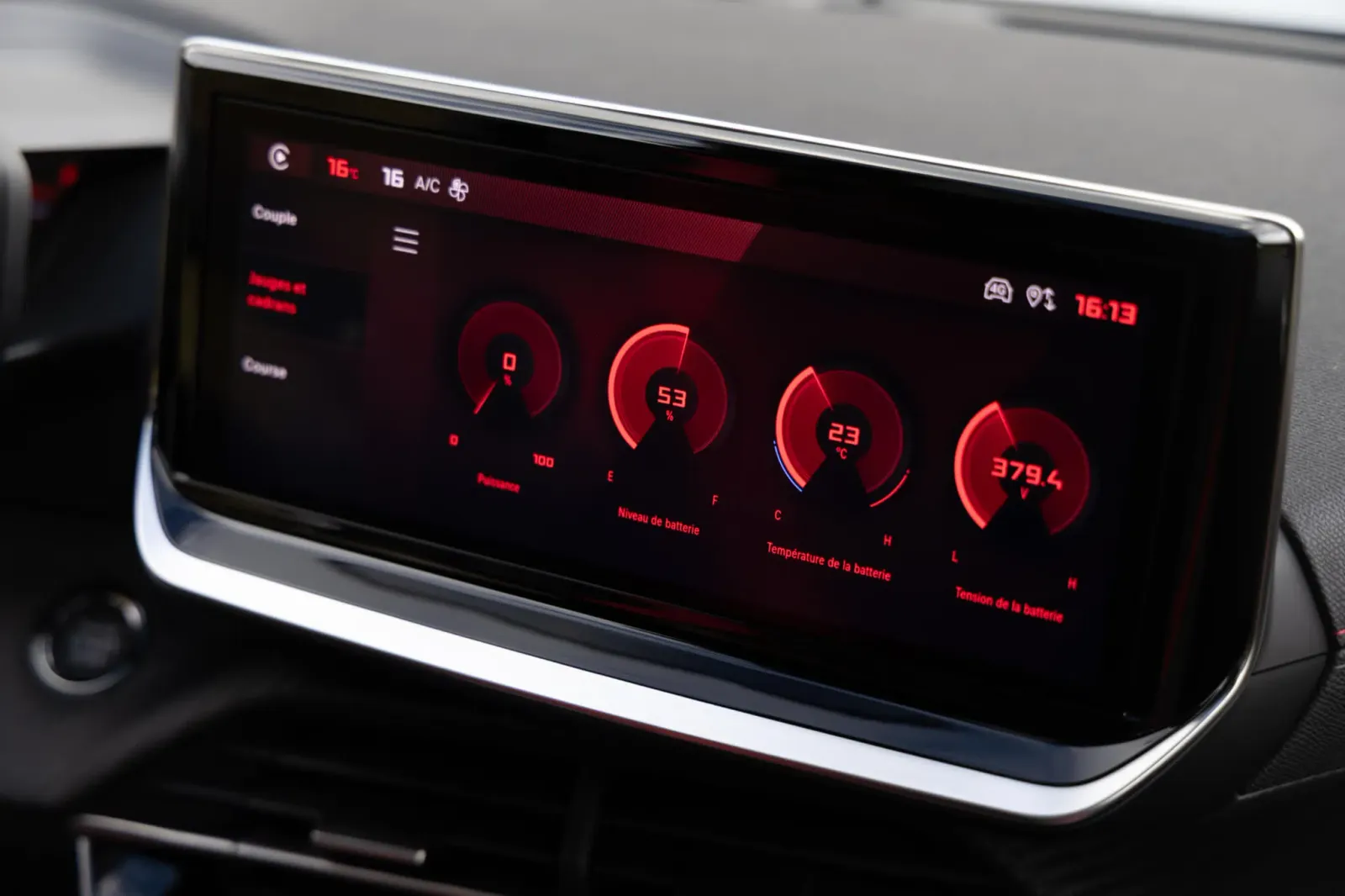
The instrumentation, for example, deserved a more interesting presentation. There are unique graphics and specific menus for this version, but the result falls short of what we find in the Alpine A290 and the electric MINI JCW.
5 images
The same is true for the multimedia system. It features wireless Apple CarPlay and all the functions we need, but its overall design already seems a bit outdated.
On the other hand, there’s good news for those looking for a small sports car suitable for daily use. The five doors maintain the 208’s versatility, and the rear space is reasonable.
It isn’t a benchmark in its segment, but it can accommodate two adults of average height, something the Alpine A290, for example, finds more difficult to do. The trunk retains a capacity of 309 liters.
Discover your next car:
A special touch from Peugeot Sport
This is where the E-208 GTi truly reaches a new level. Stellantis’ M4+ electric motor delivers 281 horsepower and 345 Nm of torque, enough to accelerate from 0 to 100 km/h in 5.5 seconds.
It only takes 3.2 seconds to accelerate from 80 to 120 km/h, with a top speed limited to 180 km/h. These figures make the E-208 GTi the fastest in its class, but it was its handling out of corners that surprised me the most.
Even with rain and wet roads, the Peugeot demonstrated a capacity to harness its power that inspires great confidence. The mechanical limited-slip differential helps explain this driving performance, but Peugeot Sport went much further in its modifications.
The body is 25 mm lower, the track width increased by 56 mm at the front and 28 mm at the rear, and the suspension features specialized springs along with shock absorbers equipped with hydraulic valves. A rear stabilizer bar with a 31 mm diameter was also added, while the front one remains at 17 mm. This transformation is noticeable from the very first kilometers.
Peugeot has achieved a very convincing balance for the car’s 1535 kg weight, delivering a vehicle that’s enjoyable to drive on winding roads. The engine offers power, the steering responds well, and the brakes proved capable during this test drive. At the front, there are 355 mm discs with fixed four-piston calipers, while the rear discs measure 268 mm.
I liked the driving position, the seats, and the steering right from the first few meters. These elements help create a connection between the driver and the vehicle in a car like this, even before we start exploring its 281 hp.
Then there’s the sound. The E-208 GTi features an interior-focused sound design intended to enhance the driving experience. The idea is interesting, but it can become annoying after some time, especially when we just want to drive quietly. Fortunately, it can be turned off.
I wish I had more range
This is where one of the main limitations of this GTi becomes apparent. Peugeot claims 352 km of range (combined WLTP cycle) with the standard Michelin Pilot Sport 4S tires in size 215/40 R18. This figure increases to 375 km with the Hankook Ventus S1 Evo3 tires.
The choice between the two tire sets is free, and the battery remains identical: it’s a CATL unit with a capacity of 54 kWh (51 kWh usable), which has been specifically calibrated to handle more demanding use cases.
According to Peugeot, the battery cooling system was designed and developed to ensure consistent performance even during prolonged sporty driving, thus avoiding power limitations that occur when the battery overheats.
But the range issue with the e-208 GTi isn’t just about battery capacity; it’s primarily related to the efficiency of the entire system. During this initial testing, fuel consumption ranged from 17 to 22 kWh/100 km, with these figures even increasing when we sped up.
I mostly drove in Sport mode, taking advantage of the secondary roads in Scotland, so this wasn’t necessarily a test of efficiency under calm driving conditions. But what I did is exactly what people who buy this type of vehicle like to do.
Looking at those figures, the theoretical range is approximately between 230 and 300 km. It’s not a distance I was able to cover before the battery ran out, but rather an estimate based on the recorded consumption levels.
I’m not surprised that consumption rises when driving a car like this. Still, I would prefer a bit more range so I can use it with fewer restrictions. It’s true that the energy cost can be quite low for those who charge at home, but that doesn’t address the need to stop more frequently during a trip.
And since we’re talking about charging, it’s worth noting that the E-208 GTi supports up to 100 kW in DC, with Peugeot claiming 27 minutes to go from 20% to 80% charge. In AC, the maximum is 11 kW, requiring 2 hours and 55 minutes to regain the same 60% of charge.
The E-208’s base model is a few years old now, which helps explain some of the limitations we encounter in terms of efficiency and charging. Peugeot Sport did a great job using it to create a sports car, but they couldn’t solve everything.
Over 40,000 euros for a small electric car
The Peugeot E-208 GTi has an announced price of 44,900 euros in Portugal, though the launch campaign for private buyers reduces this amount to 42,553 euros. The first units are expected to arrive in our market at the beginning of 2027.
This price puts the E-208 GTi in a tricky position. The Alpine A290 starts at 39,000 euros, although that figure refers to the GT version with 180 hp, which is much less powerful than the Peugeot. Still, I continue to think these small sports cars are expensive. And this isn’t an exclusive criticism of the E-208 GTi.
Those who remember the prices of some of its previous gasoline-powered models, even the more recent ones, will find it hard not to make such comparisons. This is also one of the reasons why these small electric sports cars continue to struggle to attract a broader audience.
This first encounter in the lands of His Majesty revealed that the Peugeot is a clear contender for that throne, but to crown it, it would need to be put up against the Alpine and MINI. What I can guarantee is that once you drive it, it’s impossible to exclude it from this competition.
Verdict
Peugeot e-208 GTi
First impressions
8.5/10
The Peugeot E-208 GTi surprised me with how it combines performance, agility, and ease of use. Peugeot Sport did an excellent job on the chassis, creating a car that’s enjoyable to drive. Range, price, and an interior that reveals the 208’s age are its main weaknesses. Still, after driving over 200 kilometers, one thing is clear: the E-208 GTi is one of the most interesting small electric sports cars I’ve driven.
Market release date: September 2026
Pros
Dynamism
Handling
Style
Cons
Price
Consumption
The instrumentation shows its age