
First appearance of the Volkswagen ID.3 Neo GTI
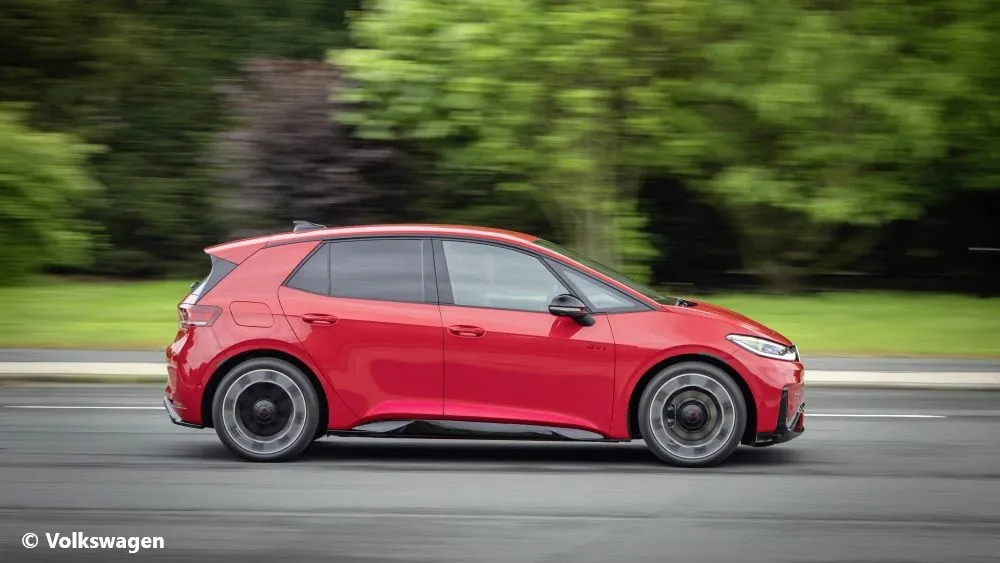

The comeback of Volkswagen’s all-electric sports models has been confirmed. Just like with the ID. Polo, Volkswagen is reverting to the GTI name for the sporty version of the ID.3 Neo—a model the German brand recently unveiled globally for the first time. The ID.3 Neo GTI aims to be the ideal daily driver, thanks to its versatility, high comfort on long trips, and over 600 km of range. It is also the most powerful vehicle in Volkswagen’s 50-year GTI history. Beyond its power, the sporty DNA of the ID.3 Neo GTI is immediately recognizable. Highly customized, its interior features many elements typical of a GTI as well. Finally, it boasts a secret ingredient that unlocks its full dynamism: the GTI mode. This mode adjusts engine and chassis settings to deliver maximum sportiness.
Volkswagen’s most powerful production model
The ID.3 Neo GTO is equipped with an electric motor integrated in the rear axle, delivering 240 kW (326 horsepower) of power. It can accelerate from 0 to 100 km/h in 5.6 seconds and generates a torque of 545 Nm. For Volkswagen, this is the most powerful production model in GTI history. Yet it has the same engine power as the Performance version of the previous ID3 GTX. Nevertheless, it features an adaptive DCC sports chassis, Launch Control, and especially a dedicated GTI mode. Additionally, it has a battery with a net capacity of 79kWh, providing up to 601 km of range. The battery supports a charging power of up to 183 kW for fast DC charging, allowing the battery level to go from 10% to 80% in about thirty minutes.
A design defined by its sports DNA

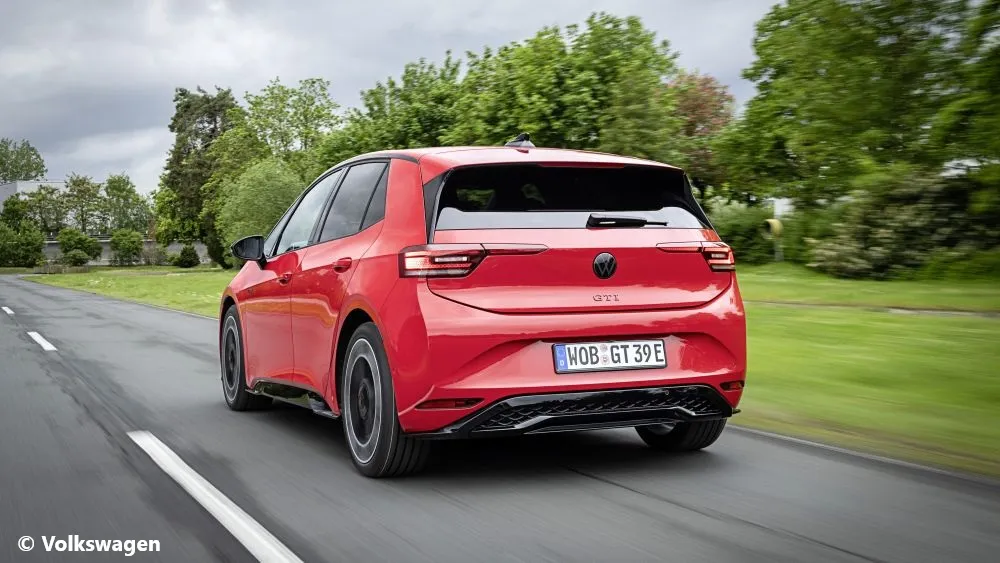
The sporty DNA of the ID.3 Neo GTI is fully reflected in its design. Its distinctive features identify this Volkswagen as the brand’s iconic sports version. At the top of the front end, the new matrix headlights capture attention. A transparent light strip incorporating the illuminated Volkswagen logo connects them. Right above this strip, designers integrated the GTI’s most iconic element: the red line. Positioned vertically at the ends of the front bumper, the LED elements create a new distinctive signature unique to this electric GTI. Seen from the side, the iD.3 Neo GTI appears significantly longer and more sleek than the ID.3 GTX—a result of a new color approach. The roof, hood, and trunk are no longer black but painted in the same shade as the body.
The rear end. This makes the cabin appear longer and more sporty.A cabin bearing the GTI badge
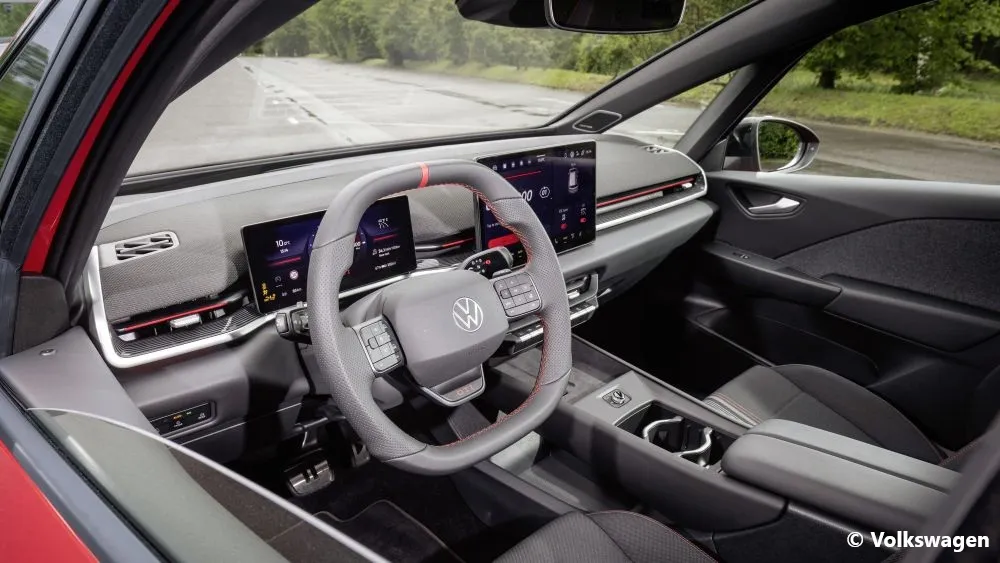
The highly customized interior of the ID.3 Neo GTI perfectly captures the GTI spirit as well. Numerous elements specific to the GTI are evident in the equipment, seat design, and technical details. First and foremost, red and black dominate the interior atmosphere. On the dashboard, a thin red line runs across its entire width. Highlighting the car’s sporty character, the new sports steering wheel features a red marker at 12 o’clock. Red is also used on the seats, whose pattern reinterprets the tartan design of the original Golf GTI. Additionally, the layout of the cockpit incorporates advancements from the ID.3 Neo, including the larger new Digital Cockpit and the 12.9-inch touchscreen of the next-generation infotainment system. Two screens are positioned along the same visual axis.
A GTI mode to unleash the full dynamism of this sports car
Besides its engine, the secret to the ID.3 Neo GTI’s power lies in the presence of a dedicated GTI mode. This mode adds to the existing Eco, Comfort, Sport, and Individual settings. As soon as the driver presses the illuminated GTI button integrated into the steering wheel, this new driving profile is activated. The GTI mode unleashes all the dynamism of this 100% electric Volkswagen vehicle. It adjusts the engine and chassis parameters to deliver maximum sportiness, resulting in full engine power, enhanced steering response, and the adaptive DCC chassis. It also enables the new Launch Control feature. The ambient lighting turns red, the ID. Light emits a red signal, and the Digital Cockpit switches to a GTI display. The power indicator then appears in the center of the digital dashboard, accompanied by a sound reminiscent of that of a traditional engine.
what triggers it.