
Why charging an electric car during off-peak hours might become troublesome
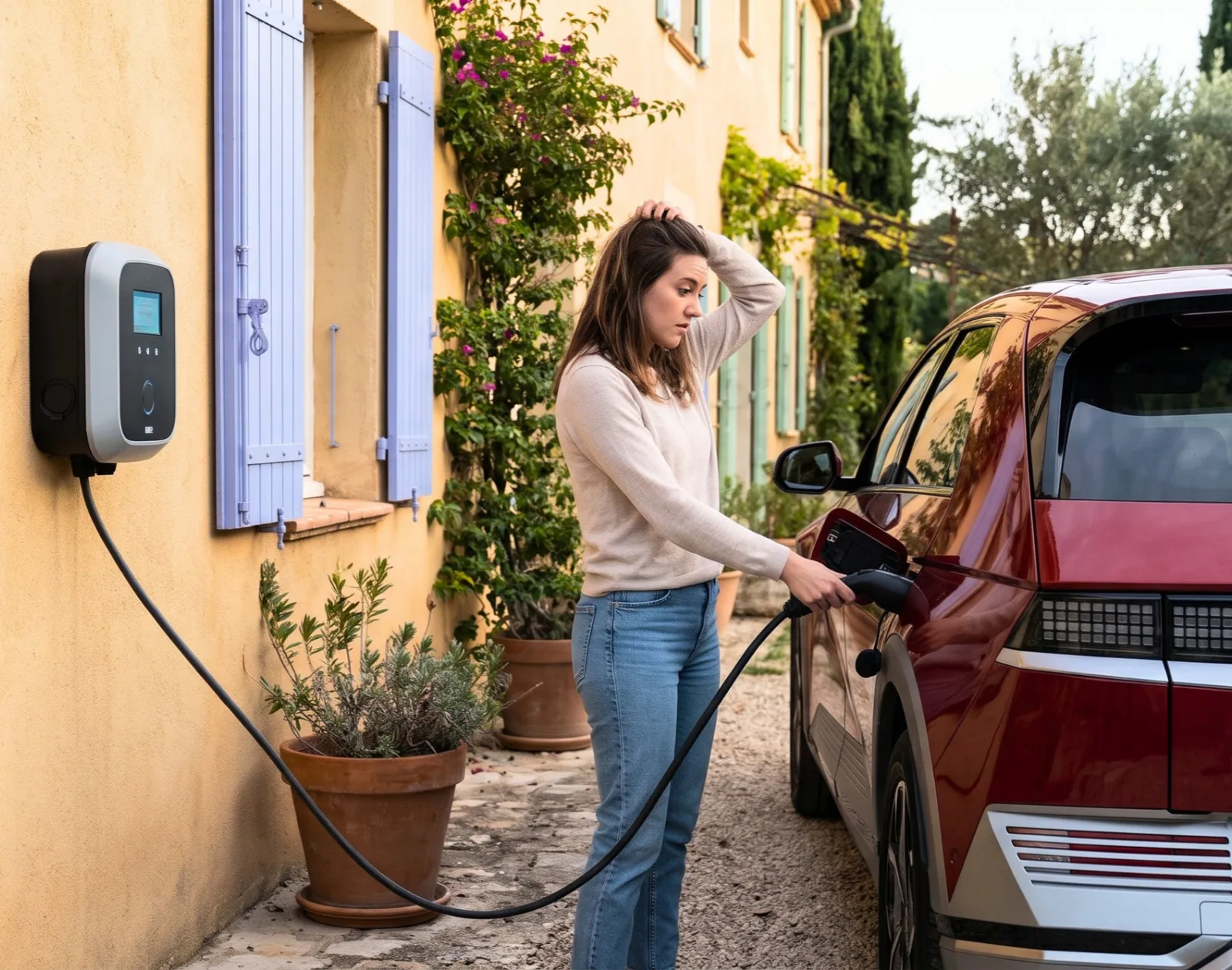
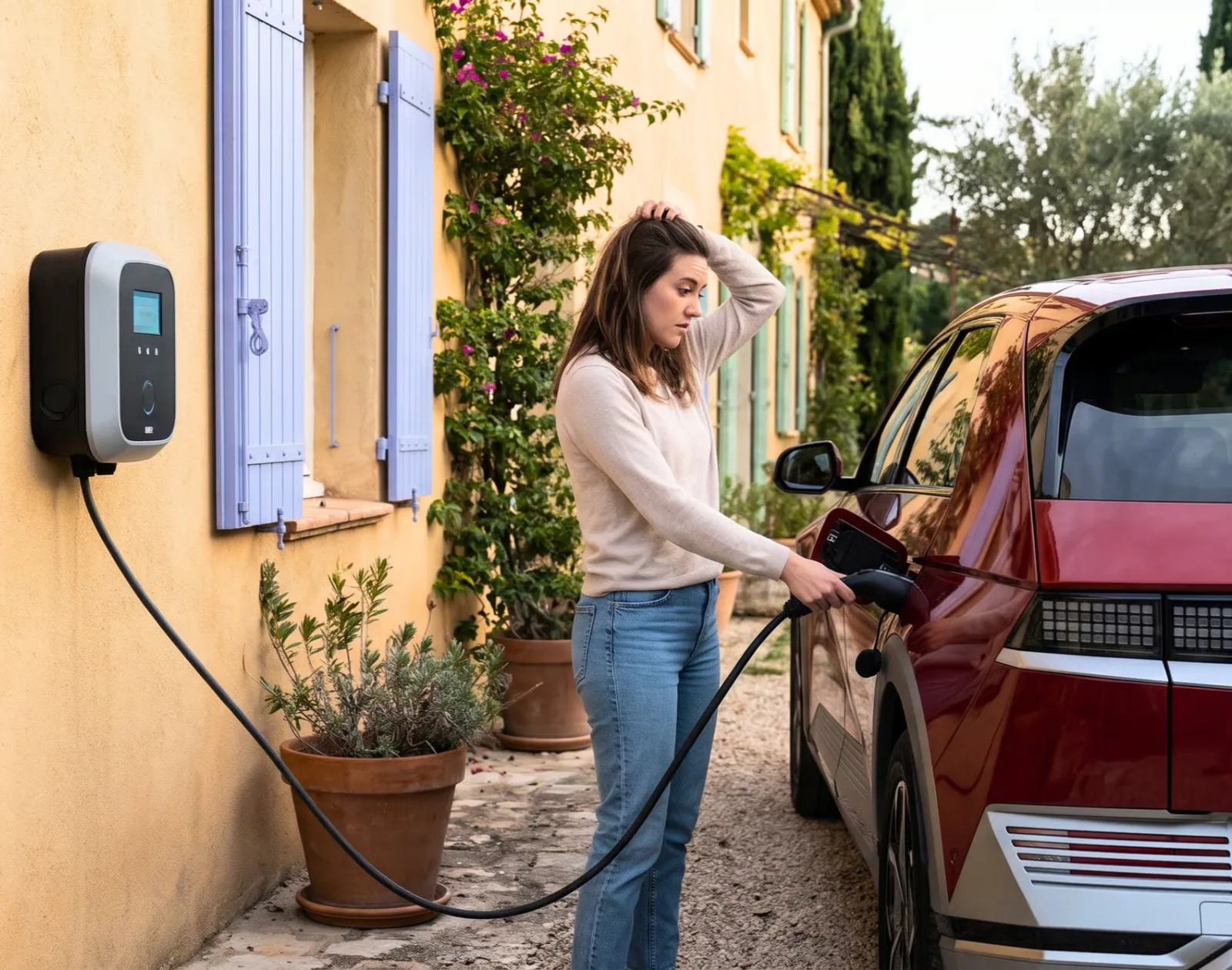
Starting December 1st, off-peak charging times will change for slightly over 9 million subscribers. This is a significant adjustment, as part of the off-peak hours will be shifted to midday, and their schedules will vary between winter and summer. This is inconvenient for some electric vehicle users who are used to charging at low prices throughout the night.
Many electric vehicle owners have developed a habit: upon returning from work, they plug in their vehicles, which then charge during the eight hours of off-peak nighttime. This long window allows them to recharge about 30 kilowatt-hours using a high-power outlet, or double that amount at a charging station, all at the lowest possible price.
Simple and effective, but not well-suited to the characteristics of France’s electrical grid, which has changed significantly over recent decades. With 30 gigawatts (GW) of solar power plants now installed, electricity generation is extremely high during the day, sometimes leaving little use for it.
To make better use of this excess energy, the Energy Regulatory Commission (CRE) has decided to gradually adjust the off-peak hours for millions of customers. Specifically, out of the eight daily off-peak hours, two to three nighttime hours are shifted between 11 a.m. and 5 p.m., during the peak period of photovoltaic generation. This has already been in effect for many households since autumn 2025.
Also read
Test of the 7.4 kW Lektrico One EM Safe charging station: ultra-compact and extremely convenient
Detailed look at the new “seasonal” off-peak hours
Starting December 1, 2026, a new phase of the off-peak hours reform will take effect. Since solar panels do not generate power at exactly the same times during winter and summer, the off-peak periods will be divided into two seasons. By October 2027, 9.3 million off-peak hours subscribers will gradually be switched to these new schedules, as detailed below:
Nighttime
Dawn to dusk
“Winter” off-peak hours
From November 1 to March 31
A minimum of 5 consecutive hours guaranteed between 11 p.m. and 7 a.m.
There is no fixed rule—some subscribers will have midday off-peak periods in winter, while others will not.
“Summer” off-peak hours
From April 1 to October 31
A minimum of 5 consecutive hours guaranteed between 11 p.m. and 7 a.m.
A minimum of 2 consecutive hours are guaranteed between 11 a.m. and 5 p.m.
Regardless of the season, a total of 8 off-peak hours per day are guaranteed.
These changes apply only to customers with HP/HC contracts, except for the Tempo option (which remains within the 10 p.m. – 6 a.m. range) and market contracts with specific schedules such as “super off-peak hours” or “solar hours.” Customers of local distribution enterprises (ELD) are also affected, but according to a schedule different from Enedis’s. In all cases, electricity suppliers must inform their customers one month before the new off-peak hours take effect.
Know Your New Off-Peak Hours
To determine if one is affected by the change, Octopus Energy offers an online simulator that allows users to see their new off-peak hours and the date they will take effect. All that’s needed is to enter one’s PDL number to obtain this information.
What it means for electric vehicle users
For water heaters and heating systems, these new “seasonal” off-peak hours don’t make much of a difference. Most of the time, these devices are controlled via pilot wires from the Linky meter. Their operation will automatically switch to the new schedules. In fact, activating heating during midday off-peak hours is economically advantageous.
It’s a bit more troublesome for those who use time-based programmers, such as most electric vehicle users who charge at home. They will need to adjust their off-peak hours every April 1st and November 1st on their vehicle’s dashboard or in the settings of their charging station, unless it is controlled by a remote control or some other connected system capable of detecting the user’s off-peak hours.
In addition, shifting two to three off-peak hours at night to the southern beaches may inconvenience large vehicle owners who cannot charge during the day. If they use all eight off-peak hours in a row to refuel at a lower cost, they will now have to spread some of those charging hours over peak times. This results in an additional cost of about 1 euro per charge for a 7.4 kW system, which can be frustrating.