
Why don’t all electric bikes come equipped with this standard feature found in electric cars?
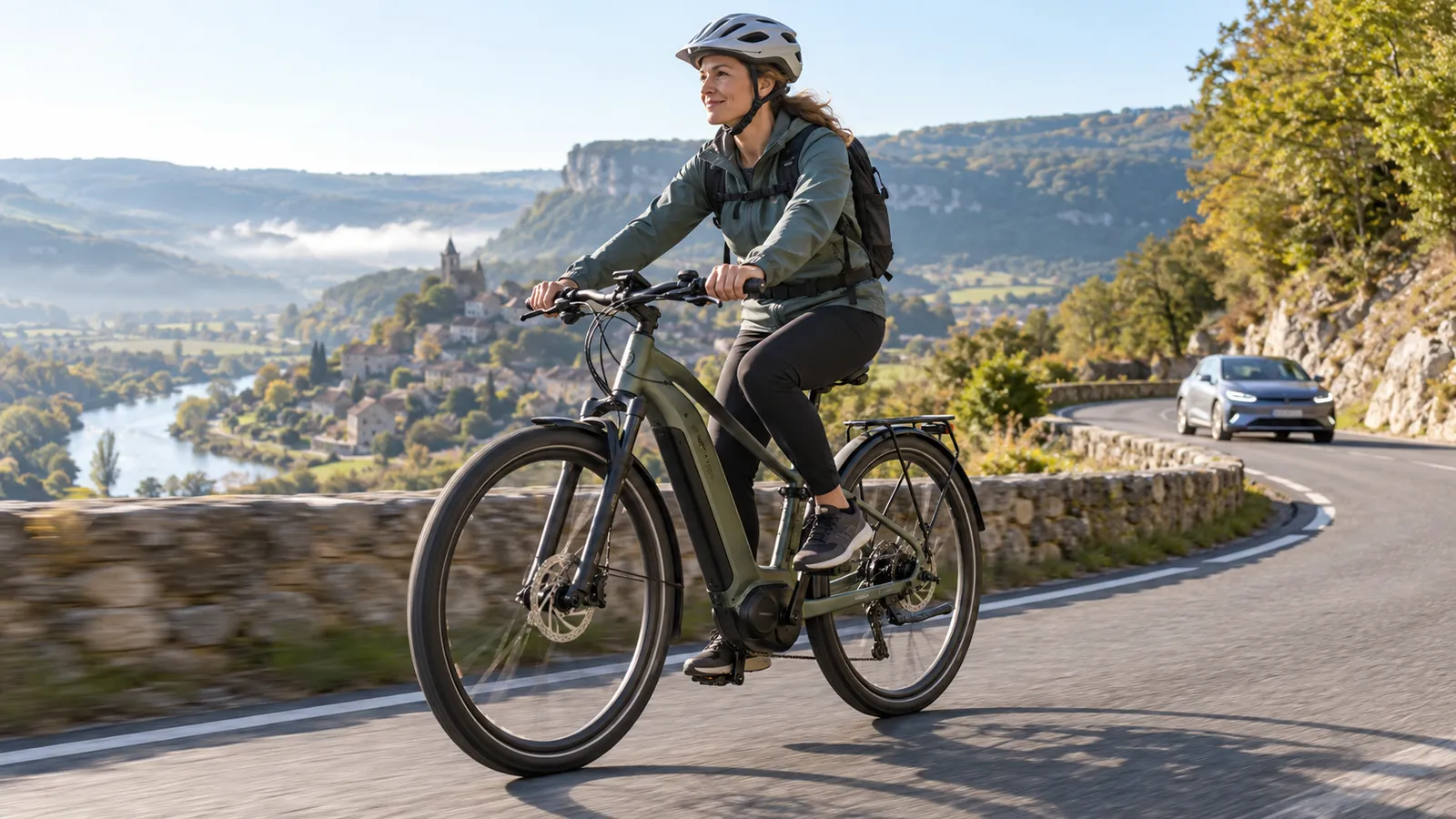
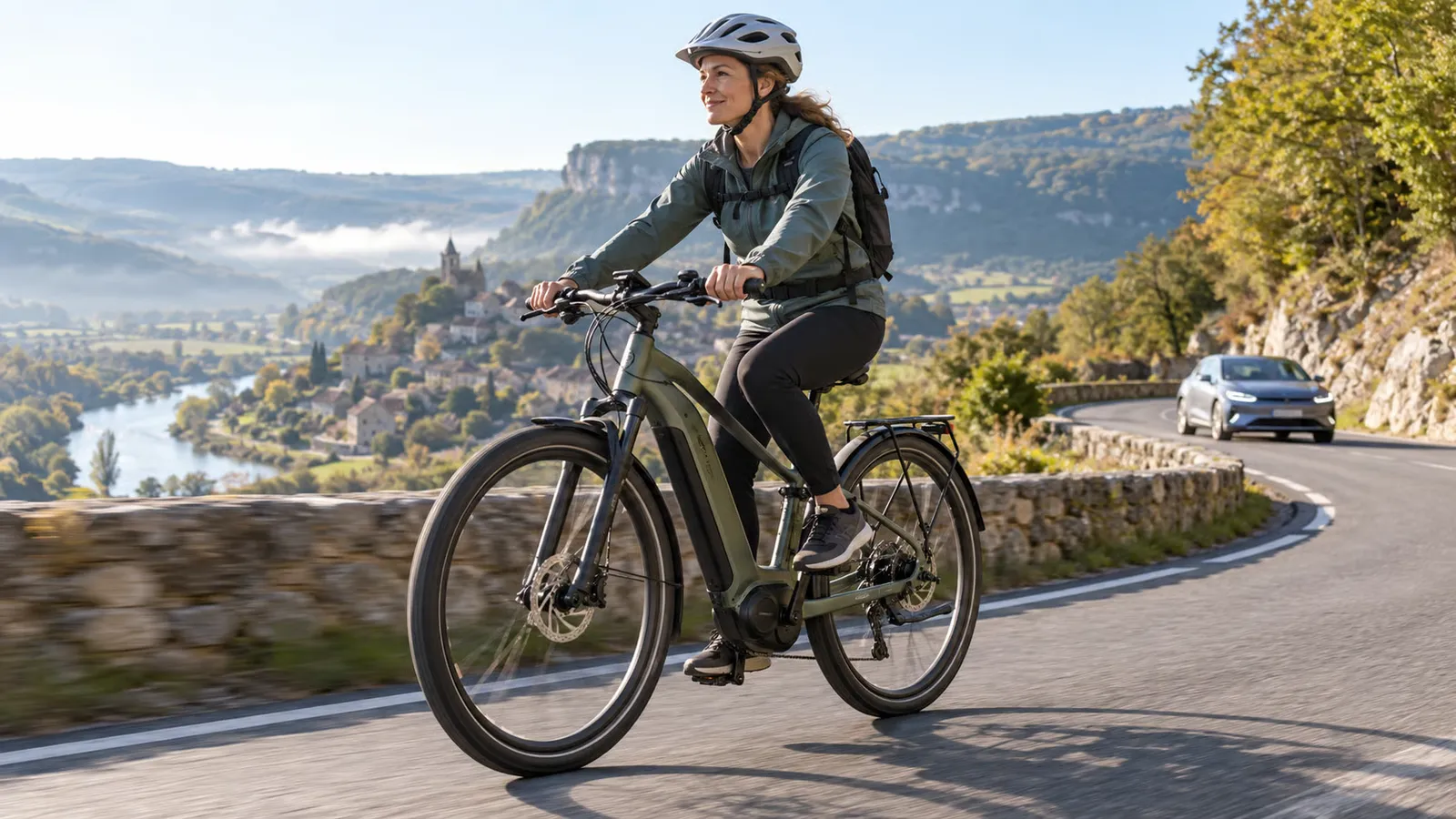
Electric cars recharge their batteries when accelerating and braking. Why not electric bikes and other individual electric devices? Here’s the explanation.
Once you try an electric-assisted bike (EAB), you quickly realize it can replace a car for many types of trips and distances, both in urban areas and in suburban areas up to 10 to 15 kilometers. Generally, the travel time is the same or even shorter than riding a bike from door to door, and the savings in money and stress are immediate, not to mention the reduced pollution.
And then there are other recreational uses, such as weekend outings or even long road trips spanning several days and hundreds of kilometers. In these scenarios, managing energy and range can become more important when planning a route. This is especially crucial since charging an electric vehicle takes much longer than charging a car—often 5 to 7 hours for a full charge, depending on battery size. There’s no point trying to squeeze in a quick charge along the way, as a 30-minute stop will at best only provide enough energy to cover about 10 kilometers. Therefore, charging can only be done at night while camping.
That is where the issue of energy management arises... and thus its recovery. A question that most e-bike users have asked at least once: why aren’t electric assist bikes equipped with a regenerative system that allows the battery to be charged when pedaling and braking, just like electric cars?
First, how does it work exactly? The principle of regenerative braking in an electric vehicle relies on the electric motor’s ability to function as a generator. During acceleration, it consumes electricity to drive the wheels. When decelerating, the wheels can drive it instead: it then resists the motion and converts part of the vehicle’s energy into electricity, which is sent back to the battery. This recovery doesn’t necessarily require pressing the brake pedal, as it activates as soon as the accelerator is released, depending on the vehicle and selected mode, with the intensity often adjustable. It can also be triggered by the brake pedal, with the electronics distributing the deceleration between the motor and mechanical brakes.
The device allows for the recovery of energy that would otherwise be dissipated as heat in the brakes, reducing the strain on them, all while providing a more pleasant driving experience that many electric vehicle users quickly get used to.
Since an electric bike also has a motor and battery, one might expect to find this function as well. However, its transmission system significantly changes the situation.
The free wheel: the first obstacle to energy recovery
On a traditional bicycle, when you stop pedaling, the rear wheel continues to turn without driving the chain or pedals. This is the role of the freewheel, which allows you to take advantage of the wheel’s momentum without having to pedal with your legs with each rotation. However, on many electric bicycles, the motor is mounted at the pedal level. It transmits its power to the rear wheel through the chain. When you stop pedaling, the freewheel prevents the rear wheel from driving this transmission in reverse. As a result, the motor does not spin due to the bike’s movement and cannot generate electricity.
This is why common central motors do not offer energy recovery. This limitation stems from their mechanical design and cannot be overcome by a simple software update. In fact, manufacturer Kalkhoff cites this design as one of the reasons for the rarity of such devices.
Installing the motor directly at the center of the wheel, within the hub, can help circumvent this problem. However, the wheel must be able to actually drive the motor. Yet, some wheel motors also have a free-wheel mechanism that disconnects them when assistance is not active. Thus, it is also impossible to recover energy in this case.
Some electric bikes already do this
That said, regenerative braking does exist on electric bikes, although it remains uncommon.
With the Zehus system, used notably by REF Bikes, cyclists can activate energy recovery by pedaling backward: the motor then slows down the bike while sending electricity back to the battery. This backward pedaling is used to control the device, and it is the movement of the bike and the rotation of the wheel that provide the recovered energy. However, in my humble opinion, continuing to pedal, even in reverse, does not truly constitute a genuine “passive” energy recovery system.
At Stromer, in the speed e-bike category (electric bikes with assistance up to 45 km/h classified as moped-type vehicles), regenerative braking can also function as a motor brake when going downhill. The brand offers various settings and a feature that adjusts the motor’s resistance to maintain a chosen downhill speed. It claims up to 20% additional range thanks to regenerative braking. In this case, it’s important to note that these bikes are slightly heavier, resulting in greater inertia, which is beneficial for better regeneration. If compared to cars, this is a true paradox: we tend to blame — often rightly — the often excessive weight of certain models, yet it is these same models that benefit from the best regenerative braking. That said, to be entirely precise, regeneration reduces the penalty of weight but does not turn it into an energy advantage.
What if we reinvented the old dynamo?
Cyclists who experienced lights powered by a dynamo likely remember that small wheel attached to the side of the tire. The wheel turned it, generating electricity to power and thus light up the bulbs in the headlights. This also added rolling resistance that could cause some sweating (yes, the need for extra energy was transferred to the cyclist—physics is relentless).
Why not adopt this idea to recharge a battery? Technically, the principle works. An independent generator, driven directly by a wheel, could produce electricity even on a bike whose assist motor is located at the pedals. Appropriate electronics would be needed to convert and regulate this energy and send it to the battery. However, it would be necessary to go beyond a simple lighting dynamo connected to the battery. To recover significant power, a generator sized accordingly, compatible electronics, and a battery capable of handling charging under such conditions are required.
A pebble against the tire would also cause noise issues and, more importantly, wear. Placing the generator at the center of the wheel would avoid contact with the tire, but it would still add extra material, weight, and cost. The idea is therefore feasible, at the expense of additional complexity.
We could even take this logic a step further by replicating the behavior of an electric car when the rider stops pedaling. A sensor would detect the cessation of pedaling, after which the electronics would control the generator based on a level selected on the handlebars: free wheeling, light regen, medium regen, or strong regen. The brake levers might also request more regenerative braking. This system would fit perfectly on a bicycle, as long as the cyclist is allowed to make the choice. After all, stopping pedaling can serve several purposes: slowing down before an intersection, controlling speed on a downhill, or simply taking advantage of momentum on a flat stretch.
In the first two cases, recovering energy is obviously advantageous. In the third case, the generator would cause the vehicle to lose speed more quickly, which would then need to be regained by pedaling or using assistance. This is why the freewheel feature is beneficial, something I consistently advocate for when it comes to eco-driving with electric vehicles.
How much energy could actually be recovered?
To measure the system’s usefulness, we also need to consider the amounts of energy involved. Take a bicycle and rider system weighing 100 kg moving at 25 km/h. Its translational kinetic energy is approximately 0.67 Wh. A complete stop would thus allow recovery, in an ideal loss-free calculation, of about 0.13% of a 500 Wh battery. In reality, only a portion of this energy would make it back to the battery. The generator and electronics have their own losses, while air resistance and rolling resistance also contribute to slowing down without generating electricity. Therefore, each stop represents a fairly modest amount of energy recovered, although these contributions can add up over time.
The terrain offers more potential. For the same 100 kg load, a descent of 500 meters in elevation corresponds to approximately 136 Wh of gravitational potential energy. This figure remains a theoretical value as well: part of it is used to overcome air resistance and rolling resistance, and the system recovers only a fraction of the remainder. Nevertheless, it explains why a long descent can make energy recovery much more significant. Yet again, physics reminds us that energy miracles do not exist—the outcome always depends on the route, the mass being transported, speed, required braking, and the efficiency of the equipment.
By the way, what about electric scooters?
Since the motor in electric scooters is generally integrated directly into a wheel, without relying on a chain and pedals, their design makes energy recovery easier. In models designed for this purpose, the wheel drives the motor during deceleration, and the motor sends electricity back to the battery. The Xiaomi Electric Scooter 5 allows for energy recovery when the accelerator is released or the brakes are applied, with three adjustable intensity levels via the app. This closely mirrors the functionality to which electric vehicle drivers are accustomed.
The physical limitations remain the same as those of a bicycle: at comparable speeds and masses, the amount of energy available during deceleration is similar. The example of a scooter shows especially that regenerative braking can be integrated into a lightweight and relatively simple device, as long as its motorization is designed for this purpose.
The development of this feature ultimately comes down to a compromise. On a lightweight bike designed for flat routes, additional equipment offers little benefit considering its weight and cost. However, for a cyclist who faces long descents daily, a well-integrated and adjustable recovery system might make more sense. What remains is to create a system whose practical advantages justify the extra equipment, while still allowing the cyclist to opt back to this very simple and always effective option: a freewheel.