
Pos Malaysia transitions to EVs for a third of its parcel deliveries
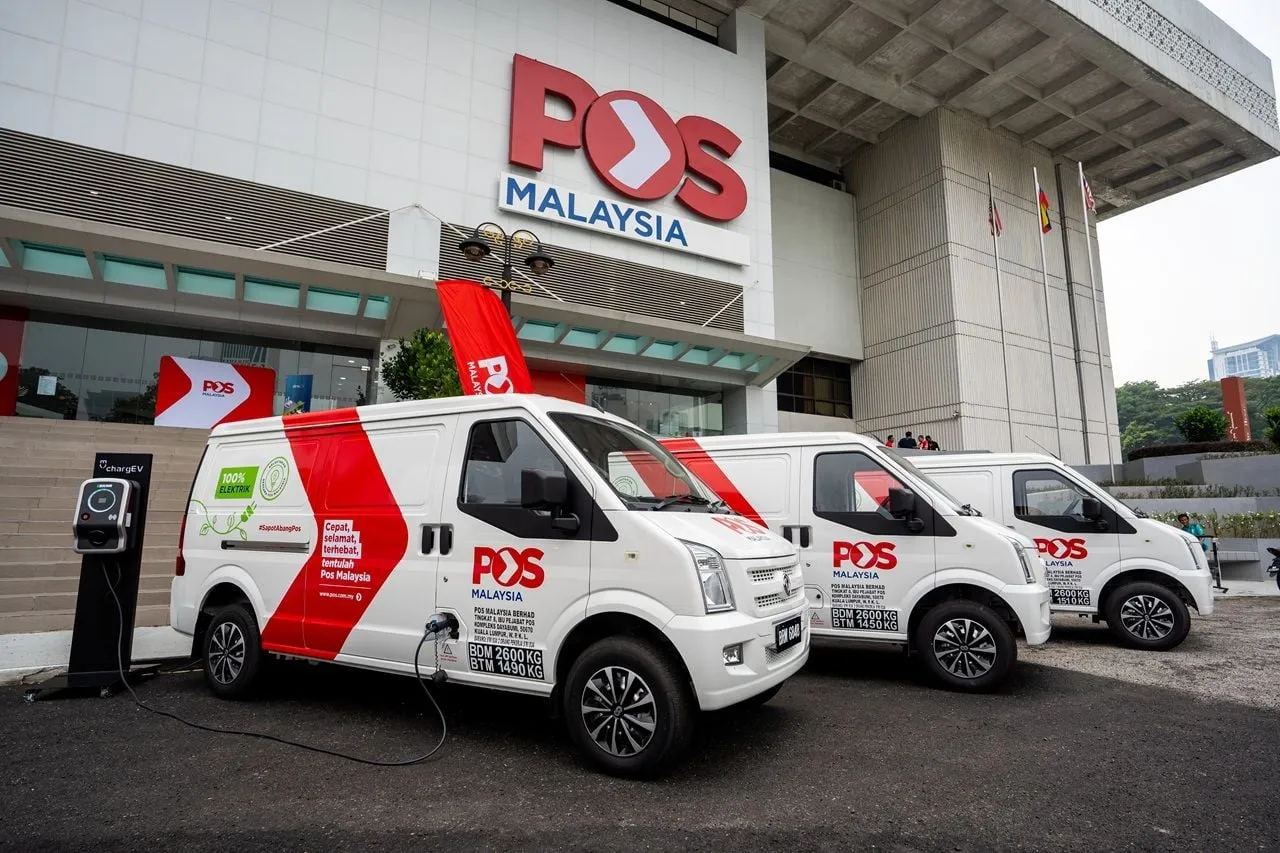
Malaysia's national postal and parcel service provider, Pos Malaysia, has announced it now delivers one in three parcels using EVs. The company has deployed electric vehicles for delivery operations across the country, including Peninsular Malaysia, Sabah and Sarawak.
Image: Pos Malaysia
Pos Malaysia now operates Malaysia’s largest EV fleet in the logistics sector, and deliveries by emission-free vehicles now account for around 33 per cent of the company’s operations. In August 2026, the supply of new electric vehicles brought the count of EVs to 1,585 in operation, including 1,253 two-wheelers and 332 vans. This has jumped from last year, when the company used EVs for 20 per cent of its parcel deliveries. Pos Malaysia aims to convert its entire fleet of first- and last-mile delivery vehicles to electric models by 2030.
Most of Pos Malaysia’s electric two-wheelers are the Modenas MEV-1 Pro scooters with a range of 135 kilometres. Pos Malaysia announced the largest purchase of electric vehicles in November 2024, back when it had only 220 electric two-wheelers and 143 electric vans in its fleet; it announced the addition of 1,092 units of the Modenas MEV-1 Pro that have now been put into operation.
As for the 143 electric vans, Pos Malaysia sourced the CAM EC35 (rebadged DFSK EC35) from drivEV, Malaysian green technology solutions provider Yinson GreenTech’s EV leasing company, in October 2023. These electric vans can travel 266 kilometres on a single charge, as per WLTP. In September 2025, the company leased 136 units of the Maxus eDeliver 3 with a WLTP range of 227 kilometres from drivEV.
Earlier this year, Pos Malaysia ordered 246 units of the Maxus eDeliver 5, which has a WLTP range of 335 kilometres. Announcing the delivery of the first batch this July, COO Zaini Yahman said that this order would expand its electric van fleet to 525 units this year.
Pos Malaysia says its fleet electrification programme was recently featured in a sustainability impact case study by United Nations Global Compact Network Malaysia, Brunei and Cambodia (UNGCMBC). Since FY2023, the company’s EV fleet has covered 28.8 million kilometres, equivalent to travelling around the world approximately 719 times, and helped it avoid 3,881 tonnes of CO2 emissions.
“At Pos Malaysia, fleet electrification is a key part of our sustainability and decarbonisation journey. Today, we operate Malaysia’s largest electric fleet, delivering mail and parcels across the country,” said Pos Malaysia Group CEO Charles Brewer.