
Portugal could join the race to produce the Citroën 2CV
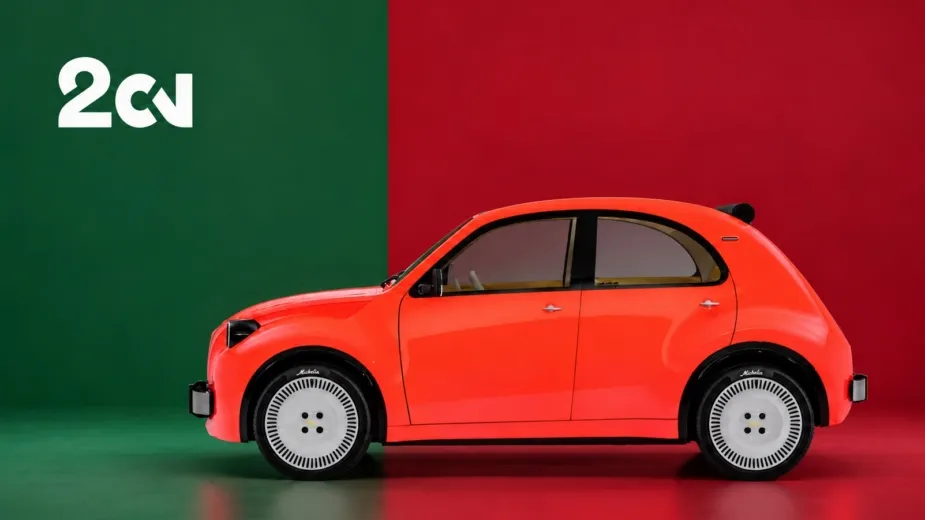
The general manager of the Mangualde factory admits that producing the new Citroën 2CV in Portugal is possible. The decision remains undecided.
Mangualde has all the conditions necessary to undertake the production of the new Citroën 2CV. With the location for the future electric model still to be determined, Múcio Brasileiro, general manager of Stellantis’ Portuguese factory, acknowledges the strengths of the Portuguese plant and expresses his desire to resume producing a model so closely tied to the history of Mangualde’s factory.
As we have reported earlier, Xavier Chardon, Citroën’s executive director, assured us in Paris that the new 2CV will be produced in Europe. The choice of factory remains open. But “it doesn’t hurt to dream (…). It would be an enormous honor,” Múcio Brasileiro replied to Razão Automóvel, without confirming that Mangualde is under consideration for the project.
A dream that, in his words, is based on the competitiveness of the Mangualde factory, one of the most profitable in the world. The remarks were made on the Auto Talks podcast, held at the Hybrid and Electric Automobile Show (SAHE) in Alfândega do Porto. You can listen to the full interview on YouTube and Spotify:
Mangualde’s arguments
The possibility has industrial backing. Mangualde stands out within Stellantis for its performance in cost, quality, and efficiency—characteristics particularly important for a car that Citroën aims to produce in Europe with the goal of starting at 15,000 euros.
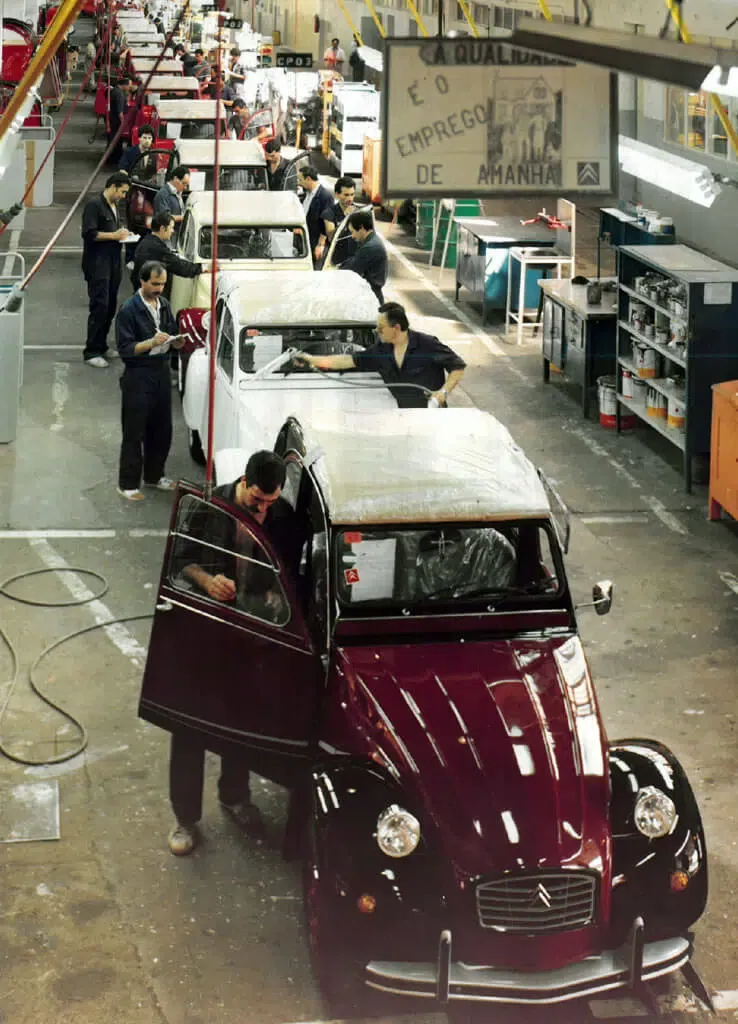
In the interview, Múcio Brasileiro explained that maintaining the factory’s competitiveness is essential to attract new investments from the group. The introduction of electric vehicles also demonstrated the Portuguese unit’s ability to respond quickly: mass production began in October 2024, ahead of Stellantis’ initial plans.
The transformation included a battery assembly line and training for teams to work with the new technology. According to the manager, the knowledge accumulated within the factory continues to make a difference, even with increasing automation. “Our employees make all the difference. And they will always do,” he said.
Discover your next car:
Recognition also comes from Citroën’s leadership. When we asked Xavier Chardon about Mangualde in Paris, the executive director described it as “one of the most efficient factories.”
The current production can be reallocated
Although Mangualde is operating near its maximum capacity, producing the 2CV would not necessarily mean increasing its output alongside existing models. The Citroën Berlingo, Peugeot Partner/Rifter, Opel Combo, and Fiat Doblò are also manufactured at other Stellantis plants. This includes Vigo in Spain, which produces these vehicle models in both gasoline and electric versions.
A possible scenario would be to reallocate part or all of the approximately 90,000 units per year currently assigned to Mangualde by other factories with available capacity. This reorganization would free up space at the Portuguese plant to accommodate production of the new 2CV.
This is an industrial hypothesis that depends on Stellantis’ decisions regarding the distribution of its models. In the interview, Múcio Brasileiro did not announce any plans to transfer current production or assign the 2CV to Portugal, stating only that such decisions are made at Stellantis’ headquarters, without direct interference from the factories.