
Porsche produces battery cells with a cathode made entirely from recycled materials
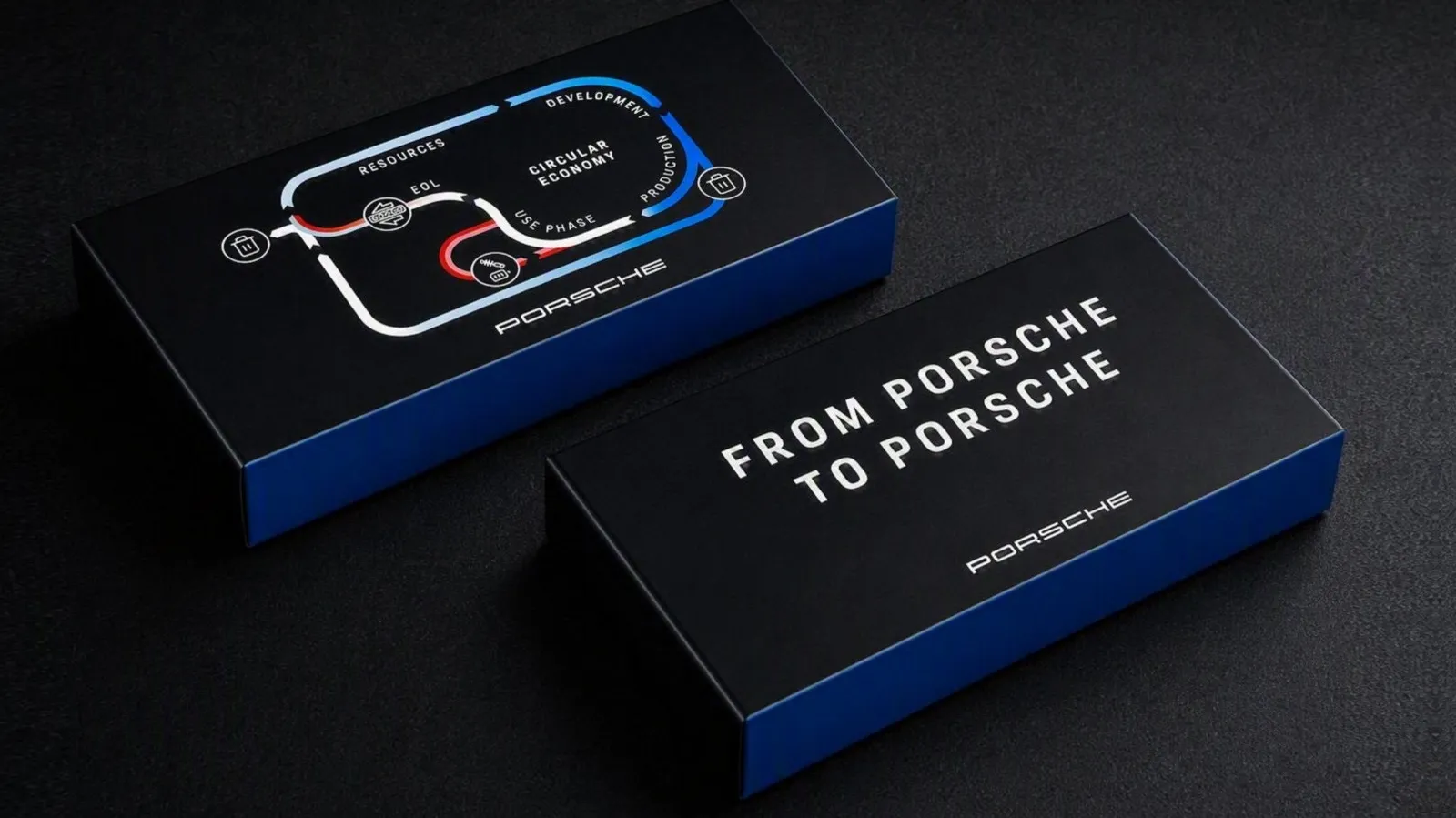
Porsche, in partnership with cylib, has produced battery cells for the first time whose cathode material comes entirely from recycled old batteries of its own. These cells are currently being tested, with raw materials for cell production expected to be available starting in 2028.
Advertisement
Porsche has taken another step forward in a pilot project for recycling high-voltage batteries: for the first time, battery cells have been manufactured whose cathode active material is entirely made from recycled raw materials. These raw materials come exclusively from used high-voltage batteries produced by the company itself. The partner in this project is the Aachen-based recycling company cylib. Tests are currently being conducted to determine whether these cells meet the requirements for quality and performance.
Recycled Raw Materials Replace Primary Materials
Porsche began this pilot project last year. The principle is to recover valuable raw materials from batteries at the end of their first life cycle, process them into battery materials, and then use them in new cells. These cells are installed in Porsche’s test vehicles.
Following recovery and processing, the next phase of the project has now been completed. The recycled active materials fully replace the primary raw materials previously used in the manufactured cells for the first time. Specifically, these are lithium, nickel, cobalt, and manganese—the metals that make up the cathode material in a typical NMC cell.
Joachim Scharnagl, who is in charge of procurement at Porsche’s board of directors, describes this achievement as a technological milestone. In his view, this approach aims to bridge circular economy principles with a more resilient supply of raw materials. Lilian Schwich, co-CEO and co-founder of cylib, sees this project as proof that her company’s process works outside the laboratory as well.
Quality determines mass production
However, pure recycling alone is not enough. What matters is whether the recycled material delivers the same performance in cells as primary material. Porsche has so far only spoken of a possible technical suitability, as suggested by initial tests. The manufacturer does not provide specific measurements such as capacity, cycle life, or performance output. Further results are expected by the second half of 2026.
The findings from the pilot project are intended to serve as a basis for deciding whether these materials will be used in series cells in the future. There is no firm commitment on this matter yet.
Ad
Recycling of used batteries from Porsche centers
Parallel to the pilot project, this cooperation has already been integrated into the regular waste management process. Since May 2026, cylib has been recycling used high-voltage batteries from German Porsche centers. The company uses a water-based method for this process.
The procedure consists of several steps: The batteries are first discharged and disassembled, then mechanically crushed. This produces what is known as black mass, which contains valuable metals and is further processed using hydrometallurgical methods.
The recovered raw materials are recorded in a material account. Starting in 2028, they are intended to be made available to Porsche and selected partner companies for cell production. The goal is to reduce dependence on global raw material sources. In the long term, recycled materials could potentially be used in high-voltage batteries for Porsche vehicles in Europe.
Locations of cylib
cylib was founded in 2022 in Aachen as a spin-off from RWTH Aachen University. The company operates a network of several locations in Germany: research and development take place at its headquarters in Aachen, while disassembly and mechanical processing occur in Wernberg-Köblitz in the Oberpfalz region. A facility for hydrometallurgical processing is currently being built in Dormagen.
Porsche integrates this project into its sustainability strategy. This includes circular economy concepts for high-voltage batteries, as well as the use of recycled materials, waste prevention, and the recycling of vehicle components.
Advertisement