
The Porsche Cayenne Electric now features 11 kW wireless charging. Currently available only in selected European countries.
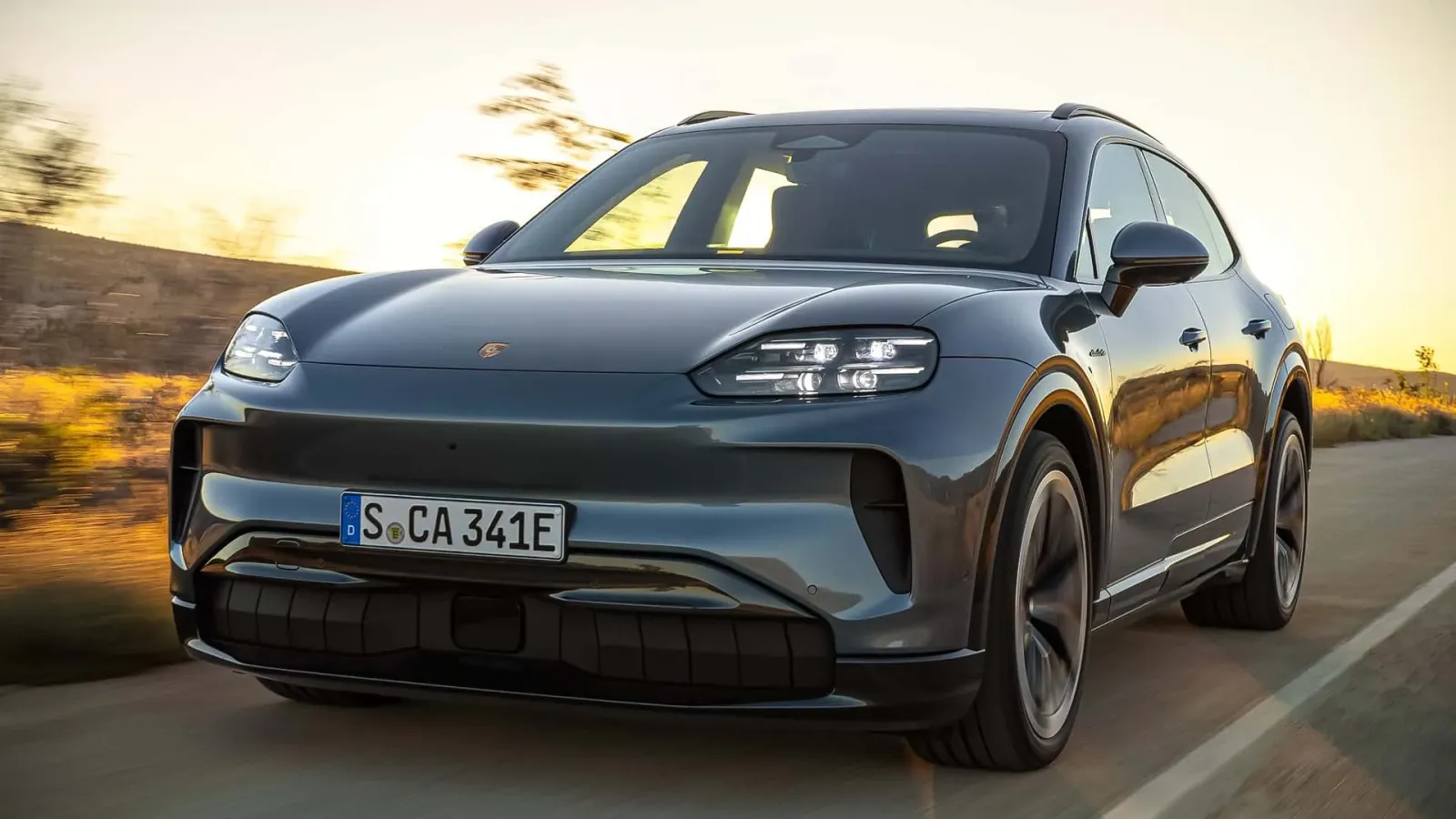
Porsche has started selling a wireless charging pad for the Cayenne Electric in Germany and several other European countries. The system delivers up to 11 kW of power and, according to the manufacturer, operates with 90 percent efficiency.
This is an interesting move, as it’s not about demonstrating technology but rather a product that can be ordered—though currently only for a very limited group of customers.
11 kW wireless charging, with a permanent pad
The car was already prepared for such charging earlier. Now, the floor-mounted pad itself is available for purchase. Porsche claims this is the first such solution offered in series in Europe and North America, although similar systems are already in use in China.
On paper, the specifications seem reasonable. 11 kW is the level of a typical three-phase AC wallbox, so it’s sufficient to charge the Cayenne’s battery during overnight parking. The battery has a capacity of 113.0 kWh, so a full charge at home still takes many hours, but that’s exactly what this system is designed for.
Porsche also claims 90% efficiency. This is clearly better than wireless phone charging, which usually has efficiencies of around 70-80%. The scale factor plays a role here, as does the larger surface area of the transmitter and receiver. Losses still exist, so this system doesn’t “eliminate” the need for a cable. It’s simply meant to be more convenient.
Convenient, but not for everyone
There’s also the other side of the coin. The plate must be permanently installed in the floor. It’s waterproof and designed to withstand the weight of a car, even if we drive over it, but it’s not a gadget we can put in the trunk and take to our new home.
The manufacturer includes a safety kit. The system is designed to detect the presence of living beings nearby and shut down charging. It should do the same when metal objects are detected on the energy transfer path. That’s good, as there’s no room for improvisation with such high power levels.
It’s not clear, however, how precisely the car needs to be positioned over the plate. And this is where the most interesting practical aspect begins. If the driver has to adjust the car by several centimeters each time, some of its appeal will be lost. If it can do this easily and consistently, the comfort of daily use could be very high.
Porsche plans to roll out the system globally in phases, starting with Europe. Sales in the US are set to begin in 2027. The company hasn’t mentioned Poland yet, so it’s likely we’ll see this system first in the richer markets of Western Europe.
Wireless car charging is finally moving out of the promotional realm and into actual pricing lists. The question is, how many premium drivers will really pay for the convenience of one less motion while parking?
LovEV Newsletter
Want more content like this?
Sign up — we’ll send you a weekly summary once the newsletter starts.