
Why the electric car with the highest charging power doesn’t always charge faster
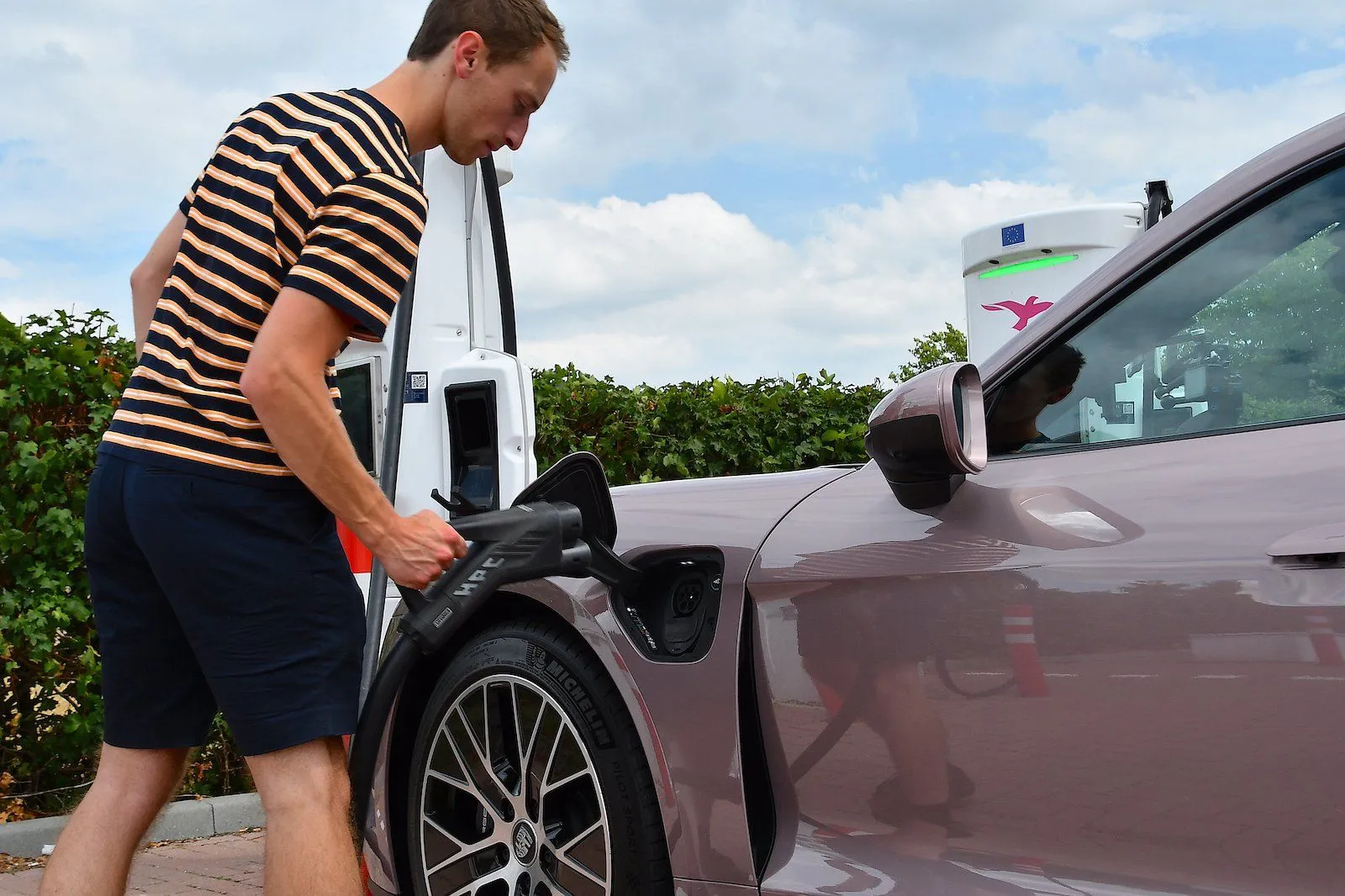
The maximum power is one of the most commonly used figures for comparing electric cars, but it alone does not determine how long a charge will last. Temperature, the ability to maintain fast charging, and the car’s power consumption can completely change the outcome.
You arrive at a fast charger, connect the car, and the screen shows a power level significantly lower than what the manufacturer claims. The charger works, the battery has room to accept energy, yet the charging time still progresses more slowly than expected. This situation has several explanations and illustrates why it’s wise to look beyond the most eye-catching figure in the technical specifications.
The maximum power indicates how far a car can go under certain conditions, but not how long it will be able to maintain that level. To determine if an electric vehicle charges really fast, one must look at the entire charging session. It also matters how depleted the battery is initially, how much energy it needs to recover, and how many kilometers it will be able to travel afterward.
The first difference lies in the charging curve, that is, how power changes as the battery fills up. One car might reach a high peak for a short time before quickly dropping it. Another, with a more modest maximum power, can maintain a steady rate for most of the charging session. If both cars need to recover the same amount of energy, the second one may finish sooner.
Therefore, the 10% to 80% time range is more useful than peak power, though it still doesn’t allow for a direct comparison between two cars without additional context. This range represents different amounts of energy depending on the battery size. In a car with 60 kWh of usable capacity, this is roughly equivalent to recovering 42 kWh; in one with 100 kWh of usable capacity, it’s about 70 kWh. Completing both charging processes in the same amount of time results in significantly different charging efficiencies.
It’s also worth checking what happens outside that range. If you need to leave with 90% charge to reach your next destination, the latter part of the charging curve can have a substantial impact on charging time. In many cars, power drops noticeably as the battery approaches full charge. The time you saved at the beginning might be lost waiting for those final percentage points to be reached.
Temperature, battery, and charger: where minutes are gained
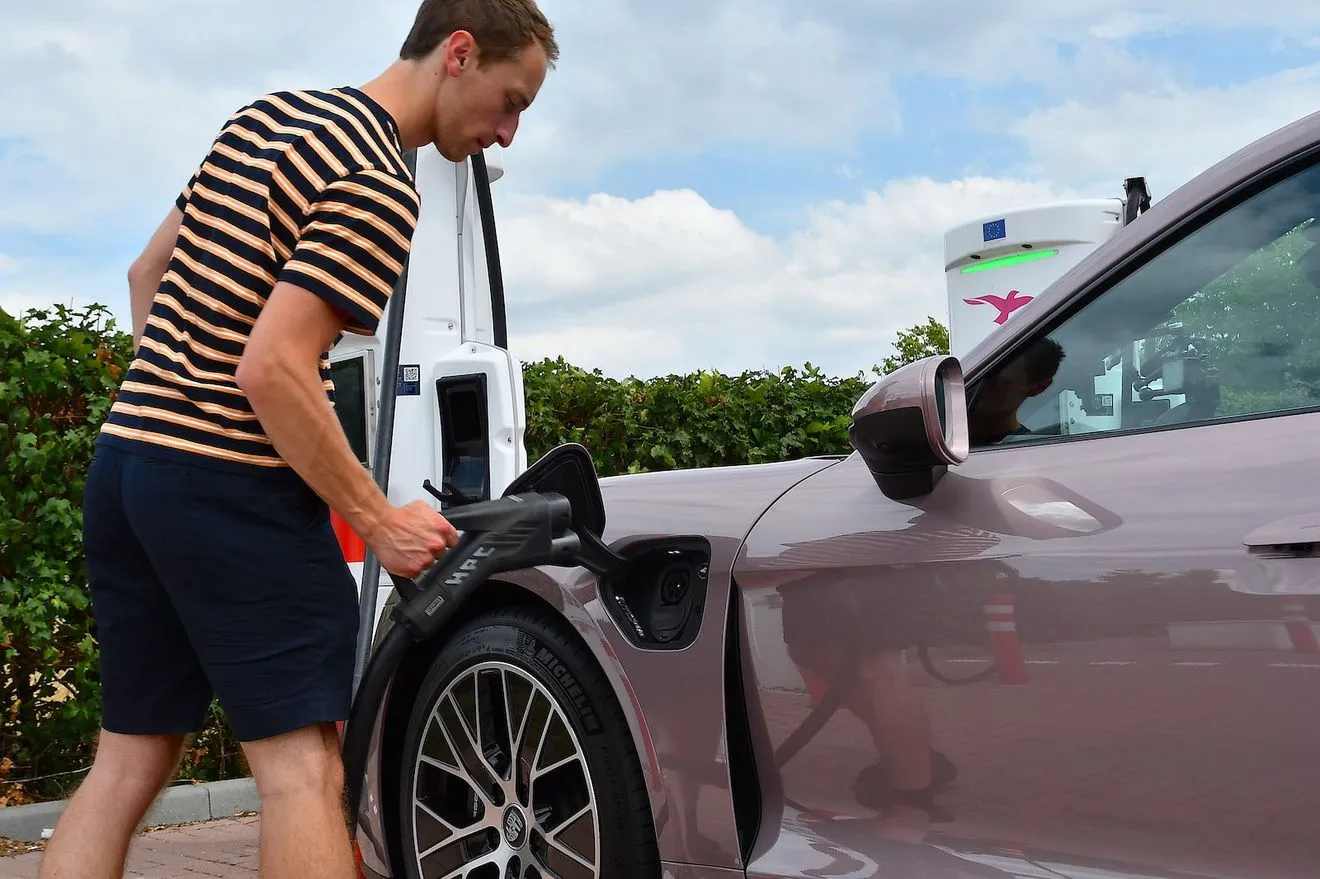
The second factor is temperature. A battery that is too cold cannot accept the same charging intensity as when it is within its optimal operating range. The car limits power to protect the cells, so having a very powerful charger does not guarantee that it can be utilized from the start.
This is where battery pre-conditioning comes in, which prepares its temperature before charging begins. Its effectiveness depends both on whether the car includes it and on whether the system activates it sufficiently in advance. It’s useful to understand how it works in each model: some link it to selecting a charger in the navigation system, while others allow manual activation as well.
The Porsche Taycan illustrates how a technical improvement beyond just horsepower can make a difference. In its 2024 update documentation, Porsche compared the time to charge from 10% to 80% with a battery at 15 °C: 37 minutes for the first generation and 18 minutes for the updated model, even though the latter has a larger battery capacity. These are figures provided by the manufacturer under the specified conditions, but they highlight the importance of extending the fast charging range.

Cooling plays an equally important role when the issue is excess heat. Keeping the cells within specified limits helps maintain performance, especially during trips with multiple consecutive charges. A quick stop isn’t enough if, after driving and plugging in again, the system needs to slow down to control the temperature.
The third factor lies within the battery itself. The materials, electrode design, and how easily ions move determine the charging speed. Simply installing a more powerful connector isn’t sufficient: the cells must be ready to accept that energy, and the entire system needs to manage the heat generated during the process.
Battery manufacturers are working precisely on combining these improvements. In 2025, CATL introduced its Shenxing Pro series for Europe, offering two distinct variants: one focused on range and longevity, and another centered on fast charging. For the latter, it announced energy recovery equivalent to 478 km WLTP in just ten minutes. This is a performance figure provided by CATL that depends on its application in a specific vehicle and does not represent a range that can be directly applied to any highway journey.

What about degradation? A straightforward answer isn’t sufficient here either. Temperature, charge level, and cell characteristics all influence aging. The battery management system adjusts the current to its operational limits; reducing power during a charging session may be part of this protection mechanism and not indicate a malfunction.
A study presented by NREL in 2015 already indicated that, for the usage patterns analyzed, the estimated frequency of fast charging did not seem sufficient to significantly affect battery life. It also emphasized the importance of thermal management when performing multiple charges during trips. Though it is an older study that cannot account for the degradation of current models, it helps explain why the usage context is so crucial.
The fourth factor is infrastructure. The power that a car receives is limited by what both the vehicle and the charging station can provide. Voltage compatibility, current limits, or power distribution among multiple outlets may prevent the car from reaching its advertised maximum capacity. The number displayed on the charging post also does not guarantee that all of this capacity is available to any car at any time.
Finally, there is a factor that connects all the previous ones to what drivers actually need: consumption. For purely illustrative purposes, 30 kWh of energy allows a car to travel about 200 km if it consumes 15 kWh per 100 km, but only about 136 km if it consumes 22 kWh per 100 km. The amount of energy added remains the same; the range available for continued travel differs significantly.
Therefore, when comparing electric vehicles, it’s worth looking for a complete range chart, the test conditions, and the kilometers they can cover on a charge with similar consumption levels. The best charging range is one that allows you to unplug earlier and reach your next destination.