
Pony.ai showcased an L4 truck in Hanover. Europe and the Middle East are targeted by 2026.
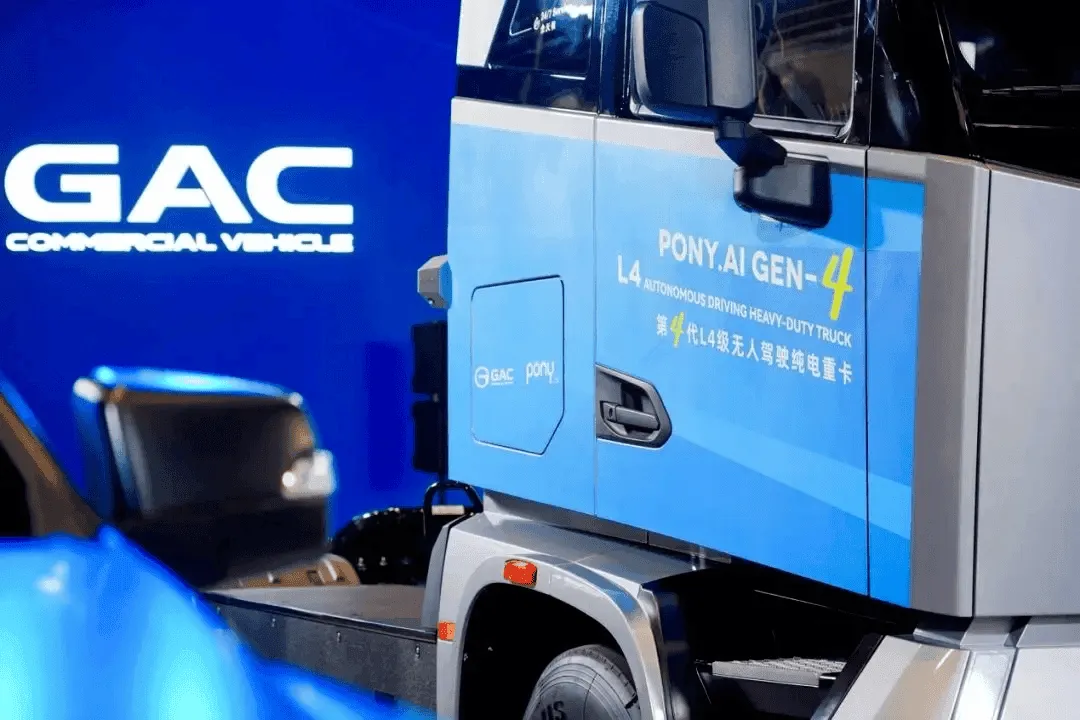
Pony.ai and GAC Lingcheng unveiled an L4 autonomous electric truck based on the T9 model at the IAA Transportation exhibition in Hanover. The vehicle is set to enter mass production this year, with the company aiming to expand into Europe and the Middle East within the next 2 years.
For readers in Europe, two things are particularly noteworthy here. First, this is no longer just a concept presentation but an announcement of actual production. Second, Pony.ai wants to enter markets where regulations and labor costs can make autonomous trucks a viable business venture.
What’s new in the fourth-generation Robotruck
The new Robotruck is the fourth generation of Pony.ai’s autonomous truck. The manufacturer emphasizes a fully redundant architecture across six areas: steering, braking, communication, power supply, computing power, and sensor systems. On paper, this represents what an L4 level should look like in heavy transportation. Without redundancy in these systems, no sensible person would deploy such a vehicle.
The sensor suite is also extensive: 9 lidars, 3 millimeter-wave radars, and 13 cameras. This is intended to provide full 360-degree coverage around the vehicle. For long-distance logistics and port operations, this still doesn’t guarantee easy deployment, but it’s clear that Pony.ai didn’t skimp on perception capabilities.
The truck is based on the electric GAC Lingcheng T9, which has a drag coefficient of Cd 0.4. Combined with an autonomous driving management algorithm, this is intended to reduce energy consumption by about 10 percent compared to conventional trucks. The company also provides two additional business figures: the cost of the autonomy system, calculated as BOM, has dropped by 70 percent compared to the previous generation, and the transportation cost per ton-kilometer is expected to be 30 percent lower.
These are concrete figures, though of course still from the company. Especially the 30 percent should be viewed as a claim that needs to be verified in actual operation.
Why Europe Is Next
Pony.ai is expanding its partnership with GAC from passenger cars to commercial vehicles. On April 16, the companies signed a strategic agreement regarding autonomous trucks, and five months later, the ready-made product underwent testing and validation before making its public debut in Hanover. The pace is fast. The question is how much of this speed will survive once it faces challenges related to certification and deployment on European roads.
The company cites demand for freight transportation and a strong commercial vehicle industry as reasons for choosing Europe and the Middle East. There is logic to this. In long-distance transportation, whether on dedicated routes or in ports, the conditions are more predictable than those in robotaxi services, and a vehicle’s operating costs significantly impact the operator’s profit margin.
It’s an interesting contrast, by the way. Pony.ai’s robotaxis are already in operation with partners in places like Dubai, Singapore, and Croatia, but it’s trucks that could reach a viable commercial scale more quickly. Less chaos, more consistency, and an easier economic calculation.
If Pony.ai truly enters Europe by 2026, we won’t first see them in residential areas but rather in ports, logistics centers, and permanent transportation corridors. And it seems that’s where such autonomy makes the most sense today. What do you think—will robotaxis be adopted more quickly in Europe, or will autonomous trucks take precedence?
LovEV Newsletter
Want more content like this?
Sign up—we’ll send you a weekly preview once the newsletter starts.