
I’m testing my 2019 Tesla Model 3 with 138,000 km on it: this is the condition of its battery after almost 7 years
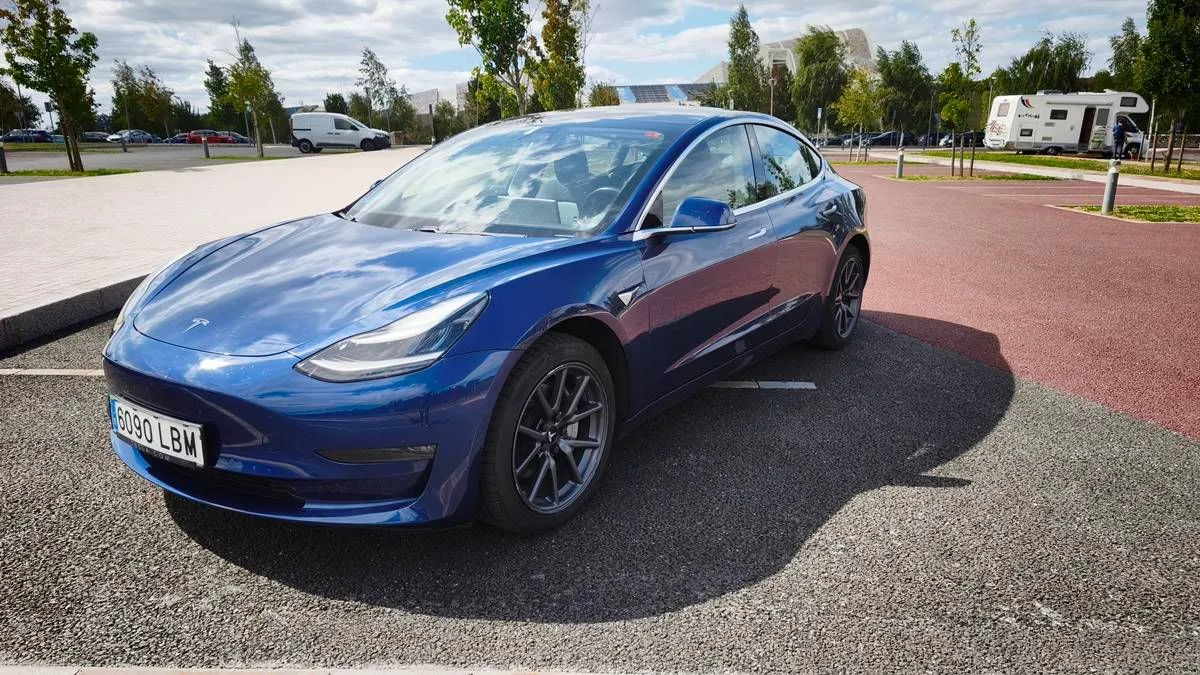
It’s been almost seven years since I got a Tesla Model 3 Long Range Dual Motor for my daily use, and it’s the end of September this year. Over that time, it has covered more than 138,000 kilometers, so I thought now was a good time to check how its most important component—the battery—has aged.
The test had two goals. First, to determine the current capacity of the battery after all these years and kilometers. Second, to find out its actual range while driving on the highway under fairly demanding conditions at a constant speed of 120 km/h.
To do this, I used, as in other occasions, our usual highway route—a path with constant ups and downs that forces the car to work hard, usually resulting in high fuel consumption. It’s not exactly the most favorable scenario for achieving an impressive range figure, but it does allow us to get a fairly realistic idea of what we can expect on the road.
Almost seven years and 138,000 kilometers later
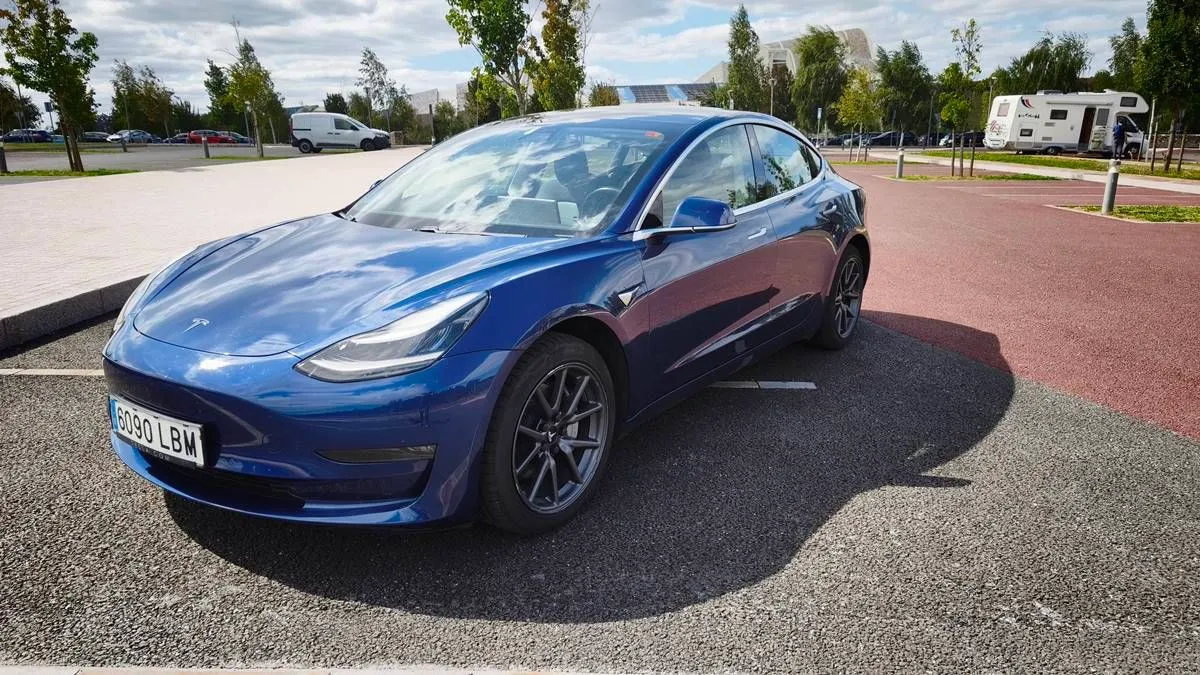
The star of this test is my 2019 Tesla Model 3 Long Range Dual Motor, which, despite the passage of time, still performs perfectly for its intended purpose. Over the years it has had some minor issues with the rear and front axles, mainly noises and slight creaking, but nothing related to the propulsion system or battery that would prevent it from driving, and these were fixed under warranty.
In fact, the only problem that forced me to take the car to a repair shop due to a malfunction—though it didn’t affect its functionality—was the modem, which stopped working properly this summer and prevented maintaining connectivity with the app. The solution was simply to replace it, at a cost of 296.38 euros. Other than that, the car has operated with reliability that, at least in my case, has been excellent.
Regarding maintenance, the truth is I haven’t been very strict about it. I had the first two done at two and four years old, each costing around 150 euros, and then I skipped the one at six years. As you may recall, Tesla doesn’t have a specific maintenance program and recommends checking it every two years. There’s even a case in Madrid of a taxi driver who has driven 300,000 kilometers without having any maintenance done. So in this regard, it’s necessary to visit a shop from time to time, but without being overly fixated on the dates.
That doesn’t mean it’s like new. Nearly seven years of use have left their marks, and my Model 3 has its share of battle scars. Some minor scratches on the bodywork are inevitable after so many miles, especially after spending considerable time parked in a public lot, where other cars’ doors end up leaving their marks.
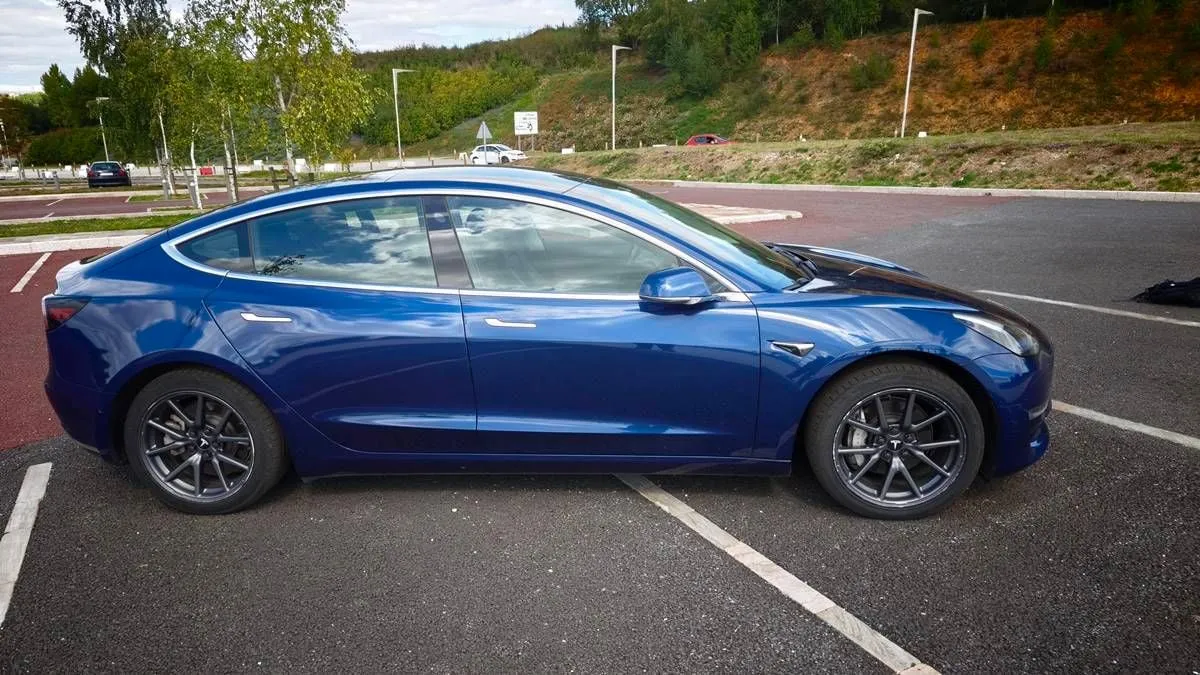
The tires have also taken a beating. Getting too close to the curb results in corresponding dents that wear them down. Additionally, this unit belongs to that early stage of the Model 3 when Tesla still used some chrome elements that were later replaced with black finishes.
And speaking of black, the well-known black piano finish on the interior hasn’t aged particularly well either. It’s a surface that gets dirty very easily, with marks and stains appearing almost as soon as you touch it. Fortunately, the central screen has held up quite well.
The screen has also improved with software updates. I remember clearly that when I bought the car, it felt like it was operating like a first-generation iPad. Over the years, Tesla has optimized the system, and now it’s smoother to use. Additionally, I installed a protective screen protector I bought online, which has helped keep the screen in good condition.
Before starting the test, the car had logged 138,443 kilometers and was at 99% battery charge. The gauge indicated a range of 401 kilometers, although when it was new and the battery was fully charged, ranges of around 450-460 kilometers were typical.
It’s also worth taking a moment to discuss the tires, as this vehicle no longer comes with original tires. On the front axle, I’m using Linglong tires, a Chinese brand manufactured in Serbia, with a size of 235/45 R18, while I use Kumho tires of the same size on the rear axle. At the time of the test, they were inflated to 3 bars.
In other words, we have Chinese tires in the front and Korean tires in the back, which is something to keep in mind since they aren’t low-rolling-resistance models. Additionally, I never use the standard wheel covers, which slightly improve aerodynamics but completely ruin the appearance. As for performance, even on wet surfaces with poor traction, this set of tires has performed excellently—even when taking the most challenging curves—without me noticing any difference compared to the Michelin tires I originally had, which cost three times more.
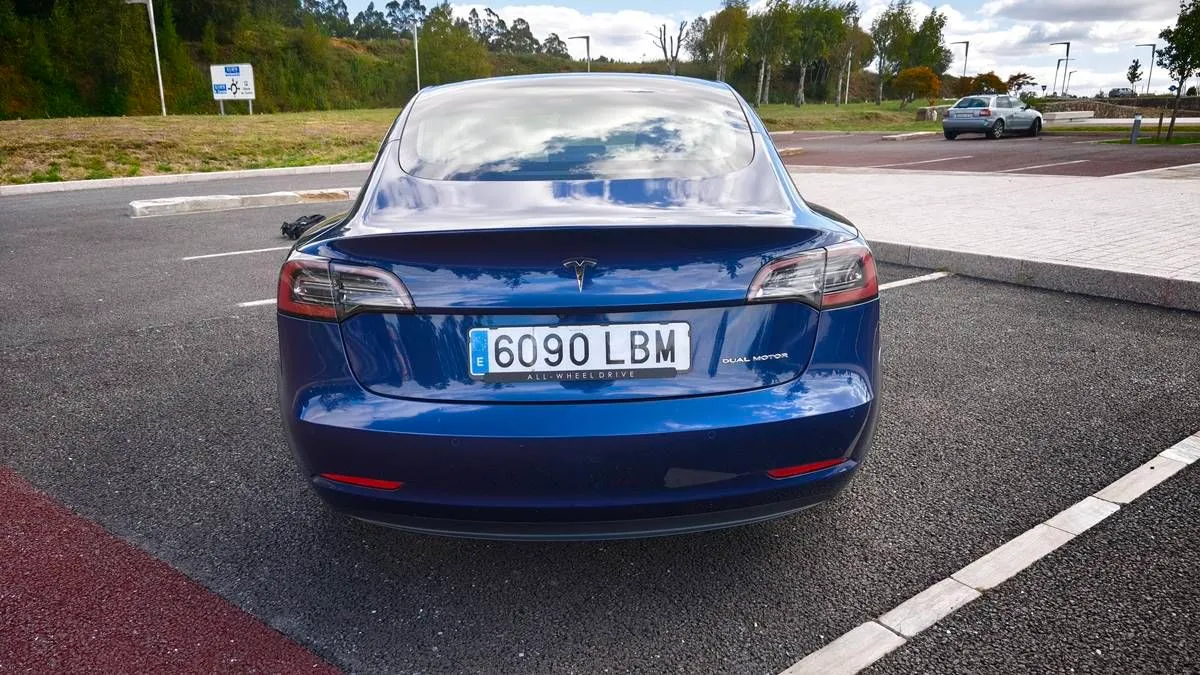
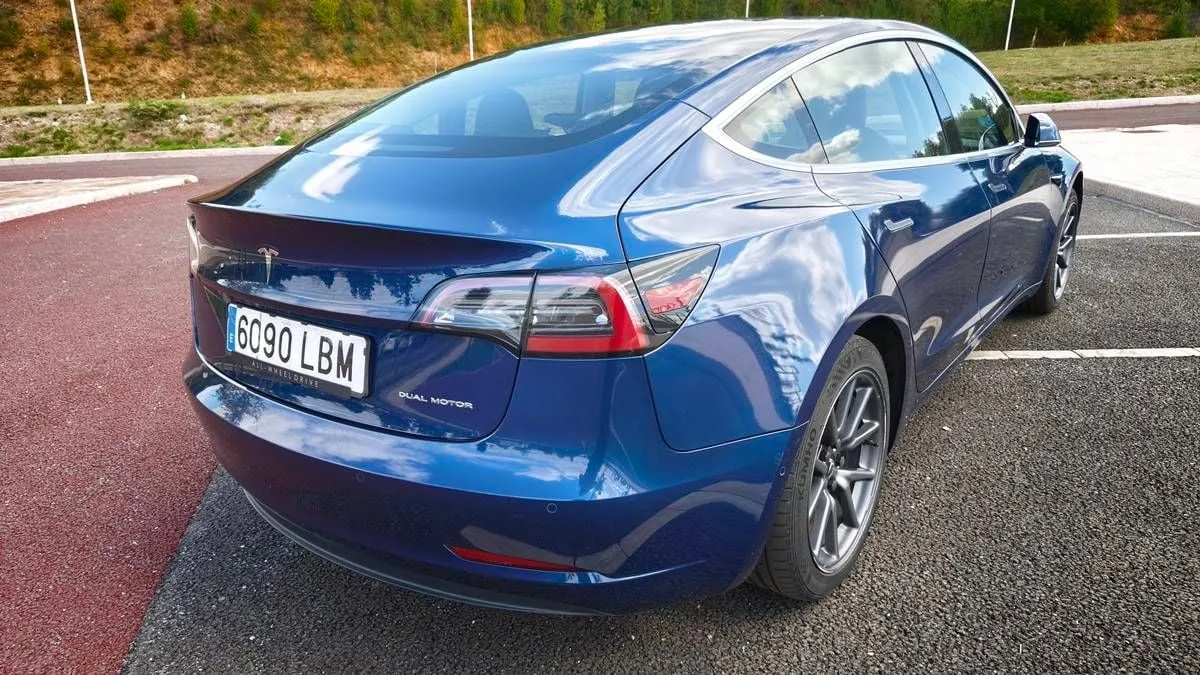
Regarding design, I still think the Model 3 has aged quite well. It’s somewhat subjective, but especially in this blue color, it still appears to me as a very attractive car. Some models show significant signs of aging over time, while others maintain a modern appearance for quite a long period. For me, this Model 3 belongs to the latter group.
But where this version truly stands out is in its performance. The Long Range Dual Motor comes equipped with two electric motors, high power, and plenty of torque, making driving it an extremely pleasant experience. Every time I drive it, I feel that it remains a fast car with immediate responsiveness and the ability to bring a smile even after all these years.
In addition, this vehicle has been my car for traveling. I’ve driven it many kilometers away from home, and from Santiago de Compostela I’ve traveled to places like Málaga, Murcia, Lisbon, Porto, or Madrid on several occasions. Throughout all those trips, it has never failed me, nor have I encountered any problems with the propulsion system or battery that prevented me from continuing my journey.
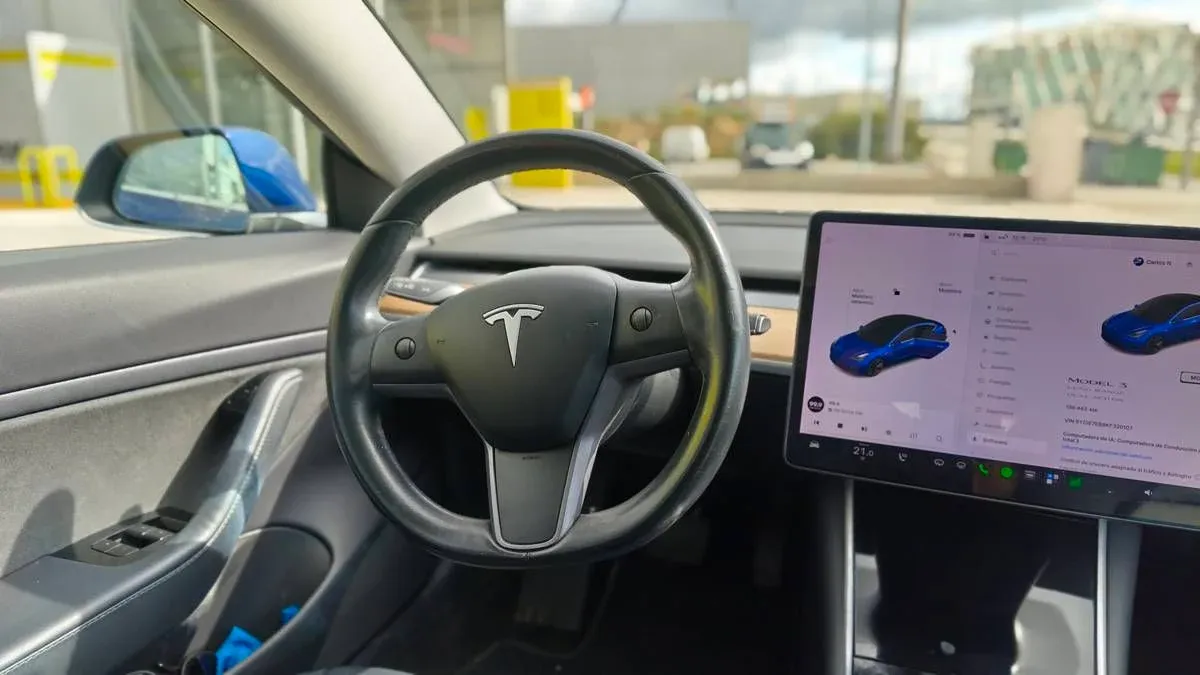
Another feature I highly value is the Autopilot system. Obviously, it has areas that could be improved and it remains a level 2 system, so the driver must keep their attention on the road at all times. But for me, it’s been one of those features that truly transforms the experience on long trips.
It significantly reduces fatigue and makes highway driving more comfortable. The car handles most of the tasks related to steering and speed, while I remain responsible for driving and must be ready to take over at any moment.
This unit also needs to be placed in context. It is a 2019 Model 3, meaning it belongs to the first generation of this model. Since then, Tesla has introduced various updates that, although they haven’t always resulted in significant visual changes, have been quite important nonetheless.
For example, at the end of 2020 and the beginning of 2021, changes were made to the interior, such as replacing some piano black elements with more pleasant surfaces. The sound insulation was also improved, and most importantly, significant changes were introduced to the propulsion system and battery.
Subsequent models achieved a significant increase in range thanks to advancements in batteries, the addition of heat pumps, and improved efficiency. The original Model 3 Long Range had a WLTP range of around 550 kilometers, while later versions surpassed 600 kilometers.
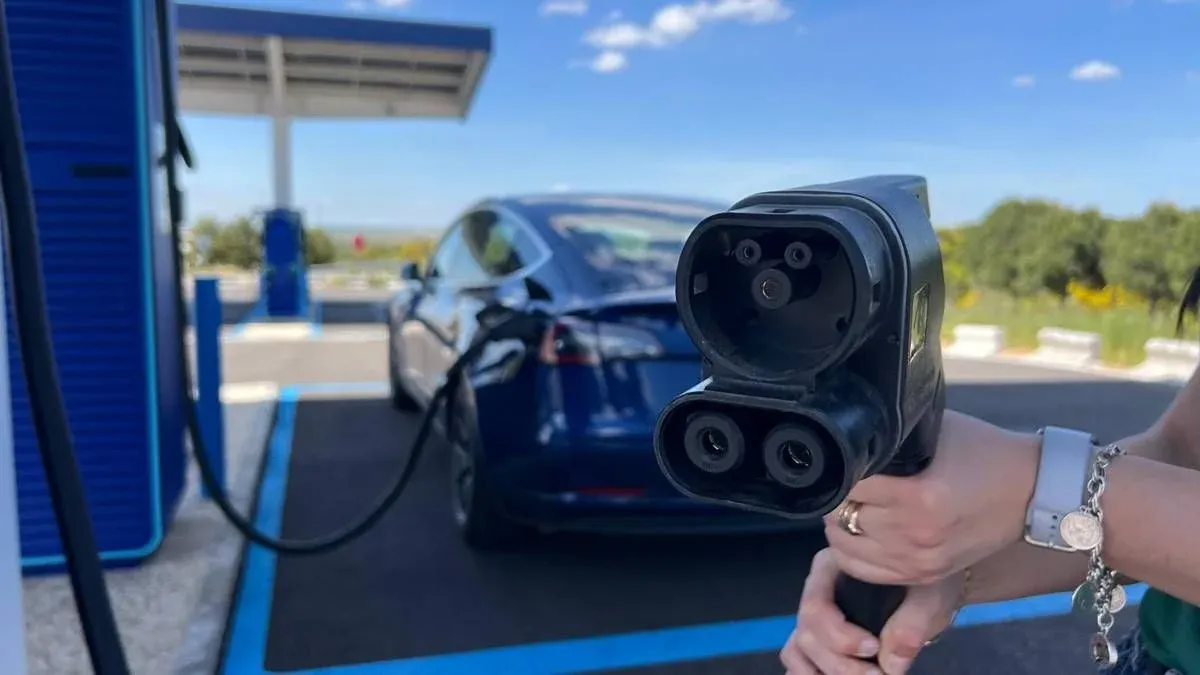
It is precisely in fast charging where the age of this Model 3 is most evident. Its 400-volt architecture is clearly behind the 800-volt systems that are becoming standard in newer models.
In theory, this Model 3 can reach peak levels of up to 250 kW under suitable conditions. To achieve this, it’s necessary to approach the charger with an appropriate battery level and at a suitable battery temperature. If these conditions aren’t met, the maximum power will be lower.
But even when everything is favorable, the charging curve is one of the aspects that has aged the most. The car starts charging at a high power level, but this begins to decrease relatively quickly, dropping to figures of 150, 140, or even 100 kW as the battery percentage increases.
In practice, a stop of about 25-30 minutes allows enough energy to be restored to continue the journey comfortably, but current models with an 800-volt architecture have taken this aspect much further.
Efficiency has also improved. On the same route, a rear-wheel-drive Model 3 Long Range, which is more efficient than my Dual Motor version, can achieve around 15-16 kWh/100 km. My vehicle, however, showed significantly higher consumption levels.
After driving 72 kilometers at an outdoor temperature of about 19 degrees, the average consumption was around 20 kWh/100 km. Later, after driving 150 kilometers with still 48% battery remaining, the average consumption dropped to 19.3 kWh/100 km.
I finally completed the test drive with the battery at between 99% and 5%, driving at 120 km/h. And here came one of the surprises of the test: the final fuel consumption was slightly better than I expected. The Model 3 ended up recording 18.3 kWh/100 km. In total, I drove 295.3 kilometers in 2 hours and 48 minutes, and the car consumed 54.1 kWh according to the screen display.
The most interesting part came when I analyzed the battery’s condition. After almost seven years and 138,443 kilometers, my Model 3 still retains around 83% of its original capacity. This degradation is greater than I expected, especially considering the actual range it provides.
This figure helps put into perspective how much this unit has aged. Obviously, it has lost some of its capacity compared to when it was new, but it still retains a significant portion of its original battery and remains fully usable for traveling, even over long distances. It needs to stop more often, but the price/performance ratio of a unit like this is still very attractive.
A car that is typically charged using a fast charger, between 50 and 150 kW, with some intermediate charging at 11 kW. But it’s never charged at a lower level due to the lack of a garage space.
Based on the results from this test, we can estimate its actual range on the highway at 120 km/h to be just over 300 kilometers with a full charge. In mixed conditions, where speeds are lower and conditions are more favorable, the range can approach 400 or 450 kilometers with a full charge.
The conclusion I draw after almost seven years is quite simple: my Tesla Model 3 has aged better than I expected. It remains an attractive, fast car that’s pleasant to drive, with driving assistance systems that continue to be one of its strengths.
The battery, which was precisely the component I was most interested in analyzing for this test, has lost more capacity than expected. And although its range on the highway is no longer that of a new Model 3, the nearly 300 kilometers it can achieve at 120 km/h are still sufficient for long trips with reasonably frequent charging stops.
The area where the passage of time is most noticeable is likely fast charging. New electric vehicles with 800-volt architectures have significantly reduced charging times and offer much more consistent charge curves. In this regard, my 2019 Model 3 is at a disadvantage in a network that is increasingly 800V rather than 400V.
But there’s one thing that still holds great value: the driving experience. After all these years, I can still get in the car, drive hundreds of kilometers, and reach my destination without worrying too much about potential mechanical problems. And that, after almost seven years and 138,000 kilometers, is probably one of the best conclusions I can draw from this test.
In addition, its current used car price makes it particularly attractive. A 2019 model with this mileage can currently be found, depending on its condition and equipment, in the approximate range of 19,000 to 21,000 euros.
That said, when buying one of these used cars, it’s important to carefully check the battery condition, mileage, maintenance history, and any repairs that may have been done during its lifetime. In my case, after all this time, the overall experience remains clearly positive. And for 20 thousand euros, it’s very difficult to find a car with this level of power, efficiency, and driver satisfaction.