
Over 60 million cars and only six accidents. GDDKiA raises the speed limit to 100 km/h in tunnels on S52
In short:
On Krakow’s Northern Ring Road, road officials have made an important change for drivers
In the tunnels in Zielonki and Dziekanowice, the maximum allowed speed will increase from 80 to 100 km/h
In total, over 60 million vehicles have used both tunnels since they were opened
The decision was based on a safety analysis and driver behavior studies, with results turning out better than expected
During the two years of operation, only six minor traffic incidents have occurred in both tunnels
Faster in the tunnels
A significant change is coming for users of Kraków’s Northern Ring Road. The General Directorate of National Roads and Highways has decided to raise the maximum allowable speed in the tunnels in Zielonki and Dziekanowice from 80 to 100 km/h. New signs will be installed overnight from Tuesday to Wednesday, and the higher speed limit will apply throughout the tunnels along Route S52.
This is a decision that may come as a surprise, as when opening the Northern Ring Road of Kraków to traffic in December 2024, the road manager adopted a more cautious approach. The speed limit of 80 km/h was primarily determined by the characteristics of both tunnels. In the tunnel in Zielonki, drivers navigate a section with a significant drop and road curve, while in the tunnel in Dziekanowice, there are entrances and exits leading to the Batowice interchange. The high volume of vehicles on Kraków’s ring road, where local, regional, and transit traffic intersect, was also taken into consideration.
Positive aspects
According to GDDKiA, nearly two years of operation have shown that drivers have adapted well to the new conditions. According to 2025 traffic measurement data, around 42,000 vehicles pass through the tunnel in Zielonki every day, while 35,700 cars use the tunnel in Dziekanowice. In total, since both tunnels opened, more than 60 million vehicles have used them.
Importantly, despite such high traffic volumes, only six road accidents were recorded. Two were related to speeding, three resulted from careless lane changes, and one was caused by a driver who deliberately caused an accident to claim compensation. It is these statistics that have become one of the main arguments in favor of raising the speed limit.
“Our observations also confirm that traffic on the ring road is smooth and safe. That’s why we decided to increase the speed limit in both tunnels,” said Kacper Michna from GDDKiA’s Kraków branch.
Traffic in tunnels is increasing
Road officials note that the previous speed limit was identical to that in the tunnel under Ursynów on Warsaw’s S2 route. The difference lies, however, in traffic volume. According to the 2025 Traffic Survey, nearly 98,500 vehicles pass through Warsaw’s tunnel daily, which is more than twice as many as those using the tunnel in Zielonki and almost three times as many as those using the facility in Dziekanowice.
Even though the allowable speed has been increased to 100 km/h, drivers will not be able to use the full limit intended for expressways. As GDDKiA explains, this is due to the characteristics of Kraków’s Northern Ring Road. Some sections feature sharper curves and gradients, and visibility conditions do not allow for a higher speed limit in all areas.
After the improvements to the tunnels in Zielonki and Dziekanowice, they will join the tunnel under Luboń Mały on Zakopane Road as routes with the highest allowable speed in Poland. Meanwhile, road authorities say they will continue to monitor the situation. If safety statistics worsen, reinstating the previous 80 km/h limit is not ruled out.
Modern infrastructure means higher speed limits
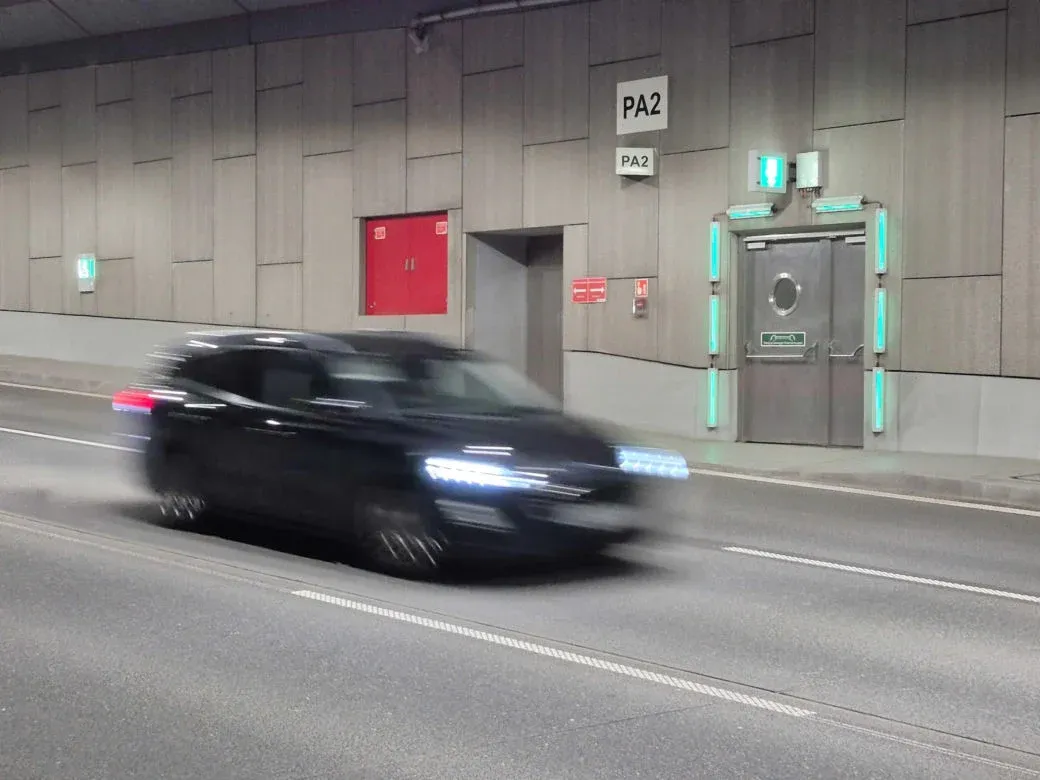
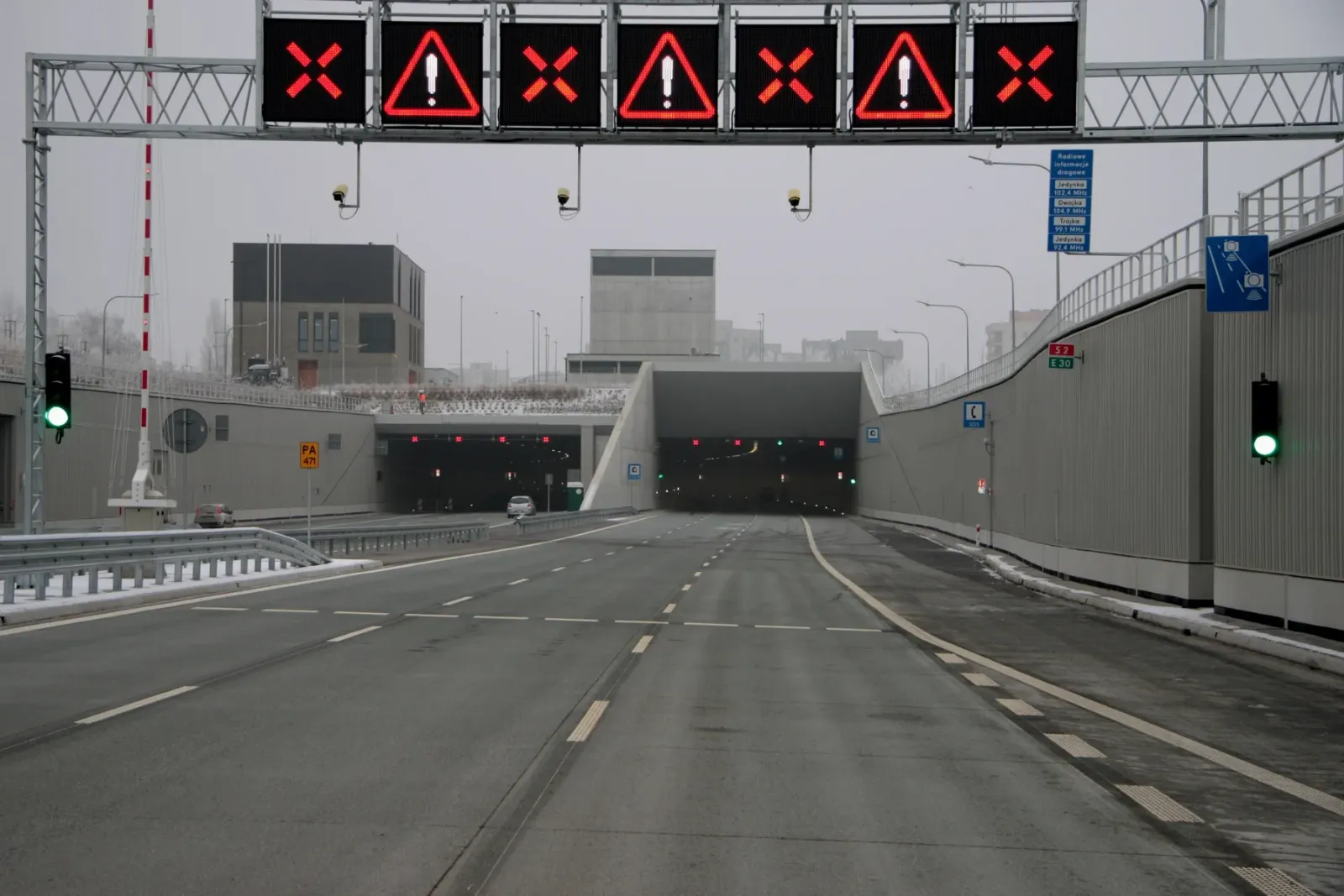
The Kraków tunnels are among the most technologically advanced of their kind in the country. They are the only bypass road in Poland equipped with two road tunnels. The structures, measuring 653 meters in Zielonki and 496 meters in Dziekanowice, are fitted with 114 cameras, thermal imaging systems, smoke and heat detectors, as well as 42 fans. Special attention is paid to the automatic fire suppression system that covers the entire length of the tunnels. A total of 920 sprinklers have been installed there, capable of initiating firefighting actions even before the arrival of firefighters.
The decision to raise the speed limit shows that modern infrastructure and responsible driving behavior can increase road capacity without compromising safety. At the same time, GDDKiA reminds that physics cannot be deceived even with a higher limit. As speed increases, braking distance grows, and reaction time in emergency situations becomes shorter. Therefore, faster does not automatically mean less cautious — warn safety experts and the police.
Oskar Włostowski