
Polish registrations, long-term foreign residence, and an upcoming inspection. What then?
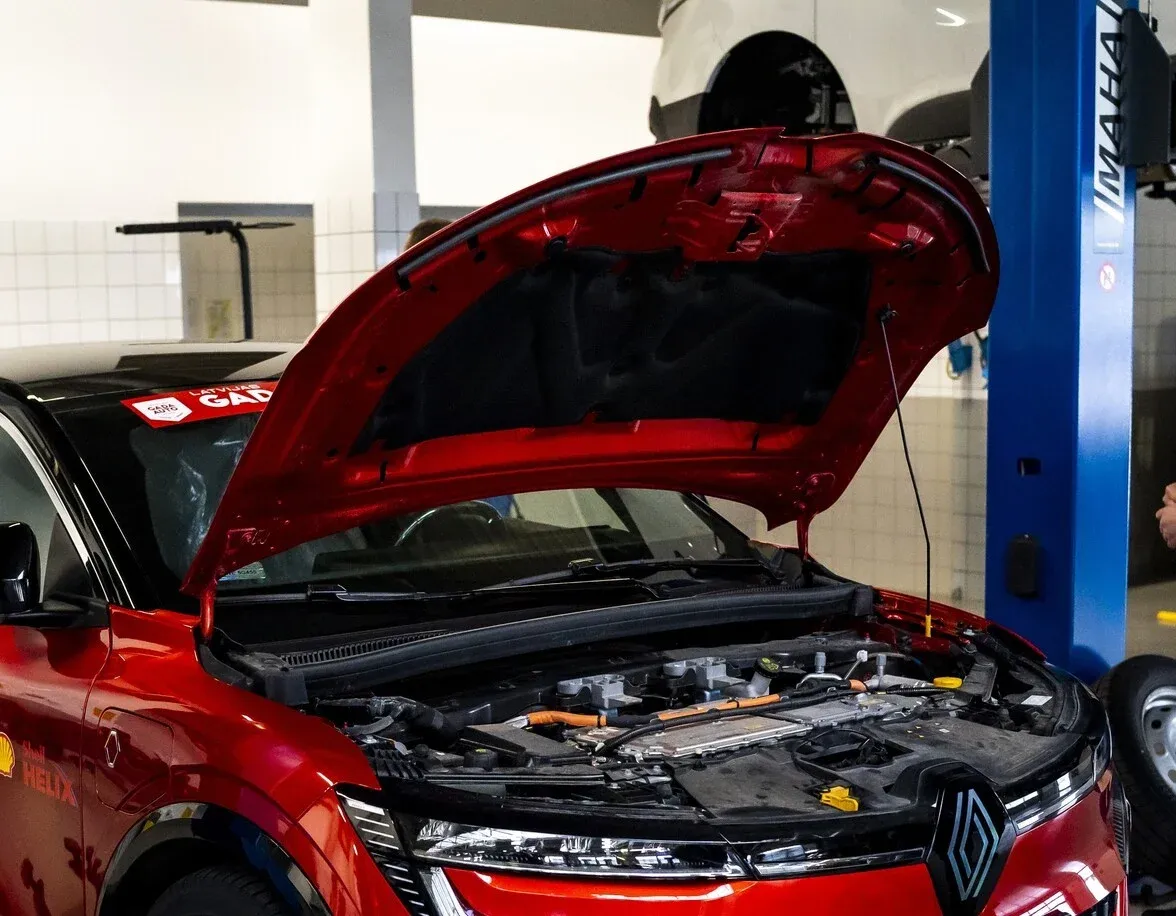
You spend a few months at home in Spain, yet your car still has Polish license plates. Everything works fine until the time for a technical inspection approaches. A local station can inspect the car, but it cannot extend the validity of the Polish inspection. As a result, you have to return to your home country for the inspection, traveling even thousands of kilometers just to spend 15 minutes at a diagnostic station. The European Union wants to solve this problem, but the regulations have not changed yet.
In short:
You’re in Europe and using your own car. Great!
The problem starts when the car needs a periodic technical inspection
This means you have to return to your home country, travel often thousands of kilometers, and incur high costs
In 2025, the EU Commission proposed changing the regulations regarding technical inspections
There is a possibility of introducing six-month vehicle inspection certificates
The legislative process is still ongoing, however
Or maybe register the car differently? We are looking into this option
Reviewing the issue
This problem could affect an increasing number of drivers. Poles buy apartments and houses in Spain, Portugal, Italy, or Croatia and spend there not just two weeks on vacation but several months each year. A car registered in Poland often travels with them or stays behind to wait for their return, serving them under the southern sun.
Sooner or later, this problem will arise. The validity of the Polish vehicle inspection expires, and the car is parked, for example, in Alicante, while an inspection station is just a few kilometers away. Theoretically, the solution seems obvious: have the inspection done locally. But currently, that’s not how it works.
The Spanish station can inspect the car, but it won’t extend the Polish inspection
The periodic technical inspection is tied to the country where the car was registered. This stems not only from Polish regulations but also from current rules in the European Union.
Directive 2014/45/EU requires that cars be inspected periodically by the country of registration or by stations designated and supervised by that country.
In the case of a car with Polish plates, this refers to Poland’s vehicle inspection system. Spain’s ITV, Germany’s TÜV, or France’s Contrôle Technique operate under their respective national systems. They cannot simply conduct a Polish inspection and send its results to the Central Vehicle Registry.
Of course, there’s nothing preventing one from having a vehicle’s technical condition checked abroad. Such an inspection can give the owner information on whether everything is fine with the car. However, it does not replace the periodic inspection required for a car that remains registered in Poland.
In extreme cases, one has to drive over 2000 km for an inspection
Imagine a homeowner in Costa Blanca who spends three months there during winter. It’s over 2000 km to Poland, and the inspection deadline falls halfway through their stay.
The most sensible approach would be to have the inspection done in Poland before leaving or return before its validity expires.
It’s worse if the deadline has already passed. There is no general EU exemption that allows driving through several countries without a current inspection just because you are heading to a checkpoint in the country of registration. Foreign traffic authorities can check whether the vehicle has a valid inspection and apply the laws in force in that country, which could result in a hefty fine.

Therefore, planning a several-day road trip across Europe with an expired inspection is risky. Formally, shipping the car remains the safer option, which of course can mean significant costs—up to several thousand zlotys—for distances measured in thousands of kilometers.
This is not just a Polish problem
From the driver’s perspective, the situation is hard to understand. If a car can legally travel from Warsaw to Valencia, and a Spanish station can check its brakes, suspension, lighting, or emissions, why can’t it extend the validity of its inspection?
The issue isn’t limited to Poles, though. The current European system is built around the country of registration. In principle, Germans, French people, or Czechs who stay in another EU country for a few months also must comply with the requirements of the country where their car is registered.
We still don’t have a single European “inspection” that can be done in any country.
The Union sets minimum inspection requirements and many common standards, but individual countries still organize their systems differently. Differences can be seen even in the frequency of inspections.
In Poland, a passenger car undergoes its first inspection within three years of initial registration, the next one after another two years, and then annually thereafter. In Germany, subsequent inspections are generally carried out every two years after the first one. In France, the first check takes place before the car’s fourth birthday, with subsequent inspections every two years. In Spain, passenger cars are exempt from ITV up to the fourth year of age; after that, inspections are done every two years, and once 10 years have passed, they must be conducted annually.
This shows why simple mutual recognition of all inspections is not as straightforward as it might seem.
The Union wants to introduce a “waiting inspection”
Interestingly, the European Commission has noted the issue of people temporarily living outside the country where their car is registered.
In April 2025, she proposed changing the regulations regarding technical inspections. One of the most significant new features would be the possibility of conducting inspections in another EU country.
This would not, however, mean a complete transfer of the inspection to a foreign station. The driver would receive a temporary EU vehicle fitness certificate valid for six months.
For example, a Polish car parked in Spain could undergo an inspection there, giving the owner an additional six months to return to Poland. The next proper inspection would then take place in the country of registration.

This solution is suitable for those who own a second home and spend several months abroad. It does not create a complete unified system, but it eliminates the need to make an urgent return across half of Europe just because of a CEP date.
The change is near, but not yet in effect
The problem is that these are still only planned regulations at present. The EU Council adopted its position at the end of 2025 and supported the possibility of issuing six-month certificates in another member state. In May 2026, the European Parliament also favored a similar solution and agreed to begin negotiations with the Council.
The legislative process is still ongoing, however. There is no existing law that would allow a owner of a Polish car to go to a Spanish ITV today, have the inspection done, and receive an additional six months of validity recognized by Poland.
Only after the final regulations are adopted and implemented by member states will such a possibility become a reality.
Or maybe re-register the car?
It depends primarily on where the owner actually lives. Simply buying an apartment or house in Spain does not automatically mean one must obtain Spanish license plates. EU rules are based on the so-called normal place of residence, which generally refers to the country where a person spends more than 185 days per year due to personal or professional ties.
If someone lives permanently in Poland and spends three months in their second home in Spain during winter, they can generally retain their Polish registration. EU guidelines explicitly address the situation of people who own a second home abroad.
One must, however, be careful about the detailed regulations of the specific country, especially if the car is to stay there permanently.
The situation is different if Spain becomes the actual place of residence. In that case, it makes more sense — and is often required — to register the car locally.
Spanish license plates solve the problem, but they require some effort.
For example, in Spain, a car imported from another EU country must first undergo an ITV inspection, which allows for the issuance of a Spanish technical certificate.
Required documents include those related to the car itself as well as proof of its homologation, usually a European conformity certificate. Tax matters, a local vehicle tax, and proper registration with Spain’s DGT are also involved.
After the process is complete, the car receives a Spanish license plate and from that point on is subject to local inspection rules.
Therefore, this is not a solution for someone who comes to the Mediterranean for six weeks. However, if someone has truly moved most of their life to Spain, keeping a car with Polish plates for years just to travel thousands of kilometers once a year for an inspection loses its meaning.
Slightly absurd, but understandable
From the driver’s perspective alone, the current system can indeed seem absurd. We have a common European market, cars with the same homologation can be driven throughout the Union, and inspections are carried out by professional stations. Yet a car with Polish plates must return to the Polish system simply because its inspection deadline has passed.
That is why a six-month temporary inspection period seems like a reasonable compromise. Drivers do not have to return to their home country just because of one date, but the responsibility for regular vehicle inspections still lies with the country where it is registered.
Today, however, the car owner with Polish license plates should first check the date of the next inspection before a long trip. If the second home abroad is only used for a few months a year, it’s easiest to have the inspection done in Poland well in advance. If, on the other hand, the “second home” has become the primary residence, it’s worth considering whether it’s time to move the car there as well.
Piotr Sobczyk
