
Poland is today a European eldorado for energy storage facilities. But easy money won’t last forever.
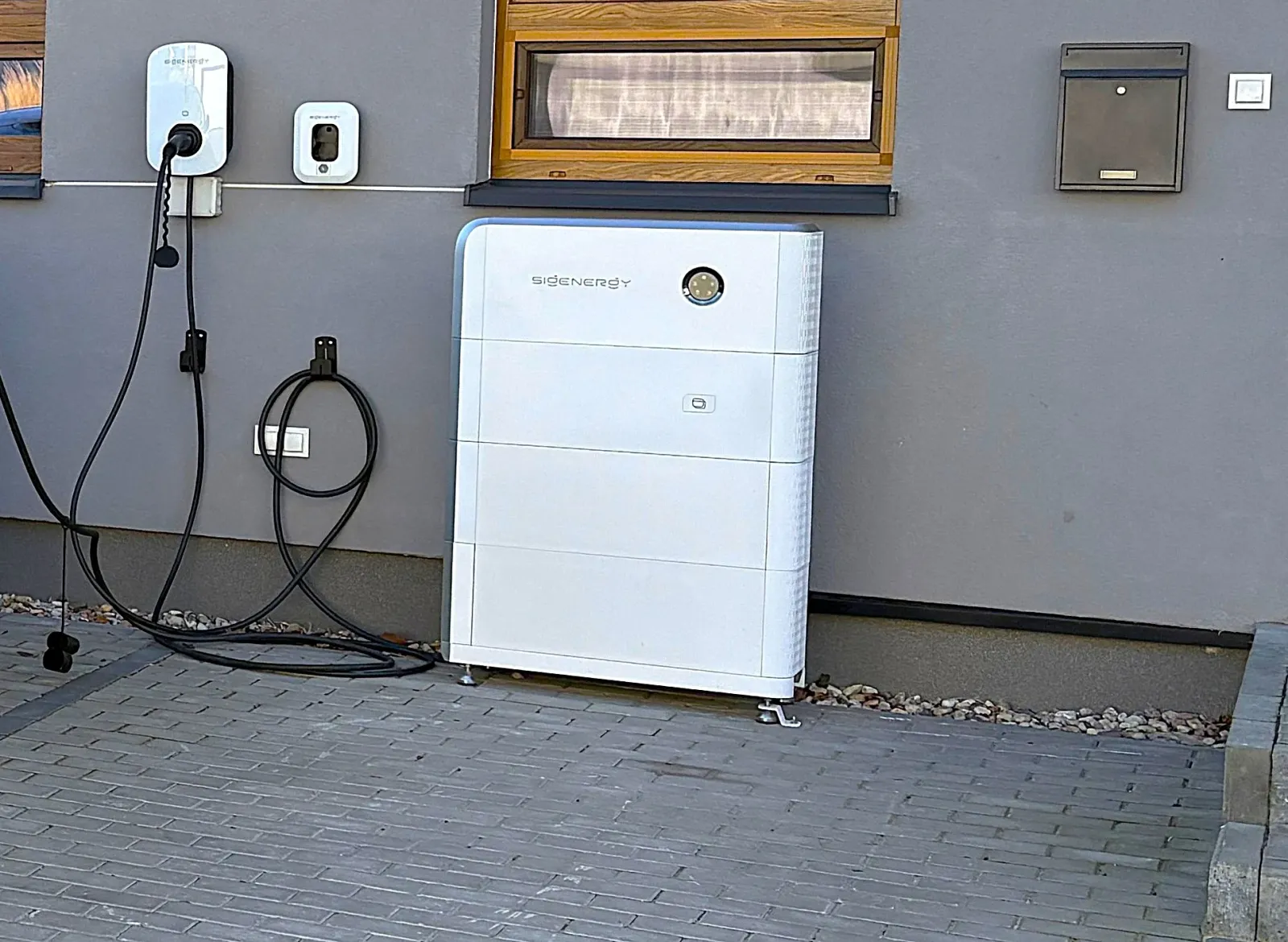
The Polish energy storage market is accelerating from two directions at once. On one hand, investors have thousands of megawatts worth of projects and power market contracts in their portfolios; on the other hand, an increasing number of BESS (large-scale battery energy storage) system manufacturers see Poland as one of the most promising markets in Europe.
The reason is simple: today, storage systems don’t have to earn money solely by buying cheap energy and selling it a few hours later. Services provided to the power grid can generate much higher profits. It is in this area that Poland stands out among European countries.
Over 3 million zł per year per 1 MW. But this isn’t a profit.
A useful reference is the Storage Index developed by the French analytics firm Clean Horizon. This model shows the revenue that an energy storage facility could generate by participating in various available market segments.
In May 2026, Poland was the most profitable BESS market among the European countries analyzed by Clean Horizon. A two-hour storage system could generate an annual equivalent revenue of over 800,000 euros per MW of capacity. At the current exchange rate, this is approximately 3.5 million złoty.
The following months saw a decline, but the figures remained very high. In June, the index for two-hour storage was 529,000 euros per MW per year, or about 2.31 million złoty. It rose to 581,800 euros in July, equivalent to around 2.54 million złoty, and was 532,000 euros in August, roughly 2.32 million złoty.
It should be emphasized, however, that we are not talking about the investor’s net profit. Clean Horizon provides an annual equivalent of gross revenue calculated based on the market conditions of that particular month. From this amount, various costs must be deducted, including the investment cost itself, financing expenses, energy losses, operation costs, maintenance fees, battery degradation, and other charges related to the project’s operation. Nevertheless, this figure clearly illustrates why so many companies are interested in the Polish market today.
Magazyn makes a profit even when it generates almost no energy
The simplest business model for an energy storage facility is arbitrage. The battery charges when electricity is cheap, and then releases it back to the grid a few hours later when prices rise. Poland is increasingly supporting such strategies. The development of photovoltaics means that during sunny hours at midday, prices can be very low, and sometimes even negative. In the evening, PV generation stops, demand remains high, and prices surge sharply.
In August, the average available price difference on the next-day market for the storage facilities analyzed by Clean Horizon reached 237 euros/MWh, which is over 1000 złoty/MWh. Such large fluctuations create natural conditions for batteries. However, system services are even more important. A storage facility can earn money by being able to quickly increase or decrease energy consumption or delivery to the grid, helping the operator maintain balance between production and usage.
FCR, aFRR, and mFRR. This is where the biggest money lies today.
In the case of Poland, Clean Horizon includes aspects such as the next-day market, intraday market, and FCR, aFRR, and mFRR services. FCR is responsible for reacting very quickly to frequency deviations in the system. aFRR is an automatic frequency restoration reserve, while mFRR is a manually activated reserve. For system operators, the storage facility is particularly attractive in these services because it can respond practically instantly.
And it is precisely for this ability to react that compensation can be received. Therefore, the battery does not need to go through full charging and discharging cycles every day to generate revenue. In May, the average price for power reservation in Poland’s aFRR exceeded 120 euros/MW/h. A month later, it dropped to around 74 euros/MW/h, which immediately resulted in a 35% decrease in revenue for the entire model storage facility.
This also shows the biggest risk of this market – today’s rates cannot simply be entered into Excel and multiplied by 20 years of plant operation.
Energy storage capacity will increase rapidly. And that’s when the eldorado will end.
System services are highly profitable precisely because the number of batteries capable of providing them remains relatively small. This will change within a few years. According to URE analyses based on power market auctions for the 2027–2029 supply period, Poland’s system could see an addition of about 6 GW of energy storage capacity. Around 2 GW is expected to be added in 2028, with another approximately 4 GW in 2029. This represents a huge scale change.
If many new storage facilities start competing for the same FCR, aFRR, and mFRR reserves, prices should fall. A similar phenomenon has already been observed in other European markets, where a rapidly increasing number of batteries was able to significantly reduce revenue from system services in a short time. This does not mean the end of the storage business. Over time, arbitrage, intraday trading, cooperation with renewable energy sources, tolling contracts, or services for large energy consumers should become more important. However, the revenue structure will change. A storage facility built solely for one exceptionally expensive market segment may have a completely different economics in a few years compared to today.
BESS manufacturers see a large market in Poland
The growing portfolio of projects means that it is no longer just China’s largest companies competing for Central Europe. Manufacturers and integrators from Europe and its immediate vicinity are also increasingly trying to enter this market. One such company is Maxxen Energy – a firm headquartered in Switzerland with industrial facilities in Turkey. Its factory in Aydın has a nominal annual production capacity of 5 GWh and covers an area of about 20,000 square meters.
The facility is only now increasing production. In the first nine months of 2026, Maxxen delivered 664 MWh of energy storage systems to 21 projects. The company estimates its share in the target segment of Europe’s large-scale BESS market at around 5%. The core product is the DC Box container, which can store approximately 5 MWh of energy. The manufacturer can also supply an MV Box unit that includes inverters and transformers, available in capacities of 2.5, 5, or 10 MW. It’s important to note that energy storage systems are much more than just battery cells.
European Storage, Chinese Cells
European manufacturers face a certain challenge in this regard. While the assembly of modules, containers, electronics, cooling systems, software, and maintenance can be moved to the continent, the most fundamental component still typically comes from Asia. Maxxen uses LFP cells made by the Chinese company Hithium. A single container with a capacity of about 5 MWh contains roughly 5,000 large prismatic cells.
This is not an exception. According to the International Energy Agency, over 98% of the world’s LFP cell and LFP cathode material production was recently concentrated in China. This chemistry dominates today’s stationary energy storage systems—the IEA estimates it accounts for more than 90% of the batteries used in them.
China’s advantage stems not only from its production scale. Local companies control a large portion of the supply chain, active materials, and machinery needed to manufacture battery cells. As a result, European integrators can compete through service, logistics, warranties, or software, but they remain highly dependent on China when it comes to the battery cells themselves.
Brussels wants more batteries produced locally
The European Union is trying to reduce this dependence. In March, the European Commission proposed the Industrial Accelerator Act, aimed at increasing demand for technologies produced in Europe. The proposal includes the possibility of using “Made in EU” criteria and emission standards, particularly in public procurement and government support programs. Batteries are one of the sectors covered by these new rules.
The EU has also launched the Battery Booster Facility worth 1.5 billion euros. This instrument aims to support battery manufacturers in expanding production in Europe through interest-free loans. However, this does not mean a quick shift away from China. Building the battery factory itself is just one step — cathode materials, graphite, production technologies, machinery, and sufficient scale are also needed to make the product cost competitive.
Storage should be viewed as a power plant for 20 years
The current revenue from the Polish market looks impressive, but investors purchasing BESS systems don’t build them to last just two or three years. A typical project is designed to operate for a dozen years or more than 20 years. During that time, energy prices, the number of storage units, regulations, the structure of grid services, and the operation of the entire national electricity system will all change. The batteries themselves will also degrade over time.
Therefore, when choosing a supplier, price per MWh of storage capacity is no longer the only factor that matters. Guaranteed cycle count, degradation rate, overall system efficiency, availability of spare parts, and especially the time required to restore the storage unit to operation after a failure are also crucial. After all, every day of downtime for a device worth tens or hundreds of millions of zlotys means lost revenue.
Poland is indeed one of the most attractive markets for large-scale batteries in Europe today. The best projects won’t be those that earn the most by 2026, but rather those that will still remain economically viable when several gigawatts of competing storage facilities start competing for exactly the same funds.
Piotr Sobczyk