
The police are conducting traffic light inspections. Starting tomorrow, 1,567 stations will check cars for free!

In the article:
- Police officers across the country will pay special attention to the condition and setting of vehicle headlights
- On four designated days, headlight inspections can be done free of charge at 1567 vehicle inspection stations
- If a car’s technical condition poses a safety risk, police can electronically suspend its registration
Police and ITS speak with one voice
In autumn, just a few minutes of driving at dusk are enough to see the scale of the problem. One car has its headlights shining several meters ahead of the front end, another points one headlight at the asphalt, while a third blinds drivers on the opposite side as if it were always driving through traffic lights.
This is why the Police and the Institute of Road Transport have launched the 11th edition of the campaign “Your Lights – Our Safety.” Traffic police officers will pay special attention to vehicle lighting during these inspections.
1567 stations will check lights for free
1567 vehicle inspection stations across Poland are participating in this campaign. Four nationwide days of free inspections have been scheduled for:
- October 24,
- November 7,
- November 21,
- December 5, 2026.
The campaign involves stations operating under the patronage of the Institute of Road Transport, affiliated with the Polish Chamber of Vehicle Inspection Stations and part of the Polish Motor Federation, as well as Dekra and Speed Car outlets.
The nearest location can be found on the Police and ITS websites as well as in the Yanosik app. The Institute of Road Transport itself in Warsaw also makes its station available from Monday to Friday during the campaign period.
It’s not enough that both lights are on
Checking the lighting system isn’t just about walking around the car to ensure no bulbs are burnt out.
The technician will also assess the setting of the headlights, the height of the light beam, the boundary between light and shadow, and the intensity of the light. The condition of the bulbs themselves is also important — a dirty lens can significantly reduce the effectiveness of even a functioning headlight.
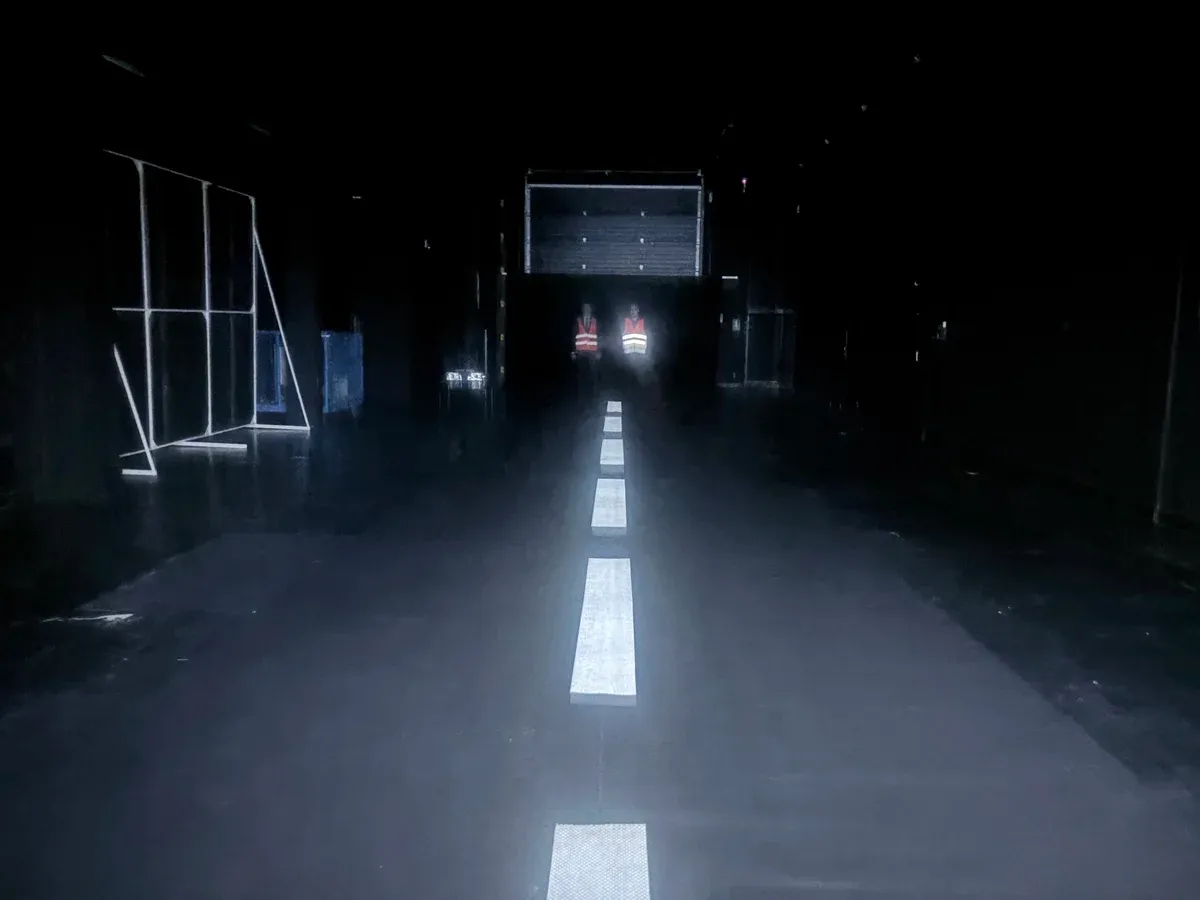
Improperly set lights can have negative effects in both directions. If they are too low, drivers will notice obstacles later. If they are set too high, they can blind drivers coming from the opposite direction.
This issue is particularly noticeable in autumn and winter. Darkness falls earlier, rain occurs more frequently, fog appears, and pedestrians wearing dark clothing may only be visible from a short distance away.
Officers will check, among other things, whether all required lights are functioning, whether headlights do not blind other road users, and whether the vehicle is not equipped with unauthorized light sources or other modifications.
Special attention should be paid to the common replacement of traditional halogen bulbs with LEDs. Just because a replacement can physically fit into an H7 or H4 bulb socket does not mean such a solution is legal for use in a specific headlight or vehicle. Improper modification can completely alter the beam pattern and blind other drivers.
Even modern LED or matrix headlights are not completely maintenance-free. Damage to the leveling sensor, suspension components, or incorrect calibration after repairs can cause even the most advanced headlight to function improperly.
You could lose your license plate for faulty lights
The consequences depend on the type and severity of the malfunction. Road traffic law allows police officers to seize a vehicle’s registration document if they determine or have reasonable grounds to believe that the vehicle’s technical condition poses a threat to safety or traffic order.
A serious lighting malfunction may meet this condition. This does not mean, of course, that the police will automatically seize the registration for every burnt-out bulb. The type of malfunction and its impact on safety are what matter.
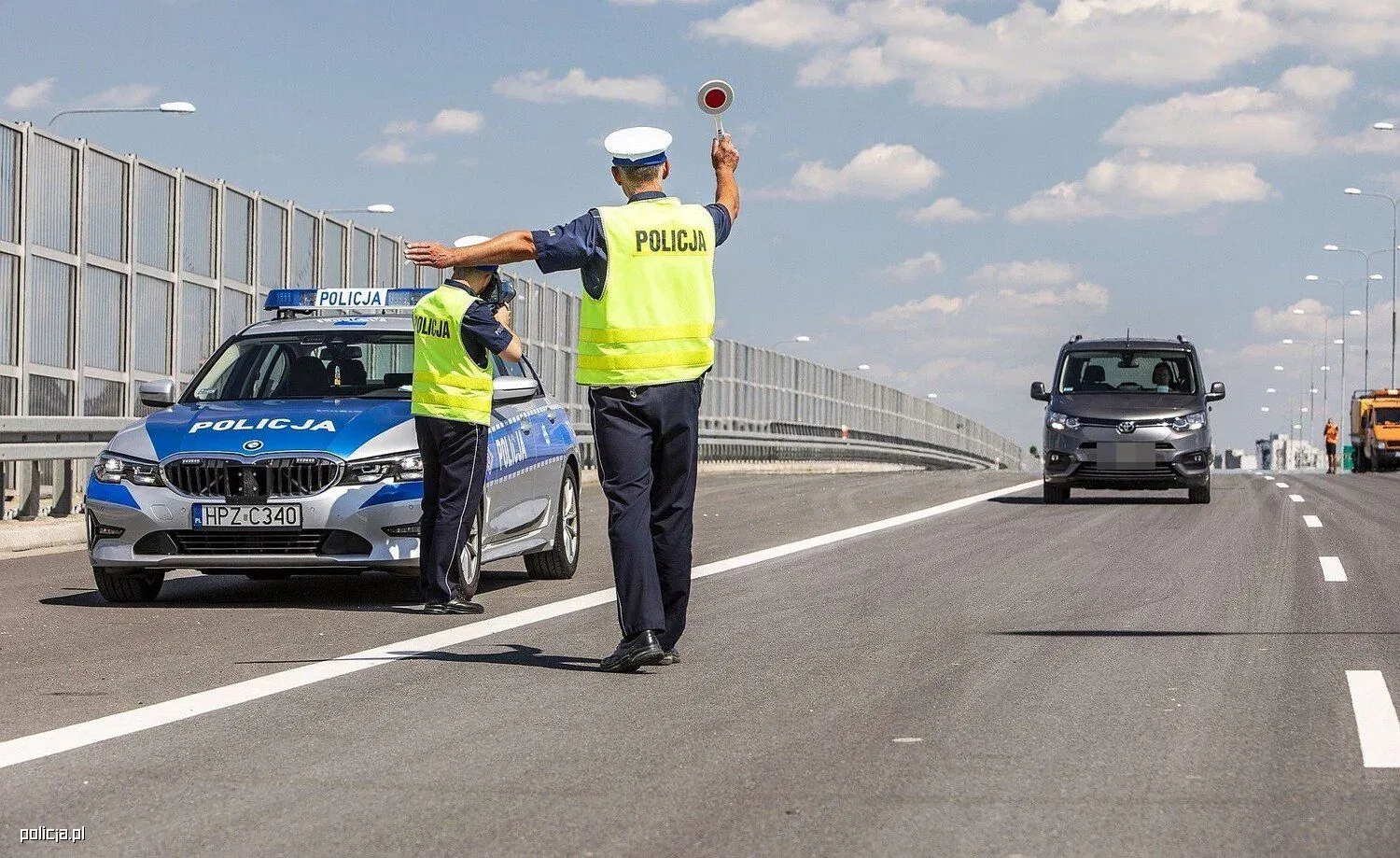
Today, document suspension is usually done electronically – the information is sent to the Central Vehicle Registry. Therefore, the driver does not need to physically hand in the plastic document to officially “lose” it.
If the defect is serious enough that continuing to drive would be dangerous, the police officer can also prohibit further use of the vehicle.
The fine can be much higher than for misadjusting headlights
Driving a vehicle that does not meet technical requirements can also result in a fine. For violations covered by Article 97 of the Code of Offenses, the maximum fine is 3000 zł.
This does not mean that every driver with misadjusted headlights will automatically receive a 3000 zł fine. The amount of the penalty depends on the specific violation and circumstances.
Specific penalties outlined in the tariff apply, for example, to driving without the required lights. Forging them on is one thing, but driving with poorly adjusted or faulty headlights is another.
What to do if the police seize the document?
First, you need to eliminate the reason for the document being seized. In the case of lights, this may mean replacing a bulb, fixing the headlight, restoring a certified light source, or properly adjusting the lamps.
Next, the vehicle may require an inspection at a vehicle control station to confirm that the defect has been fixed. In cases of electronic seizure of the document, an appropriate entry can also be cleared by a diagnostic station that has conducted the proper inspection.
It’s worth doing a quick test before heading out
The simplest things can be checked by yourself. You just need to turn on the position lights, passing lights, high beams, fog lights, turn signals, and brake lights one after another, then walk around the car.
This kind of test will help identify a burnt-out bulb, but it won’t show whether the headlights are properly adjusted. To assess the height and shape of the light beam, a proper diagnostic tool is required.
It’s especially important to keep this in mind during autumn and winter. Faulty lights not only reduce visibility and blind other drivers but may also result in a fine, suspension of the registration, and the need to visit a diagnostic station again during inspections.
Piotr Sobczyk