
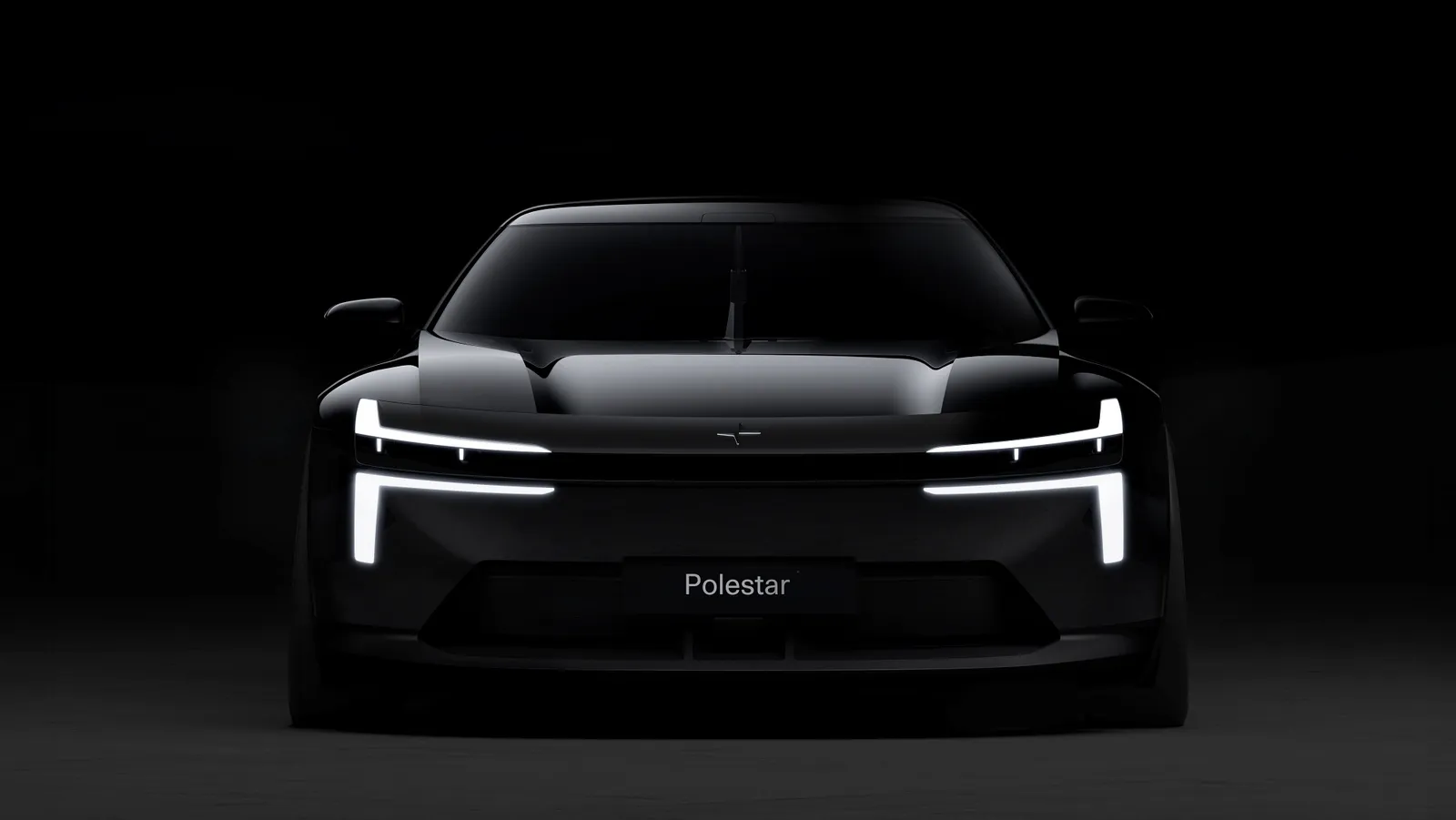
Polestar offers a glimpse of what its cars will look like in the future: "We needed a bold evolution, not a revolution.
08/09/2026 15:00
Updated to
08/09/2026 15:00
Polestar decided long ago to separate from its parent company Volvo in order to capture the global electric vehicle market. Although the plans have not turned out as well as expected, the Swedes remain determined. Next month in October, Polestar will officially unveil the Formula 2030 prototype, the first vehicle developed from scratch under the leadership of Philipp Römers, who has been in charge of the brand’s design since January 2025.
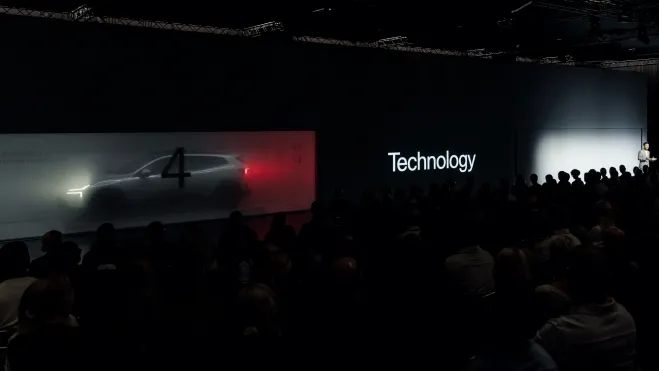
This experimental model will not remain just a stylistic exercise. Its design will be used to transfer aerodynamic, aesthetic, and structural solutions to the nearest mass-production models, starting with the next-generation Polestar 2 scheduled for 2027 and continuing with the all-new Polestar 7, a compact SUV planned for 2028. Recently, the company added the Polestar 4 to its lineup, featuring a range of 630 kilometers (WLTP) and a starting price in Spain of 54,390 euros, without any offers or discounts.
Functional aerodynamics with S-duct and lowered wheel arches
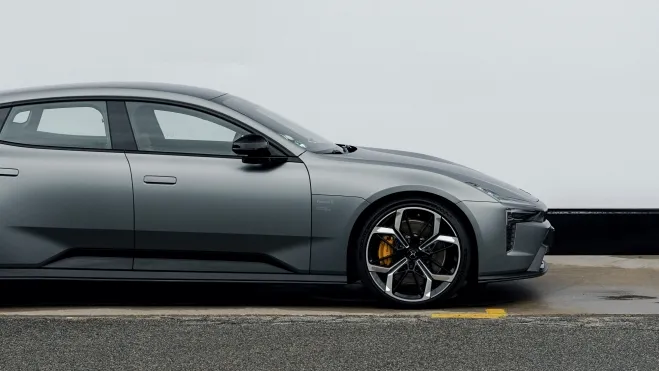
Technically and dynamically, the Formula 2030 stands out with a lowered and wide stance that optimizes the center of gravity and enhances its sporty feel. One of the most notable features in its design is the incorporation of pronounced negative camber on the front wheels, a configuration designed to maximize tire contact area during high-speed cornering.
The aerodynamic aspect features a front duct system called the S-duct. This duct channels air directly through the front grille and redirects it to exit through a large opening above the hood. This design directs airflow, reduces turbulence, and creates downward force to keep the front axle firmly planted on the road at high speeds.
Distinguishing Chassis from Volvo and Recognizable Blade Lights
The technical advancements aim to enhance its dynamic differentiation from parent company Volvo by focusing on a performance approach centered on pure driving and road behavior. Despite the angular front design, it retains distinctive features such as the dual-blade shape daytime running lights. Römers himself stated: "The design and Polestar brand are already very strong, so it was clear we needed a bold evolution, not a revolution, of what we’ve built so far."
The design deliberately avoids aggressive contrasts to maintain a functional Nordic balance, where every element of the bodywork serves a purpose in managing airflow and enhancing the energy efficiency of electric powertrains. In the future, all Polestar models will adhere to this new design philosophy. Recently, the company announced its withdrawal from the North American market to focus its efforts on Europe. Its CEO, Michael Lohscheller, reiterated the company’s commitment to 100% electric mobility: “We will not produce any hybrids for Europe.”
Business Goals and Industrial Scale Aiming for 100,000 Units
Under the leadership of its CEO, Polestar is undergoing a financial restructuring phase aimed at improving profitability. In the first half of 2026, the company reported net losses of $842 million (approximately £623 million), a 29% decrease compared to the same period in 2025. The operational plan aims to achieve annual deliveries of 100,000 units, up from 60,000 units sold in 2025. To support this growth, the brand will target the highest-volume markets in Europe using the architectures introduced with the Polestar 2 and 7 models based on this new prototype.