
The Polestar 4 SUV is available in Europe starting at 57,900 euros. It’s more of a station wagon than another coupe-SUV.
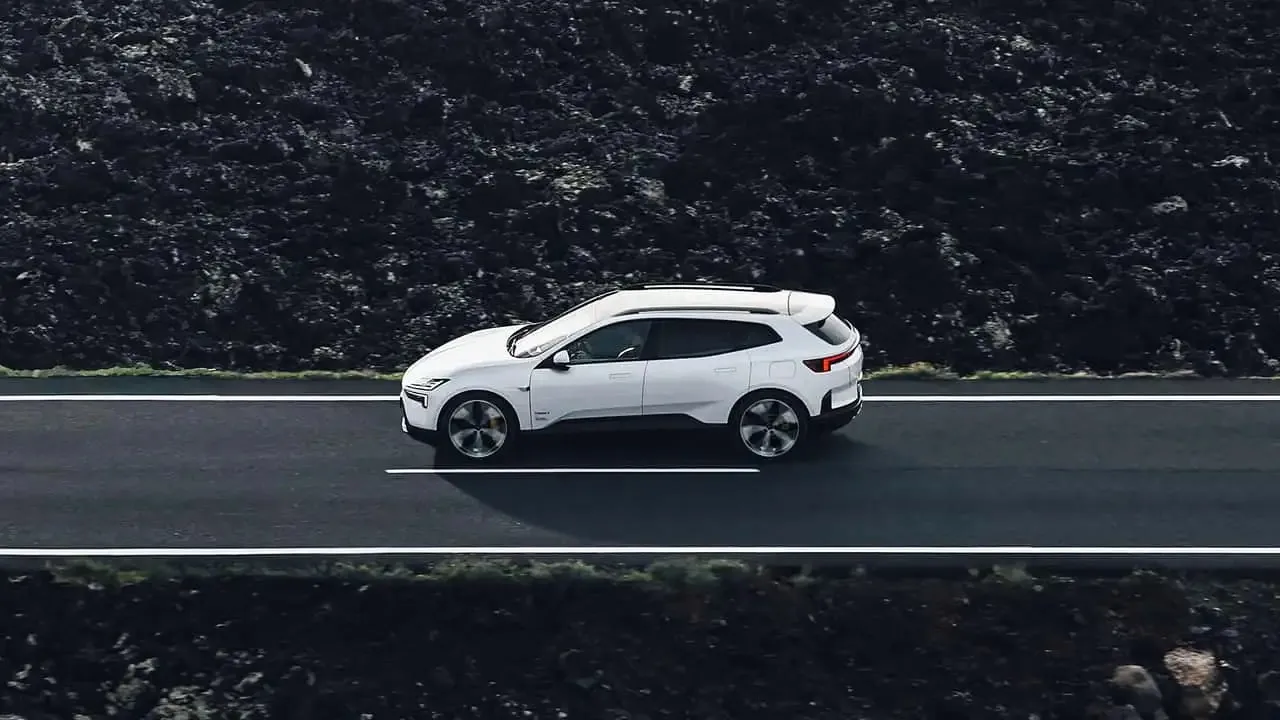
Polestar has launched sales of the new Polestar 4 SUV in Europe, a version based on the best-selling Polestar 4. The car costs around 57,900 euros in Germany, which is approximately 247,000 zł, with first deliveries scheduled for the fourth quarter of 2026. For drivers, one change is more important than styling marketing: a regular rear window has returned.
The new model also features a larger trunk, standard V2L functionality, and a Camping mode. On paper, it seems to be a response for those who liked the appearance of the regular Polestar 4 but found it frustrating in everyday use.
Rear window returns, trunk gets bigger
The standard Polestar 4 is one of the odder electric cars in recent years due to its lack of a rear window. The manufacturer fixed this issue in the new Polestar 4 SUV. It features a classic rear window, traditional rearview mirror, and a rear wiper with a nozzle cleverly hidden under the spoiler. Optionally, a digital mirror can still be ordered, which makes sense when the trunk is packed under the roof.
The trunk capacity has also increased significantly. With the rear seats folded down, the car offers 655 liters of space up to the roof line, which is 129 liters more than the coupe version. With the seats up, there’s 530 liters, 30 liters more than the base model. When the seats are folded and the front trunk with a 15-liter capacity is added, the total space rises to 1,665 liters. In short: it’s labeled as an SUV but is more functional like an electric station wagon.
The dimensions have changed very little. The length remains at 4,840 mm, the width at 2,139 mm, and the new version is only 22 mm taller.
100 kWh, up to 200 kW charging, and a new Camping mode
There are few changes inside, but there’s now an optional electrochromic glass panel on the roof to reduce glare. The standard remains a fixed glass roof with a claimed 99.5% UV protection.
We also get V2L at 3.3 kW as standard. It’s connected to the charging port via an adapter, allowing external devices to be powered. Polestar added a new Camping mode that keeps the air conditioning, infotainment system, USB-C ports, and 12 V outlets working after parking. This one actually sounds practical, not like a feature added just for the brochure.
Each variant comes equipped with a battery having a capacity of 100 kWh. The maximum DC charging power is 200 kW, while AC charging reaches 22 kW in selected markets. The single-engine rear-wheel-drive version delivers 272 horsepower and 343 Nm of torque, with a maximum range of 630 km according to WLTP standards. The two-engine AWD version boasts 544 horsepower and 686 Nm of torque, accelerates from 0 to 100 km/h in 3.9 seconds, and is rated for a range of up to 600 km per WLTP. Of course, WLTP figures do not represent highway performance at 140 km/h.
The car is manufactured in Busan, South Korea. Polestar also explicitly states that after Europe, it will be time for Canada. In Poland, we are still waiting for the brand’s official debut, so for now we have to rely on the German pricing and do the calculations. And the numbers make it clear: the new model is 4,000 euros cheaper than the Polestar 4 Coupe.
Polestar has made a more practical car that’s also cheaper than the more stylish version. The question is, shouldn’t this have been how the Polestar 4 looked from the start? What do you think of this version compared to the original without a roof?
LovEV Newsletter
Want more content like this?
Sign up — we’ll send you a weekly roundup once the newsletter starts.