
Polestar 4 SUV: Early tests give mixed reviews of the newcomer
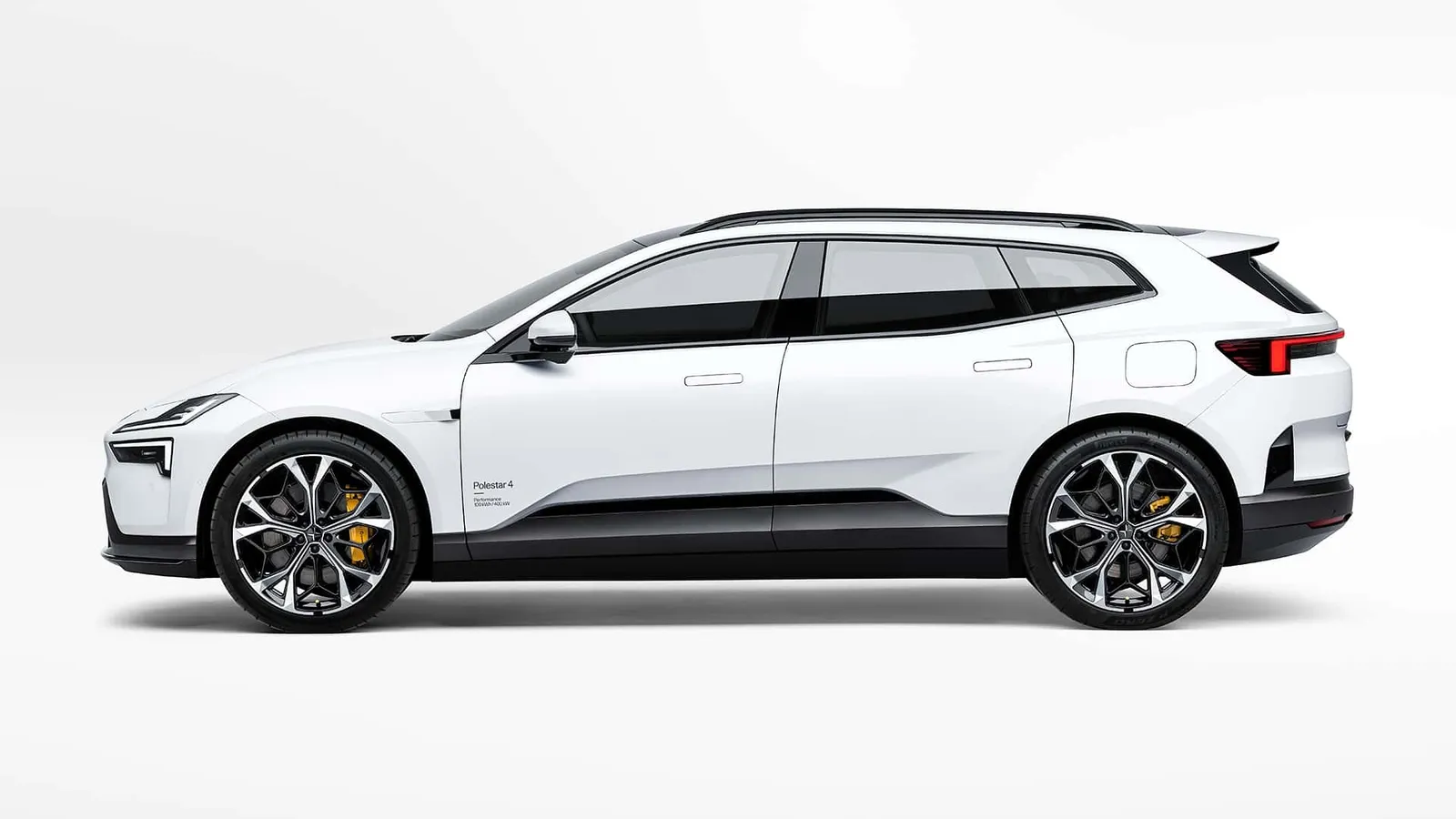
The Polestar 4 SUV, essentially the more spacious version of the Polestar 4 Coupé, was unveiled in early September. Now the first tests are available. We took a closer look at the reports from Autocar and Autobild.
Firstly, the Polestar 4 SUV features a different rear end and more trunk space. Additionally, this version has a rear window—unlike the well-known Polestar 4, which is now called the Polestar 4 Coupé. A conventional rearview mirror comes standard, with an optional camera-based rearview mirror similar to that in the Coupé. The suspension and equipment have also been improved. Nevertheless, the SUV is 4,000 euros cheaper than the Coupé:
Polestar 4 SUV
Polestar 4 Coupé
Difference
Price Rear Motor
57,900 euros
61,900 euros
4,000 euros
Price Dual Motor
65,900 euros
69,900 euros
4,000 euros
Both body style options are available as rear-wheel drive models with 200 kW of power and as all-wheel drive versions with 400 kW. All variants use the same battery with a gross capacity of 100 kWh and approximately 94 kWh net (according to the EV-Database).
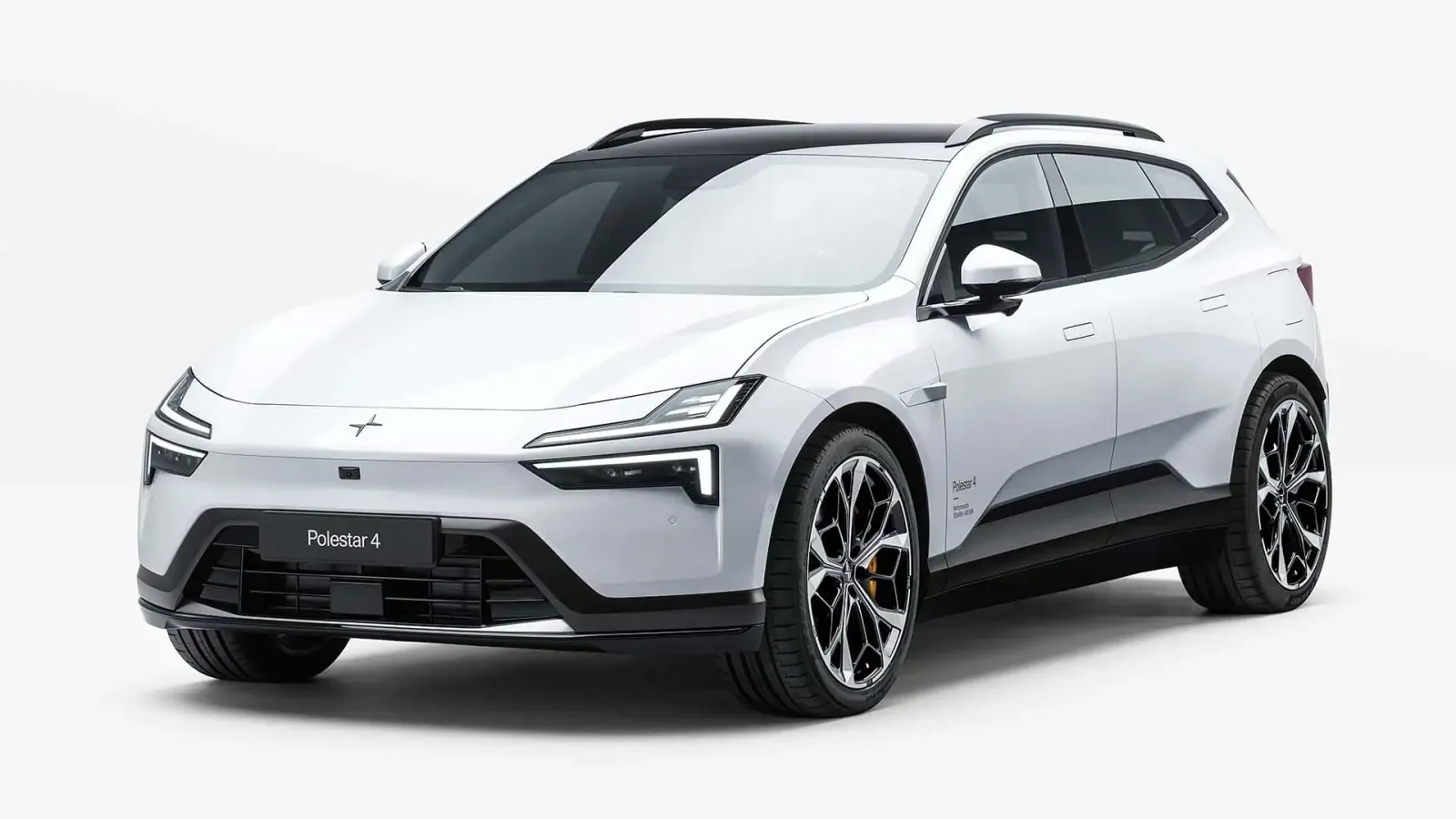
Image by: Polestar
Exterior
The design appeals to the Autocar reviewer. However, the range of exterior colors is criticized: Like the coupe, there are only white, silver, gray, and black, with a very light and subtle blue being the only true color option. For the SUV, matte versions of the blue and gray options are added.
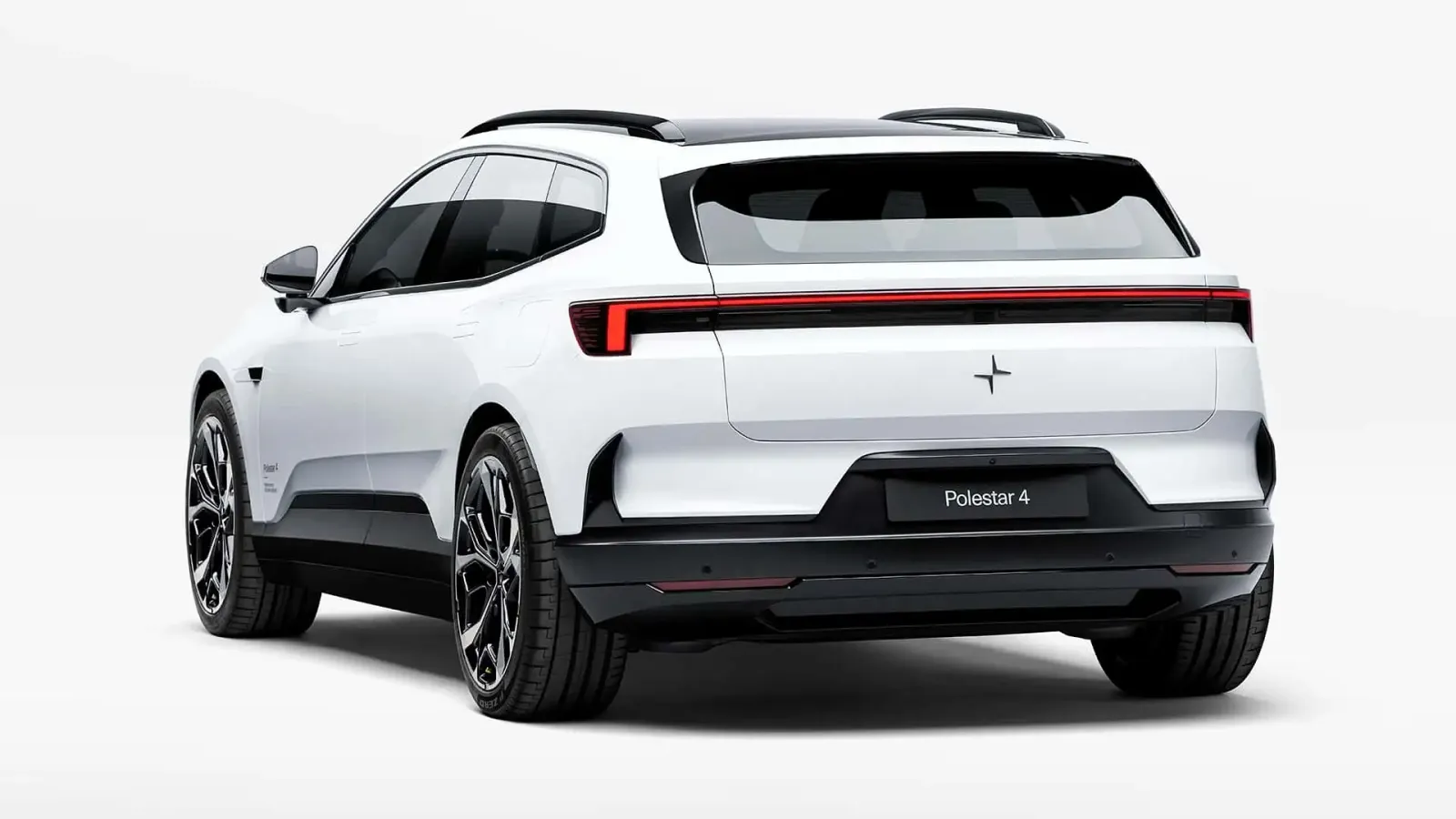
With its roof rail and elongated shape, it’s almost like a crossover: the rear of the Polestar 4 SUV
Images by: Polestar
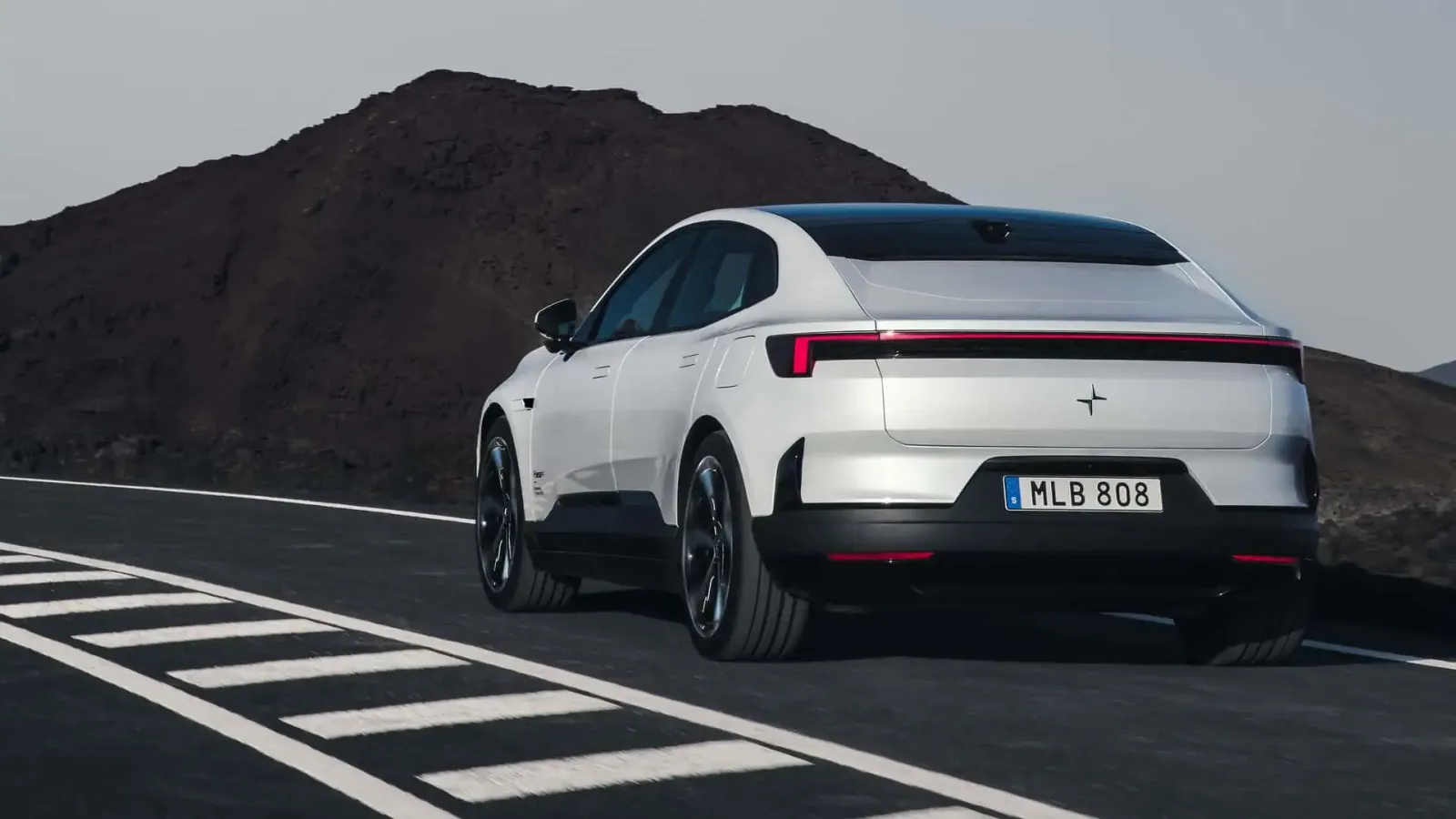
Lacking a rear window and featuring a glass roof that extends far back: the Polestar 4 Coupé
Images by: Polestar
The Polestar 4 SUV is about two centimeters taller than the Coupé, but according to Autocar, this is solely due to the roof rail that is standard on the Polestar 4.
Length
Width
Height
Wheelbase
Trunk space
Polestar 4 SUV
4,840 mm
2,139 mm
1,556 mm
2,999 mm
530–1,665 L
15 liters in the front compartment
Polestar 4 Coupé
4,840 mm
2,139 mm
1,534 mm
2,999 mm
526–1,536 L
15 liters trunk space
Difference
identical
identical
about 2 cm
identical
Trunk, interior, and controls
Regarding trunk space, the above figures show that the fully loaded SUV can carry roughly 130 liters more luggage than the coupe. The lower trunk height in the coupe is likely due to the sloped body design.
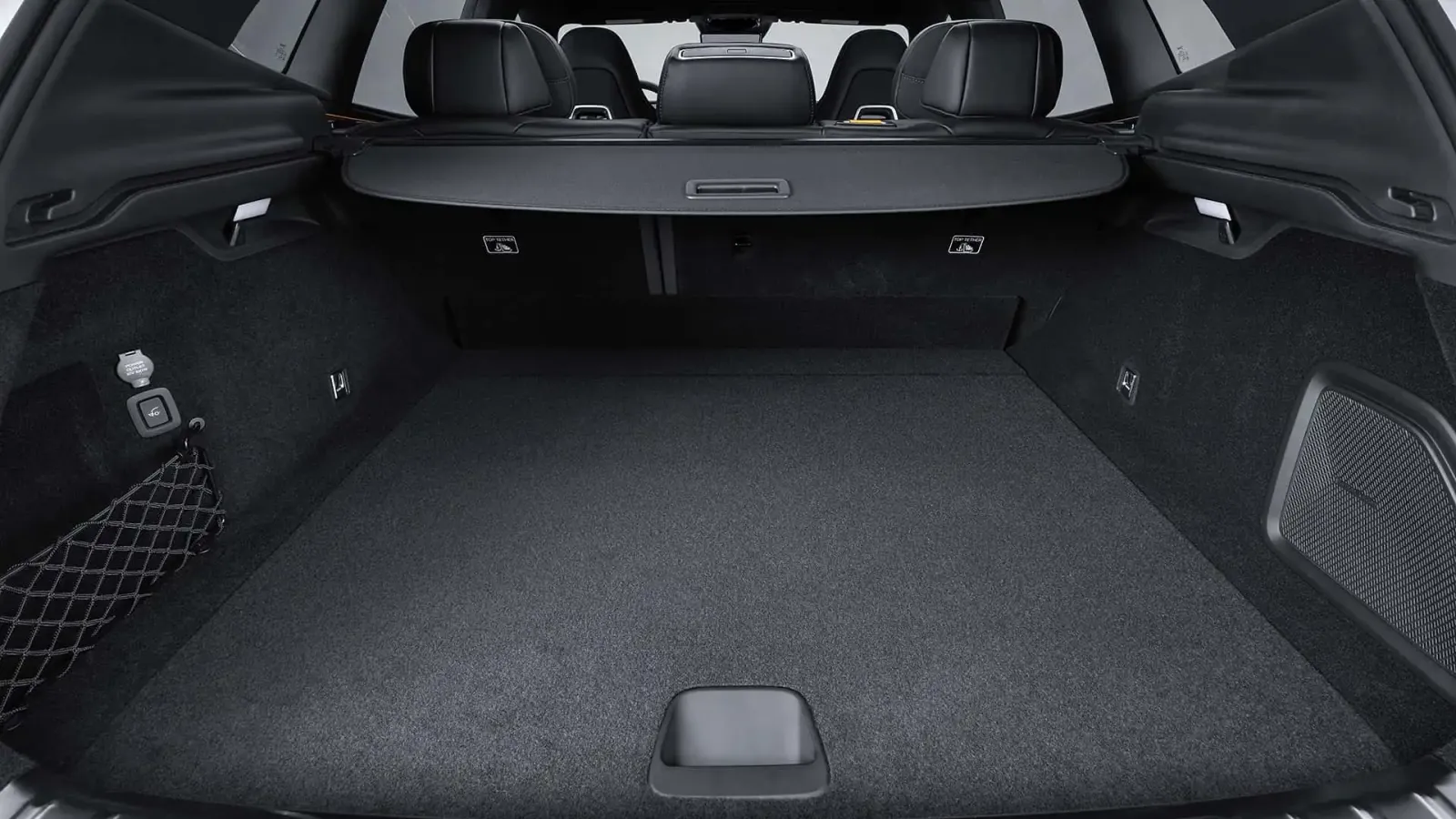
The trunk of the Polestar 4 SUV
Images by: Polestar
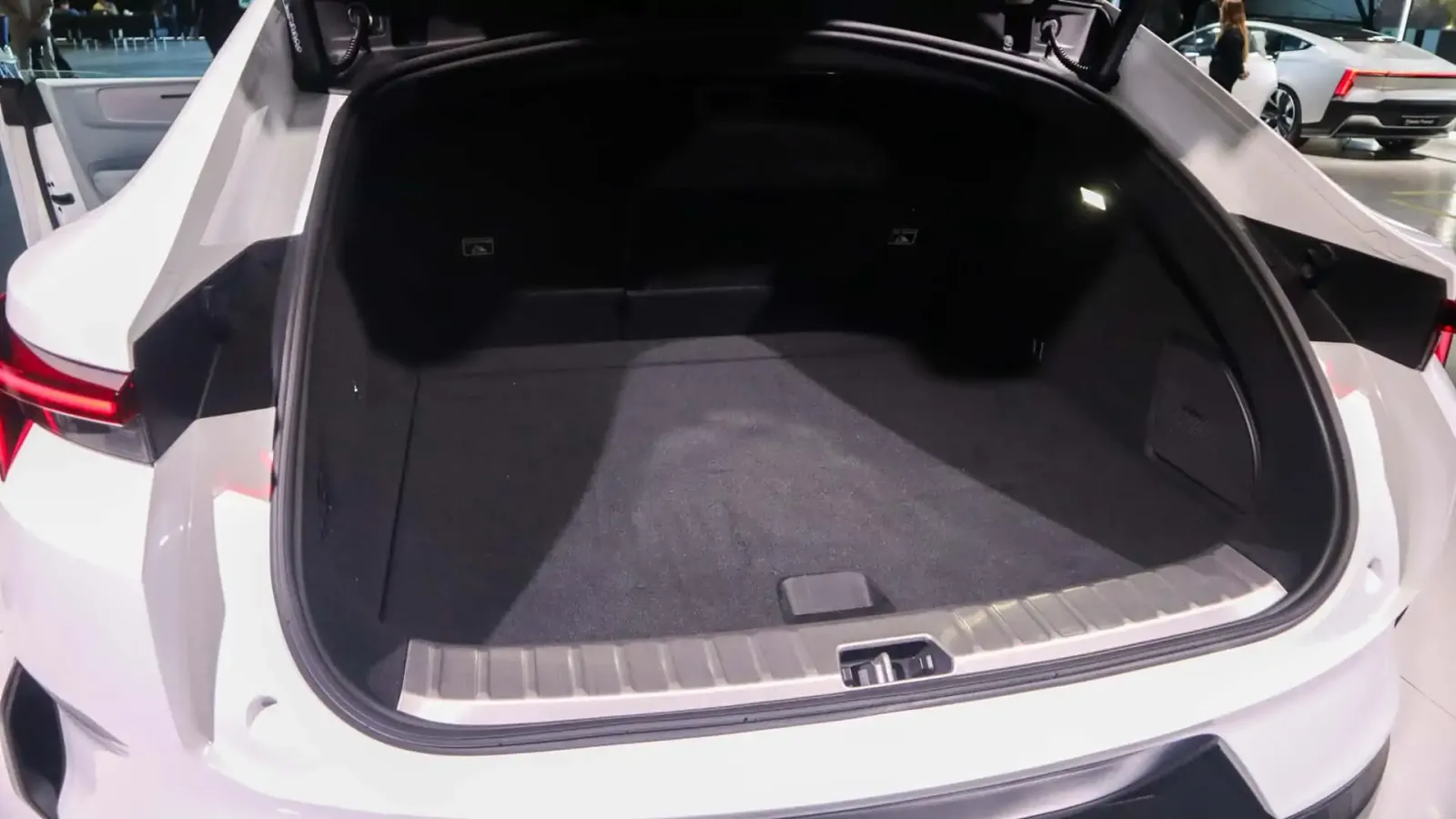
The trunk of the Polestar 4 coupe
The Polestar offers a maximum trunk volume of 530 to 1,665 liters, which is slightly less than that of the BMW iX3 (520–1,750 liters plus 58 liters in the front compartment); the electric Mercedes GLC also has a larger storage space (570–1,740 liters plus 128 liters in the front compartment).
Images by: Polestar
Images by: Polestar
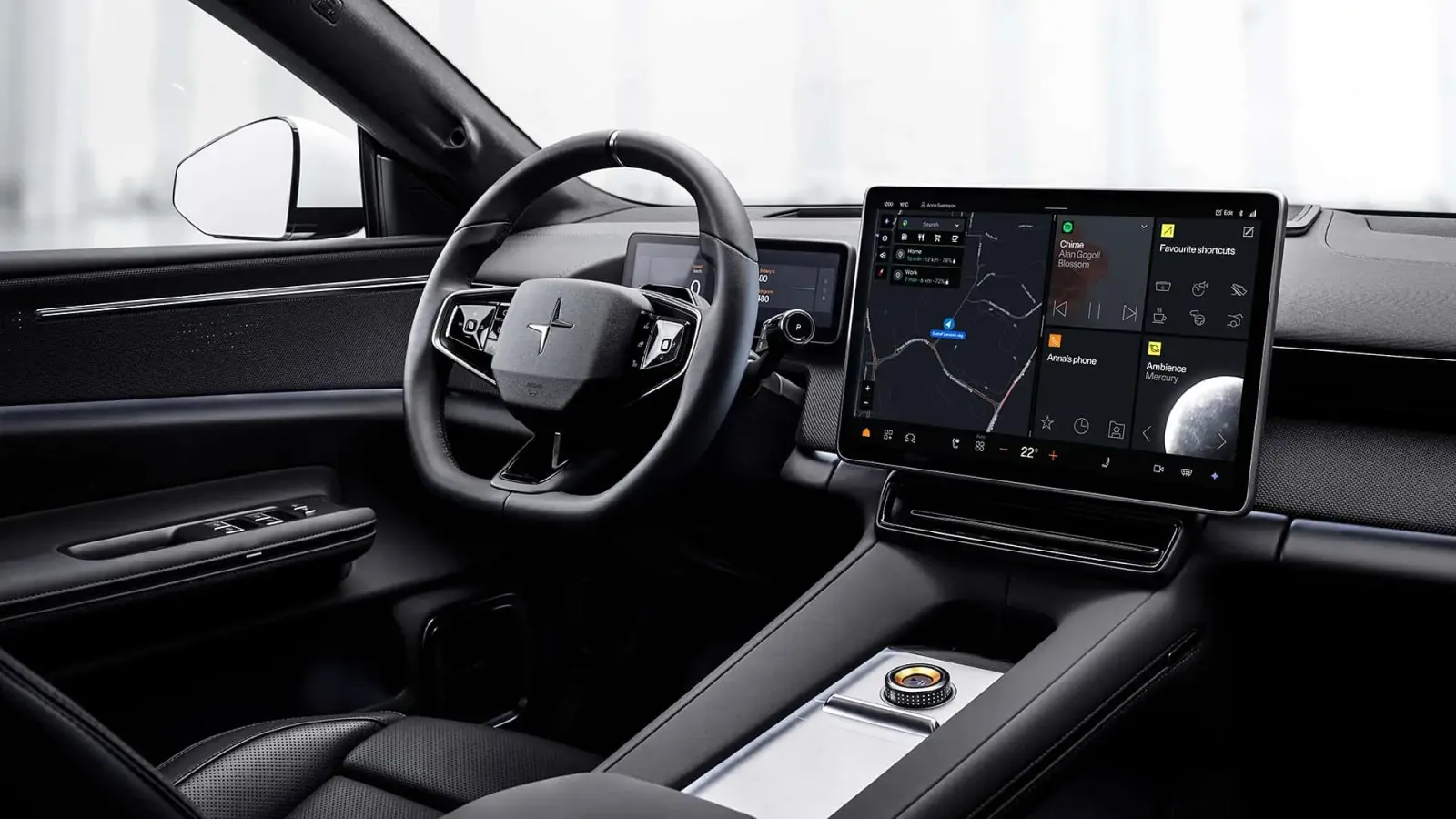
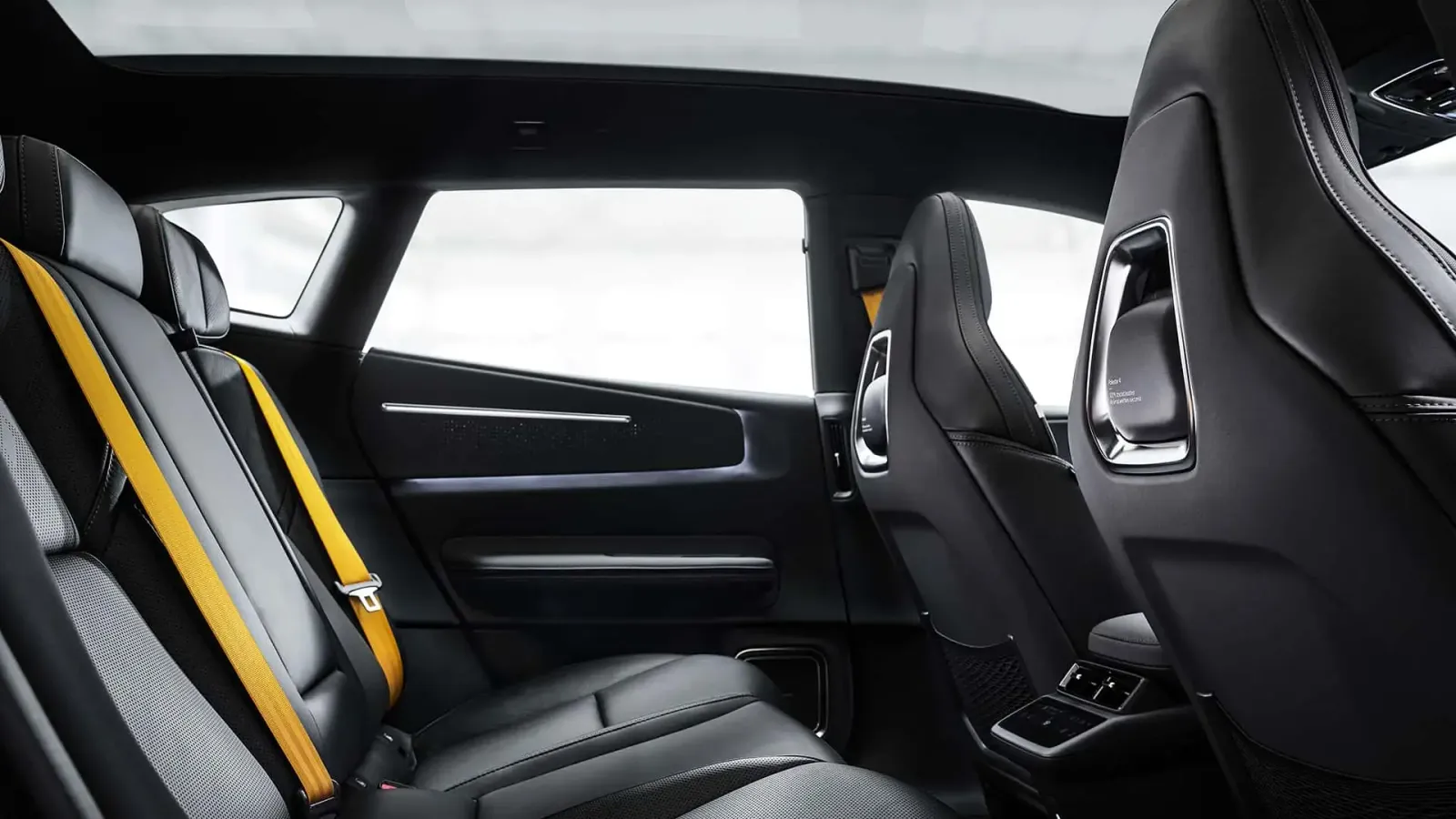
According to Autocar, the interior appears solid and becomes even more luxurious with the premium Bridge-of-Weir leather (costing 3,700 or 4,000 euros depending on color). Autobild adds that a glass roof is standard, extending to the trunk lid, and can optionally be made partially opaque in specific sections. The Autocar reviewer criticizes the lack of physical buttons but praises the infotainment system with Google Gemini, which offers truly intelligent voice control. In the back seat, headroom is greater compared to the coupe, which already has ample headroom.
Autobild agrees on the interior space, also highlighting the new V2L function and the new camping mode. However, the reviewer was not satisfied with the new Google Gemini voice control: while temperature regulation worked, adjusting the transparency of the glass roof or turning off the lane-keeping assistant did not. This would be desirable, as otherwise many settings require tedious searching on the touchscreen—even those related to the steering wheel.
Powertrain and Suspension
Regarding propulsion, the rear-wheel drive version is “not particularly fast.” In contrast, the dual-motor variant accelerates from 0 to 100 km/h in 3.9 seconds, matching the speed of BMW’s M60 xDrive version set to launch in 2027, while the current top-tier GLC model takes 4.3 seconds. In terms of range, the new Polestar falls short compared to its two competitors, with a range of 630 km (or 600 km for the all-wheel drive version); the Mercedes achieves up to 673 km, and over 700 km in its Long Range Edition, while BMW claims up to 805 km in its top version according to WLTP standards.
Autocar praises the performance package for the all-wheel-drive model, which is priced at 4,500 euros. It includes springs, active dampers, and even stabilizers with a new SUV-specific setup that compensates for the 30 kg higher weight on the rear axle and creates a more sporty driving feel than the 4er Coupé, according to the tester. Even compared to the active-driving iX3, the 4er SUV appears significantly more sporty. Nevertheless, the suspension is said to remain comfortable even in sport mode.
Autobild also praised the newly calibrated steering wheel, which can be adjusted in three levels. Like Autocar, it commended the smooth suspension (despite the 22-inch wheels in the Performance Package). Additionally, it remains quiet inside the cabin. There is a difference in the assessment of sportiness: the all-wheel-drive SUV shows the same level of sportiness at high speeds with ESP in sport mode as the coupe. The high weight causes issues in fast turns just like it does with the coupe.
In the rear-wheel-drive version, the suspension is tuned softer according to Autocar, resulting in slightly excessive vertical movements when driving through fast bumps or dips. However, it handles turns quite quietly and responds more directly than the 110 kg heavier all-wheel-drive model.
Otherwise, Autocar praises the low power consumption and strong regenerative braking. However, frequent drivers might be disappointed by the slow charging speed. Here is a comparison of the manufacturer specifications for this rear-wheel-drive vehicle versus its 800-volt competitors:
Polestar 4 SUV Rear Motor (approx. 94 kWh)
BMW iX3 40
(82.6 kWh)
Mercedes GLC 250
(85 kWh)
Max. DC charging capacity
200 kW
300 kW
320 kW
DC charging time
10–80%
30 min
21 min
22 min
Charging speed
10–80%
2.2 kWh/min
2.8 kWh/min
2.7 kWh/min
Average charging capacity
10–80%
132 kW
165 kW
162 kW
Eco-driving range extension
14.7 km/min
up to 21.2 km/min
20.6 km/min
Testers’ conclusion
In summary, Autocar finds that the Polestar 4 SUV is also interesting compared to the BMW iX3. What the car lacks in range and charging speed is made up for by its high build quality, excellent comfort, fantastic handling, and the powerful dual-motor version, according to the tester.
Autobild concludes that there is no noticeable difference in driving dynamics from the coupe, with the steering even being more precise. Combined with a proper rear window, a larger trunk, and a price 4,000 euros lower, the new SUV is the better Polestar 4.
We add a brief price comparison for the rear-wheel drive models, focusing on the 800-volt competitors compared by Autocar. The rear-motor variant competes with the BMW iX3 40, which offers a similar range of 645 km to the Polestar (630 km), but is slightly more powerful. However, the BMW costs a few thousand euros more at 63,400 euros. The base model of Mercedes, the GLC 250, is even more powerful at 260 kW and provides a slightly higher range of 647 km. It costs 61,500 euros, making it a bit cheaper than the BMW, but even this model is more expensive than the Polestar.
More SUVs of similar size:
In summary
The test reports from Autocar and Autobild’s colleagues don’t reveal much new information for us. The larger trunk size is already evident from the data, and we had previously assumed that a larger rear window would improve everyday usability. The same holds true for findings that a model with a 3.9-second acceleration time (like the dual-motor version of the Polestar 4 SUV) drives swiftly, and that 400-volt vehicles charge more slowly than their 800-volt competitors.
As with many car tests, the suspension is evaluated differently: The Autobild reviewer apparently assumed the coupe would drive more sportily than the SUV and was pleasantly surprised that this wasn’t the case. For him, both models were equally sporty. In contrast, the Autocar tester highlighted the improved suspension of the SUV and found it significantly more sporty than that of the coupe. The most interesting to us were the comments regarding the operation (of the interface) in Autobild.