
Polestar 4 SUV Brings 391-Mile Range And More Space From £54,750
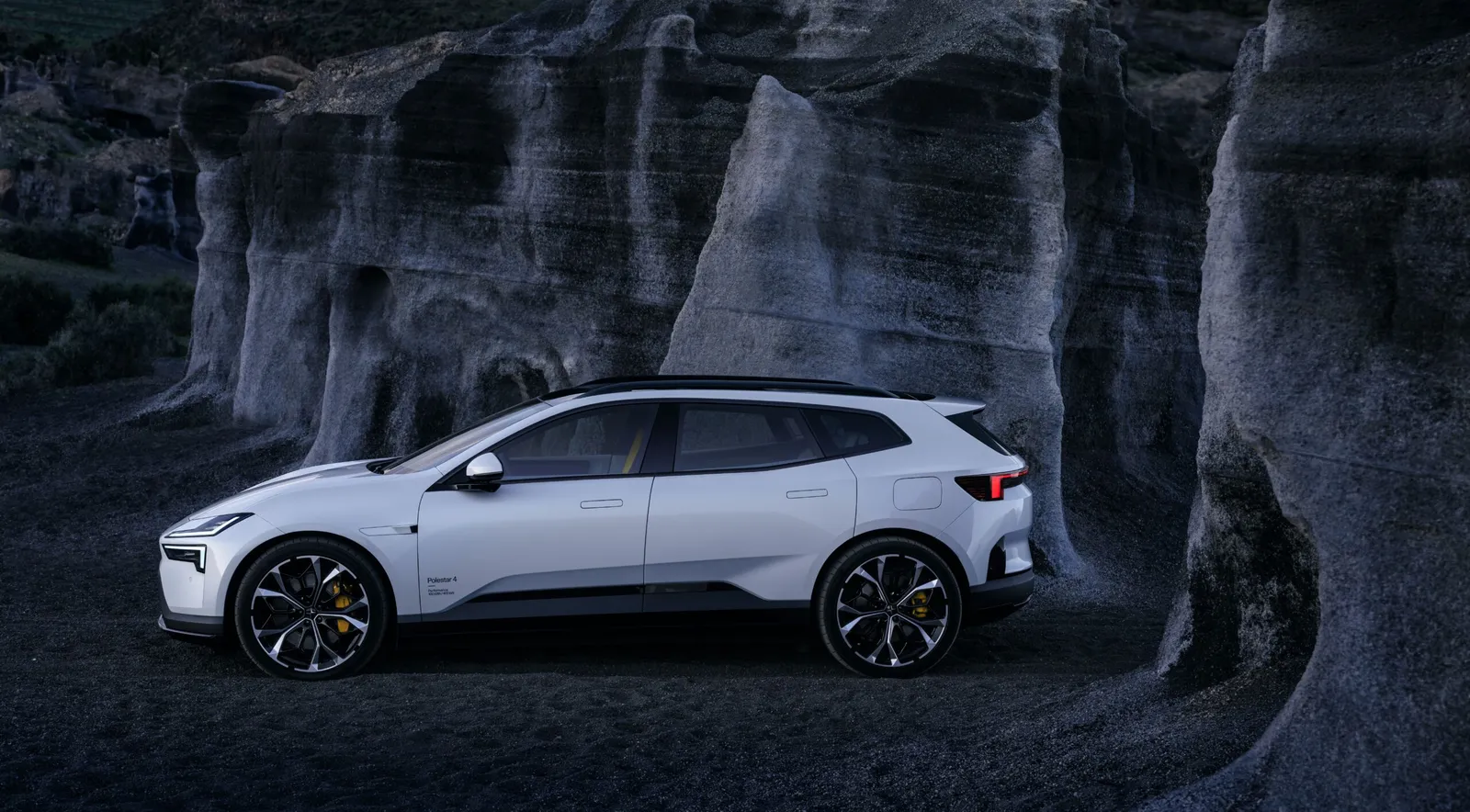
Polestar has launched a more practical SUV version of the Polestar 4, combining up to 391 miles of WLTP range with substantially increased luggage capacity and prices starting at £54,750 in the UK.
Production of the new Polestar 4 SUV began in Busan, South Korea, during the second quarter of 2026. The first cars are already being shipped, with initial customer deliveries scheduled to begin in the fourth quarter.
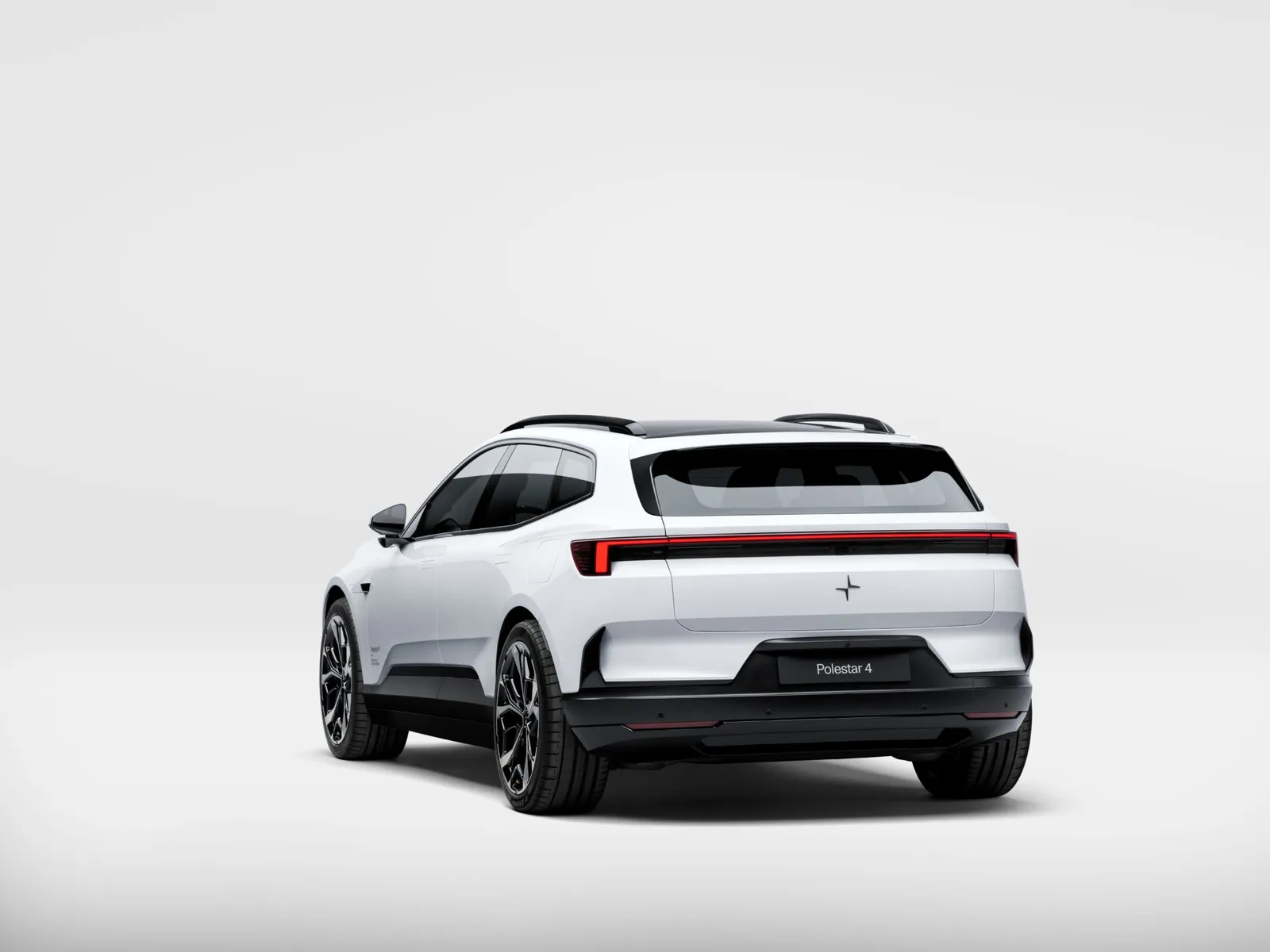
The newcomer sits alongside the existing Polestar 4 coupé rather than replacing it. While both cars share their Sustainable Experience Architecture (SEA), powertrains and core cabin design, the SUV gains a straighter roofline, a more upright tailgate, full-length roof rails and – significantly – a conventional rear window.
Prices start at £54,750 for the 200kW Rear motor model, rising to £60,750 for the 400kW Dual motor version. The Dual motor car fitted with the Performance pack costs from £68,250.
Polestar is positioning the model in the compact executive SUV class, where its combination of estate-like carrying ability and SUV presence should broaden the appeal of what the company describes as its most successful model.
“Polestar 4 SUV broadens the appeal of our most successful model and extends our product offering in one of the industry’s most important segments,” said Polestar chief executive Michael Lohscheller. “With more space, more utility and more opportunities for adventure, it stays true to the design, technology and driving experience that define Polestar.”
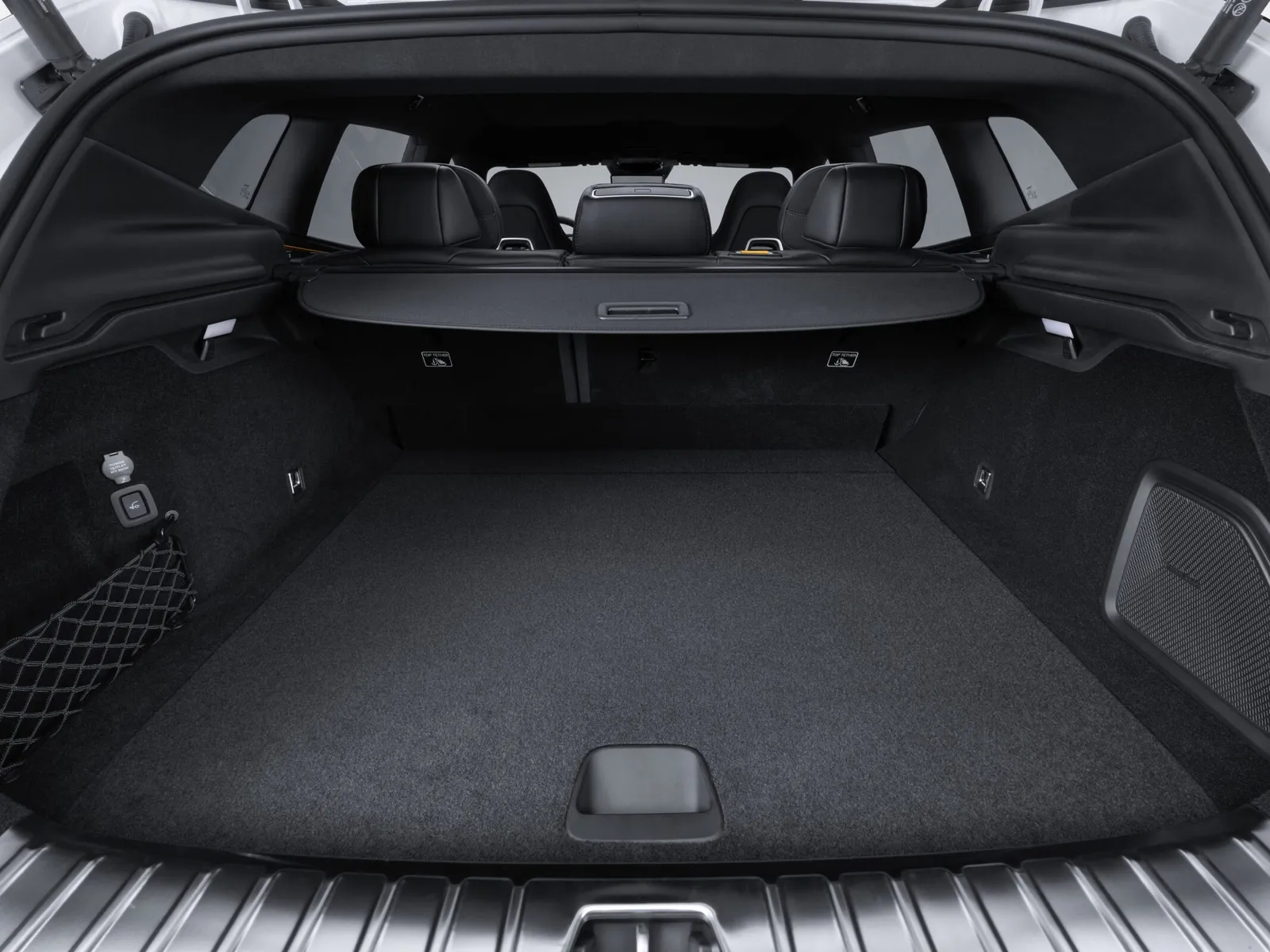
The revised body provides 530 litres of rear luggage space when measured to the seatbacks, or 655 litres when loaded to the roof. Folding the 60:40 split rear seatbacks increases capacity to 1,665 litres. Polestar quotes 1,680 litres of storage overall when the front and rear compartments are combined, implying a useful additional space beneath the bonnet.
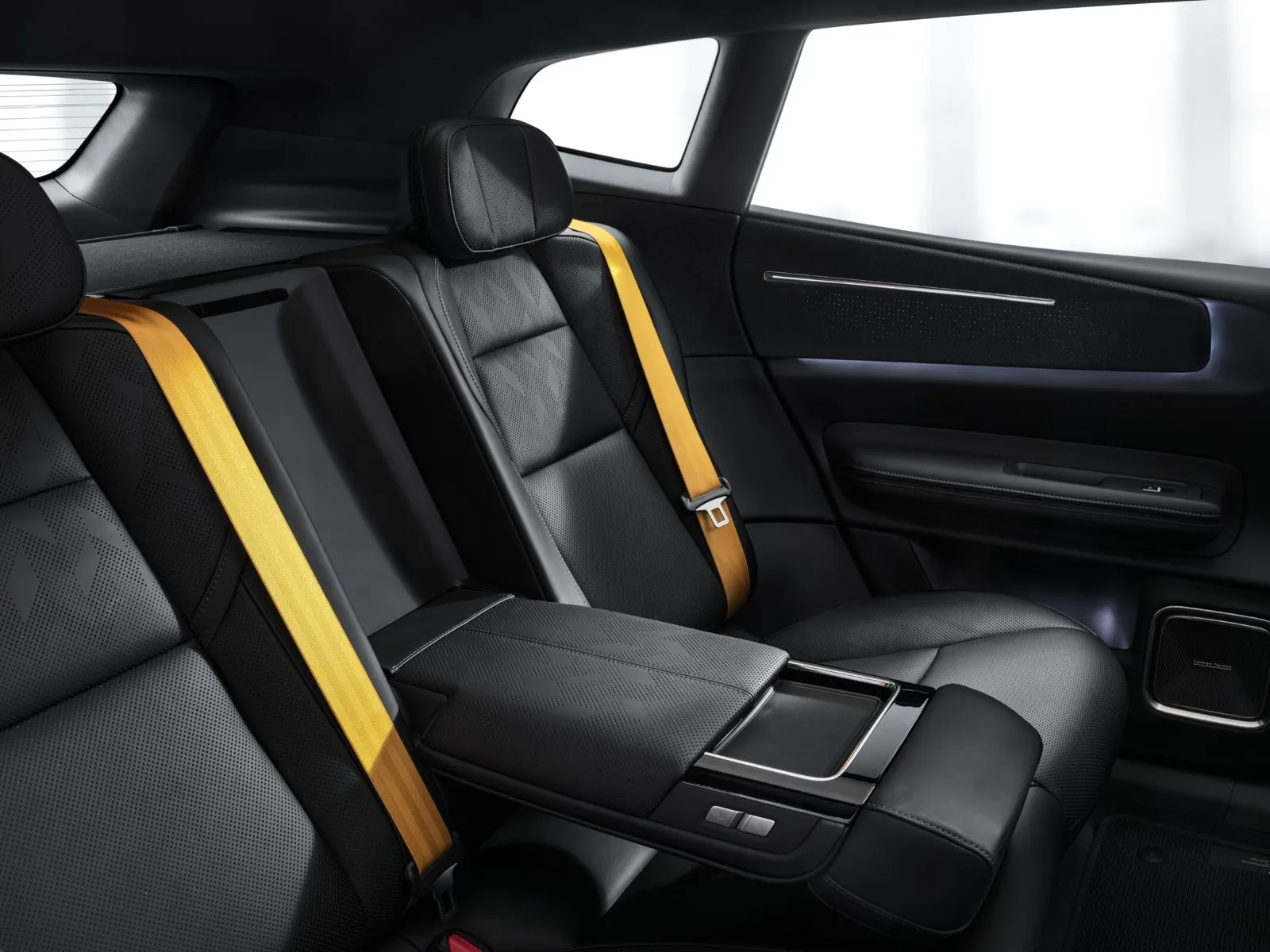
The longer, more upright roof also gives rear passengers an additional 2.5cm of headroom. A larger panoramic glass roof extends to the tailgate and is fitted as standard, while its glass is said to block 99.5% of ultraviolet radiation.
An optional electrochromic version can be switched between transparent and tinted settings through the centre touchscreen, with occupants also able to shade selected areas. Roof rails raise the dynamic roof-load rating to 100kg, giving owners scope to carry bicycles, roof boxes or other equipment.
The return of a rear window marks one of the clearest differences from the coupé, whose camera-based rear-view system and windowless tailgate are among its most distinctive features. The SUV consequently receives a conventional interior mirror as standard, although buyers can specify the digital rear-view mirror for a wider view or unobstructed visibility when the boot is full.
Much of the established Polestar 4 design remains intact, including the split ‘dual-blade’ headlights, illuminated Polestar badge and minimalist cabin. Two new paint finishes – the bright silver-green Aurora and matte silver-purple Ozone Matte – help expand the exterior range to eight colours.
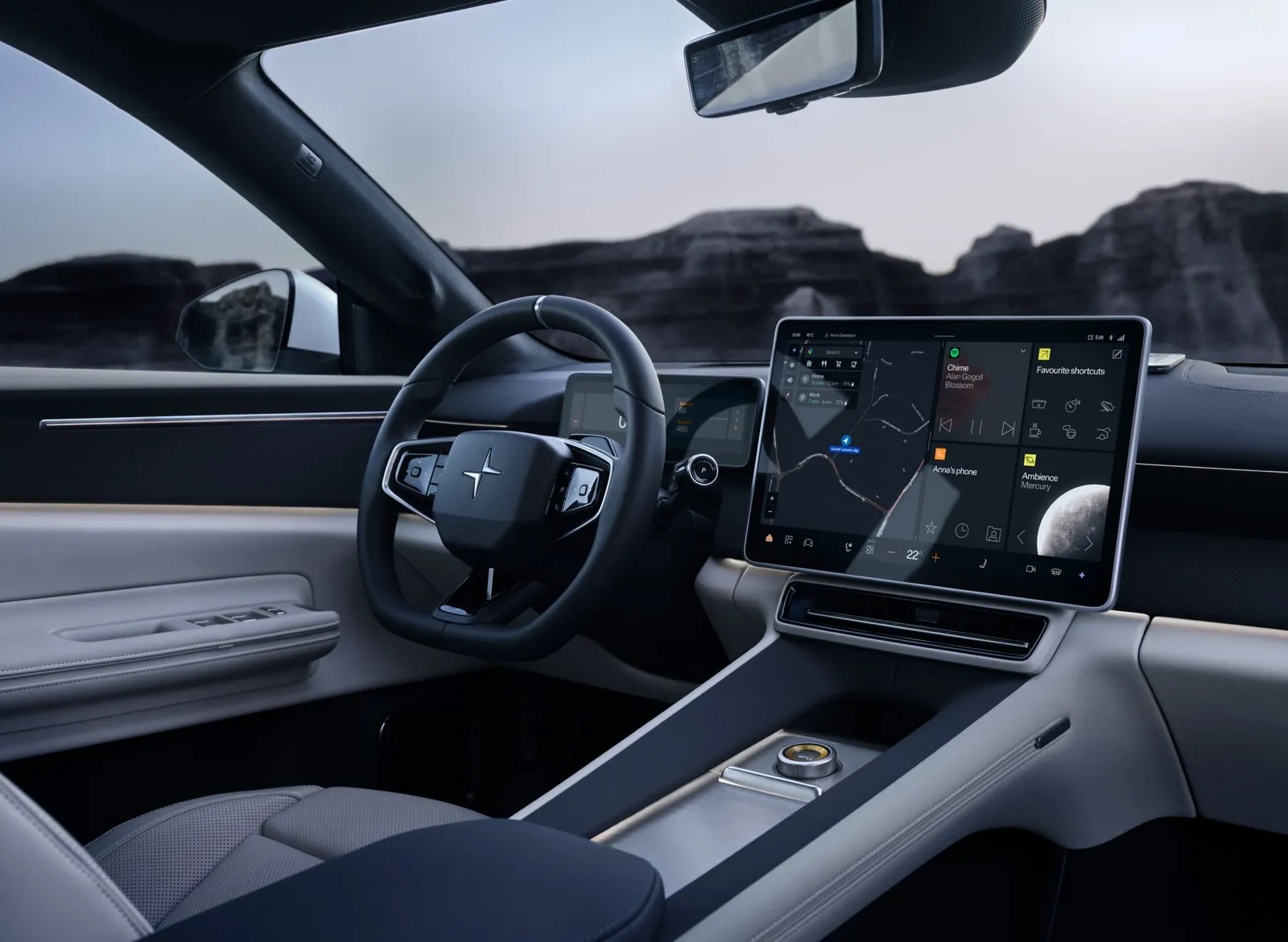
Inside, the landscape-format central touchscreen gains nine widget shortcuts in place of six, along with a wider choice of shortcut functions. The solar-system-inspired ambient lighting and Star Knit trim continue, while a 12-speaker Harman Kardon sound system with a 1,400-watt channel-hybrid amplifier is optional and has been retuned for the SUV’s cabin.
Both versions use a 100kWh nominal-capacity battery and support DC rapid charging at up to 200kW. Although the hardware can accept three-phase AC charging at up to 22kW in selected countries, UK cars are limited to 11kW AC.
The Rear motor model sends 200kW, equivalent to 272hp, and 343Nm of torque to the back wheels. It offers the longest claimed range at 391 miles and completes the 0-62mph sprint in 7.3 seconds.
Moving to the all-wheel-drive Dual motor version raises output to 400kW, or 544hp, and 686Nm. Acceleration from 0-62mph takes 3.9 seconds, while the extra performance and second motor reduce WLTP range to a still substantial 373 miles.
Polestar says the SUV shares its chassis specification with the recently updated Polestar 4 coupé, but has been tuned to balance long-distance comfort and everyday refinement with accurate steering and engaging handling. Rear motor cars use black seatbelts and a black rotary controller, while Dual motor versions add a gold stripe to both details.
The Performance pack brings recalibrated ZF active dampers, Brembo brakes with Swedish-gold callipers and new 22-inch wheels wearing Pirelli P Zero tyres. It also replaces the striped seatbelts with full Swedish-gold items.
Vehicle-to-Load capability will allow the traction battery to supply external appliances, tools and camping equipment through a separately sold certified adapter. The system provides up to 3.3kW at 230V and lets the driver set a minimum battery level at which external power delivery stops.
However, V2L will not necessarily be active when the first cars arrive. Polestar’s release specifies that it and the new Camping mode will be enabled across all Polestar 4 models through a future software update.
Camping mode is intended to turn a parked car into a climate-controlled living space, bringing entertainment, ambient lighting and vehicle controls to both the front and rear displays. It also integrates the V2L supply, USB-C connections and 12V socket.
Google Gemini is also being introduced as an evolution of Google Assistant within the car’s Google-based infotainment system. Polestar says the generative-AI assistant can understand context, continue multi-turn conversations and handle more complex requests in natural language. Gemini Live adds functions including brainstorming, journey planning and real-time translation, although availability and app compatibility will vary between markets.
Material choices include standard MicroTech upholstery with a backing made entirely from recycled PET and a PVC surface containing 53% bio-attributed material. The optional Tailored Knit upholstery uses 89% recycled PET and is knitted to shape to reduce offcuts, while the optional Bridge of Weir Nappa leather is chrome-free, traceable to farm and sourced as a by-product of the food industry.
Polestar calculates a cradle-to-gate carbon footprint of 20.2 tonnes of CO2 equivalent for the Rear motor model and 21.1 tonnes for the Dual motor. Those totals cover emissions generated from raw-material extraction through manufacturing, rather than energy used throughout the car’s full working life.
The company attributes the figures partly to battery cells produced using renewable electricity. It also says 34% of the car’s aluminium comes from smelters powered by renewable energy and 23% of its aluminium content is recycled.
For UK buyers, the Polestar 4 SUV therefore trades a little of the coupé’s visual drama for extra headroom, easier rear visibility and markedly greater carrying capacity, without sacrificing its long-range battery or high-performance option. Its £54,750 entry price puts that additional versatility into showrooms before the end of 2026.