
Polestar 4 SUV: 630 km range and plenty of space
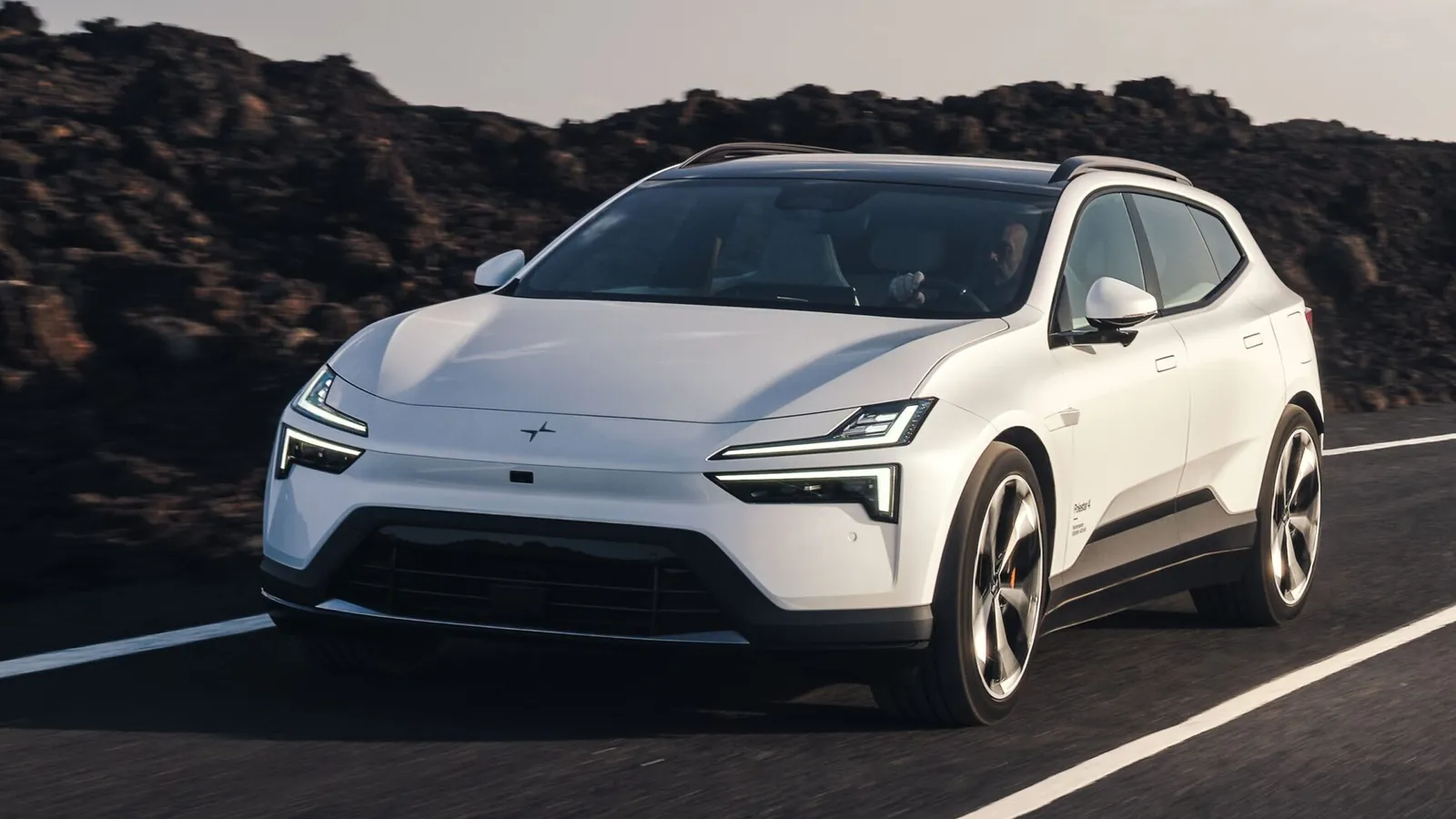

The Polestar 4 SUV offers up to 1,680 liters of storage space, a 100-kWh battery, and a maximum WLTP range of 630 kilometers. In Germany, this electric vehicle costs starting at 57,900 euros.
Ad
A new rear design creates space for luggage and passengers
Polestar is adding an SUV version to the Polestar 4 model line. This new electric vehicle retains the key technical and design features of the existing Polestar 4 Coupe, but it features a rear end designed more for everyday use. In Germany, the rear-wheel-drive version costs starting at 57,900 euros. The all-wheel-drive dual-motor model requires at least 65,900 euros, while the version with a performance package is priced from 76,300 euros. Delivery costs apply to each of these options as well.
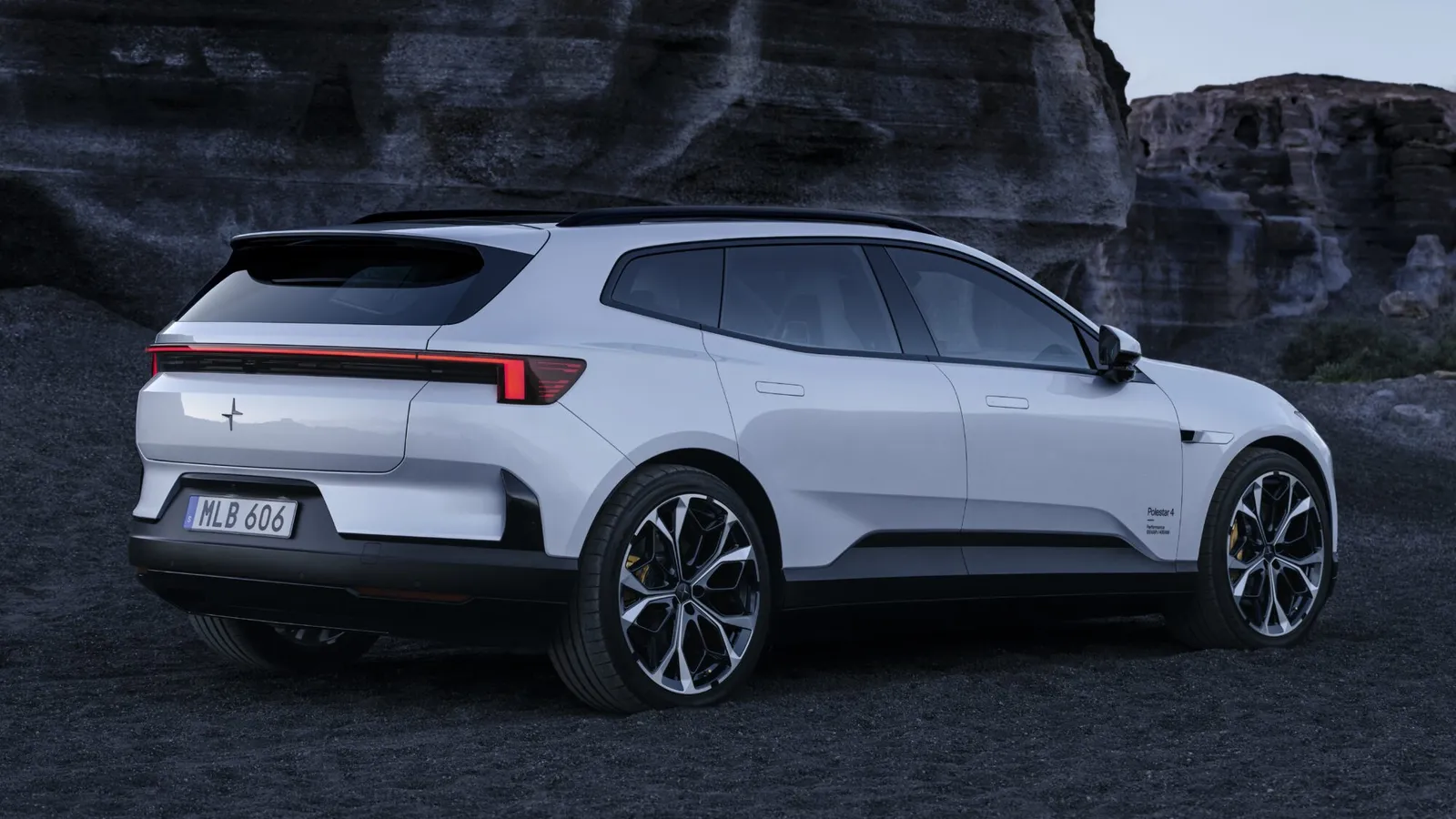
The front end featuring the split dual-blade headlights and illuminated brand logo remains largely unchanged from the coupe version. The most noticeable changes involve a straighter roof line and a more upright rear hatch. This not only increases the trunk space but also boosts headroom in the second row by 2.5 centimeters. A standard roof rack, according to Polestar, allows for a dynamic roof load of up to 100 kilograms.
According to the manufacturer, a total of 1,680 liters of storage space is available in both the front and rear trunks. The rear trunk holds 530 liters up to the top of the rear seat backs or 655 liters when loaded to the roof. When the rear seats, which are split in a 60:40 ratio, are folded down, the rear loading capacity increases to up to 1,665 liters.
Unlike the Polestar 4 Coupe, the SUV version features a conventional rear windshield and standard classic side mirrors. The Coupe’s digital mirror is still available as an option and is designed to provide a clear view backward, especially when the trunk is fully loaded. The standard equipment also includes an enlarged panoramic glass roof with 99.5 percent UV protection. Optionally, Polestar offers an electrochromic version whose light transmittance can be adjusted via the central display for specific areas or the entire surface.
Advertisement
Two powertrains and a 100-kWh battery
Technically, the Polestar 4 SUV, like the coupe, is based on the SEA platform. Options include a rear-wheel-drive model and a more powerful all-wheel-drive version. The Polestar 4 SUV Rear Motor delivers 200 kW (272 hp) and a maximum torque of 343 Nm. The manufacturer claims a 0 to 100 km/h acceleration time of 7.3 seconds. The WLTP range is said to be up to 630 kilometers.
In the Polestar 4 SUV Dual Motor version, two electric motors drive both axles. Together, they provide 400 kW (544 hp) and 686 Nm of torque. This enables the vehicle to accelerate from 0 to 100 km/h in 3.9 seconds. The additional power and all-wheel-drive come with a slightly lower reported WLTP range of up to 600 kilometers.
Both powertrain options use a battery with a capacity of 100 kWh. At a suitable DC charging station, Polestar claims charging speeds of up to 200 kW are possible. The announcement does not provide information on the duration of a typical charge, such as from 10 to 80 percent. In Germany, the SUV can be charged via three-phase AC at up to 22 kW. In the UK, Ireland, South Korea, and Canada, however, the AC charging capacity is limited to a maximum of 11 kW.
The suspension setup comes from the revised Polestar 4 Coupé. For the performance package, the manufacturer adds active dampers from ZF, a Brembo braking system with gold-colored calipers, as well as 22-inch wheels fitted with Pirelli P-Zero tires. Polestar promises this results in a more direct steering response and a stronger focus on driving dynamics, without providing independent comparison figures.
V2L and Camping Mode Arrive via Software Update
With Vehicle-to-Load, or V2L, the high-voltage battery can power external electrical devices. Through a certified adapter available separately, the vehicle provides single-phase alternating current at 230 volts, 16 amps, and up to 3.3 kW. This allows devices such as camping equipment, tools, or entertainment electronics to be operated. The central display enables setting a minimum battery level at which power delivery stops.
V2L, along with the new camping mode, is set to be enabled for all Polestar 4 models through a future software update. No specific date has been given. The camping mode consolidates access to climate control, entertainment, ambient lighting, and other functions in a parked vehicle. In addition to V2L, USB-C ports and a 12-volt outlet are available for these purposes.
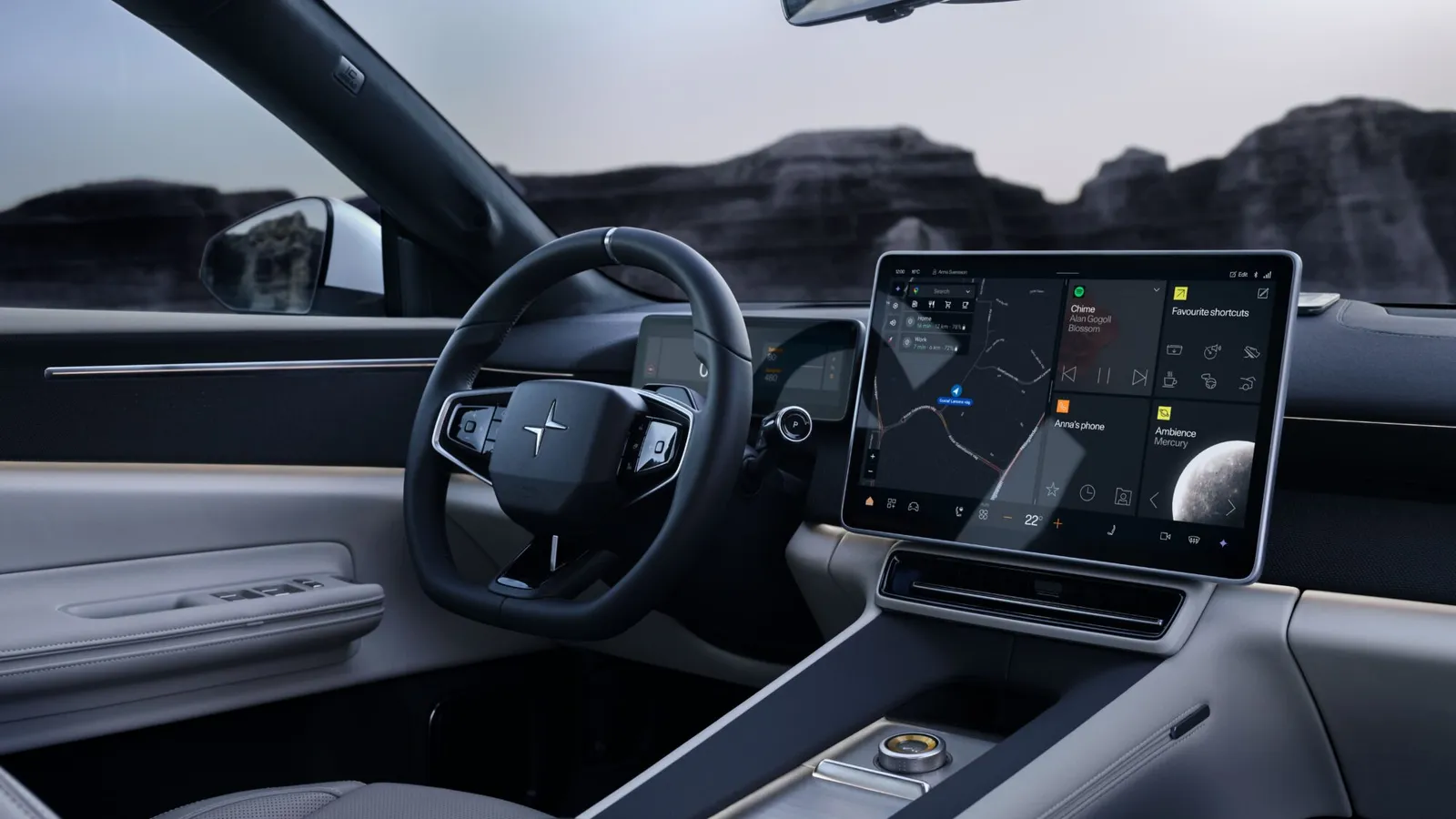
The infotainment system still uses Google built-in. On the horizontal central display, Polestar now offers nine quick access options for widgets instead of six. Google Gemini is set to gradually replace the current Google Assistant, enabling more natural, multi-step voice conversations. Additionally, Polestar mentions travel planning, translation, and brainstorming as potential uses for Gemini Live. Rollout is planned for 22 countries and 16 languages, with availability and feature set varying by market. A minimum age of 18 is required to use it.
Equipment, Materials, and Delivery
Inside, Polestar adopts the minimalist design already seen in the coupe. The ambient lighting offers various color schemes inspired by the solar system. Optionally, a Harman-Kardon sound system with twelve speakers and a 1,400-watt hybrid amplifier is available.
The manufacturer uses different recycled materials for the seat covers. The standard MicroTech features a backing made entirely from recycled PET; for the PVC surface, Polestar states it contains 53 percent bio-based components. The optional Tailored-Knit padding, produced using 3D technology, is said to be 89 percent made from recycled PET. As an alternative, chrome-free tanned nappa leather from Bridge of Weir is offered.
Polestar claims to have developed 48 new components to adapt the coupe to the SUV body structure. The vehicle has been produced in Busan, South Korea, since the second quarter of 2026. First deliveries are scheduled for the fourth quarter of 2026.
Advertisement