
The Polestar 2 is no longer being manufactured in China. Over 200,000 vehicles have been built.
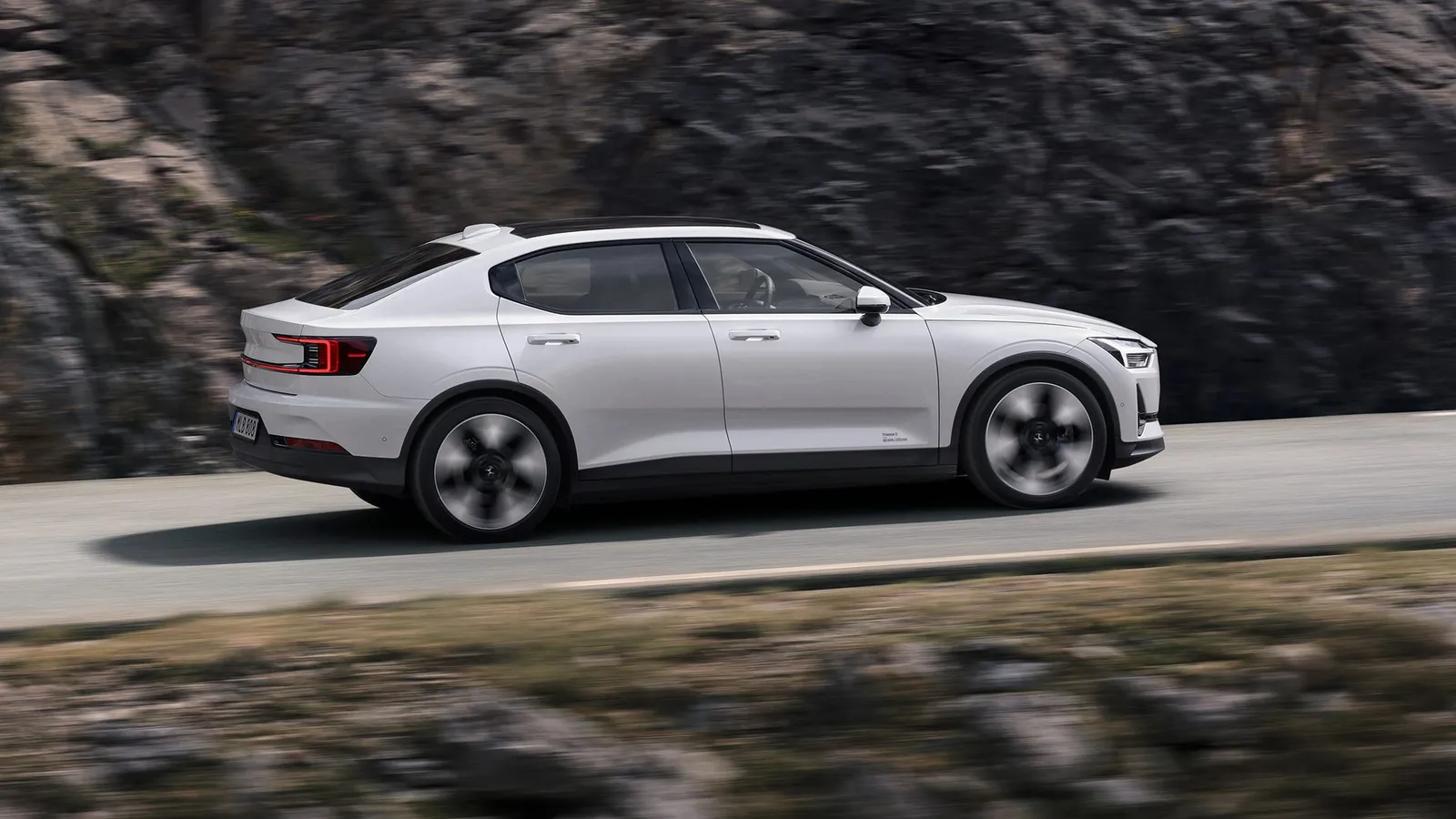
The last units of the Polestar 2 reportedly ceased production in Luqiao. The company has not officially announced an end to manufacturing, but it is directing customers in several European countries toward used cars and no longer accepting new configurations. The electric fastback has been produced in China since March 2020, with media reports indicating that slightly over 200,000 units were manufactured there.
Polestar recently reported selling over 190,000 vehicles of this model. It was most popular in Norway, where more than 16,000 units were purchased. Polestar Norge recently described it as crucial for the brand’s successful market entry.
From Volvo concept to the final version
The roots of the Polestar 2 trace back to the Volvo era. In 2016, the Swedish brand unveiled concept cars 40.1 and 40.2. The former became the XC40, while the latter evolved into the Polestar 2. The vehicle received its most significant technical update in 2024, when the most popular versions switched from front-wheel drive to rear-wheel drive, with the powertrain being heavily modified.
The successor is set to enter the market in early 2027. Polestar has stated that it won’t be a simple facelift but rather a completely new vehicle. The Norwegian TV station 2 Broom reports that it will be a crossover. The brand has not confirmed the body style, platform, or place of production.
In Norway and Sweden, new orders for these configurations are no longer being accepted. Thus, one of the brand’s most important models is phasing out before its successor becomes available.
Weaker Half-Year and End of Sales in the U.S.
The model change comes at a difficult time. In the first half of 2026, Polestar’s global sales rose by only 0.4% to 30,423 vehicles, while revenue fell by about 4% to $1.36 billion. The operating loss was significantly reduced.
The company lowered its full-year growth forecast from a low double-digit figure to a low or single-digit figure. It cited the end of the Polestar 2’s lifecycle and changes in the U.S. business as reasons. Starting with the 2027 model year, the brand will not be able to sell new vehicles in the U.S. due to the Connected Vehicle Rule.
This makes Europe even more important, as it now accounts for around 80% of sales. The year started well: in the first quarter, the brand delivered 13,126 vehicles, achieving its best Q1 performance. Growth was then slowed down by the end of the Polestar 2 era and regulatory changes in the U.S.
The Polestar 4 is meant to partially fill the Lukę’s lineup. The car has been produced in Busan, South Korea, since the second quarter, with an expected launch in September 2026. Initial deliveries are scheduled for the fourth quarter of 2026, but the configurator for Germany shows delivery dates in January-February 2027.
The predecessor entered a market that was still learning about electric vehicles. The successor must defend a brand that generates almost all of its sales in a single region. And how has the Polestar 2 performed for you if you drive it or have driven it on a daily basis?
LovEV Newsletter
Want more content like this?
Sign up — we’ll send you a weekly roundup once the newsletter starts.