
Polestar 2: Production ends, successor arrives in early 2027
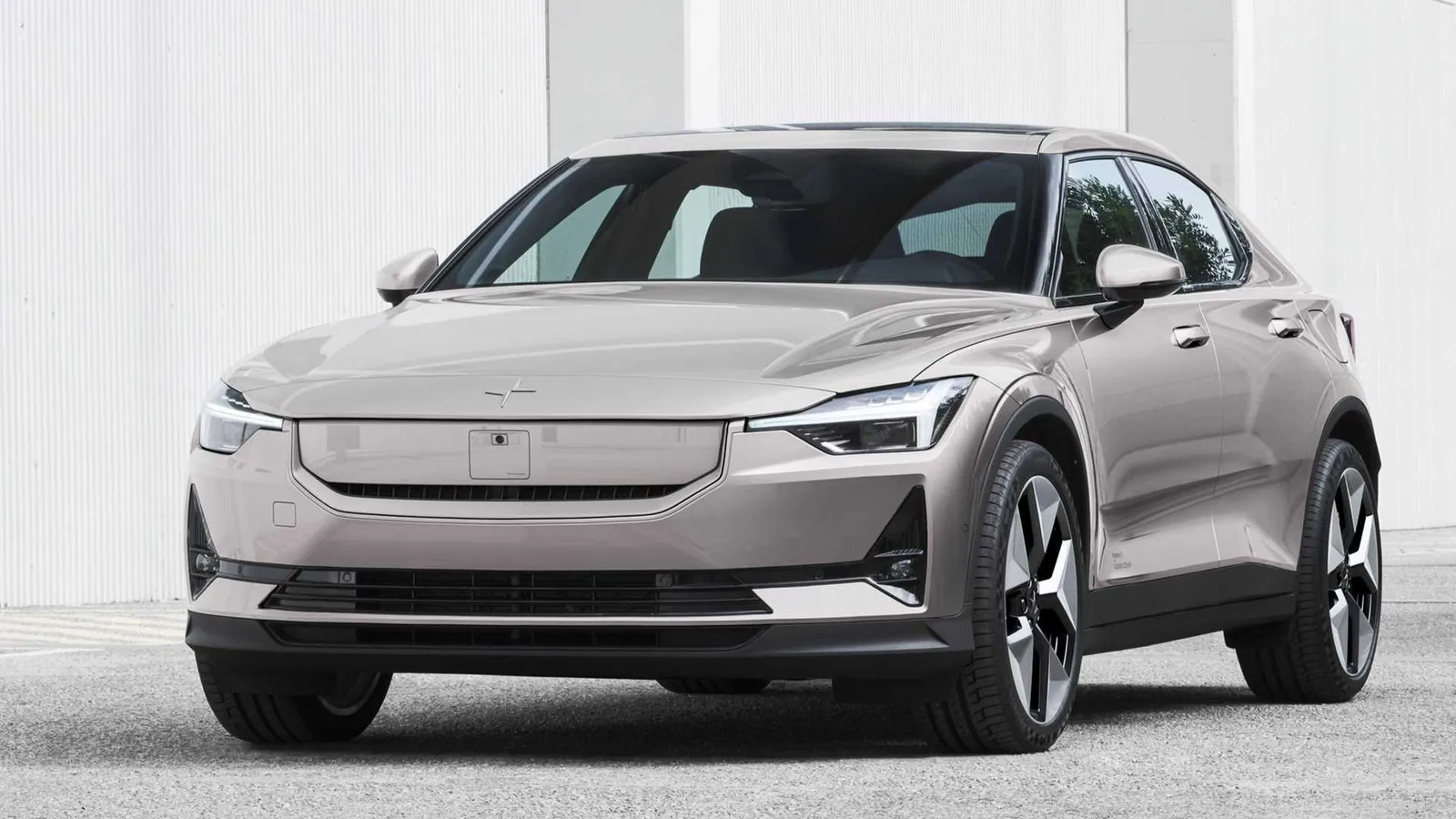
After about six and a half years, production of the Polestar 2 appears to have been halted. The successor to this electric mid-size sedan with a large trunk is set to be unveiled in early 2027. For now, however, the Polestar 2 is still available for configuration in Germany.
Roughly 200,000 units have been produced since March 2020, as reported by the website of Norway’s private broadcaster TV 2 on October 20, 2026. We became aware of this through a brief report in Automobilwoche. Production took place in Luqiao, China, located about 400 km south of Shanghai.
The model received generally positive reviews in tests, but sales in Germany are weak. So far this year (as of the end of September 2026), only about 1,160 new registrations have been recorded. In 2025, there were around 1,700 units, even fewer than in the already weak previous year (2,300 units). In 2023, there were about 6,300 units, and in 2022, nearly 7,000.
It seems efforts have already begun to streamline the model lineup: In July 2026, the base version Standard Range Single Motor was priced at 48,990 euros. Additionally, there appears to have been a price increase. The cheapest variant, called Long Range Single Motor, now costs 57,690 euros (up from 52,690 euros).
Exterior | Drivetrains/Batteries | Charging | Prices | Competitors
Image gallery: Polestar 2 (2024): Images from the test
Exterior
At 4.61 meters in length and just 1.48 meters in height, the Polestar 2 is classified as a five-door hatchback sedan in the mid-size segment. The model’s origins date back to 2016, when Volvo introduced the concept cars 40.1 and 40.2. The former evolved into the Volvo XC40 and later the EX40, while the 40.2 became the Polestar 2. Both models are based on Volvo’s Compact Modular Architecture (CMA).
In spring 2023, the vehicle received a facelift. The new version features a nearly fully enclosed grille that houses the front camera and radar under a SmartZone design. Technical improvements include higher performance and range; additionally, the single-motor versions switched from front-wheel drive to rear-wheel drive—a fairly unique move in the automotive industry.
Powertrains and Batteries
By summer 2026, the Polestar 2 was available in four versions. The base version with a 200-kW rear drive system and a battery capacity of 70 kWh gross (68 kWh net according to the EV-Database), offering a WLTP range of 554 kilometers, was discontinued. As a result, all variants now come with a larger battery. According to Polestar, this battery consists of 27 modules and provides 86 kWh gross capacity (previously 82 kWh gross or about 79 kWh net). Three variants remain available for selection:
Long Range Single Motor
Long Range
Dual Motor
Long Range
Dual Motor Perf. Pack
Drive Type
RWD 220 kW,
490 Nm
AWD 310 kW,
740 Nm
AWD 350 kW,
740 Nm
0–100 km/h Acceleration
6.2 seconds.
4.5 seconds.
4.2 seconds.
Top Speed
205 km/h
205 km/h
205 km/h
WLTP Fuel Consumption
14.8–15.8 kWh/100 km
15.8–17.2 kWh/100 km
16.8–17.2 kWh/100 km
Battery net / gross
approx. 80 / 86 kWh
approx. 80 / 86 kWh
approx. 80 / 86 kWh
WLTP range
659 km
596 km
up to 568 km
Max. towing capacity
1,500 kg
1,500 kg
1,500 kg
The Polestar 2 model with the highest range is the Single Motor Long Range; it achieves 659 km according to WLTP standards. This isn’t a bad figure, though it’s no longer in the top ten.
As far as we know, a permanent magnet motor (PSM) is used on the rear axle, while an asynchronous motor (ASM) is used at the front in the all-wheel-drive versions. This allows the front electric motor to be simply switched off when not needed, saving electricity.
Charging
The battery can be charged at up to 205 kW, which is slightly more than the 200 kW that a 400-volt system with a CCS charging port limited to 500 amps can actually support. The charging time is still listed as 28 minutes. This results in a charging speed of approximately 80 kWh x 0.7 / 28 minutes = 2.0 kWh/min. For a 400-volt model, this is a solid figure.
Long Range Single Motor
Long Range
Dual Motor
Long Range
Dual Motor
Perf. Pack
DC Charging Power
up to 205 kW
up to 205 kW
up to 205 kW
DC Charging Time
(10–80%)
28 min
28 min
28 min
DC Charging Rate
approximately 2.0 kWh/min
approximately 2.0 kWh/min
approximately 2.0 kWh/min
Range Extension Charging
16.5 km/min
14.9 km/min
up to 14.2 km/min
The WLTP range and charging time can also be used to calculate how much additional range can be gained with one minute of charging. The resulting values reach up to 16.5 km per minute. This currently places it in 6th place for range addition among the top ten list of 400-volt models.
Prices and Equipment
The prices for the Polestar 2 start at just under 58,000 euros, with the top-powered version being about 10,000 euros more expensive:
Long Range Single Motor
Long Range
Dual Motor
Long Range
Dual Motor Perf. Pack
Price
57,690 euros
61,990 euros
68,490 euros
The standard equipment is quite comprehensive. It includes 19-inch aluminum wheels, LED lighting, automatic high beams, electrically adjustable, heated, and foldable exterior mirrors, an electric rear hatch, front and rear parking sensors, a reverse camera, partially electrically adjustable front seats, a two-zone climate control system, an infotainment system with Google Maps and Google Assistant, an audio system with eight speakers, and wireless phone charging.
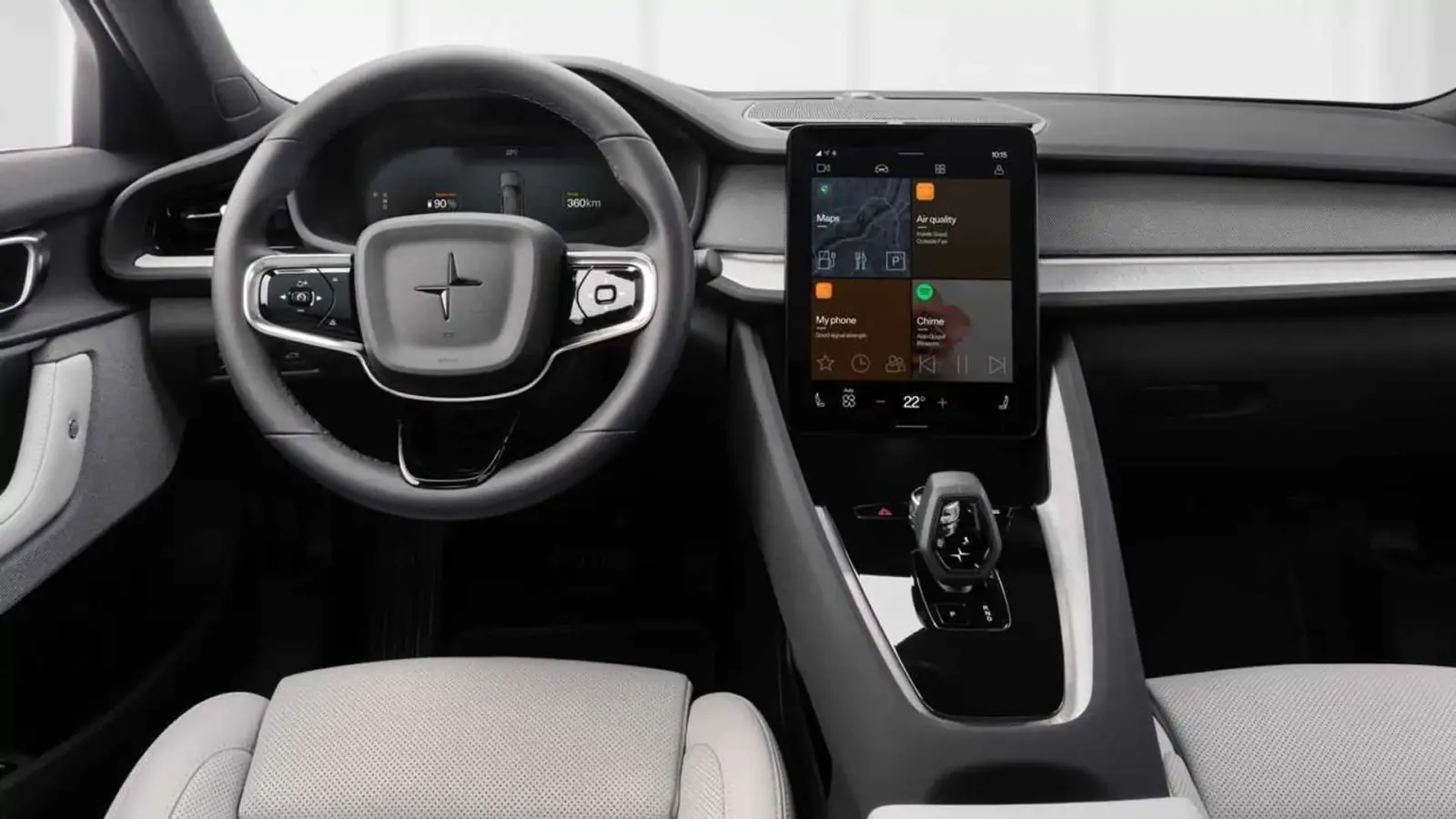
Inside, the Polestar 2 features a 12.3-inch instrument display and a vertically mounted 11.2-inch touchscreen.
Rivals
The competitors include various electric sedans, such as the 800-volt newcomers like the BMW i3 and Mercedes’ electric C-Class, as well as well-known 400-volt models like the Tesla Model 3 or the new BMW i4. Compared to the Tesla and Mercedes, the Polestar and both BMW models have the practical advantage of a large trunk lid. In terms of range, the Polestar 2 can only surpass the BMW i4 (up to 613 km); the other competitors perform better: the Model 3 now reaches up to 750 km, the C-Class up to 762 km, and the BMW i3 even up to 912 km.
However, so far only all-wheel-drive versions of the i3 and C-Class are available; therefore, we compare what we consider to be the most attractive version of the Polestar 2 (Long Range Single Motor) with the BMW i4 and Tesla:
Polestar 2 LR SM
BMW i4 eDrive40
Tesla Model 3 Premium LR RWD
Powertrain
RWD 220 kW
RWD 250 kW
RWD 235 kW
0-100 km/h
6.2 seconds
5.6 seconds
5.2 seconds
WLTP Range
659 km
613 km
750 km
Charging Speed
2.0 kWh/min
1.9 kWh/min
approx. 1.9 kWh/min (unofficial)
Range Extension Charging
approx. 16.5 km/min
14.3 km/min
approx. 18.2 km/min
Trunk Space
405-1,095 liters
(frunk: 41 liters)
470-1,290 liters
425 liters, of which 85 liters in frunk
Price
57,690 euros
61,300 euros
44,990 euros
It is clear that the Polestar falls in price between the more expensive BMW and the significantly cheaper Tesla. Based on the data, we would choose the Model 3, but its impractical trunk space and overly reliant interface on screens are drawbacks. Therefore, there are still many advantages to the Polestar 2. Another new competitor is the electric Mercedes CLA. The Model 3 will likely face difficulties competing against this vehicle as well as the upcoming rear-wheel-drive versions of the BMW i3 and C-Class with 800 Volt systems.
Test and Evaluation
We have driven the Polestar 2 several times already; most recently, we tested the Long Range Single Motor in the fall of 2023. We were impressed by its strong regenerative braking, though unfortunately it can only be adjusted via the touchscreen — a steering wheel controls would be better. With it, one can not only adjust the braking effect but also activate or deactivate creep mode separately.
Overall, the Polestar 2 is particularly easy to operate, likely thanks to its Google operating system. This makes voice control through Google Assistant simple and very practical. The drive system remains quite subdued; the car is more of a glider than a sports vehicle. Among its weaknesses are the seats, which provide little side support in corners.
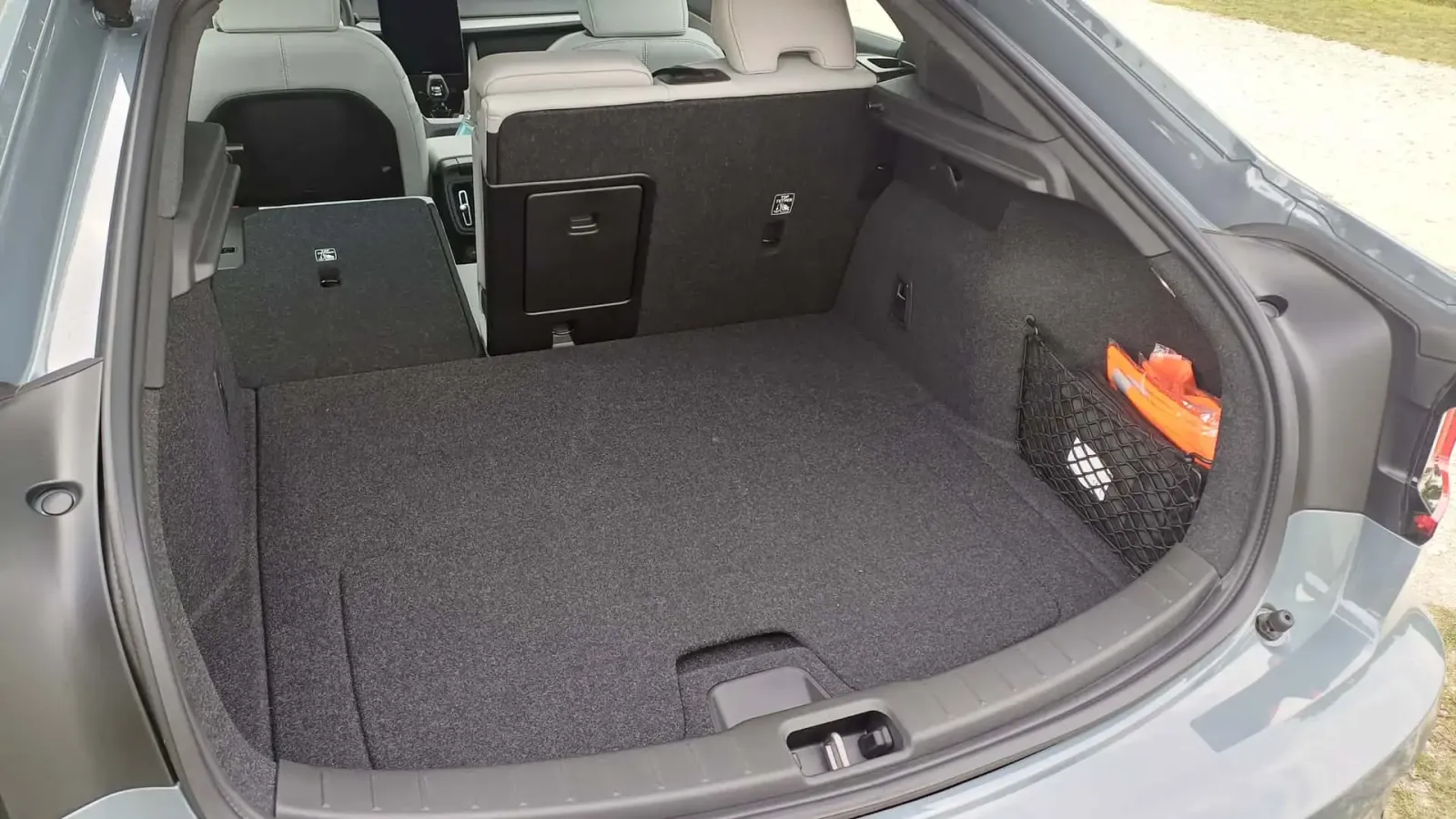
Polestar 2 (2024): The trunk
The interior space is also rather limited; larger adults in the back seat might face difficulties. Although the trunk is more usable than that of the Model 3 thanks to the larger rear hatch, the sloping rear makes it hard to transport larger items.
More about Polestar:
In summary
Adequate range, good charging options, a large trunk, solid features, and very user-friendly operation: all of these sound positive. So why is the Polestar 2 selling so poorly? The relatively high price likely plays a role. BMW charges even more, but it has a better reputation. Tesla doesn’t have such a good reputation, yet it charges much less. EU tariffs on electric cars built in China like the Polestar 2 may also contribute to the high price. Now production has been halted. The successor model is said to feature 800 volts.
Last updated on October 27, 2026: Production end reported.