
Pioneer of alternative truck propulsion: Why Your Company Is Now Going All-In on Electric Trucks
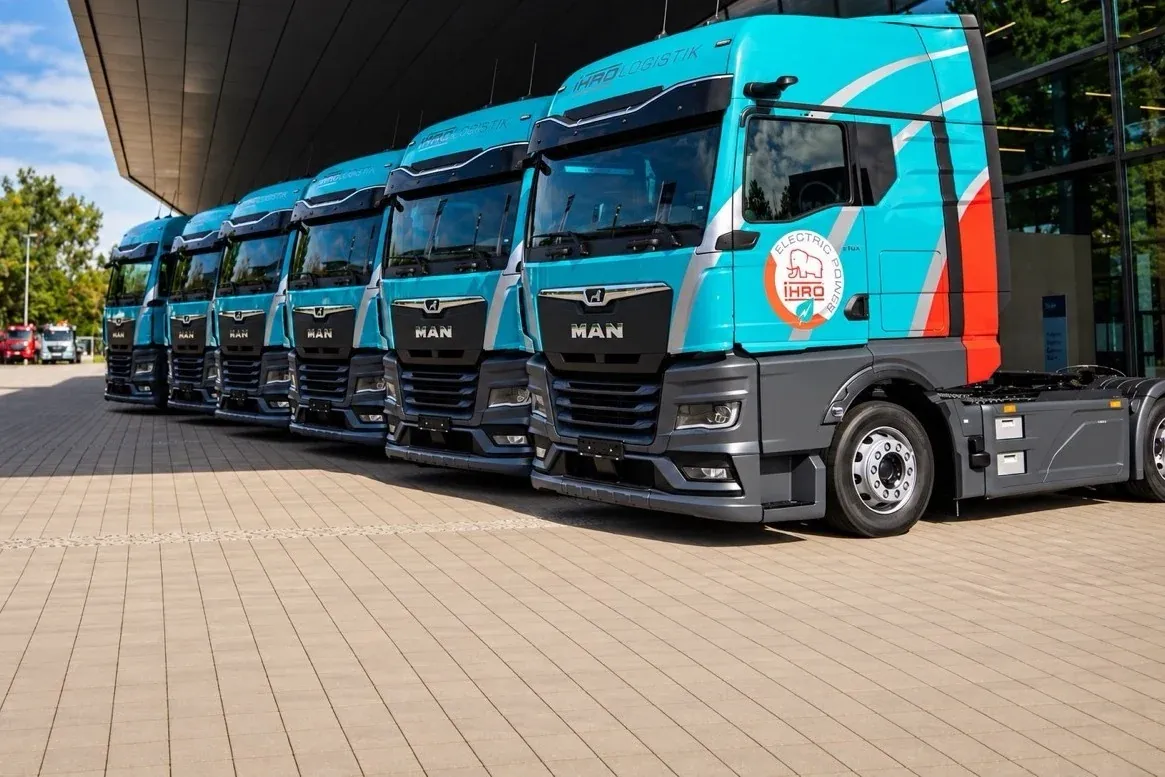
Hans Ihro GmbH is a freight forwarding company founded in 1963, headquartered in Neuenstein, Württemberg, with branches in Germany and the Czech Republic. This mid-sized company, employing around 400 people, specializes in transporting sensitive, time-sensitive, or oversized goods across Europe. Its clients include those in the automotive industry as well as in the packaging, consumer goods, construction materials, insulation, and chemical sectors.
To provide its logistics services, Ihro maintains its own fleet of over 200 trucks, many of which are custom-built. The recent order for 15 MAN eTGX trucks represents a significant step toward electrification in the company’s vehicle procurement strategy. And these electric MAN trucks are only meant to be the first step.
"We are now convinced that electric mobility will become standard in road freight transport — and permanently," says Kai Ihro, manager of the logistics company based in Neuenstein in northeastern Baden-Württemberg. Although there are still significant challenges, especially regarding charging, the practicality of these vehicles has already been proven.
The decision to order the 15 eTGX tractors was driven less by the brand and more by the vehicle configuration. MAN is currently the only manufacturer capable of producing low-bed tractor units in large quantities — a crucial factor for manager Ihro, who needs a three-meter loading height for automotive logistics. The new vehicles are currently being integrated into the fleet to replace diesel trucks.
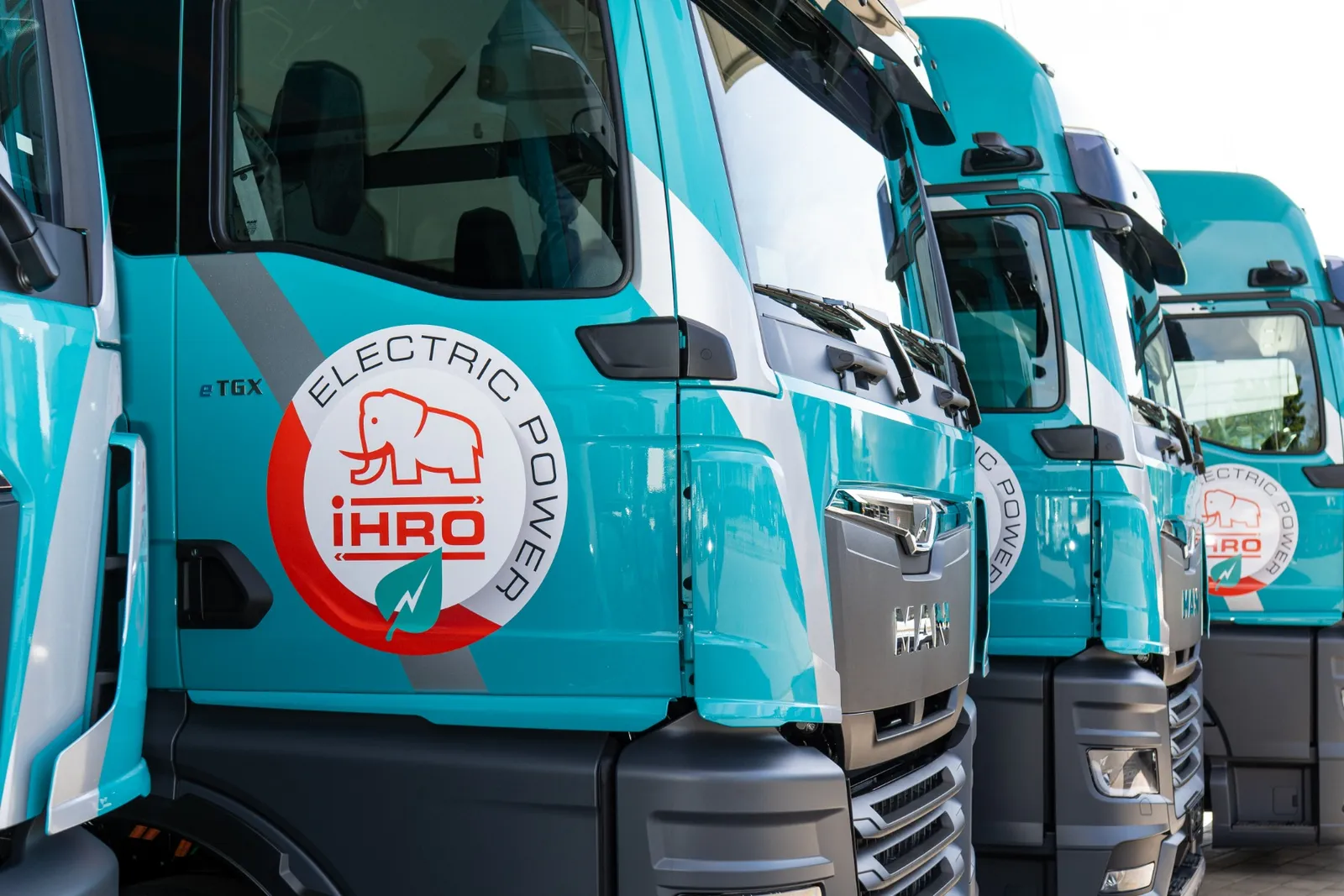
Image: Spedition Ihro
- 1/4
- 2/4
- 3/4
- 4/4
More efficient than stated by the manufacturer
Interestingly, as early as 2016 the company introduced its first electric hauler in Audi’s internal logistics using an electric-powered special vehicle from Dutch manufacturer Terberg. That was ten years ago! The truck carried out deliveries on a three-shift basis and was charged during production breaks. Despite its very limited range at the time, the concept worked surprisingly well. “We never let the battery level drop below 50 percent,” recalls the manager. Since then, the company has also tested other propulsion technologies—such as CNG and LNG—as well as all the setbacks that came with them. But one step at a time.
The serious test of eMobility began for Ihro with two MAN pre-production vehicles that have been in use by the logistics company since March 2025, leaving an overall positive impression. According to the company owner, these vehicles even consume less energy than predicted by the manufacturer: “On daily routes of around 430 to 440 kilometers, they reach their destination regularly with about 20 percent of battery capacity remaining,” Ihro explains. Under current operating conditions, ranges of over 500 kilometers are possible — though only with relatively light loads. Therefore, Ihro emphasizes that range, just like in diesel vehicles, varies significantly depending on weight, terrain, and driving style.
Today, the logistics company no longer sees the vehicle as the main obstacle, but rather the charging infrastructure. “Therefore, route planning is consistently based on available charging points,” explains Kai Schmuck, who heads the business development department at Ihro. Currently, the logistics firm uses vehicles exclusively for fixed route services because it is easier to plan charging windows and travel times in such cases. Flexible scheduling with daily changing routes has so far proven hardly economical.
1.5 million euros for expanding charging infrastructure
The situation at the company’s own location is also challenging. For four years, the company has been waiting for a more powerful power connection. Currently, the existing commercial connection is only sufficient to supply two vehicles alternately overnight using a mobile 44-kW charging solution. A new medium-voltage connection is expected to be available only at the beginning of next year, which will suffice for now according to your team. In the meantime, drivers also use Milence’s truck charging park in Kirchberg an der Jagst, about 30 kilometers away.
In total, the logistics company is investing around 1.5 million euros in its own charging infrastructure. A subsidy from the state of Baden-Württemberg has been applied for, and CEO Ihro expects this to cover 15 percent of his investment costs. The plan includes five fast-charging stations with up to 400 kW capacity, as well as a megawatt charger that can deliver 700 kW of charging power. At the same time, the company is significantly expanding its photovoltaic systems, for which the hall roofs are being reinforced and even facades equipped with solar panels. “We assume that in two to three years we will be able to use all of our PV-generated electricity ourselves,” says Ihro.
The system is supplemented by a one-megawatt battery storage unit to enable the use of as much of the power generated on-site as possible for the vehicle fleet later on. “Unfortunately, expansion is only possible with significant technical and bureaucratic effort — something we never expected at all,” the CEO admits frankly. Public charging remains a critical factor in his view as well. Although the charging network is expanding continuously, many locations are not usable for trucks due to insufficient space or the need for drivers to unload their cargo. On top of that, electricity prices can reach up to 70 cents per kilowatt hour. “That certainly doesn’t promote electric mobility,”
Dismaying findings regarding CNG and LNG propulsion
Despite the costs, the logistics company considers electric propulsion to be the best solution among alternative drives. This assessment is also based on their experience with other technologies: The company had purchased five CNG trucks in 2016, but it had less successful experiences with them. While the vehicles functioned technically, the closure of gas stations eliminated their reason for use. “There are hardly any refueling options left now, and the remaining vehicles are practically worthless in the yard,” lamented the manager, who still hopes for some scrap value.
The assessment of the LNG fleet is even more disheartening. Since 2021, Ihro has had 15 LNG trucks in use. “These vehicles turned out to be extremely prone to malfunctions,” says the business manager. The fuel gauges were unreliable, and technical defects regularly led to costly tow services costing thousands of euros. Several vehicles failed long before reaching 500,000 kilometers of mileage. Additionally, there were issues with some fuel stations, and extreme price spikes for LNG due to the war in Ukraine further compounded the problems. At times, the price rose from an estimated euro per kilogram to as much as five euros per kilogram. “It was a complete financial disaster,” concludes Kai Ihro. Looking back, he even describes LNG as a complete rip-off—both economically and in terms of environmental impact.
Hydrogen also plays no role in the company’s plans. Neither
hydrogen engines nor fuel cell vehicles can offer advantages over battery-electric trucks from the logistics company’s perspective. Ihro and Schmuck are convinced that technical progress in batteries, especially in megawatt charging, will occur faster than that of hydrogen infrastructure.
Electric trucks gain appeal among drivers and customers
According to the company, electric trucks are already economically viable today under certain conditions. This requires inexpensive electricity, high annual mileage, and daily driving distances of at least around 500 kilometers. The exemption from tolls significantly improves the cost structure, according to the company officials. “However, the charging infrastructure must expand substantially so that these vehicles can be used flexibly in the future even outside fixed routes,” says Schmuck.
The demand from customers is already moving in the right direction. In particular, automobile manufacturers are increasingly requesting proposals for zero-emission vehicles in their tenders. While previously longer contract terms and subsidies were agreed upon in exchange, customer expectations now are that battery-electric vehicles be offered “on a competitively economical basis,” according to Ihro’s management.
What about truck drivers? The technology enjoys high acceptance among them. According to Ihro, they report better driving comfort, a quieter working environment, and even sometimes preferential treatment from customers at the depot. The conclusion is clear: “Once you’ve driven an electric truck, you want to stay with them and not return to diesel,” says the manager. The transformation of the fleet has begun. Going forward, Ihro plans to electrify more vehicles each year and hopes that power grids, charging infrastructure, and storage capacity will grow in parallel.