
Small LFP battery or large NMC battery, which one to choose? The example of the Kia EV2
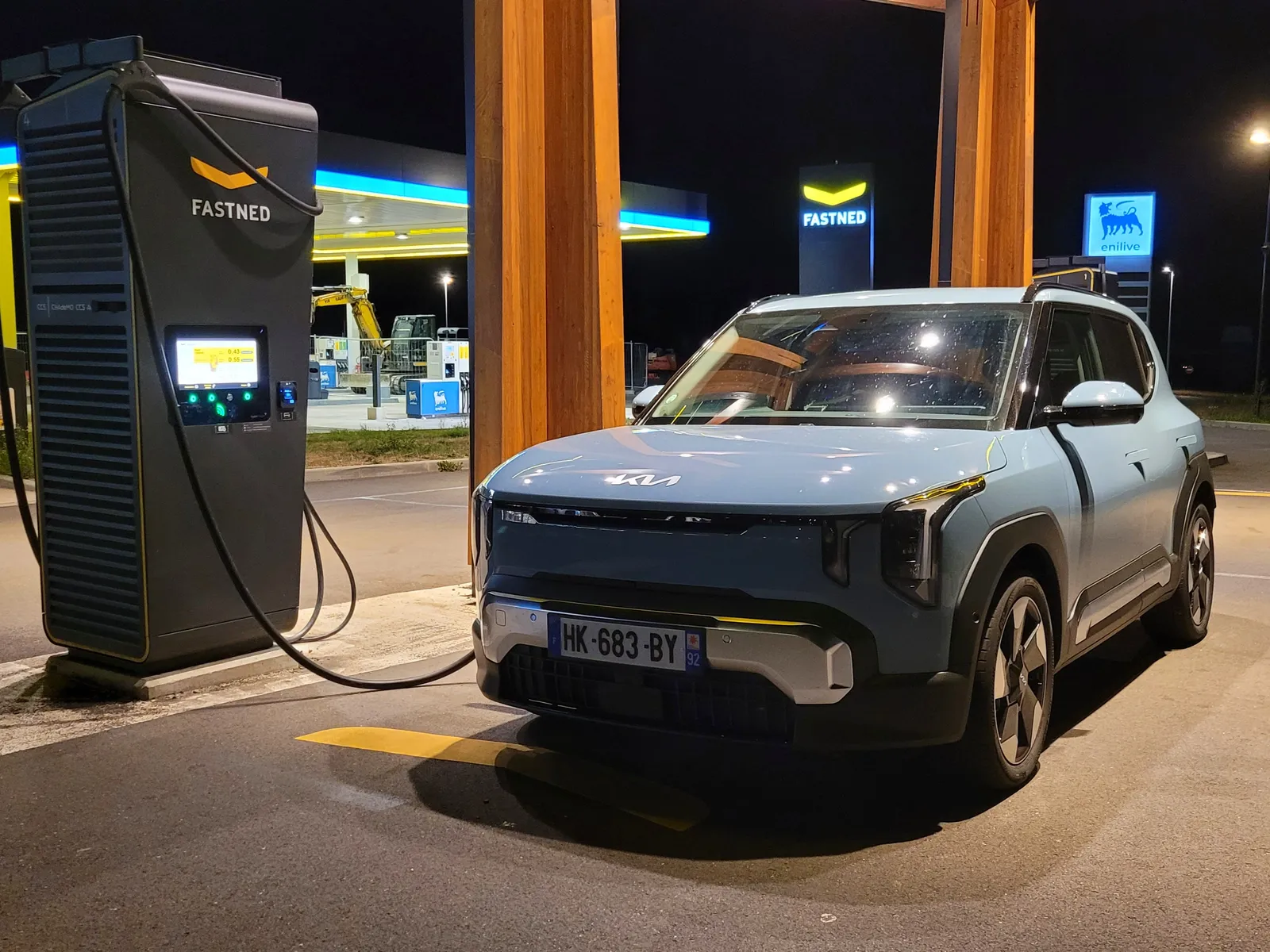
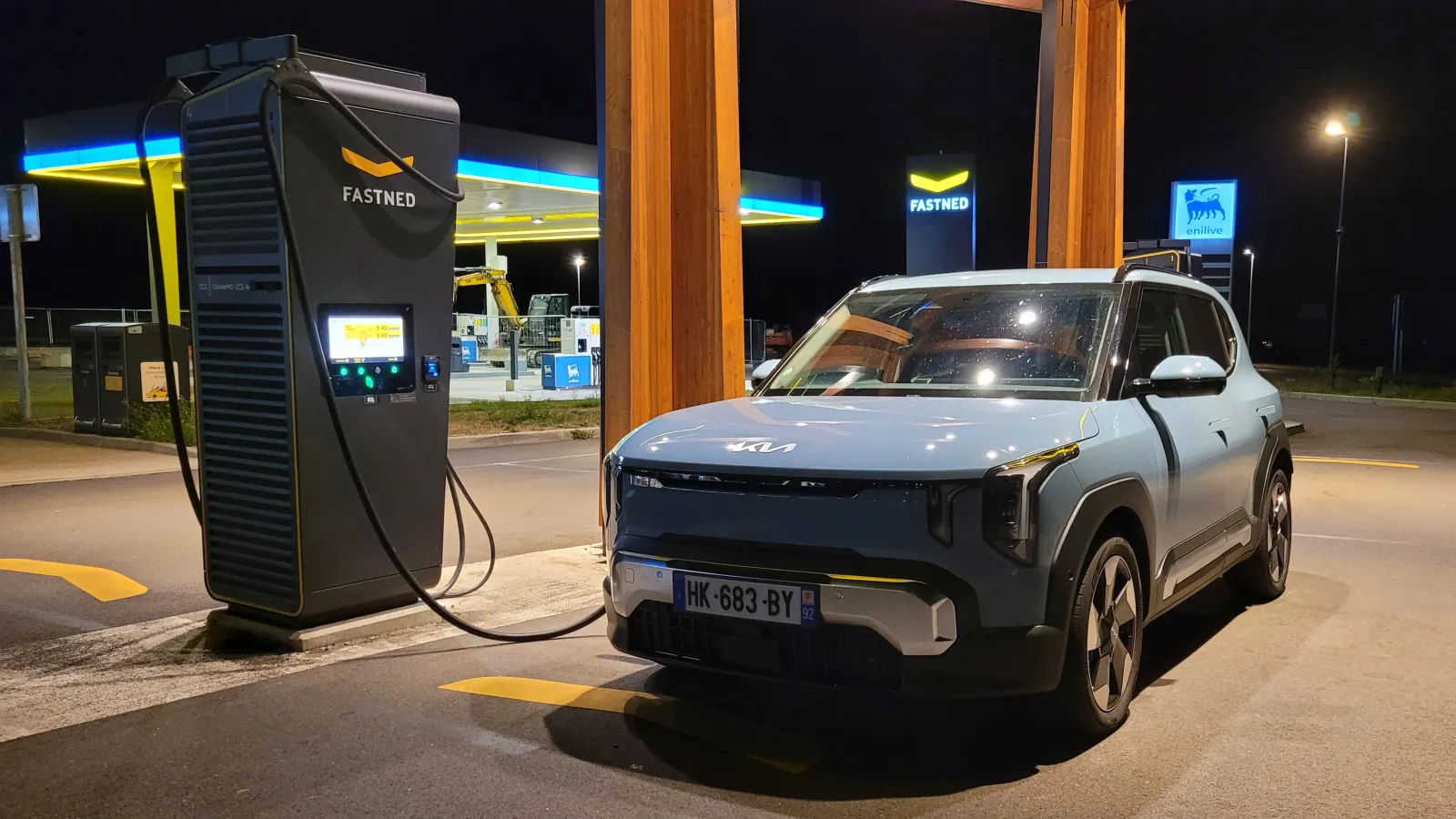
LFP batteries are becoming increasingly common in affordable electric cars, while those designed for longer range often rely on NMC technology. But what are the differences in performance, and which should one prefer? The Kia EV2, which offers both types, serves as an excellent case study to examine this issue.
Choosing among the various batteries available for the same electric vehicle generally meant simply weighing range, charging speed, and performance relative to price, based on the simple assumption that the higher the cost, the more powerful it is, the farther it can go, and the faster it charges. But things have changed with the advent of LFP batteries. These are increasingly favored by manufacturers for “smaller” models, while larger vehicles continue to use NMC batteries. This is true for the Kia EV2, which we’re using as an example today, but it also applies to a whole new generation of Volkswagen Group models such as the ID.Polo, Skoda Epiq, and Cupra Raval, as well as upcoming models from Renault like the R5, Mégane, and Scenic. This makes the equation a bit more complex.
Also read
Kia EV2: Up to 10,100 € in purchase subsidies for this compact electric SUV
Take this Korean compact electric SUV, which comes in two battery capacities—42.2 and 61 kWh—but with two different chemistries. The smaller battery uses LFP (lithium-iron-phosphate) technology, while the larger one employs NMC (nickel-manganese-cobalt) chemistry. Upon examining their technical specifications, some counterintuitive results emerge: the smaller battery is paired with the most powerful motor and features higher voltage as well as a greater charging peak. Conversely, the larger battery stores nearly 45% more energy for just a few extra kilograms.
So, which one should you choose?
317 or 453 km: Range clearly makes a difference
Let’s start with the simplest option. With its 42.2 kWh capacity, the LFP battery allows the EV2 to achieve up to 317 km of WLTP range depending on the configuration. With a 61 kWh NMC battery, the maximum range increases to 453 km. The difference is thus 136 km, which represents about a 43% increase in range.
For a car primarily intended for daily commuting, the roughly 300 km range provided by the smaller battery will more than suffice for many drivers, especially with the option to charge at home. To make the EV2 the family’s main vehicle for longer trips, the 61 kWh battery becomes significantly more attractive.
So far, it’s straightforward: smaller capacity means shorter range, larger capacity means longer range. But that’s where things get complicated.
There’s only a 6 kg difference between the two batteries!
This is probably the most surprising feature of the two packs: the 42.2 kWh LFP battery weighs 319 kg, compared to 325 kg for the 61 kWh NMC battery. In other words, there is only a 6 kg difference between them, yet the latter holds 18.8 kWh—nearly 45% more energy. This difference highlights one of the main disadvantages of LFP: its energy density is generally lower than that of NMC chemistries. With comparable mass or volume, NMC allows for storing more energy.
Nevertheless, one should avoid drawing a direct comparison of cell density from these figures. Kia reports the mass of complete packs, which also include their structure, cooling system, electronics, and protective components. The architecture can vary significantly from one battery to another. But for the driver, the outcome remains remarkable: an increase from 42.2 to 61 kWh hardly affects the weight of the EV2.
For the manufacturer, another advantage of having a range of vehicles with roughly similar weights is that there’s no need to adjust the suspension or braking system based on the battery.
The small LFP battery also has its advantages
Why then does Kia use LFP for its small battery? This chemistry has several advantages, including good thermal stability. It is also renowned for its longevity: under comparable conditions, these cells can often handle more full charge and discharge cycles before experiencing significant degradation.
They also perform better with frequent 100% charges, which helps to reduce the gap in range. Moreover, it is necessary—and regularly required by the dashboard computer—to perform a full charge to rebalance the cells, a separate topic that Soufyane will cover soon.
This obviously doesn’t mean that an NMC battery should never be fully charged, but leaving it at a very high charge level for extended periods is traditionally less favorable to its longevity.
Why does the smaller battery provide more power?
Another interesting fact: the EV2’s smaller battery is more powerful than the larger one, despite having what might seem to be an identical motor. The smaller battery is paired with a maximum power output of 107.8 kW (147 hp), compared to 99.5 kW (135 hp) for the NMC battery. Torque remains the same at 250 Nm. As a result, depending on the version, it takes about 8.5 to 8.7 seconds to go from 0 to 100 km/h with the smaller battery, and 9.5 to 9.7 seconds with the larger one.
Is this bringing us back to the intrinsic qualities of LFP versus NMC? Yes... but no. Certainly, chemistry plays a role because it influences factors such as a cell’s voltage, internal resistance, thermal behavior, and the current it can handle during discharge. However, there is no simple rule stating that “an LFP delivers more power than an NMC” — nor the reverse. Studies comparing different cells show that power performance varies greatly depending on the specific cell and its design, beyond just the chemistry alone.
In the case of the EV2, this is particularly important because we observe something somewhat paradoxical. An NMC cell normally has a higher nominal voltage than an LFP cell—typically around 3.6-3.7 V compared to 3.2-3.3 V. Yet, it is the full LFP battery pack in the EV2 that shows the highest voltage: 358 V versus 297 V. This very likely means that the two battery packs do not have the same series/parallel architecture. Kia must connect more LFP cells in series to achieve 358 V, while the NMC battery configuration prioritizes capacity in Ah. This is consistent with the values we have:
LFP: 358 V × 118.2 Ah ≈ 42.3 kWh
NMC: 297 V × 206 Ah ≈ 61.2 kWh
And that’s where the difference might actually come into play, at 147 hp versus 135 hp. To deliver around 108 kW at 358 V, the current is roughly 301 A. To produce the same 108 kW at 297 V, approximately 364 A would be needed, which is about a 21% increase in current.
But this still doesn’t prove that Kia limits the NMC version to 99.5 kW due to its 297 V voltage. The battery pack could very well be designed to handle higher currents. The limitation might stem from the cells, BMS, inverter, wiring, thermal management, or simply Kia’s calibration choices.
Fast charging yields another result that seems paradoxical at first glance. Kia claims a charge from 10% to 80% in 29 minutes with the smaller battery, compared to only 30 minutes with the larger one. A one-minute difference despite the larger battery storing nearly 45% more energy!
The difference in chemistry can also help explain the varying charging curves of the two batteries, as LFP and NMC cells do not have identical electrical and thermal properties. But this doesn’t explain everything: just like with power, the specific type of cells, their arrangement within the pack, cooling systems, and the BMS strategy also play a decisive role.
The EV2 case is a good illustration of this. The smaller LFP battery reaches a slightly higher peak power of 118 kW compared to 112 kW for the NMC battery. Yet, over a 10-80% charge range, our calculations using Kia’s data show an average theoretical power of around 61 kW for LFP versus 85 kW for NMC. Therefore, the larger battery must maintain high power levels for much longer. What truly matters is thus the charging curve, and consequently the average power sustained throughout the charge session. This can be estimated fairly easily using official data. Charging from 10% to 80% represents 70% of the battery’s capacity. For the smaller LFP battery:
42.2 × 70% = 29.5 kWh
Theoretically, these 29.5 kWh can be charged in 29 minutes, which corresponds to an average power of around 61 kW.
With the larger NMC battery:
61 × 70% = 42.7 kWh
Recovering this energy in 30 minutes corresponds to an average power of about 85 kW. This completely changes the way we interpret the specifications. The large battery shows an average theoretical power between 10-80% that is approximately 40% higher than that of the small one. It recovers about 13 kWh more in just one additional minute.
Note that these 61 and 85 kW figures are not measurements taken at a charging station, but theoretical averages calculated based on Kia’s stated capacities and times. Actual available capacity, BMS buffers, and charging losses prevent these values from being exact. Nevertheless, they clearly illustrate why the peak charging rate should never be considered in isolation. A battery that can briefly reach a very high value is not necessarily the one that charges fastest; a less impressive power level sustained for much longer can yield better results.
And how much does the large battery cost?
At equal energy capacity, an LFP battery pack is generally less expensive to produce than an NMC battery pack. The main reason lies in the cathode materials. LFP uses iron and phosphate, which are abundant and relatively inexpensive, whereas NMC cathodes contain nickel, manganese, and cobalt, which are significantly more costly and subject to greater price volatility.
This is actually one of the key reasons behind the rise of LFP in entry-level and mid-range electric vehicles: some energy density is sacrificed to reduce the cost per kWh. This allows for cheaper batteries when mass and size are not the primary considerations.
Also read
Electric vehicle: this large LFP battery charges in less than 10 minutes
And it is ultimately this figure that will likely have the greatest impact on the decision. The Kia EV2 starts at 26,670 € with the 42.2 kWh LFP battery in the Light trim, which is not available with the larger battery. In the Air trim, the smaller battery costs 28,820 €, while the larger battery costs 33,320 €, representing an additional 4,500 €. In the Earth trim, the price rises from 31,320 € to 35,320 €. This time, the difference is 4,000 €. Finally, the GT-Line at 37,320 € is only available with the 61 kWh battery.
So, for comparable equipment, the key question is: does an additional 136 km of maximum range justify around 4,000 to 4,500 € for you? The answer depends entirely on your usage patterns.
So, LFP or NMC?
Ultimately, there is no technology that is systematically superior to another. For a car designed primarily for daily commuting, LFP batteries have strong advantages: they are cheaper, more durable, and offer sufficient range for most uses. However, NMC retains a decisive edge when it is necessary to carry a large amount of energy without increasing weight and size, making it particularly suitable for models with long ranges.
The Kia EV2 shows that this choice shouldn’t be reduced to just the chemistry. The pack architecture, voltage, cells used, thermal management, or charging strategy can yield sometimes counterintuitive results. Here, the smaller LFP battery is more powerful and achieves the highest charging peak, while the larger NMC battery captures much more energy in practically the same time. When making a choice, it’s better to consider how you’ll use the car — and its overall technical specifications — rather than just the three letters listed after “battery.”