
They carry 130 tons and operate at 1,250 meters underground: these massive electric trucks move 3,200 tons of ore per day
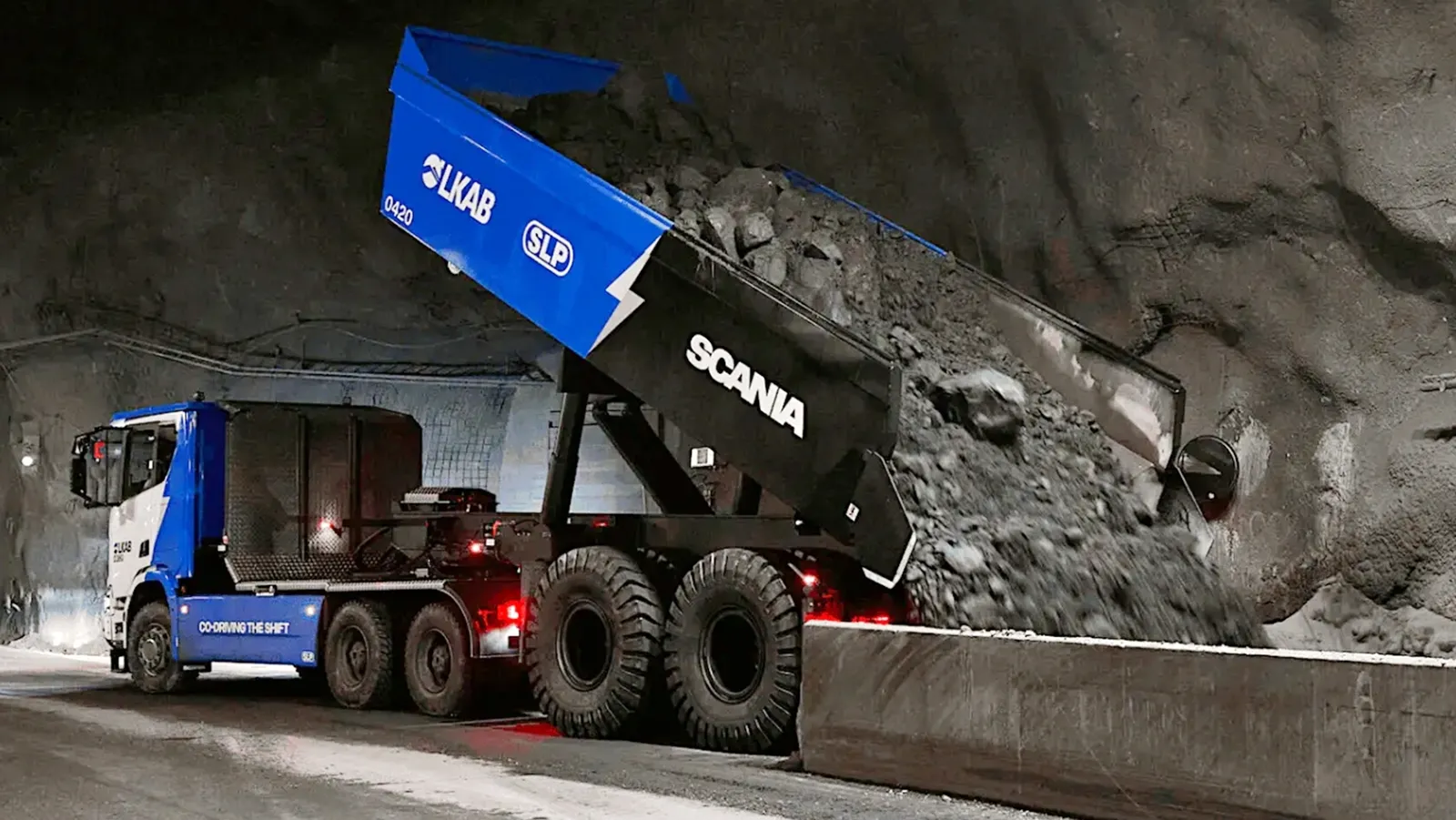
Thinking of an electric vehicle usually brings to mind urban cars, SUVs, or increasingly, large trucks for road transport. But electrification is also reaching some of the most demanding working environments out there. And few can compare to a mine located 1,250 meters beneath the surface.
There, under the Swedish town of Malmberget, the state-owned mining company LKAB has deployed two enormous electric trucks developed in collaboration with Scania. Each unit can carry just over 70 tons of cargo, and the total weight with load reaches around 120 metric tons, or about 130 U.S. tons. Their task is to transport iron ore between the hoppers and crushers at the mine site.
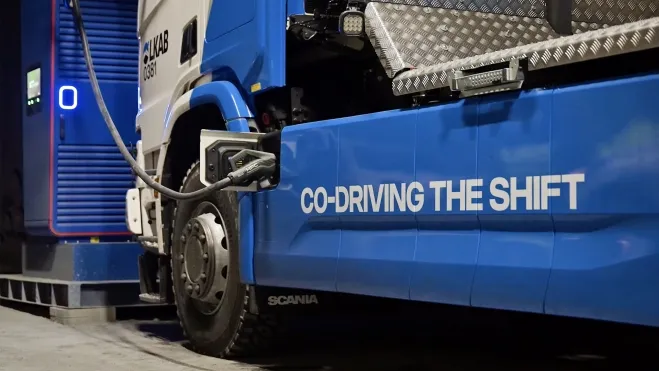
624 kWh battery and up to seven hours of operation on a single charge
This is not just a technological demonstration. LKAB has already put them into production, and Electrek reports that each one can move more than 3,200 tons of ore during a full working day. The mining company wants to see how far this technology can take them, and most importantly, whether it can completely replace the large diesel vehicles currently used underground.
The two vehicles use a 6x4 configuration specifically tailored to LKAB’s needs and are equipped with a massive 624 kWh lithium-ion battery. According to their statement, they can operate for about 7 hours on a full charge under ideal conditions. They also mention that initially they will operate for 2 shifts totaling 16 hours per day, though the goal is to have them running 24 hours a day eventually.
When it’s time to recharge, the trucks can achieve a charging power of up to 375 kW using a CCS connector. According to Scania, approximately 80 minutes are needed to restore enough electricity for another full shift of work. This is a significant downtime compared to refueling a diesel vehicle, but it’s much easier to incorporate into a mining operation with well-planned routes and operating cycles.
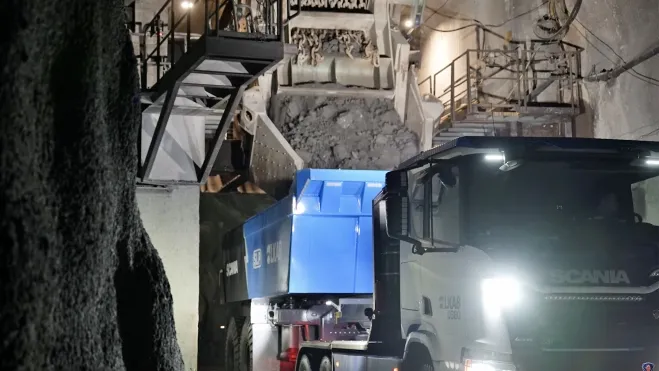
Its propulsion system is also unique. Rather than using an electric axle like other heavy road trucks, this Scania design employs a central electric motor, an automated transmission, and conventional drive axles. This configuration allows the gear ratios to be adjusted to generate the immense torque needed to move such heavy loads through mine tunnels.
Batteries are surprisingly comfortable at 1,250 meters underground
Working at such depths might seem like one of the worst possible locations for an electric vehicle, but LKAB claims the opposite is true. “The environment is dark, but it’s ideal for electric vehicles,” explains Pär Sundqvist, the mining company’s electrical engineering specialist.
The main reason is temperature. Inside the mine, it remains consistently between about 12 and 15 °C, conditions particularly favorable for batteries and much more stable than those they would experience working outdoors in northern Sweden. Additionally, the internal roads are in good condition, further facilitating the operation of these electric giants.
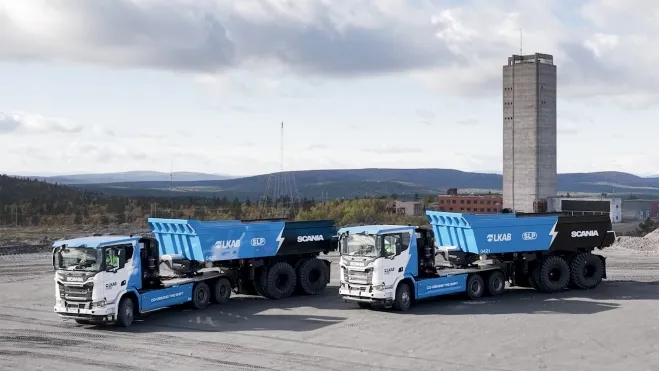
Previous experience also works in Scania’s favor. LKAB has been using an electric Scania 25P XT truck on roadways since 2022, with a gross weight of 49 tons. According to Sundqvist, it has been in operation daily since delivery, delivering results that exceeded expectations, and the operators themselves are satisfied with it. The next need was straightforward: having much greater capacity to transport minerals within the mine.
LKAB aims to electrify 30% of its mining fleet by 2027
The advantages aren’t limited to eliminating fuel use. In a confined space over a kilometer underground, ditching a massive diesel engine means reducing local emissions and noise right where employees work daily. “It’s powerful, quiet, and reliable,” summarizes Peter Gustavsson, head of LKAB’s mobile machinery electrification project, about his previous experience with electric trucks.
The scale of the operation highlights the difficulty of this challenge. The mine processes more than 50,000 tons of ore daily, and LKAB aims to electrify 30% of its mining machinery by 2027. Its goal is to transport and load at least five million tons annually without any emissions.
These two trucks will be used precisely to test how far it’s possible to go. “We want to know how far we can go with a single load, how much energy we need, and whether we can replace our current diesel equipment. I truly believe we can,” concluded Sundqvist.