
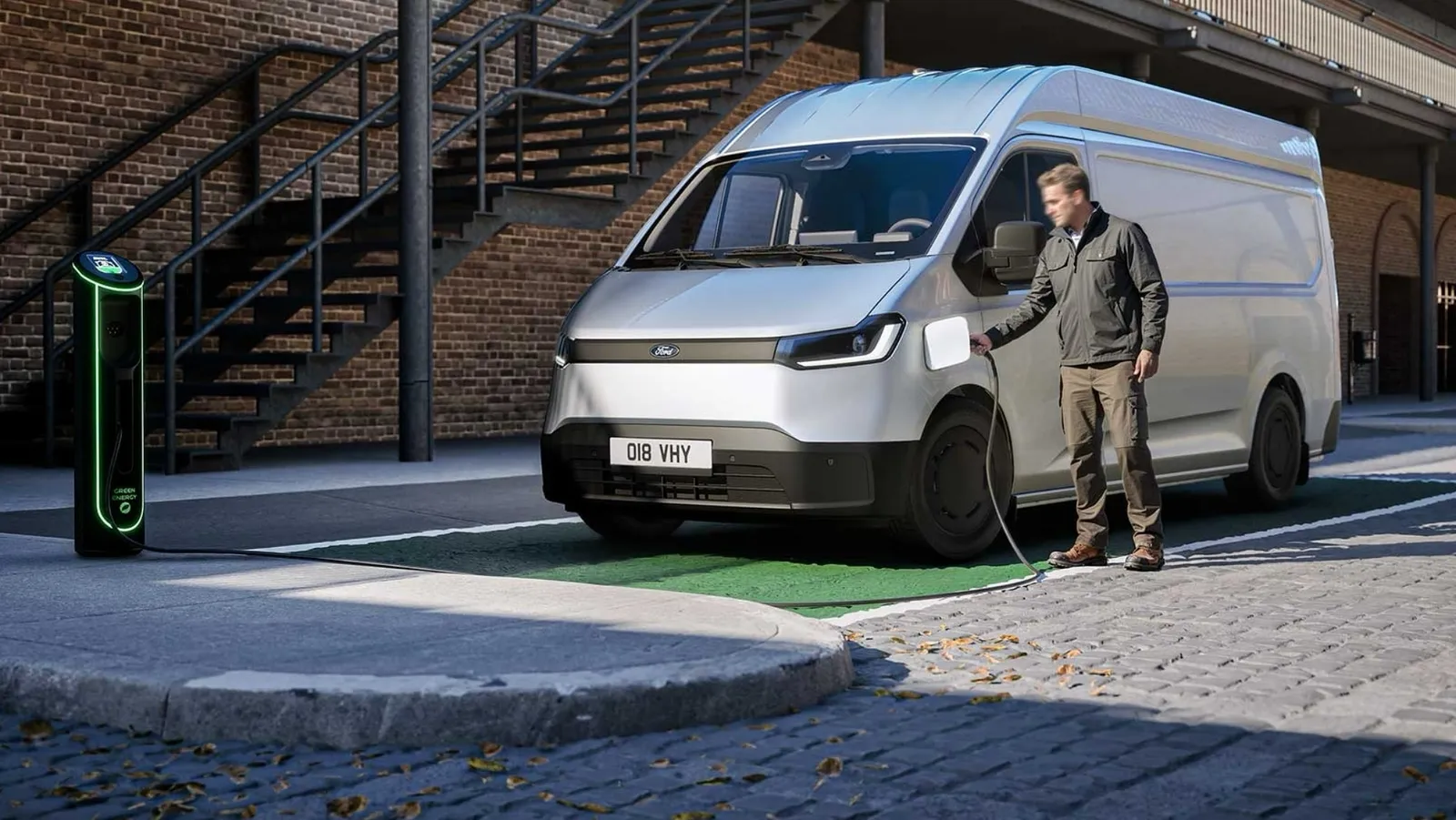
It looks like a regular Ford Transit, but it’s more Chinese than three-delight rice: it has a range of 254 km and costs only 26,420 €.
10/09/2026 15:00
Updated to
10/09/2026 15:00
Ford is implementing major electric vehicle changes in Europe. After selling nearly half of its Almussafes factory to Geely, the company is now announcing the launch of a new electric van. Ford has named it Transit City, but its origins are actually far from Europe and the United States. The pressure to reduce costs in the field of electric commercial vehicles is forcing traditional manufacturers to redefine their supply chains and production sites. Ford has decided to bring its electric Transit City van, manufactured in China, to Europe.
European customers, including those in Spain, can now place orders, with the first deliveries expected before the end of the year. The initial batch consists of approximately 1,000 vehicles at a starting price of 26,420 euros. This marks the launch in the European market of a model originally developed for its Chinese home market, which is now part of a global export initiative. The new Transit City is actually a Farizon V7e.
254 km of range and various gearbox configurations
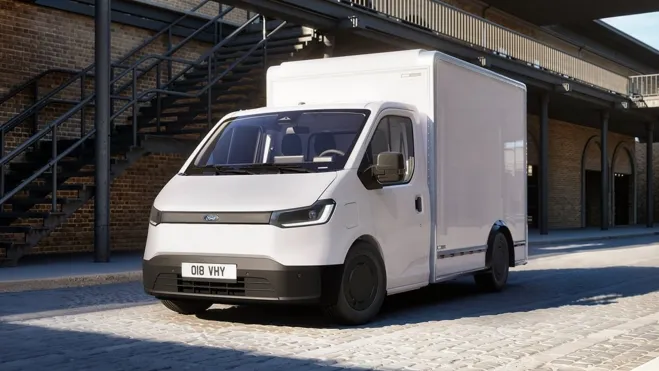
The Transit City is designed to be an affordable van for last-mile freight delivery. It was developed by the joint venture between Ford and Jiangling Motors Group and is manufactured at the Xiaolan plant in Nanchang city, in eastern China. Its focus on short routes sets the Transit City apart from larger commercial vehicles designed for long-distance transport, such as the Ford e-Transit that has been on the market for years.
The Transit City is equipped with an electric motor of 110 kW (150 HP) on the front axle. The power comes from a lithium iron phosphate (LFP) battery with a net capacity of 56 kWh, which provides a range of 254 kilometers according to the WLTP cycle. At a fast charging station, ten minutes are sufficient to add 50 kilometers of range, which is especially useful for delivery routes with limited waiting times. The payload capacity is up to 1.6 tons, and the cargo volume is up to 8.5 cubic meters.
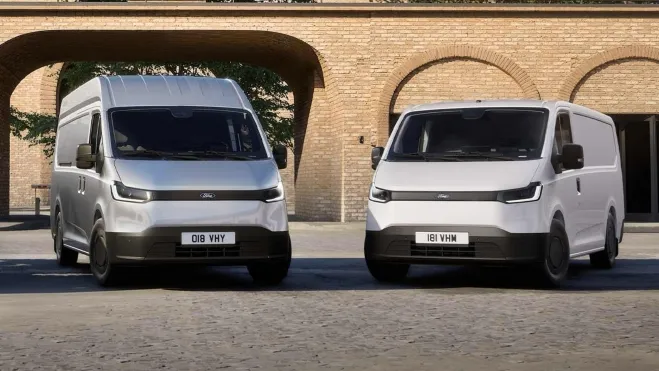
There are three body variant options available for the European market. These include a short-bed, low-roof version, a medium-bed, high-roof version, and a chassis-cab variant for custom bodywork. Depending on the intended use, the appropriate configuration can be chosen, from compact urban delivery vehicles to those with large cargo capacities. The chassis-cab version is primarily aimed at bodybuilders who wish to develop their own solutions based on this chassis.
Modern interior and ample cargo space
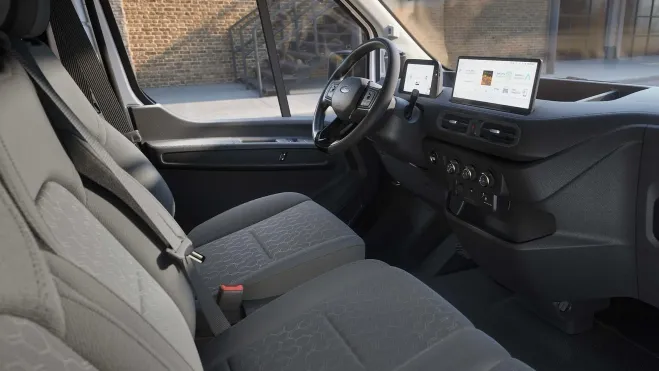
The daily delivery tasks shouldn’t be without those comfort features that are now considered essential. Available only with the Trend finish, the Transit City comes standard with a side loading door (on the right side), dual rear doors, power mirrors, air conditioning, a 7-inch digital dashboard, a 12.3-inch central multi-function screen, lighting in the cargo area, a heated driver’s seat, Apple CarPlay and Android Auto, a rear camera, keyless entry and start, along with a full suite of safety features and driving assistance systems.
As we have already mentioned, Ford offers various body configurations. The smallest versions (H1, L1) feature a bed that is 2.77 meters long and 1.456 meters wide, with a payload of 1,085 kilograms and a volume of 6.43 cubic meters. In the larger versions (H2, L2), the Transit City increases its dimensions to 3.07 meters long and 1.746 meters wide, with a payload of 1,275 kilograms and a cargo volume of 8.5 cubic meters. The remaining versions depend on the specific body type installed.
Ford Pro’s global electrification strategy
The addition of the new Chinese Transit City to Ford Pro’s catalog in Europe strengthens the lineup of urban and intercity delivery vans alongside existing models. The brand aims to bridge the time gap until its own next-generation Western electric platforms achieve full profitability. At the same time, this move puts Ford in direct competition with independent Chinese commercial vehicle manufacturers that have begun arriving at European ports, competing on price with a range supported by its established European distribution and after-sales service network.