
USA Paradox: Trump Removes Incentives but Solar Energy Soars, Especially in Republican States
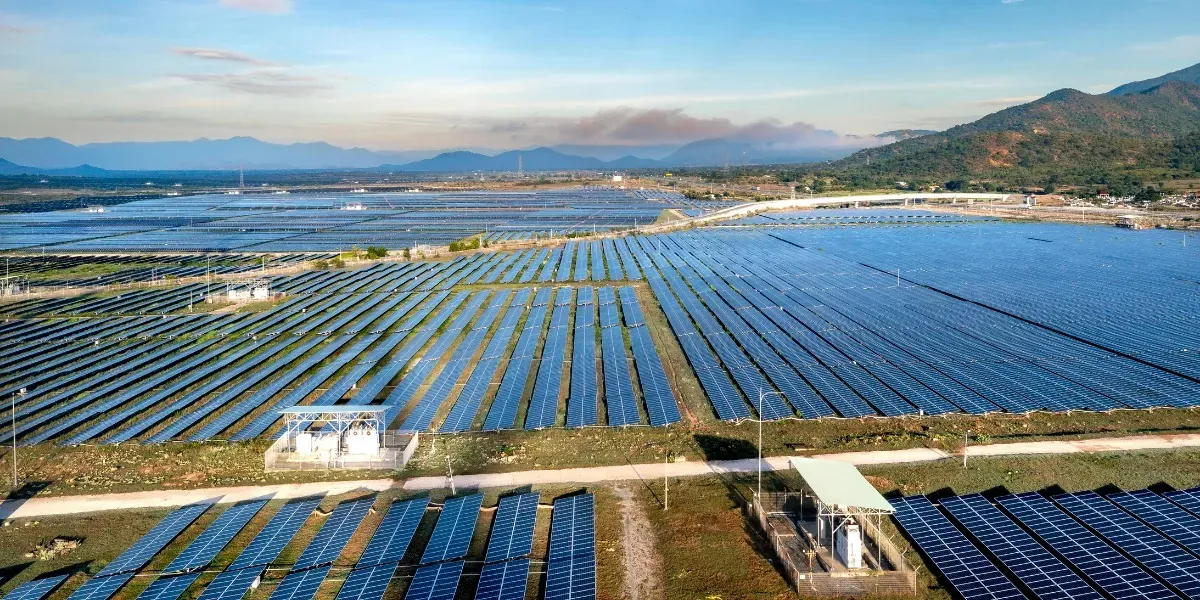
The U.S. paradox: In the second quarter of 2026, the United States reached a new record high for photovoltaic installations. The installed solar capacity is now sufficient to generate as much electricity as is consumed by over 50 million households. Large utility-scale power plants continue to invest in projects, especially in Republican states, despite reduced federal incentives.
The boom of photovoltaics in large-scale plants
According to the US Solar Market Insight report by the Solar Energy Industries Association (SEIA) and Wood Mackenzie, installations in the second quarter increased by 45% compared to the same period in 2025 and by 43% compared to the first quarter of 2026.
The growth has been driven primarily by utility-scale installations (industrial storage systems), which reached 9.6 GWdc in the quarter, marking a 61% year-on-year increase.
This figure is particularly significant at a time when the United States must deal with rapidly rising electricity demand, fueled by the expansion of data centers and the electrification of various industries. In the first half of the year, solar and storage accounted for 70% of new electricity capacity installed in the U.S.
The paradox: Solar thrives especially in “Trumpian” states
The ranking of individual states also confirms this trend: eight out of the ten regions with the highest new installations are politically aligned with the Republican party. And this is despite the president’s long-standing political stance in favor of fossil fuels and skepticism toward ecological transition.
The data thus shows how difficult it has become to understand the growth of U.S. renewables solely through political conflicts between Democrats and Republicans. For large companies, utilities, and investors, photovoltaic energy primarily meets practical needs related to new electricity capacity, costs, and construction timelines. Its growth continues even in an overall unfavorable environment.
Renewables Set New Records in Trump’s USA

The end of incentives does not halt major projects
The slowdown in federal incentives does not seem likely to deplete the market for large-scale installations, at least in the short term. Wood Mackenzie forecasts around 44 GWdc of new solar installations per year through 2031, a rate that could nearly double the total U.S. capacity within five years.
Several significant obstacles remain, starting with permitting times and the transition after the tax incentive phase ends. The ability to turn large-scale projects into actually built facilities will therefore be one of the key factors to monitor in the coming years.
Residential photovoltaics face greater challenges
The situation changes significantly when looking at residential rooftops. The Residential Clean Energy Credit, which provided a 30% tax credit for certain domestic solar photovoltaic and battery installations, is no longer available for systems put into service after December 31, 2025.
Wood Mackenzie still expects a recovery in residential solar and energy storage by 2027. Driving demand could be not only environmental goals but also the need to reduce energy costs and enhance home resilience during power outages.
The U.S. market is thus entering a different phase, where system costs, electricity demand, energy storage, and grid capacity will become increasingly decisive in determining where and how much solar photovoltaic technology will continue to grow.
READ ALSO: “Climate change is here. Enough talking, let’s address it” and watch the VIDEO
Previous Article
Alpitronic Dispenser Depot, for bus and truck fleets