
Why do cars that are not 100% electric need a second battery if they won’t use it to power their engine?
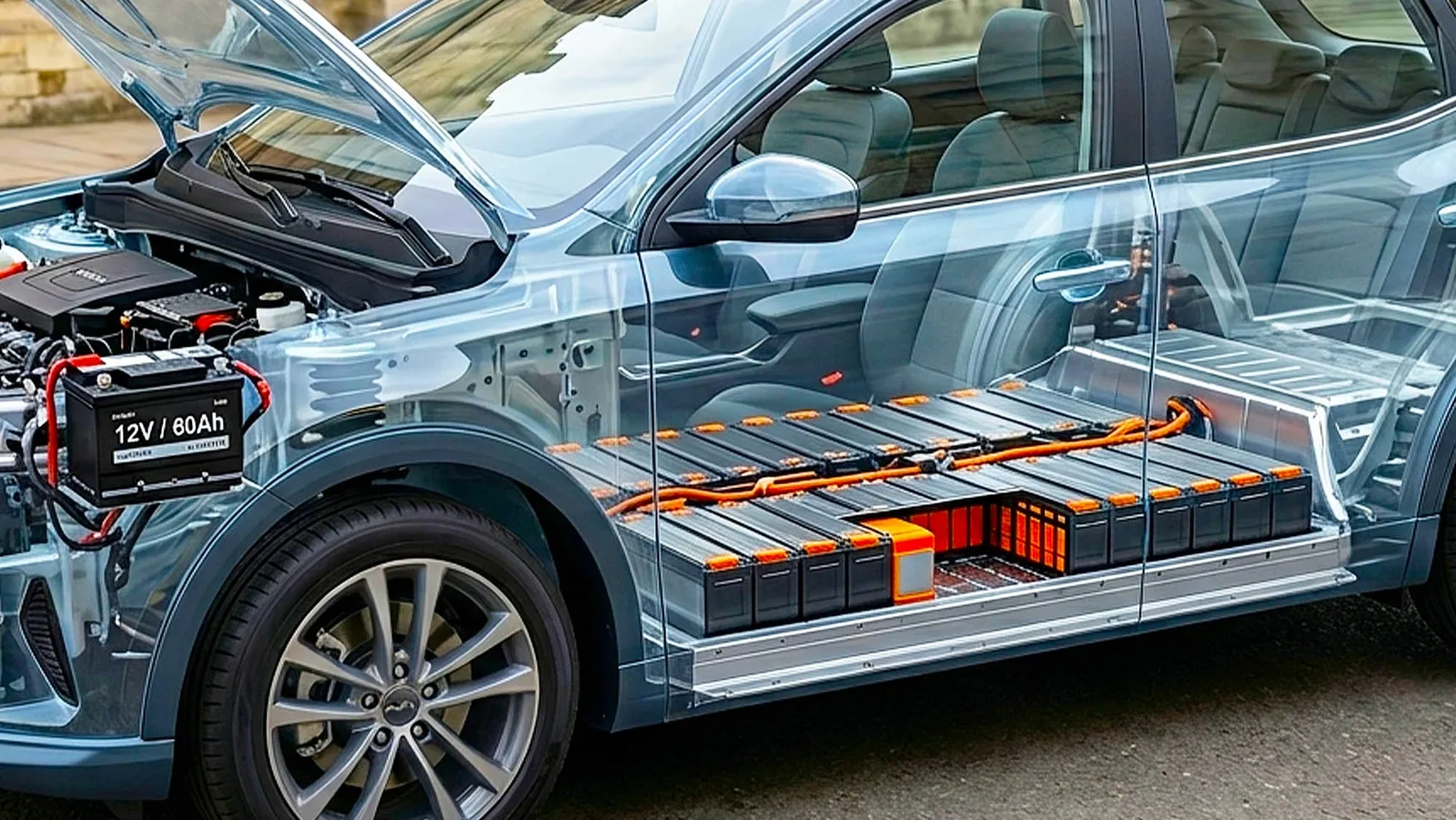
In many modern cars, it is possible to find two batteries instead of one. The reason is not to increase starting power, but to better manage electrical consumption and protect the onboard electrical system.
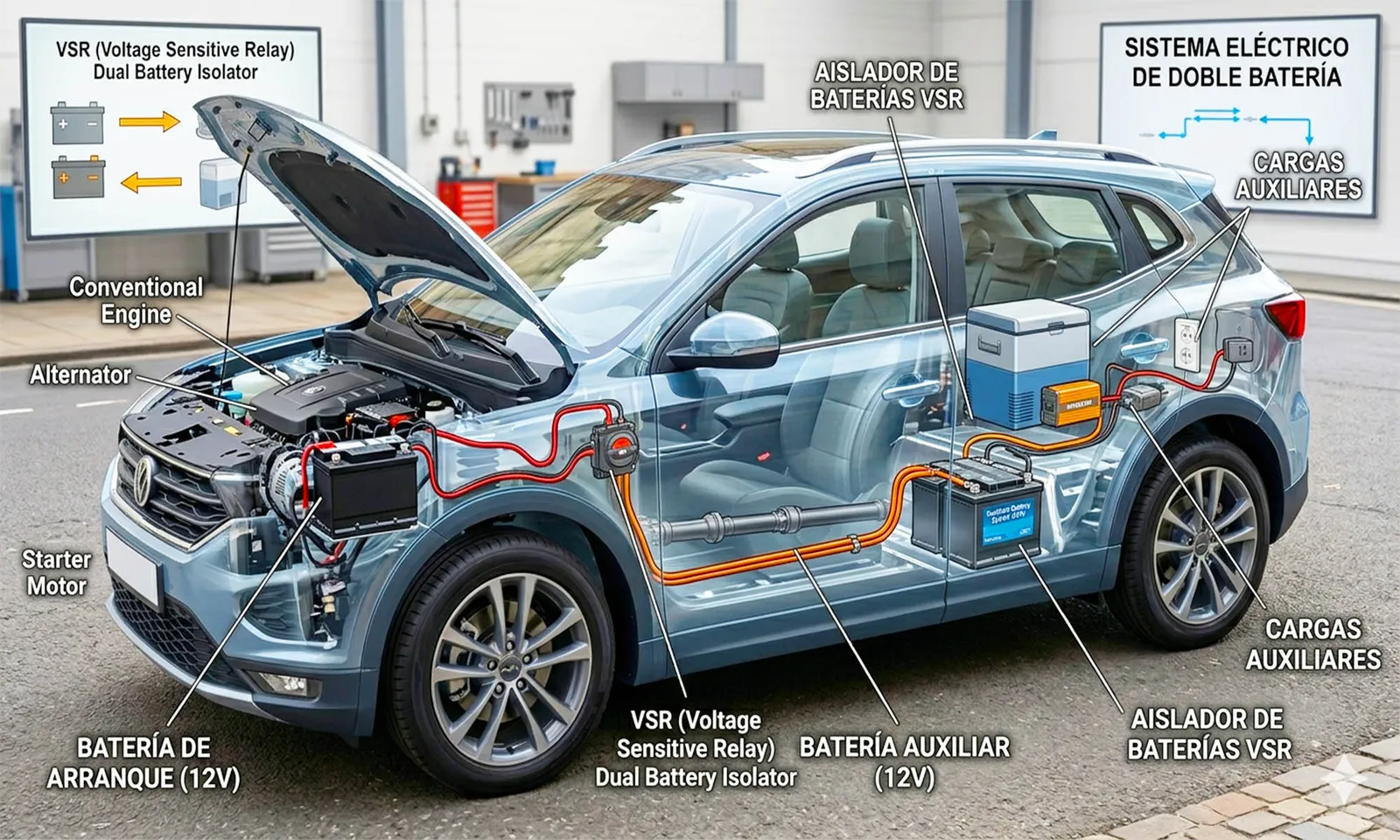
Each battery serves a different purpose: the main battery (12 V) starts the engine and powers basic systems, while the auxiliary battery (also 12 V) supports comfort features, memory systems, and locks. In 48 V microhybrids, a third battery (48 V) with a DC/DC converter is used to distribute loads according to voltage levels.
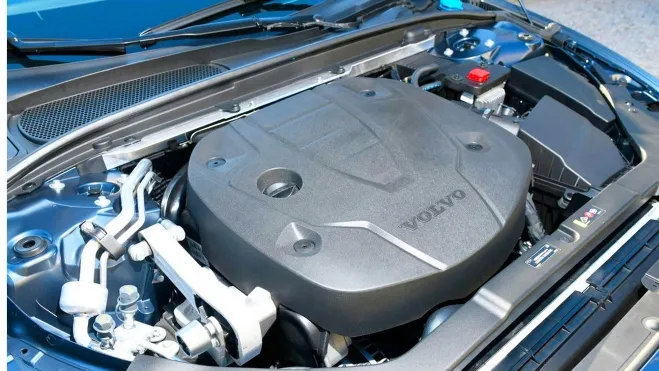
What are two batteries used for
This modular architecture prevents overloading a single battery and improves electrical stability. For example, in a car with Start-Stop, the main battery is optimized as AGM/EFB type for multiple starts, while the auxiliary battery keeps systems active (radio, climate control, etc.) when the engine is off. This way, a temporary voltage drop no longer shuts down the entire vehicle.
Vehicles with dual batteries separate critical functions. The main battery (12 V) handles starting and powering essential systems such as the main ECU, emergency lights, and safety features. The auxiliary battery, with lower capacity, powers secondary consumers like the climate control system.
Thus, at a traffic light or in heavy traffic, when the engine is turned off (via Start-Stop), the auxiliary battery continues to power the comfort and alarm systems, maintaining stable electrical functions without interfering with the upcoming start.
This dual power source is especially useful with the increasing number of electrical components in cars. Auxiliary pumps, power steering, assist systems, and constant connectivity (OTA) create ongoing demand even when the engine is not running.
With a single battery, short distances or regenerative braking can drain it too quickly, leading to failures. Distributing the load across two batteries allows for the use of smaller and lighter units (instead of one oversized one) and enables selective load shedding: the system disconnects non-essential components, giving priority to headlights, ABS, or electric brakes if necessary.
48 V Systems and Electric Cars
In 48 V microhybridization (mild hybrid vehicles), there are two low-voltage levels: 48 V and 12 V. The 12 V battery is supplemented by a small 48 V (lithium) battery pack connected via a DC/DC converter.
The 48 V motor-generator assists the main engine and enables features such as regenerative braking or electric compressors, while the 12 V battery powers the lights, ignition, and standard modules. This improves efficiency (15–25% savings according to manufacturers) but adds complexity: there are three voltage levels, although current converters and protocols mitigate risks.
Plug-in electric and hybrid cars also have dual batteries. The traction pack (200–800 V) powers the vehicle, but the onboard electronics still use 12 V. In these vehicles, a DC/DC converter recharges the 12 V battery from the HV battery, with a BMS controlling the energy flow.
Most accessories (infotainment, ADAS, lights, airbags, and even the safety contactor) operate at 12 V or less. Driving solely on HV would require redesigning all those systems and would be more dangerous. In fact, if the 12 V battery runs out, the EV cannot start its propulsion system, as the inverter relies on 12 V.
Examples and key figures
In practice, this setup is becoming increasingly common. High-end cars typically come equipped with two 12 V batteries: a powerful main battery and an auxiliary one for the vehicle’s electrical systems. For example, some luxury SUVs come standard with dual batteries, and premium brands use auxiliary batteries to support electric brakes or other critical systems.
Even hybrid or electric vehicles (PHEV, EV) combine an HV traction battery with a traditional 12 V battery. In terms of capacity, a conventional 12 V battery provides around 45–100 A* of capacity (400–800 A for starting), while the auxiliary battery is around 20 Ah. Although there are no official statistics, it is estimated that most new mid-to-high-end cars use dual batteries.
One final point: maintenance. Both batteries need to be checked. If the auxiliary battery fails, the car may be limited to minimum mode (in a PHEV, only gasoline) until it can be replaced. The cost increases (two units instead of one), and in 48 V systems, extra care must be taken with electrical safety. Still, the weight increase is modest (a few kilograms) compared to the benefit of maintaining system stability.
Configuration
Function
Advantages
Disadvantages
High voltage + 12V
Electric drive + auxiliary systems
Maximum efficiency and safety
Higher technical complexity
12V + 12V
Separation of starting and running systems
Redundancy and reliability
More weight and maintenance needs
48V + 12V
Mild hybrid system
Fuel savings (15–25%)
More complex architecture